




{{item.videoDuration}}
{{item.title}}
{{item.text}}

{{item.videoDuration}}
{{item.text}}
Recent Treasury and IRS guidance has reshaped how the OBBBA impacts CAMT. This webcast replay explores key updates—including R&D, repairs, bonus depreciation, and qualified production property—and highlights practical considerations for companies navigating these changes.
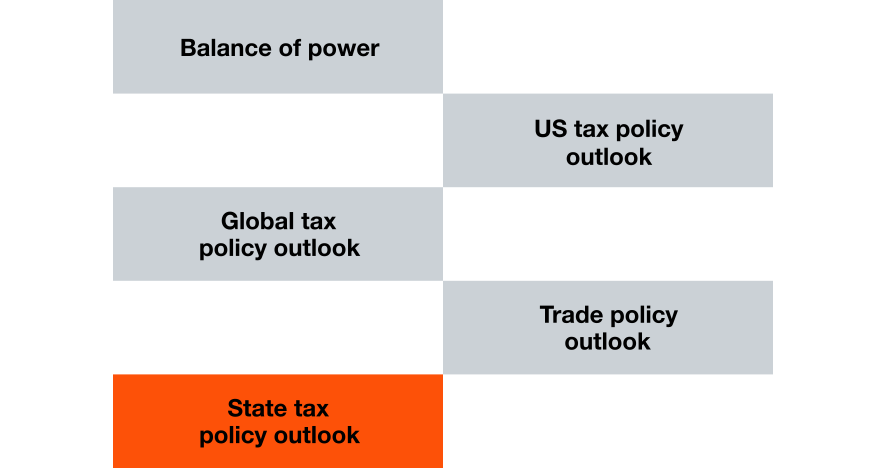
All 435 seats in the House are up for election every two years. Democrats would need to achieve a net gain of three seats in the 2026 elections to regain control of the House, assuming seats vacated due to death or resignation will be filled by members of the same party in the upcoming special elections.
Since many significant individual OBBBA tax provisions took effect during the 2025 tax year, the impact of the law will be reflected in the 2026 tax filing season. While public opinion surveys generally have reflected lukewarm support for the law, President Trump and Republicans in Congress are predicting that many individual taxpayers will notice positive effects from the OBBBA when they file their 2025 tax returns in advance of the 2026 midterm elections.
Business tax leaders will need to manage increased global tax compliance challenges even as a Pillar Two side-by-side agreement is implemented this year. Meanwhile, the United Nations and the European Union are focal points for discussions by countries considering new tax enforcement measures that could increase compliance costs for business.
Tariffs, both proposed and implemented, are central to the administration’s economic, industrial, and geopolitical objectives, creating a level of policy volatility that few global companies have navigated before. These measures have become part of the policy architecture along with tax policy and the general business regulatory climate that companies must incorporate into their planning.
As states consider their conformity to the federal changes, it is important for taxpayers both to track legislative and administrative action and to analyze the mechanisms by which states decouple from the federal provisions. Some states, for example, may require an addition or subtraction modification to federal taxable income, whereas in other states taxpayers may need to recalculate federal taxable income for state tax purposes. The distinction could create opportunities or pitfalls depending on the taxpayer’s filing method and tax attributes in the specific state.
A key challenge for business leaders this year is to engage with policymakers and build public support for tax and trade policies that promote economic growth, business investment and job creation. Explore our dynamic list of priority areas below.
{{item.text}}
{{item.text}}