





This series explores how taking a portfolio-wide approach can help organizations align transformation efforts, reduce risk, and drive meaningful outcomes across business, tech, and controls.
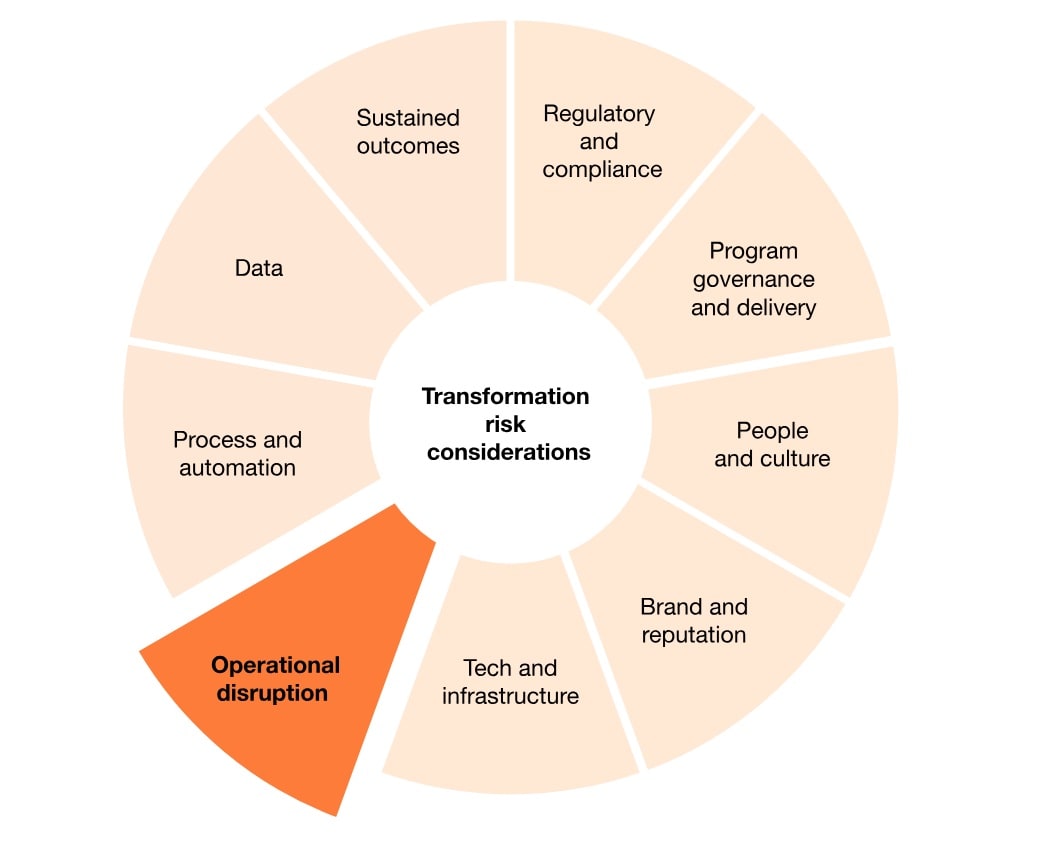
Business transformations can offer significant benefits, from enhanced efficiency to improved customer experience. While many companies manage multiple risks during a transformation program, resiliency risk is often overlooked. If your organization isn’t adequately prepared and equipped to recover your critical services and reduce operational disruption, that can open you to more risk and damage downstream.
During operational and technological transformation, your business still needs to perform well and meet its obligations. Without careful management, disruption can become the hidden cost of change, eroding revenue and performance, increasing transformation risk, and jeopardizing the value of the transformation itself. Operational disruption—like system outages, process delays, quality failures, control breakdowns, and vendor issues—are risks you should be prepared to handle quickly, as they can severely impact your customers, your employees, your costs, and overall business.
While you want to reduce the likelihood of disruptions as much as possible, avoiding 100% of hiccups just isn’t possible, so you should be prepared with a swift, effective immune response when a disruption occurs.
Resiliency—the ability to withstand, adapt, and quickly recover while maintaining your core functions within acceptable performance levels—is imperative.
“Poorly managed cutovers and process changes can interrupt daily service delivery, causing revenue loss and client dissatisfaction.”
—Gena Sullivan, Partner,Digital Assurance & Transparency, PwC USWhat are some of the most pressing operational disruption transformation risks today?
The operational disruptions you’re likely to encounter depend heavily on your industry and types of service, but there are a few common root causes.
What can I do to help reduce operational risks right now?
Anticipating disruption means accepting the idea that you can’t preempt every risk from turning into an issue. It also means developing the operational muscle and agility to maintain core business throughout those disruptions and limit their impact.
Here are a few practical steps you can take to help reduce exposure and enhance resiliency during transformations.
Where can I get help?
Addressing operational disruption transformation risks requires foresight, insight, discipline, and coordination. At PwC, our transformation risk assessments offer an outside-in perspective that can help your company understand where design decisions, program dependencies, and transition activities may inadvertently increase operational or execution risk. These assessments can do more than identify risk points—they can help pinpoint the more impactful risks and interdependencies early in your transformation and deliver clear, actionable recommendations to address them.
When deployed at key milestones, these assessments can inform stronger decision-making, enable more confident go/no-go readiness determinations, reduce the likelihood of costly downstream remediation, and help protect transformation value by lowering both the likelihood and the impact of operational disruption. With the right approach to operational monitoring, your organization can move faster with confidence—withstanding and learning from shocks, meeting customer and regulatory commitments, and safeguarding return on investment.
Digital Assurance and Transparency
Powering digital progress through trust
Explore more from our Transformation Risk insights series