There’s a growing recognition among board members that the old playbook no longer applies. But consumer markets directors can help lead the next chapter for their companies, one shaped by more segmented, emotional, and digitally influenced consumer behavior. One where agility, trust, and responsible innovation are core to competitive advantage. This moment calls for sharper questions, better structure, and more future-facing engagement.

According to PwC’s 2025 Annual Corporate Directors Survey, in which we surveyed 67 directors on boards of public consumer markets companies, many reported concern about mounting external pressures, their colleagues underperforming, and intensifying governance demands related to AI. All of which makes sense given the mounting pressures from shifting consumer demand, outdated operating models, AI acceleration, and regulatory complexity across industries.
GLP-1 medications are also changing the game across consumer markets. In CPG and retail especially, the shift is already visible—from product portfolios and marketing strategies to demand forecasts and wellness branding. Restaurants, wholesalers, and agricultural producers are also recalibrating for a consumer more focused on health, less processed foods, and new lifestyle norms.
By understanding fast-evolving consumer expectations, leading through AI-driven disruption, and scenario-planning amid regulatory uncertainty, boards can stay ahead of what’s next.
Business model shifts require board-level alignment
This year’s story won’t be about weak demand. Instead, 2026 will be about changing patterns of demand—and which companies are prepared to meet them. Consumers are still spending, just in ways that are less predictable, more segmented by factors such as income and age, and increasingly influenced by trust. For consumer markets companies, that means growth will depend on the ability to flex and personalize systems within the business, not just optimize the operating model in a one-size-fits-all way.
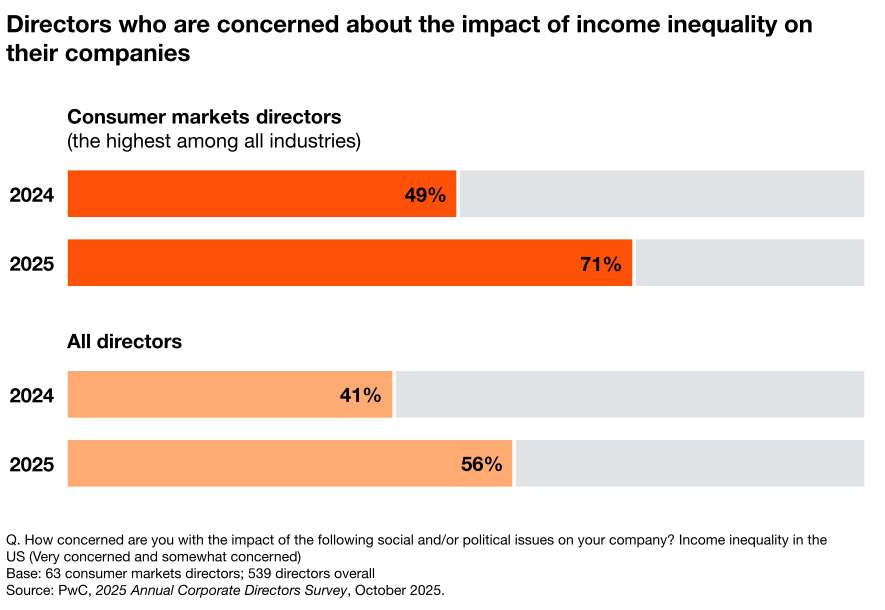
Boards have a critical role to play here, and they increasingly recognize the macroeconomic tensions playing out: 71% of consumer markets directors say they’re concerned about the impact of income inequality on their company, a sharp rise from 49% the year prior. But they can use this concern to help leaders flex by shaping and pressure-testing the conditions for change.
That means treating scenario planning as a tool for structural, not just seasonal, uncertainty. It means probing whether capital, leadership, and workforce talent are aligned to the parts of the portfolio where demand is actually heading—building for long-term relevance. And it means scrutinizing decision rights, data governance, and incentives to support the kind of agility and accountability required now.
These are some of the governance levers that shape a company’s ability to make meaningful trade-offs in how the business is configured and led. Boards can help reflect how macro social dynamics are now inseparable from growth strategy and brand trust.
AI governance is a board issue, not just a tech issue
Nearly every major consumer markets company is deploying AI in some capacity. But fewer can articulate how their tools are governed, how they’re trained and validated, or who is accountable when systems go off course. While more boards now receive information about AI initiatives, many still lack visibility into deployment practices and risk controls. That blind spot could become costly as agentic AI rapidly scales across functions—from marketing and pricing to forecasting and logistics.
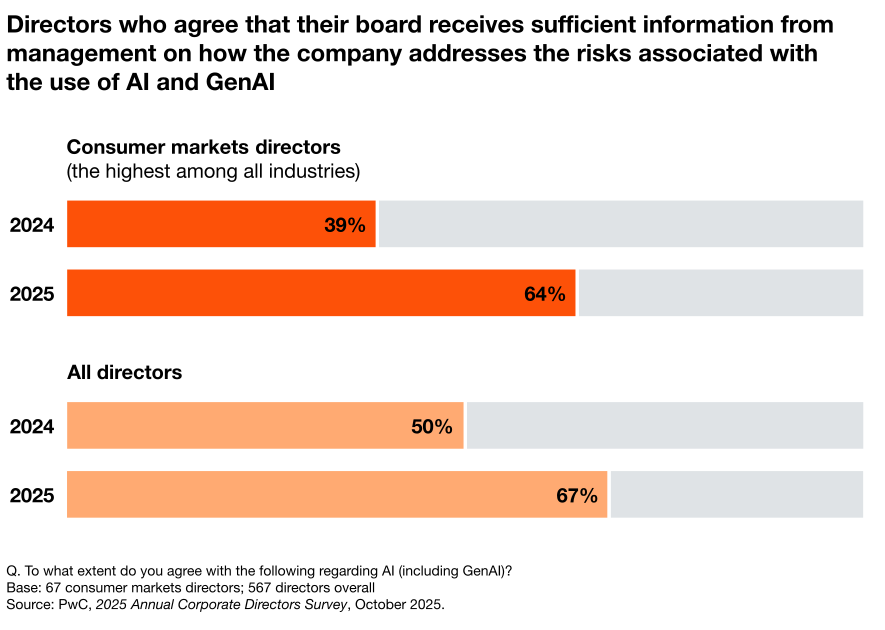
The risks—brand missteps, ethical blind spots, regulatory scrutiny—are multiplying. And the governance expectations are shifting with them. Boards can no longer defer these responsibilities to the CIO or CMO. Oversight should evolve to include understanding the fundamentals of AI, as well as how it’s being used, trained, and governed. Directors can also ask for clear reporting that links AI performance to business outcomes, as well as explore whether the board and management team have the talent to oversee scaled deployment.
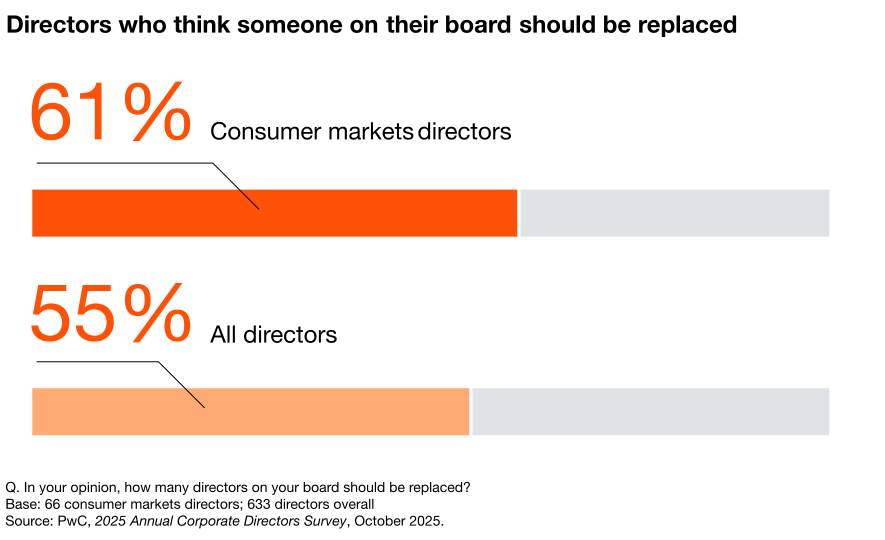
The need for forward-focused oversight may be fueling sharper internal scrutiny. Sixty-one percent of consumer markets directors believe that at least one director on their board should be replaced—raising the question: Are current board members equipped to lead in the AI era?
Resilience depends on board-level preparation
Ongoing uncertainty around trade policy is creating strategic ambiguity for many companies. But while the headlines focus on tariffs, the underlying issue is deeper: Most companies still aren’t built for structural agility.
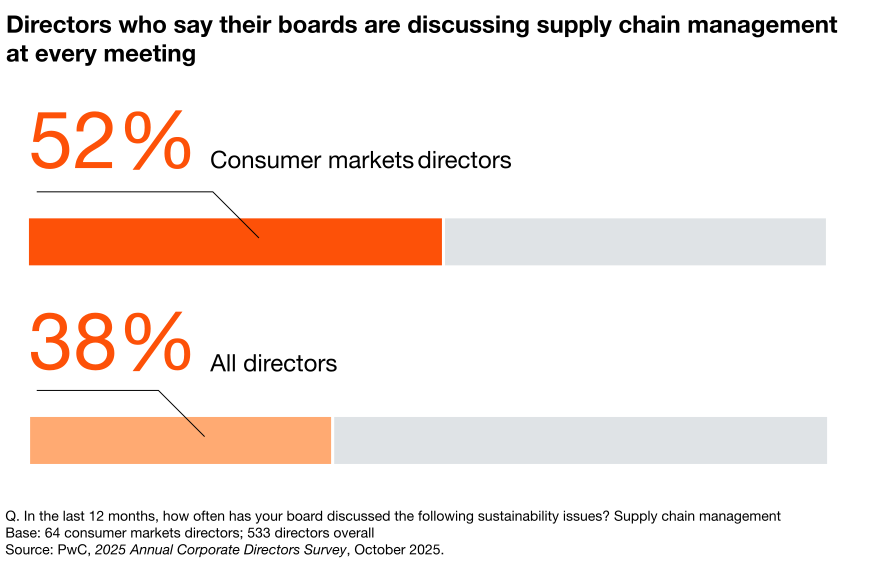
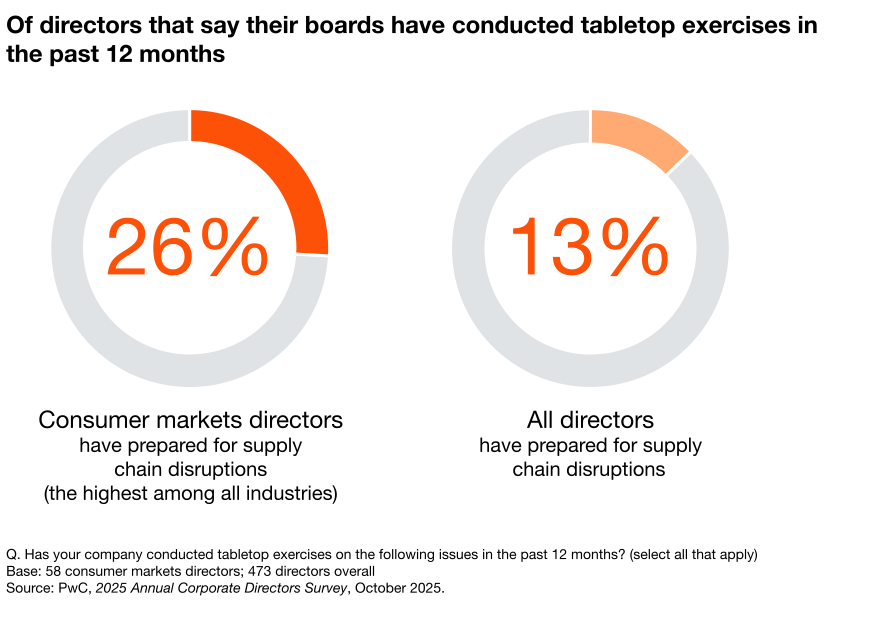
Boards in consumer markets remain focused on supply chain oversight, with 52% of directors saying they’re discussing it at every meeting, well above the cross-sector average of 38%. Despite this focus, action is uneven: Just 26% of consumer markets directors say their board has conducted tabletop exercises to prepare for supply chain disruptions. And 43% believe they should spend even more time on the topic over the next year.
Many companies have conducted crisis scenario planning, but preparedness remains uneven. Too often, risk management is reactive and disconnected from strategic planning. Boards can help close that gap by challenging assumptions that long-standing supplier relationships or sourcing strategies are still fit for purpose. They can also link supply chain resilience to innovation, not just risk mitigation. And they can elevate operational interdependencies in board-level discussions, rather than siloing them by function.
Time to raise the bar
The most effective boards across retail, CPG, restaurants, hospitality, and transportation are updating how they operate, not just what they oversee. They’re embedding forward-looking topics like AI, data ethics, and consumer trust into regular agendas. They’re expanding board evaluations beyond tenure and attendance to assess alignment with future strategy. And they’re clarifying how decision-making authority and accountability cascade through the enterprise.
In practice, this looks like reviewing board composition based on forward-looking strategy, not just legacy experience. It includes creating standing agenda items on AI governance and data oversight—not relegating them to once-a-year updates. And it means holding executive teams accountable to clear metrics around consumer trust, brand relevance, and speed to decision.
This is a pivotal moment. Consumers are moving. Technology is accelerating. Policy is shifting. Boards that treat this moment as an opening will be better positioned to guide their companies into what’s next. The opportunity for corporate directors isn’t to predict the future. It’s to ask better questions, embrace new structures, and push for the kind of alignment that gives companies room to evolve. That’s not just governance. It’s leadership.
Contact us