







{{item.videoDuration}}
{{item.title}}
{{item.text}}

{{item.videoDuration}}
{{item.text}}
Packaging waste is no longer just a problem for states, cities and municipalities — it’s becoming a corporate one as well. Across the US, Extended Producer Responsibility (EPR) regulations are making companies more accountable for the packaging they place on the market. These regulations shift the end-of-life burden of packaging waste away from municipalities and toward producers, creating new cost obligations to fund recycling systems and requirements to design recyclable products.
EPR laws aren’t new. They’ve existed in the US for more than two decades across various sectors — from textiles and electronics to pharmaceuticals. Now, though, there has been a marked uptick in packaging-focused regulations across multiple states in part to address the growing cost and space burden of packaging waste. As a result, businesses are navigating a complex and evolving landscape: a patchwork of state-led rules, SKU-level data requirements, divergent infrastructure realities and eco-modulation, which is the practice of adjusting EPR fees based on products’ environmental performance or packaging. For organizations ready to engage early, there’s an upside: a chance to redesign packaging, control costs and capture a potential 6% to 25% revenue uplift from increased sales volume and market share, new product offerings and pricing premiums for sustainable goods versus those products without such an emphasis.
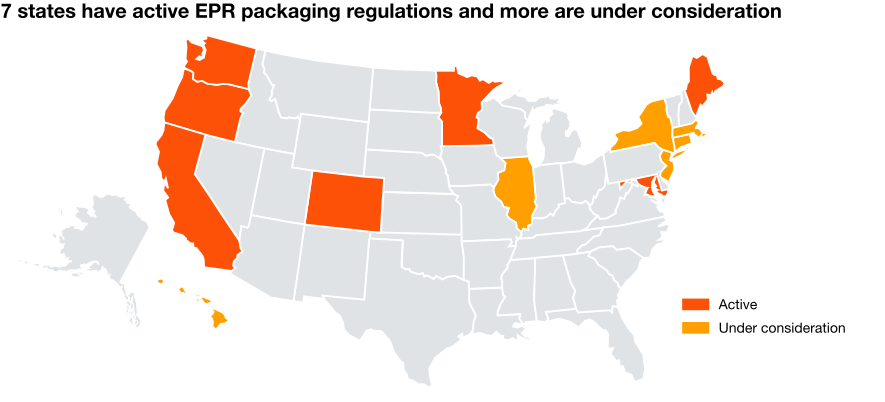
The US EPR landscape is fragmented — and fast-moving. Seven states, including California, Oregon and Washington, have enacted packaging-focused legislation. Five more, from Illinois to Rhode Island, are close behind with bills under active consideration. For companies operating nationally, that means managing regulatory complexity across jurisdictions with differing timelines, data formats and fee structures. Managing this variability often starts with visibility: tracking state-level developments and building the flexibility to adapt quickly as rules evolve.
While program details vary, the mechanics are similar. Once a state passes EPR legislation, it typically designates a Producer Responsibility Organization (PRO) to oversee the program and engage with companies. Producers — usually the brand owner or manufacturer — register with the PRO and submit detailed packaging data each year. This includes weight, material type, recycled content, brand names, recyclability and volume sold. That data is then used to calculate compliance fees based on the volume of covered products.
Reporting requirements, thresholds, definitions of “producer” and “covered product,” and deadlines vary by state, making close analysis key to confirm compliance. Penalties for non-compliance — such as failure to register, report or pay fees — can accumulate quickly and vary significantly between states.
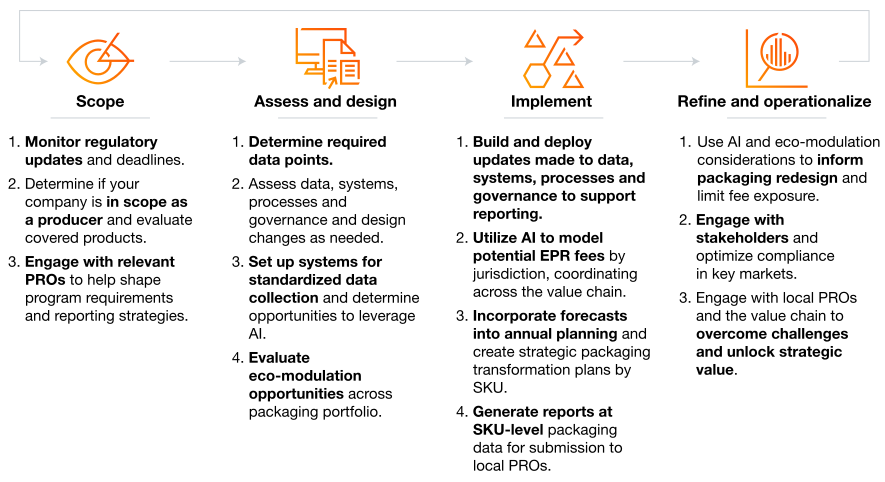
Strategic EPR compliance often starts with a proactive mindset. From understanding individual jurisdictional requirements to enhancing packaging and operations to help reduce costs, companies should consider four key steps:
This example illustrates one approach to implementing EPR compliance for your company. Adjusting your packaging may involve considerations such as the availability of PCR content or other feedstocks, as well as potential cost increases associated with switching primary materials. Collaboration with local PROs and providers across the value chain can support implementation.
Although the formal EPR reporting responsibility lies with producers (e.g., brand owners), these laws are likely to impact business models for packaging manufacturers and reshape their relationships with their customers.
As those customers face financial and reporting obligations based on the recyclability, material type, and volume of packaging they place on the market, manufacturers may expect to see increased demand for recyclable and low-impact materials, requests for design modifications that align with eco-modulation fees and greater transparency and traceability in packaging composition and sourcing. There’s a payoff to this transformation — a 6% to 25% revenue uplift from expanded sales volume and market share, new product offerings and pricing premiums for sustainability-marketed products.
Manufacturers can stand out by:
By treating EPR not merely as a compliance burden, companies can turn it into strategic advantage — helping to reduce fees, improve packaging costs, support broader sustainability initiatives and strengthen brand perception. In turn, they can capture a potential 6% to 25% revenue uplift from expanded sales volume, increased market share, new product offerings and pricing premiums for sustainability-marketed products.
Eco-modulation mechanisms reward sustainable packaging decisions. Actions like converting to recyclable materials, increasing PCR content, or conducting LCAs can reduce regulatory costs while improving environmental impact.
Redesigning packaging also provides opportunities for improvement. Reducing packaging size and implementing lightweight packaging materials or downgauging can lead to reduced material costs and logistics enhancement. Simplifying or removing unnecessary outer packaging and avoiding mixed materials can further reduce packaging weight and overall EPR costs.
These actions also support broader sustainability goals including the reduction of Scope 3 greenhouse gas (GHG) emissions, microplastics, and removing chemicals of concern like BPA and PFAS. Developing a consistent system to track packaging types, recyclability, and materials across SKUs enables accurate EPR reporting which can also be leveraged to support other sustainability reporting requirements, such as CSRD, and further reduce regulatory exposure.
Furthermore, consumers care about sustainable products and packaging. According to studies, 90% of consumers are more likely to buy from brands with sustainable packaging1 and over half (54%) of respondents reported deliberately choosing products with sustainable packaging in the past six months. This consumer demand can have a direct impact on revenue. Research has shown that sustainability-marketed consumer packaged goods can command an average price premium of 26.6% over conventionally marketed products. Thus, a bold commitment to sustainability can make all the difference and communicating your sustainable packaging actions and building a narrative can be key, especially as one in five of Americans now live in states with packaging EPR regulations2.
Regulations are shifting. So are expectations — from regulators, customers and stakeholders alike. Companies that act now likely have an opportunity to strengthen compliance, reduce long-term costs and unlock brand value through smarter packaging decisions. That often starts with visibility: tracking legislative developments across states and markets like Canada, and assessing how your operations, data, and design choices align to emerging requirements.
Establishing a solid foundation includes more than checking boxes. It involves identifying in-scope products, evaluating current packaging data, and engaging with producer responsibility organizations (PROs). The earlier you move, the more flexibility you’ll likely have to shape reporting strategies and future-proof compliance efforts.
What’s powering decarbonization — and what’s not
Capturing financial gains from decarbonization
Dive deep into PwC thought leadership for more on the insights you need to build resilience, drive growth, lower costs and offset capital investments with tax credits and incentives.
{{item.text}}
{{item.text}}


