






The metaphor of building a house has long been used to illustrate structured design, phased development and clear distribution of responsibilities. But as customer expectations evolve in a hyper-connected world, what if you didn’t just build a house but a smart home — one that senses and responds to occupants in real time?
That’s how your company should think about the customer journey, moving beyond static models to create an experience that is intelligent, connected and responsive. It isn’t about controlling each room but orchestrating an ecosystem where every sensor, device and feature helps deliver a seamless, personalized experience.
Many of today’s consumers aren’t following pre-planned funnels or linear journeys. They're like guests in a smart home, and companies should orchestrate an ecosystem that adapts in real time — an experience supply chain.
Smart homes can offer comfort, convenience and personalization, but if they don’t work they can be the opposite of smart. Here’s what that looks like and why it happens.
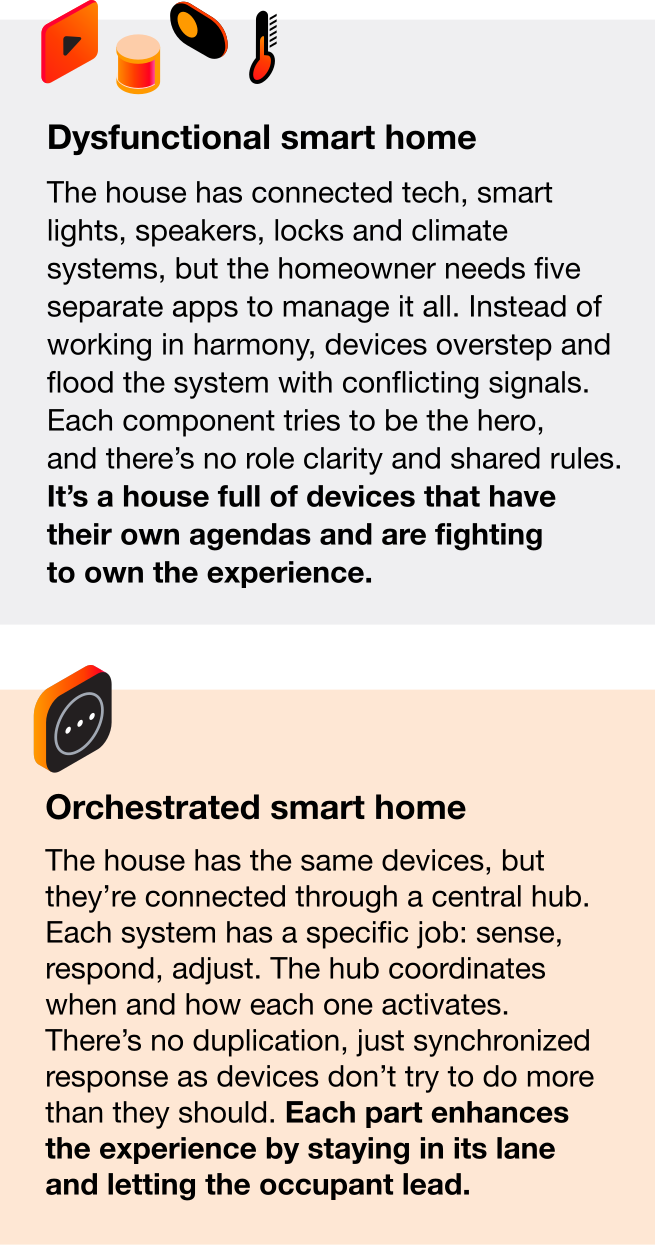
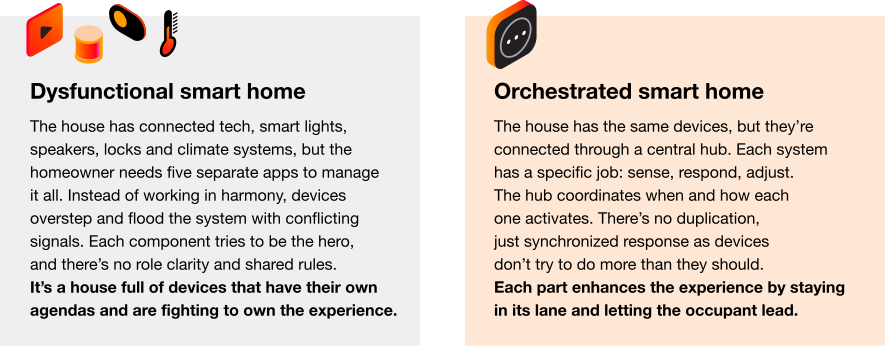
The experience supply chain in action: Smart hub = smarter roles
A smart home works not because every component is powerful, but because each plays a clearly defined role. This is the same dynamic that defines the experience supply chain. In modern customer journeys, no single system, player, partner or team owns the experience end to end. Instead, multiple contributors, both inside and outside your organization, collaborate to shape moments that matter. These contributors aren’t working independently or blind to others. The value often lies in their coordination.
Much like the homeowner is the focus of a smart home, the customer is at the center of the experience supply chain — moving freely, triggering responses and ultimately defining the journey on their terms. As the journey unfolds, the experience supply chain comes to life through a series of specialized, interconnected roles.
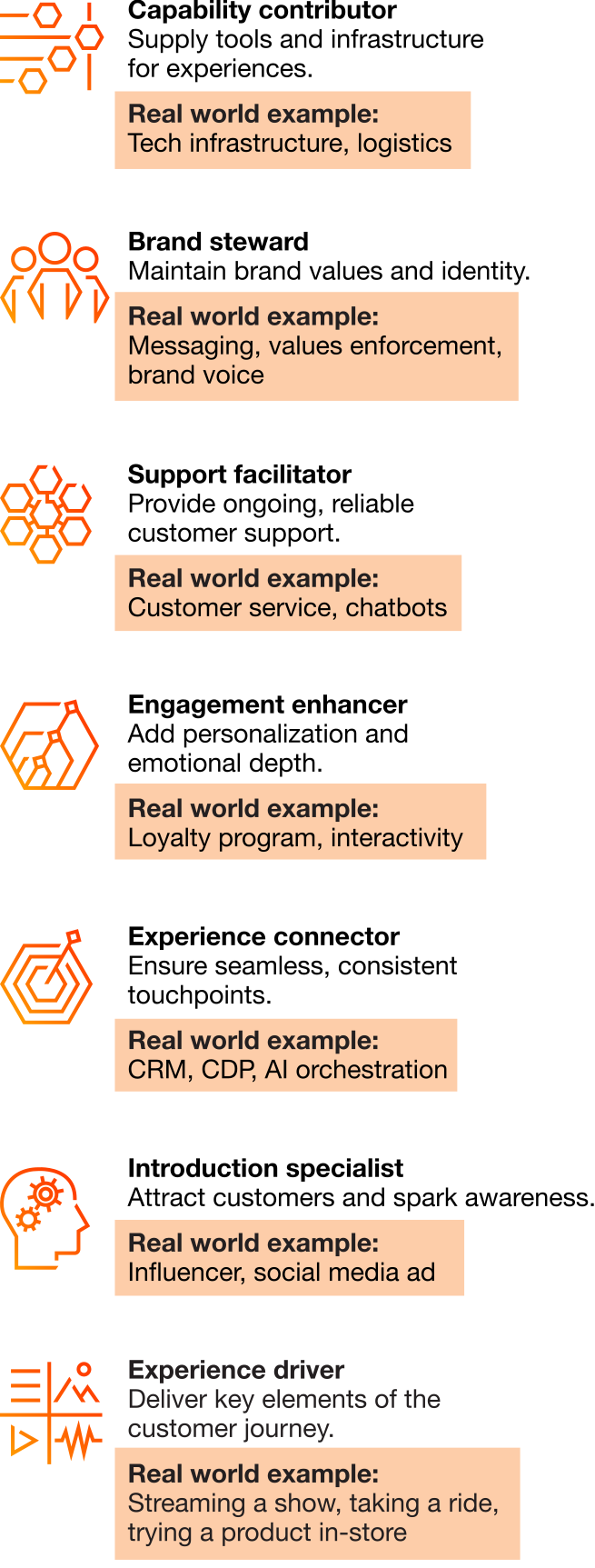
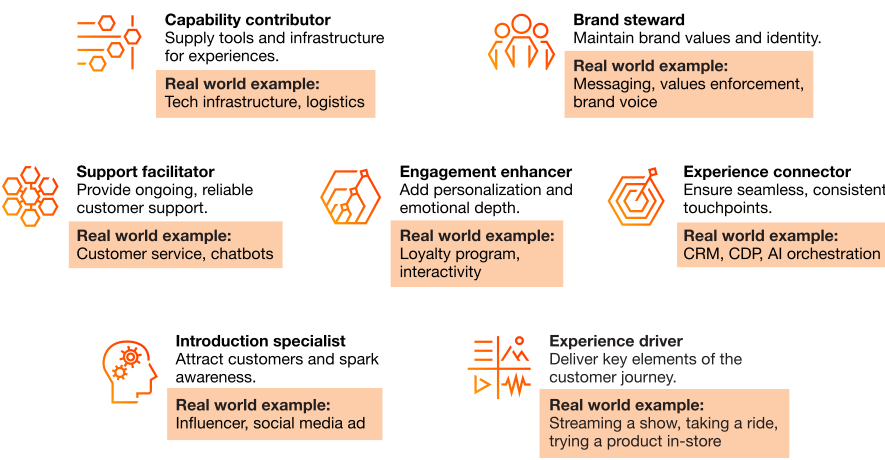
Individually, each role is important. But it’s the coordination — intelligent activation at the ideal moment — that transforms a collection of functions into a unified experience. That’s where the smart hub comes in.
The smart hub is the orchestrator and a critical role in the ecosystem. It doesn’t try to do everything — it listens, interprets, analyzes and activates contributors. For advanced organizations, the hub can use analytics to predict or influence the experience. In the context of the experience supply chain, this is your central orchestration layer, often embodied by your customer experience function, customer listening and analytics function, and customer-centric principles.
To help meet modern customer expectations, organizations should invest in becoming the orchestrator. That means aligning teams around the customer journey and building connective tissue — technologies, processes and roles — that enables every part of the experience to respond cohesively. Without a smart hub, even the more effective individual players operate in isolation. With a hub, you can deliver a responsive and seamless customer experience.
Stop managing moments and start orchestrating outcomes
The customer journey isn’t something to control. It’s something to support, sense and evolve with. Here’s how you can get started with your experience supply chain.
Your customers aren’t looking for a perfect funnel. They’re looking for an experience that understands them wherever they show up. You don’t have to be everywhere and do everything. You just have to listen well, connect smartly and orchestrate with care. That’s how smart homes work. That’s how experience supply chains win.
Contact us


