





AI and private equity fuel surge in large M&A deals

  • 7 minute read
  • September 15, 2025

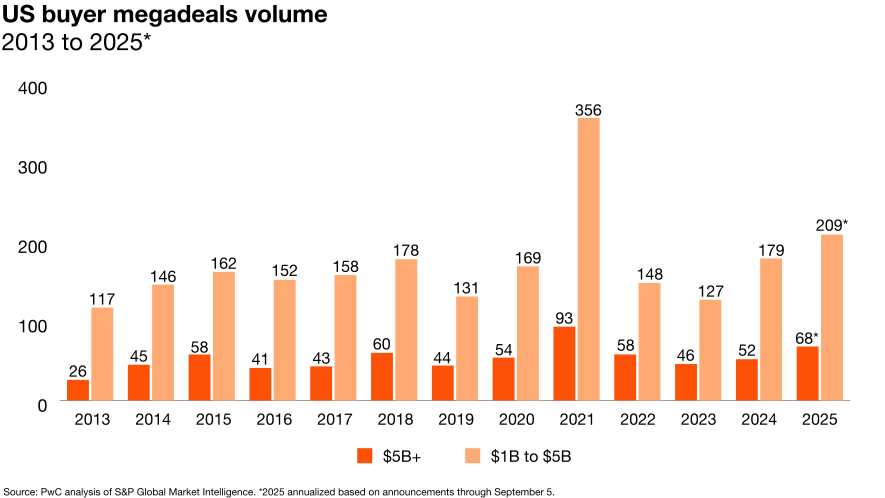
Powered by AI-driven M&A and PE exits, 2025 is on pace to be the strongest year for large deals by volume since 2021 — which would make 2025 the second strongest year in history for large deals.

Through September 5, there have been 144 large deals worth between $1 billion and $5 billion and 47 megadeals (over $5 billion), according to PwC analysis of S&P Global Market Intelligence. If that pace continues, 2025 would finish with 17% more large deals and 31% more megadeals than last year. Despite market volatility due to shifts in trade policies, the underlying momentum signals continued confidence in transformative dealmaking.

Overall deal volume, which includes deals of all sizes, is up more than 3% to about 7,700 so far this year. But driven by so many large and megadeals, overall deal value has reached $1.1 trillion, a 26% increase over the same period a year ago. Deal value is disclosed in only about a third of M&A transactions.

AI is the single most important catalyst for growth in megadeals. Roughly one quarter of the deals valued at $5 billion or more have an AI theme, spanning data center products, AI-related power demand and integration of AI capabilities into the acquirer’s offerings. This trend doesn’t include several large “acquihires” in which Big Tech companies are securing AI talent, licensing intellectual property or taking minority stakes — often with an eye toward avoiding antitrust scrutiny.

While overall private equity exits of all sizes are down this year, PE activity has bolstered the number of megadeals. Most PE exits this year are to corporate buyers, particularly those seeking recurring-revenue, data-rich assets — including cybersecurity, enterprise software/data platforms and scaled platform businesses such as insurance brokerages and payment infrastructure providers. Several transactions also represent the unwinding of large multi-investor club deals formed in the strong pre-2020 market.

While large PE exits are surging, a significant inventory remains — creating urgency as limited partners press for liquidity. The median age of companies exited in the first half of 2025 is about six years, according to a PwC analysis of data from PitchBook Data Inc. That’s down from a 2023 peak but, overall, portfolios keep aging. At the current pace, firms still hold around eight and a half to nine years of inventory, well above the pre-pandemic norm.

Let’s take a closer look at how large and megadeals are impacting M&A on a sector-by-sector basis.

Sector analysis

Walk the aisles of today’s grocery stores and the choices look abundant, almost overwhelming. But behind the scenes, companies are asking hard questions. Which brands deserve space on tomorrow’s shelves, and which should quietly be retired? Several global players have already announced portfolio reviews this year — signals of a shift from breadth to focus. And, according to PwC’s 2025 CPG Executive Survey, most industry leaders believe their companies will need to self-disrupt — rethinking portfolios and business models — to stay competitive.

But buyers and sellers remain apart on price on some deals. To close the distance, dealmakers are reaching for inventive structures — joint ventures, carve-outs, earnouts — that share both the risks and the rewards. On the buy side, the appetite is focused. Food, beverage and personal care brands tied to health and wellness trends remain the strongest draw. Private equity has also stepped in, snapping up heritage names where corporate owners see little reason to invest further.

Beyond financials, acquirers are measuring loyalty, churn risk and digital engagement. Advanced analytics and AI can now uncover hidden consumer segments and stress-test brand relevance long before contracts are signed. And as agentic commerce takes hold — with consumers increasingly delegating choices to AI-powered shopping tools — the value of trusted, data-rich brands will only rise.

In short, the market is less about filling shelves than curating them — tending the brands that can grow with tomorrow’s consumer and letting go of those that can’t. Companies that act decisively will have a competitive advantage. M&A can help a company transform faster than organic change. The key is having a coherent strategy behind portfolio management, including divesting to acquire. Now is a key moment for CPG leaders to consider how to transact-to-transform, choreographing strategic imperatives to achieve long-term shareholder value faster.

Defense spending and an energy transition designed to improve efficiency while modernizing infrastructure are fueling resilient demand. Higher US and allied defense budgets (Ukraine, Indo-Pacific) — and record capex for EV supply chains, batteries and renewable infrastructure — are driving interest in deals aligned with policy goals. Recent large transactions illustrate how these policy-backed sectors are anchoring industrial products megadeals.

Industrial leaders also are using large-scale acquisitions to catch up with AI, which has become a central force in automation, infrastructure and supply chain transformation. PwC found that in the first half of 2025, aerospace and defense (A&D) M&A volume rose 11% as companies acquired AI-enabled defense systems, drone technologies and mission-critical platforms. Tariffs and financing, however, remain obstacles to dealmaking. US tariffs on autos, steel and copper are eroding margins and widening valuation gaps, while elevated borrowing costs complicate financing structures.

These issues slow cross-border activity and give acquirers with strong balance sheets an advantage. Still, favorable economics and potential interest rate reductions are encouraging those on the fence to move ahead with deals.

Private equity assets are fueling the supply of potential targets. Liquidity pressures on LPs are forcing PEs to explore exits, with corporates emerging as potential buyers. Many portfolios include capabilities such as automation platforms, engineering services, specialty chemicals and infrastructure providers.

Industrials are divesting distribution and consumer-facing assets to reinvest in B2B and mission-critical platforms, while acquirers are embedding AI into deal processes to assess tariff exposure, supply chain resilience and regulatory risk. This integrated approach sharpens valuations, informs deal structures and enables post-deal integration strategies that unlock lasting value.

Looking ahead, preparation is key, as the megadeal environment rewards companies with policy-backed growth themes like defense and AI. Such companies are also expected to be equipped with strong balance sheets and valuation discipline, as success increasingly depends on portfolio focus, disciplined deal strategy and robust diligence.

While mega-deals in health services (HS) have been limited recently, future large deal opportunities in the sector are poised to accelerate as organizations adapt to a new market reality shaped by policy reform (e.g., the One Big Beautiful Bill Act), evolving reimbursement environments and shifting consumer expectations.

Further, the HS sector continues to benefit from strong fundamentals — demand growth, demographic tailwinds and the strategic imperative to integrate care, lower costs and enhance access.

Reimbursement dynamics are a major catalyst. As value-based care models evolve and government programs exert more influence, providers and payers alike are looking to scale, diversify revenue streams and strengthen negotiating power. Health insurers, in particular, are actively pursuing acquisitions that expand their care delivery, pharmacy and technology platforms — aiming to build more integrated AI-based models.

For corporate dealmakers, the focus is increasingly on strategic fit and long-term value creation. Health systems and insurers are using large transactions to accelerate vertical integration and drive care coordination. Divestitures can also play a constructive role here — allowing organizations to sharpen focus, reallocate capital and position themselves for transformation. By contrast, private equity firms are facing tighter financing conditions but continue to pursue platform-building opportunities, particularly in physician practice management, behavioral health and tech-enabled services.

Companies considering large dealmaking should try to have a clearly articulated growth strategy, the ability to demonstrate stable margins under evolving reimbursement frameworks and the financial flexibility to transact at scale. Importantly, valuations in the sector are expected to remain resilient, given the essential nature of services and the strategic premium buyers place on assets that can bend the cost curve.

Large TMT deals have surged in 2025, helping propel overall US M&A value toward historic highs. Corporate buyers are prioritizing acquisitions of data-rich, recurring-revenue tech platforms and differentiated talent. Private equity investors are focused on software take-privates, aiming to unlock growth and enhance efficiency in traditional software businesses as they adapt to the AI era.

Both corporate and private equity acquirers are demanding a more sophisticated diligence approach and an AI-driven value creation playbook. Leading deal teams are using alternative data and advanced analytics to evaluate a target’s true market position and go-to-market fit, sharpening valuations and informing post-merger strategies in the process. AI diligence is now essential at every stage of the deal life cycle. To drive stronger outcomes, buyers should move beyond traditional, siloed diligence workstreams and integrate product, technology and AI evaluations across all areas, establishing a stronger foundation for post-deal value creation.

How large and megadeals are taking shape across TMT
  • Technology: Investors are pursuing durable software with clear AI upside, while corporates focus on IP, talent and new revenue streams. “Acquihire” deals highlight the race for AI talent, as Big Tech and strategics add data-rich platforms — from cybersecurity to enterprise tools — to embed AI and recurring revenues.
  • Media and entertainment: Streaming economics and content monetization pressures are driving strategic realignment. With subscriber growth leveling off and profitability in focus, studios are pursuing scale and pruning legacy operations to better monetize their valuable IP libraries.
  • Telecommunications: Operators and infrastructure investors are doubling down on connectivity and compute assets to meet surging demand for fiber, 5G and edge computing. Recent megadeals underscore the push to own critical network enablement capacity. Simultaneously, carriers are divesting non-core assets and partnering with cloud hyperscalers as they realign around next-gen networks, including deals in AI data centers and fiber infrastructure.

Contact us

Derek Townsend

Deals Platform Chief Operating Officer, PwC US

Kevin Desai

US and Mexico Deals Leader, PwC US

Elizabeth Crego

Deals Clients & Markets Leader, PwC US

Josh Smigel

US Private Equity Leader, PwC US

Follow us