





PwC’s 2025 Customer Experience Survey

The loyalty illusion: Why companies think they’re winning when customers are walking away

Hero image
  • Insight
  • 10 minute read
  • September 29, 2025
70%

of executives say customer expectations are evolving faster than their company can adapt

29%

of consumers say they stopped using or buying from a brand due to poor customer experience, either online or in-person

46%

of executives say their company's current loyalty program will be irrelevant in three years

58%

of consumers say they're only somewhat or not at all comfortable using AI tools to engage with brands

In today’s market, customer experience isn’t just a brand pillar, it is the brand. Each moment is a referendum on trust, and customers often vote with their wallets. In PwC’s 2025 Customer Experience Survey, more than half of consumers (52%) say they stopped using or buying from a brand because they had a bad experience with its products or services, while nearly a third (29%) stopped due to poor customer experience, either online or in-person.

Yet many executives seem to be playing a different game entirely. About nine out of 10 say customer loyalty has grown in recent years, but only four in 10 consumers say the same. That’s not just a perception gap. It’s a blind spot with a direct line to lost revenue.

In a world where trust is table stakes for loyalty and data can fuel a better customer experience, bridging this gap requires more than a refreshed loyalty program — especially in a volatile economy and with the rapid rise of AI. It takes the ability to anticipate, design and deliver the desired experience in real time, every time.


Executives overestimate customer loyalty growth in recent years

Qs: Thinking about customers who frequently purchased or used products or services from your company, have they generally become more loyal or less loyal to your company over the past few years? (Less loyal consists of ‘Somewhat less loyal’ and ‘Much less loyal’; More loyal consists of ‘Somewhat more loyal’ and ‘Much more loyal’.) Thinking about brands you frequently buy from or use, have you generally become more or less loyal to them over the past few years? (Less loyal consists of ‘Somewhat less loyal’ and ‘Much less loyal’. More loyal consists of ‘Somewhat more loyal’ and ‘Much more loyal’.)
Base: Executives 406, Consumers 5,511
Source: PwC’s 2025 Customer Experience Survey

The experience supply chain: Winning customers from passive discovery to decisive action

Loyalty now begins long before the first click or store visit. It’s seeded in the half-light of indirect influence — a friend’s recommendation, a Reddit thread, a product review. In this early stage, you’re competing in an AI-fueled, multi-touch maze where consistency is currency and one broken link can stall the entire chain.

Price is still the leading factor for many consumers before they click “buy,” with 69% saying that comparing prices significantly influences their decision to engage with a brand; that number tops 70% in multiple industries. But long-term loyalty hinges on mastering what we call the experience supply chain — the connected sequence of interactions, from discovery to advocacy, that can move a customer from curious to committed.
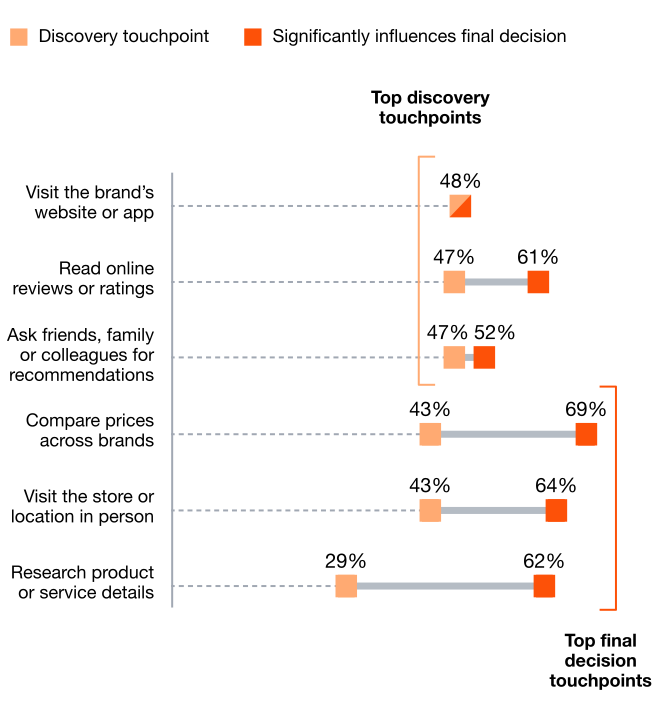
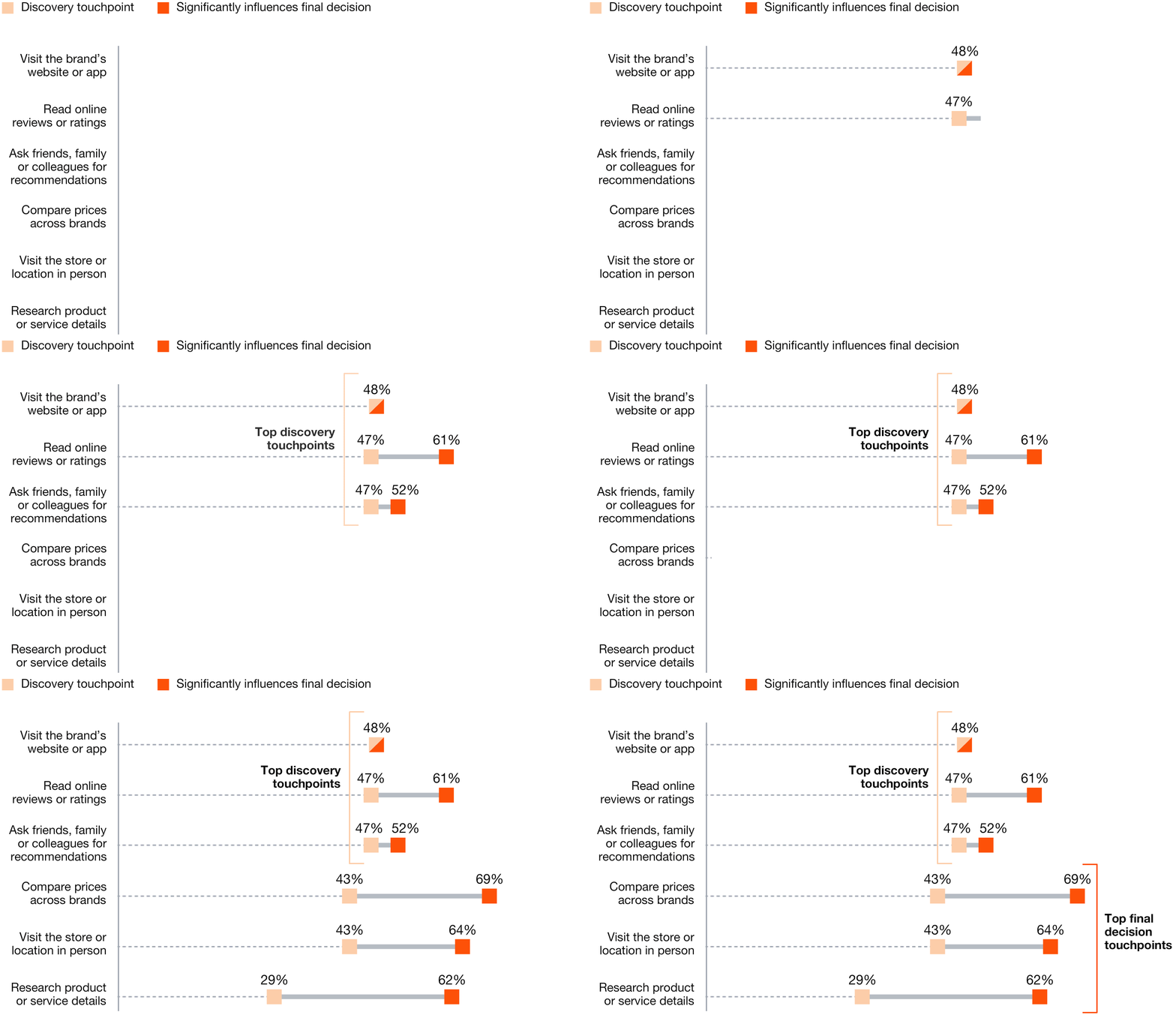
Discovery isn’t decision: Early touchpoints are critical but often underestimated

Qs: Which of the following are the ways you discover a brand or company in [industry] before engaging with them? (Select all that apply.) To what extent does each of the following influence your final decision to engage with a brand or company in [industry]? (Response to ‘Significantly’.) Note: Showing 6 choices out of 13 options.
Base: Consumers 5,511
Source: PwC’s 2025 Customer Experience Survey

What you can do

Deeply analyze every step of the customer journey with a forensic eye for friction. Use real-time data and AI across this life cycle, spotlighting moments that matter most. Treat influencers and communities as integral forces shaping brand perception and loyalty.

The front door to your brand may now be an online comment thread or a product comparison site. Or it could be an AI overview of search results as the rise of large language models is driving a drop in human-generated web traffic. Determine how you can build value from initial discovery and use cross-functional teams to deliver relevance before a customer even engages directly. Treat awareness as a strategic CX entry point that feeds long-term retention.

Align every touchpoint with a cohesive narrative, providing consistency from first impression through final decision. Go beyond chatbots and use AI to monitor early-stage influence signals like product reviews and social media chatter to detect where brand discovery is happening. Then deploy real-time content and journey nudges that respond to those signals with precision and consistency.

The difference between table stakes and true delight in CX

Price and quality are no longer differentiators. They’re the cost of entry. The real battleground is how you layer personalized, meaningful value on top of those basics, in ways that feel intentional and human.

Our survey shows 70% of executives think customer expectations are outpacing their organization’s ability to adapt. That’s where trust can erode, and competitors could win. Designing for delight requires experience with intent — anticipating what matters to each customer segment and operationalizing it at scale.

Don’t forget that expectations vary across generations. Boomers are less likely to care about your social media presence and sustainability efforts, our survey found, but millennials and Gen Z are watching your values and what you do online. Neglect in any area important to an age group can damage CX and quickly fracture loyalty.
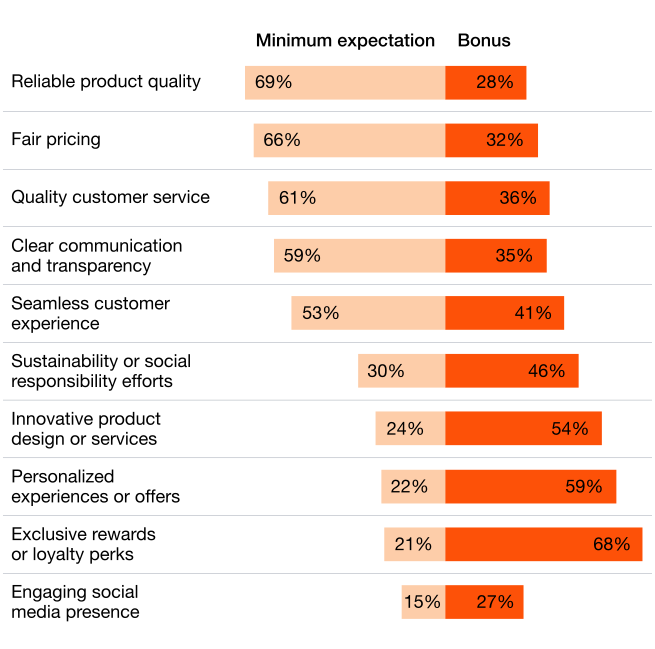
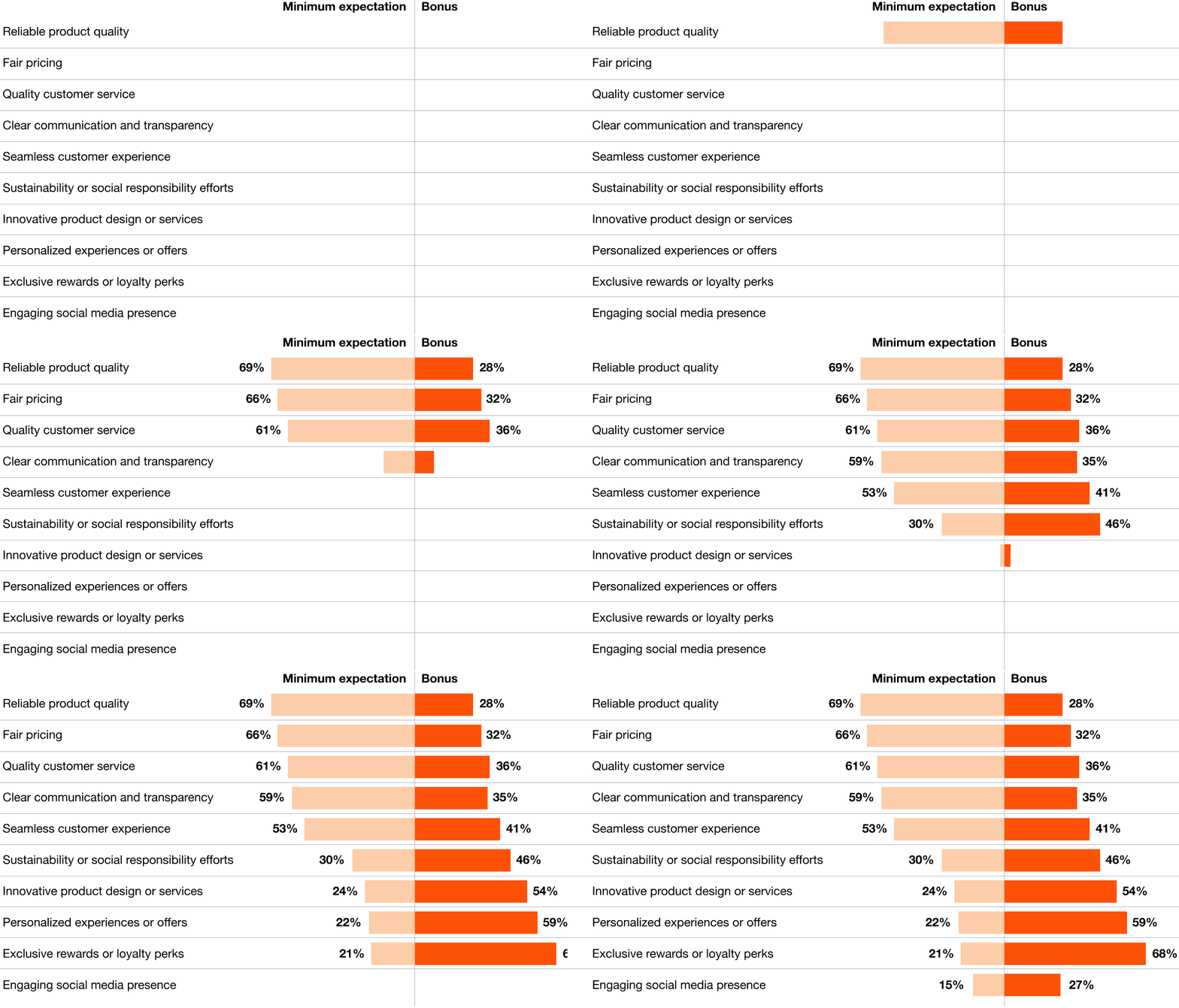
Where companies can move beyond table stakes to earn lasting loyalty

Q: When thinking about a brand, which of the following do you consider minimum expectations and which do you see as a bonus?(Response to ‘This is a minimum expectation for a brand’ and ‘This is a bonus that would make a brand stand out’.) Note: Response to ‘This does not matter to me’ not shown.
Base: Consumers 5,511
Source: PwC’s 2025 Customer Experience Survey

What you can do

Consider your customers not just by demographics but generation and behavior and then design CX strategies that speak to their unique preferences and values. Use data — first-, second- and third-party — to build dynamic, adaptive journeys that shift with your customers' needs so every interaction feels intentional, not generic.

Move beyond points and perks to create programs that guide customers from onboarding and education through ongoing engagement, support and brand community. Build trust by delivering personalized value at each stage so loyalty isn’t just rewarded but earned through relevance, responsiveness and relationship-building.

Consider how you can build loyalty through surprise and relevance. From unexpected rewards to hyper-personalized content, deliver experiences that resonate emotionally with customers. That can make your brand unforgettable even in a tight economy.

AI can improve experience and boost loyalty — if you know when to back off

With the rapid rate of adoption and shift from traditional search and discovery, AI has become the new frontier in customer engagement. But even as some consumers become accustomed to AI, frontiers can still be rough terrain. More than half (58%) of consumers say they're only somewhat or not at all comfortable using AI tools to engage with brands. In addition, our survey shows the pressure to implement AI often comes more from internal ambition than from customer demand. The result? A gap between what companies can automate and what some customers actually want.
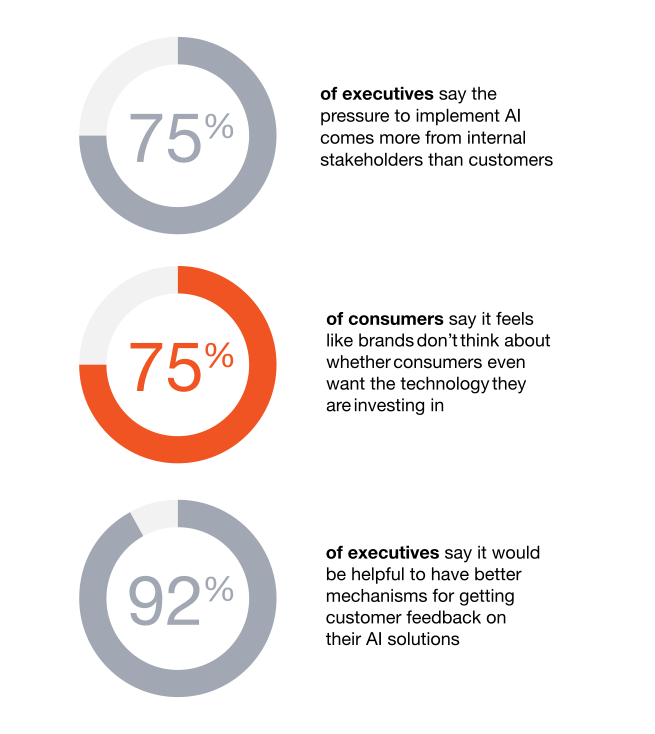

AI remains a work in progress

Q: To what extent do you agree or disagree with the following statements? (Response to ‘Agree’ and ‘Strongly agree’.)
Base: Executives 406, Consumers 5,511
Source: PwC’s 2025 Customer Experience Survey

As AI use increases overall, it’s clear that many consumers prefer some interactions more than others. Nearly half (49%) say they’re likely to use AI to track an order or delivery status, while less than a third (29%) say they would use it to make a payment. But those numbers pale when compared to the 86% who say human interaction is moderately or very important in their brand experience.

Successful brands don’t deploy AI for its own sake. They integrate it with intention, using it where it accelerates service and seamlessly handing off to humans where empathy and judgment matter. And those who get it right could open another path to stronger loyalty. We found that consumers with higher AI usage are much more likely to say they’ve become more loyal to brands in the past few years. In addition, high AI users are generally more willing to share personal data for more personalized experiences, and they show loyalty in more ways.
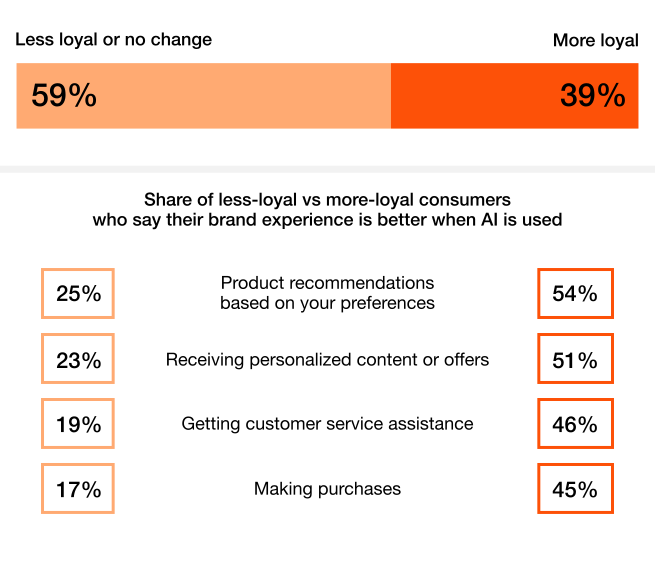
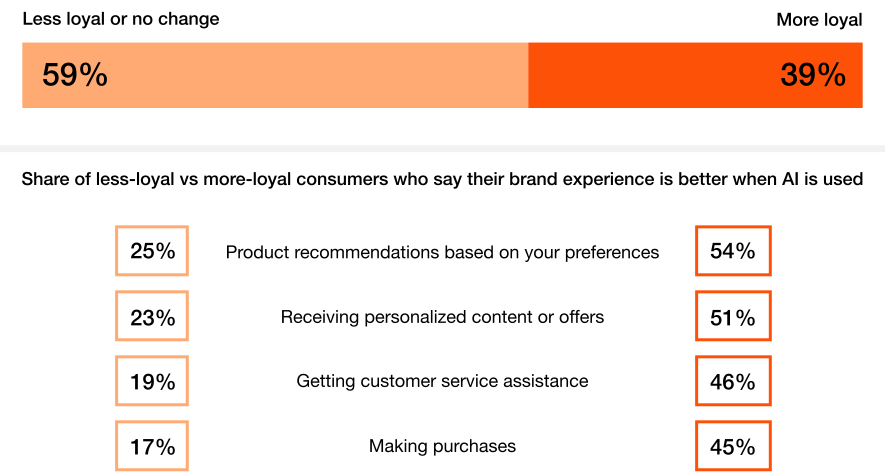
More-loyal consumers see greater benefits from AI in brand interactions

Q: For you personally, are the following brand interactions better or worse when replaced with AI (e.g., virtual assistants, chatbots)? (Response to ‘Somewhat better’ and ‘Much better’.) Note: Showing 4 choices out of 6 options.
Base: Consumers less loyal or no change 3,342, Consumers more loyal 2,098
Source: PwC’s 2025 Customer Experience Survey

What you can do

In an age of agentic commerce, AI can be instrumental in identifying patterns and reimagining the customer journey in many industries. Deploy it for tasks like tracking, status updates and other basic inquiries, but create clear, fast escalation paths to human support when nuance is required. Find the right balance and don’t let efficiency come at the cost of connection.

Use rigorous analytics to track how AI influences loyalty, conversion and customer sentiment. Implement tools that provide real-time insights into what's working and what isn’t.

Segment users based on their digital confidence and preferences, then learn what appeals most to frequent AI users. Customize AI so it enhances rather than alienates, treating it not as a one-size-fits-all solution but a dynamic layer of your CX playbook.

Your loyalty program could be failing and you don’t even know it

Loyalty programs are in danger of solving the wrong problem. More than half of executives (57%) say that while customer loyalty is vital, their loyalty systems aren’t delivering the outcomes they need, and 46% say their company's current loyalty program will be irrelevant in three years. The core issue isn’t points or perks. It’s a misalignment between how companies define loyalty and how customers demonstrate it.

Many loyalty programs are designed for signals customers don’t reliably send. Compared to consumers, execs overestimate such things as customer feedback, brand communications and social media engagement in customers’ brand loyalty. Then companies wonder why perks underperform.

The solution starts with a reset. Define loyalty based on observable behaviors, not guesswork, and design for repeat choice, referrals and incremental spend. That means mapping the moments where loyalty is truly earned or lost and hardwiring operational playbooks to win those moments in real time.


How consumers show loyalty vs. how execs perceive it

Qs: When you think about customers buying from your company, how do you define customer loyalty? (Select all that apply.) Which of the following, if any, are ways you show loyalty to a company or brand? (Select all that apply.) Note: Showing 10 choices out of 16 options. Totals may not add up due to rounding.
Base: Executives 406, Consumers 5,511

What you can do

Map out critical points in the customer journey where emotions run high and loyalty is won or lost, then redesign those areas with precision to leave lasting positive impressions. Continue monitoring and reacting to these touchpoints and treat them as loyalty battlegrounds so you can win them decisively.

Throw out outdated models and recalibrate your loyalty strategy using actual customer data, not wishful thinking. Understand how your audience shows commitment and design your loyalty programs to achieve specific goals.

Design systems that detect service failures before they spiral and empower teams to fix them fast. Respond with empathy and tangible value to turn negative experiences into trust-building opportunities. Use customer feedback to continually refine and strengthen your response playbook.

The data dilemma: Navigating personalization and privacy to build and maintain trust

Personalization is a paradox. Customers want it until they don’t. More than half of consumers (53%) think that it’s worth it to share personal information if it makes their experience interacting with a brand smoother. But mishandle that data and 93% say that a brand will lose their trust. In other words, every personalization strategy carries a built-in trust trigger.

This is where many companies stumble. Executives often assume more data equals more value, but many consumers don’t see it that way. Nine out of 10 consumers are willing to share some type of personal data for more personalized service, but they seem to calibrate their trust based on what’s collected, how it’s used and whether the benefit feels tangible. The more intimate the data — such as biometrics and real-time location — the more that willingness drops.

The lesson? Treat privacy not as a compliance box but part of the customer value proposition. Winning brands integrate technology with intention — collecting only what’s necessary, explaining why it matters and delivering value in the moment. Respecting boundaries is no longer just a legal safeguard. It’s a competitive advantage.


What you can do

Focus on high-impact, low-intrusion data like preferences, behaviors and past purchases to tailor experiences without crossing privacy lines. Be transparent about why you’re collecting data and strive to deliver immediate, visible value in return. When customers feel in control, personalization becomes a loyalty driver, not a red flag.

Use identity resolution tools that unify data across channels to create a single, accurate view of each customer based on behavior, preferences and consented information. Combine that with contextual signals like device use, purchase history and interaction patterns to deliver personalization that feels intuitive, not invasive.

Use anonymous or aggregated data models when full identification isn’t necessary, protecting customer trust while still delivering tailored experiences. Build personalization that feels empowering and actively show respect for privacy, which can be a competitive advantage instead of a compliance burden.

Why your CX dashboard may not be telling the full story

Many customer experience dashboards are packed with data, but deciphering it can be difficult. While four out of five (84%) of executives say they’ve increased spending on customer loyalty, 83% admit they need better tools to measure what’s actually driving purchases. You might as well be driving a car with no speedometer or navigation — going nowhere and no idea how fast.

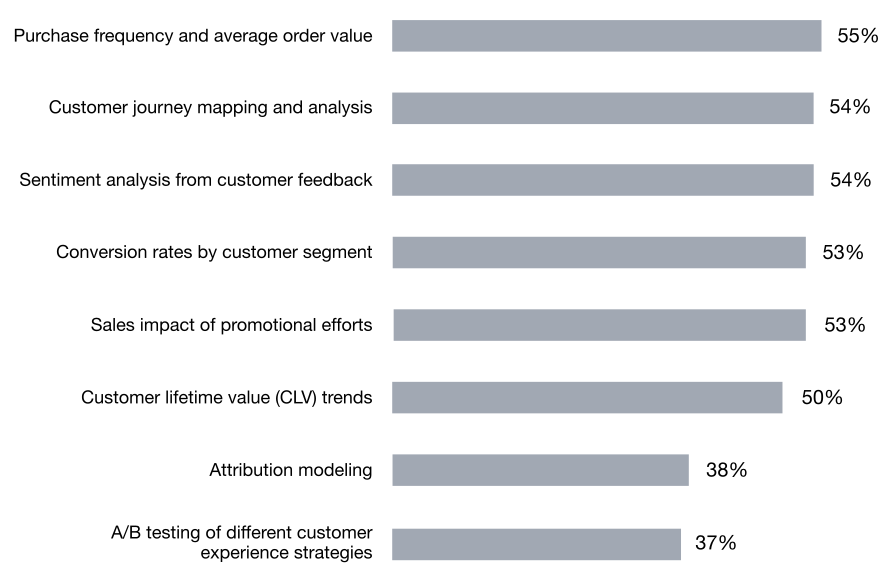
Emotional engagement, incremental spend and longitudinal loyalty are the standards in CX measurement. Traditional metrics like CSAT and NPS are still useful, but modern loyalty demands metrics that capture sentiment and link loyalty initiatives to tangible business outcomes.

This isn’t just about knowing if customers are satisfied. It’s about knowing if satisfaction is translating into loyalty and loyalty into enterprise value. Leading companies use capabilities like conversion rate attribution and customer lifetime value tracking so they can translate customer experience into business impact.
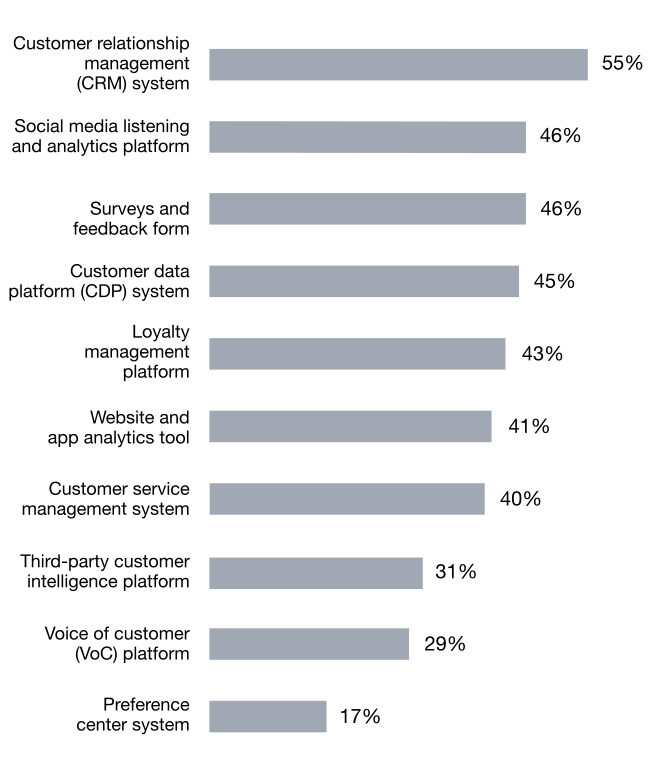
Tools executives use to track customer preferences

Q: Which of the following does your company use to track customer preferences and behaviors related to customer experience? (Select all that apply.) Note: Response to ‘Other’ and ‘None’ not shown.
Base: Executives 406
Source: PwC’s 2025 Customer Experience Survey

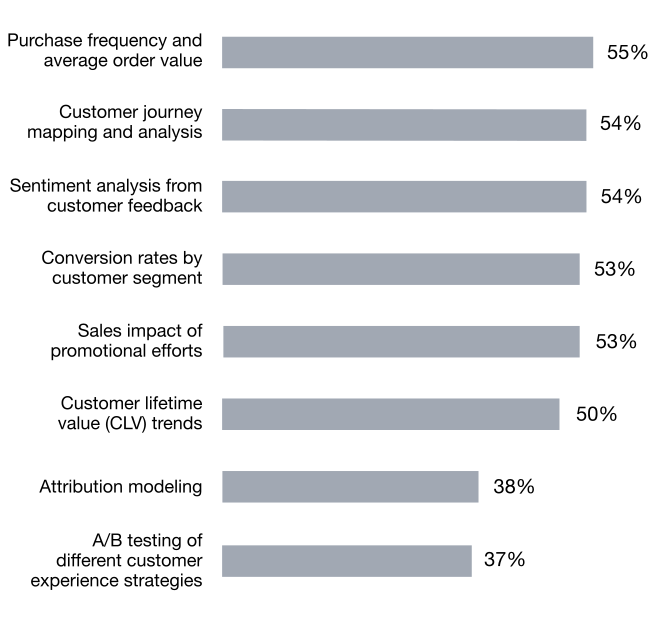
How executives measure the customer touchpoints that matter most

Q: Which of the following are you using to track which touchpoints matter most in getting consumers to engage with your brand? (Select all that apply.) Note: Response to ‘Other’ and ‘None’ not shown.
Base: Executives 406
Source: PwC’s 2025 Customer Experience Survey

What you can do

Start by defining what your loyalty program is meant to achieve. Is it increased purchase frequency, higher average spend, deeper emotional connection or all three? Design the program to uncover what truly motivates customers to take those actions, using behavioral data, feedback and testing. Prioritize metrics that track customer lifetime value and emotional engagement so you can confirm your loyalty investments are driving real business outcomes.

Integrate qualitative insights like customer feedback and sentiment analysis with hard data from journey tracking, behavioral analytics and purchase patterns. Use platforms that combine these to create a fuller view of customer experience and train your teams to interpret and act on those insights.

Go beyond reporting and use real-time data as fuel for rapid experimentation and design optimization. Replace rearview analytics with predictive intelligence that guides future decisions. Tools like PwC’s Experience Value Analyzer can help measure the incrementality of CX investments and sharpen personalization strategies.

7 ways you can reinvent customer experience and strengthen loyalty

  • Treat discovery like a make-or-break moment. Your customer’s journey now often begins long before they interact with your brand directly. Design every touchpoint from first impression to purchase as a seamless, story-driven experience.
  • Rebuild loyalty based on behavior, not fantasy. Drop the assumption that loyalty is on the rise. Reassess your programs based on real customer actions and your company’s loyalty goals.
  • Segment smarter and personalize with purpose. Move beyond generic personas and target by generation, behavior and emotional triggers. Customers want relevance and connection as long as it doesn’t become invasive.
  • Pair AI with empathy and know when to hand off. Use AI to streamline tasks like tracking and recommendations, but escalate quickly to humans when nuance matters. 
  • Win the moments that matter or lose customers. Focus on high-stakes micro-moments where friction or failure can kill loyalty in seconds. Map and redesign these emotional flashpoints with precision.
  • Turn privacy into a competitive advantage. Consumers want personalization but could bolt if you mishandle their data. Bake transparency, choice and clear value exchange into every data interaction.
  • Measure what actually moves the needle. CSAT and NPS are vanity metrics in an era when tracking behavioral, emotional and incremental impact is imperative. Use real-time analytics to help drive loyalty design, not just quarterly reporting.

This podcast was created using generative AI.

About the survey

PwC surveyed 5,511 consumers and 406 executives in the United States between May 21 and June 30, 2025. Consumer respondents in the online survey were adults 18 and older, with demographic weighting to achieve census representation on age, gender, race, US region, income, employment status and marital status. Executive respondents were from a range of consumer-facing companies with annual revenues of $100 million or more. They included C-suite officers, business owners, upper management and directors who have sole or shared responsibility regarding business decisions on customer experience​.

Follow us

Required fields are marked with an asterisk(*)

Your personal information will be handled in accordance with our Privacy Statement. You can update your communication preferences at any time by clicking the unsubscribe link in a PwC email or by submitting a request as outlined in our Privacy Statement.

Hide