
Deliver what consumers want: Four models unlock value in home healthcare

Hero image
  • 10 minute read
  • December 04, 2025

Home care is a game-changer for expanding access, cutting costs and fostering seamless communication between patients and providers.

Health systems have the opportunity to become a driving force for growth and healthier patient outcomes. We predict that within the next 10 years, the traditional infrastructure-heavy model will collapse, replaced by a distributed, tech-enabled system that delivers care anywhere, anytime with most care moving into the home, enabled by wearables, implantables and virtual command centers that orchestrate treatment remotely.

Care-at-home is anchored by four high-impact models designed to manage acute and chronic conditions while meeting the growing demand. These models are unlocking new value for health systems by increasing hospital capacity, reducing readmissions and improving patient satisfaction. As health systems shift toward value-based care, these scalable frameworks present a compelling opportunity for investment, innovation and long-term growth in a rapidly expanding market.

Four leading models driving home care

What’s fueling the home care surge?

The US home healthcare market is projected to reach US $239 billion by 2030, growing at a compound annual growth rate (CAGR) of 7.7%.

Growth is fueled by several trends, most notably consumers themselves. Consumers are moving away from in-person visits toward virtual, at-home and retail models. Growth won’t come from square footage but from scalable, digital-first platforms. While 72% of consumers received care at a doctor’s office in the last 12 months, only 34% say they would ideally like to receive care at a doctor’s office in the future.


At the same time, according to USA.gov, other factors are at play:

Aging patient population: The US senior population will exceed 70 million by 2030. Many prefer the convenience and affordability of home-based care. The National Institute on Aging confirms a strong trend toward aging in place, powered by digital tools like telehealth and hospital-at-home models. 1,2

Digital innovation: Smart tech is transforming care delivery, boosting access, efficiency and outcomes. AI, telehealth platforms, wearable connected devices and remote patient monitoring (RPM) are turning health data insights into health interventions.

Regulatory momentum: Updates from the Centers for Medicare & Medicaid Services (CMS) are accelerating adoption of home healthcare, creating incentives for home-based care.

  • Medicare reimbursements: Medicare now covers remote monitoring—including both physiological and therapeutic tracking, requiring 16 days of data in a 30-day cycle. The 2025 Physician Fee Schedule confirms RPM’s role in chronic care, even with a 2.93% payment adjustment. The patient-driven groupings model is promoting quality outcomes.
  • Value-based models: Providers are being rewarded for outcomes with the 2024 launch of the Transforming Episode Accountability Model (TEAM) and a doubling of value-based care adoption since 2015.
  • Acute H@H expansion: The 2020 waiver and pending five-year extension under the 2024 Modernization Act position the Acute Hospital Care at Home (AHCAH) initiative to potentially double by 2026—delivering 30% cost savings, superior clinical results and lower mortality.

Operational challenges holding you back?

Despite its promise, care-at-home delivery faces operational challenges that still should be addressed.

  • Workforce shortages: Demand is outpacing supply. Caregiver scarcity and low wages are constraining industry expansion despite significant demand and active caregiver involvement. 
  • Fragmented infrastructure: Integrating RPM, AI and new platforms requires major investment and training. Without policy and reimbursement support, innovations like telehealth and AI will likely struggle to scale. Leveraging new technology can help you overcome these challenges and improve operational efficiency. 3
  • The need for a tech-enabled model: AI-powered command centers and workflow tools can streamline care delivery and ease provider burden while enhancing patient care at home.

Build a resilient, future-forward care-at-home strategy

To succeed, health systems should define their care-at-home services, identify and build enabling capabilities, and invest in scalable technologies that elevate care outcomes and patient experiences. That means investing in workforce development and strategic partnerships while navigating regulatory complexity, embracing AI innovation and improving payer reimbursement. Here’s how you can develop a holistic strategy that integrates clinical, operational and technological capabilities to compete and lead in this market.

Develop a strong operating model

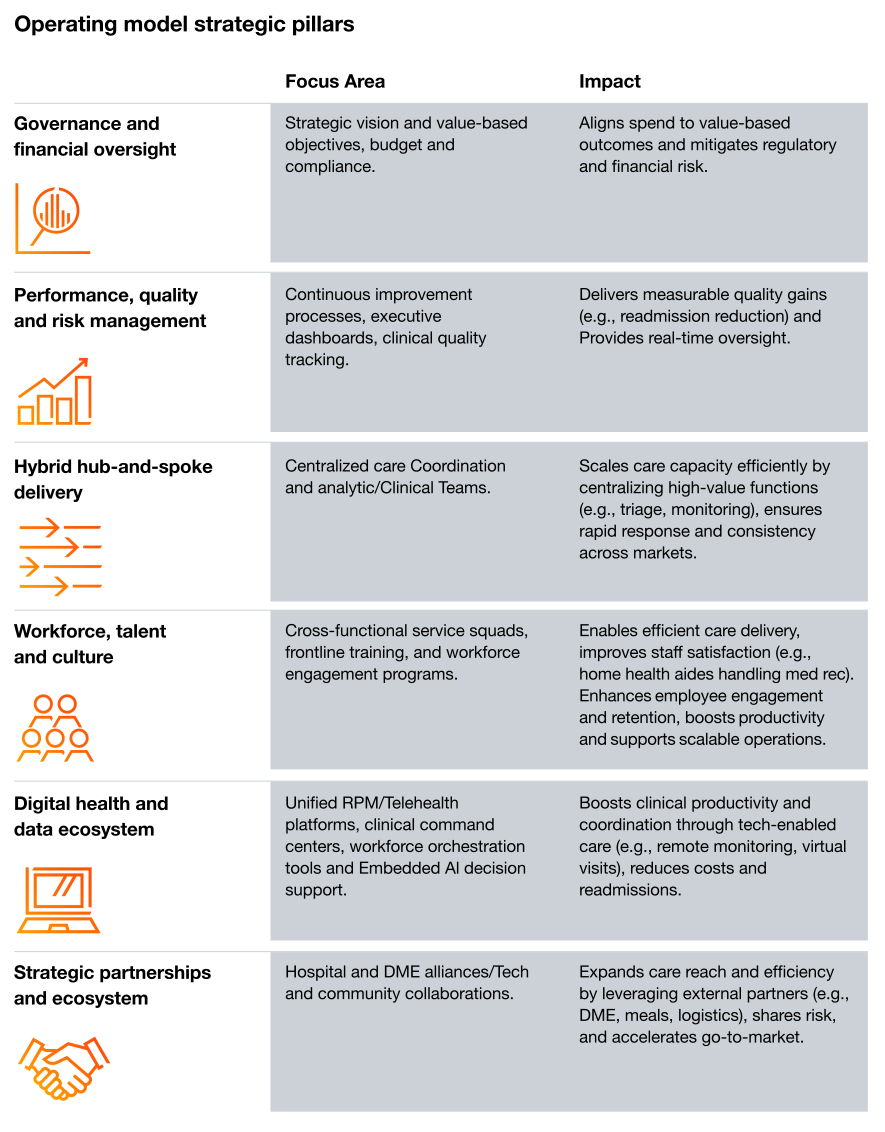
Align your operating framework with your executive priorities of growth, quality, risk management and ROI by concentrating on six strategic pillars.

Target high-impact opportunities

Prioritize offerings with measurable impact and clearly define the roles, capabilities and infrastructure required to scale them effectively. Pinpoint the services and use cases that generate the greatest clinical and financial returns. Below are key examples of high-value services powering transformation in home-based care.

  • Post-acute skilled nursing and rehab:
    • Care based on patient condition and needs
    • Reduces readmissions, accelerates healing, and lowers infection risk by providing skilled support immediately after discharge
  • Chronic disease management:
    • Regular scheduled visits for managing long-term illnesses
    • Helps keep vital signs steady, allows quick changes to medications, and prevents expensive flare-ups
  • Rehabilitative therapies:
    • In-home PT/OT/ speech therapies
    • Improves mobility, independence, and safety by tailoring interventions to obstacles and reducing fall risk
  • Infusion and injectable therapies:
    • Home infusions (chemo, biologics, hydration)
    • Keeps patients out of infusion centers and EDs, lowering travel burden and exposure risk, especially for immunocompromised population
  • Palliative and hospice support:
    • Pain management, counseling, caregiver support
    • Improves quality of life and dignity at end-of-life or in serious illness by controlling pain/symptoms in the comfort of home
  • Behavioral health and cognitive support:
    • Counseling, cognitive stimulation, coaching
    • Prevents mental-health deterioration and supports overall recovery, independence, and caregiver effectiveness
  • Transitional care and care coordination:
    • Discharge planning, case management
    • Ensures seamless handoffs among settings, closes care gaps, and reduces medication mix-ups

Construct a care team that supports the overall spectrum of patient needs, both clinical and non-clinical.

Selecting the right care-at-home use cases is only part of the equation. Success hinges on how services are delivered. You might, for example, appoint a dedicated care-at-home coordinator to manage logistics, social support and community resources. Assign care managers to focus on clinical oversight, assessing patient conditions, developing personalized care plans and confirming consistent communication among patients, families and providers.

  • Your care team should strike the right balance between dedicated resources and shared team support including the care manager and the clinical team.

Reimagine the care-at-home capabilities ecosystem

Start by defining the essential functions required to support priority home care use cases, then map those needs across patients, clinical and non-clinical teams. Prioritize foundational and enabling capabilities to inform smart, scalable technology investments.

  • Consider not only core offerings like specialist services and ancillary services along with digital patient engagement, pharmaceutical and diagnostics. Include consideration of internal operations like workforce enablement and evidence-based guidelines and foundational enablers like data, analytics and technology integration as well.
  • Address the needs of patients and caregivers, clinical and non-clinical care team roles, and internal staff.
  • Establish a clinical command center to centralize triage and monitoring functions, enabling timely response to patient clinical needs while optimizing clinical resource allocation.
  • Engage external vendor partners to fill capability or service gaps like laboratory services, medication and equipment supply, meals delivery, cleaning services and other home health aides.

Create value through tech innovation

Turn insight into action. Use smart tools to help drive timely interventions and seamless care coordination. Harness the power of technology to turn data into action and care delivery. Identify critical data signals that enable timely clinical and non-clinical interventions and evaluate platforms that support scalable capabilities from remote monitoring to predictive analytics. Invest in omnichannel solutions that create seamless, transparent communication among patients, caregivers and providers. Consider adopting these forward-thinking actions.

  • Leverage an integrated view of data from multiple sources to guide clinical and non-clinical interventions. These include patient data from electronic health records (EHRs), medical device data from RPM platforms and social determinants of health data such as risk of falling and food insecurity captured from in-home assessments. 
  • Establish dedicated platforms for care at home that augment existing solutions such as EHRs and CRMs. Critical platforms include: 
    • An RPM platform for integrating and processing wearable medical device data.
    • An AI-enabled clinical command center for alert management and intervention. 
    • Workflow coordination to manage delivery of services at home integrated with internal supply chain and logistics platforms. 
    • External partner ecosystem for home care delivery of meals or medications. 
  • Use AI to enhance RPM and alert management to support staff efficiency and predict disease or condition deterioration. 
  • Enhance omnichannel strategies to engage patients, establish transparency and build trust and adopt digital tools for remote check-in, virtual rounding, medication management and patient education.

Act boldly. Deliver care differently.

Health systems should have a clear strategy, scalable capabilities and the right collaborators. We can help you create your care-at-home model—from identifying high-impact use cases to implementing AI-powered analytics, virtual care platforms and integrated operating models—so you can move faster, more effectively and at scale with measurable results.

Ready to lead the next era of healthcare?

Contact us to schedule your 90-minute care-at-home readiness workshop today.

1 “Demographic Turning Points for the United States: Population Projections for 2020 to 2060,” US Census Bureau, Demographic Turning Points for the United Sates: Population Projections for 2020 to 2060

2 “Tele-Behavioral Health Use Among Medicare Beneficiaries During COVID-19,” Office of Behavioral Health, Disability, and Aging Policy,” US Health and Human Services, Tele-Behavioral Health Use Among Medicare Beneficiaries During COVID-19 Issue Brief

3 “Solutions for Challenges in Telehealth Privacy and Security,” Journal of AHIMA, Solutions for Challenges in Telehealth Privacy and Security

Contact us

Glenn Hunzinger

Glenn Hunzinger

Health Industries Leader, PwC US

Thom Bales

Thom Bales

Principal, Health Services Advisory Leader, PwC US

Deepak Goyal

Deepak Goyal

Principal, Customer Transformation, PwC US

Sreekumar Krishnamony

Sreekumar Krishnamony

Principal, PwC US

Follow us