





{{item.videoDuration}}
{{item.title}}
{{item.text}}

{{item.videoDuration}}
{{item.text}}
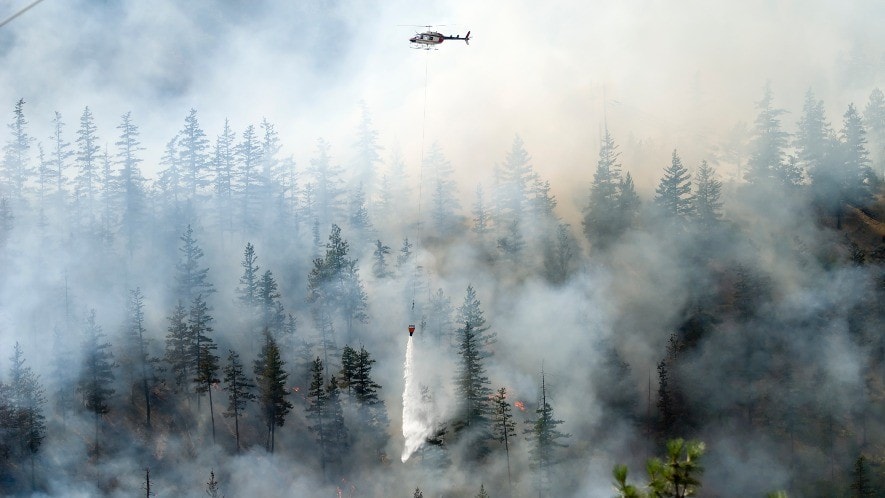
There’s an increasingly urgent need for communities, governments and financial institutions – particularly insurers - to address wildfire risks. The LA wildfires are one of the most expensive catastrophe losses ever recorded. Meanwhile, Europe and other regions have grappled with unprecedented wildfires burning millions of acres, emitting hundreds of megatons of carbon, and exposing significant sums of value at risk.
The challenge of reducing wildfire risk is often multifaceted. On the one hand, as the planet continues to warm, the environmental conditions necessary for wildfires to ignite and promulgate will become more prevalent. On the other, it’s important to understand that approximately 75% of wildfires globally can be traced to human activity, underscoring the key role people play in this issue.
While there’s a clear need for greater investment in resiliency (as this PwC publication notes), the nuances and challenges associated with wildfire risk merit dedicated focus and unique interventions. Understanding the complicated nature of the problem can inform integrated strategies including localized mitigation to reduce risk, innovative insurance that prices and rewards risk reduction, and technology that helps detect, forecast and coordinate response.
This paper summarizes the wildfire challenge and offers solutions set for many insurers. It first explores the breadth of the issue, including historical impacts, the risks posed by compounding hazards, and why wildfire risk is hard to model and insure—including WUI exposure growth, human-driven ignition, and modeling constraints. It then outlines an integrated solution that helps connect on-the-ground mitigation and adaptation, tech-enabled monitoring, and insurance innovation.
Download the full report to learn more on how to:
{{item.text}}
{{item.text}}


