






{{item.videoDuration}}
{{item.title}}
{{item.text}}

{{item.videoDuration}}
{{item.text}}
The board plays a critical role in navigating an increasingly active shareholder environment. Directors can help position the company to anticipate which activists might target the company, and which issues they might raise. By being familiar with activism trends, they can encourage management to proactively address common issues that are attracting attention. In many cases, these issues deserve careful consideration and should be reflected in company strategy.
The board also plays a key role in shareholder engagement, and in responding to activist requests and demands. What do boards of directors need to know to navigate this environment? What can they learn from shareholders, and how can they leverage the benefits and insights activists can provide?
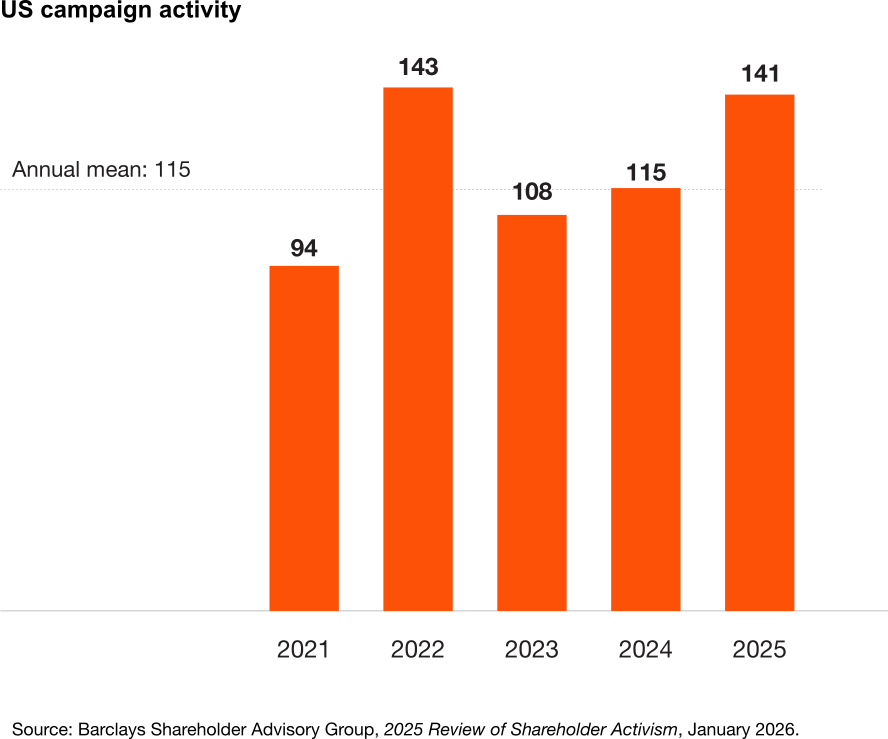
Shareholder activism remains elevated and is evolving in ways that make it a persistent governance and leadership issue for boards. Globally, campaign volumes have reached record highs, with the United States continuing to account for the largest share of activity. Activist pressure is increasingly translating into tangible outcomes, including board change, strategic shifts, and CEO turnover. While many campaigns still begin with valuation arguments, they are now more likely to escalate if activists perceive weak execution, limited credibility in the company’s strategy, or gaps in board oversight.
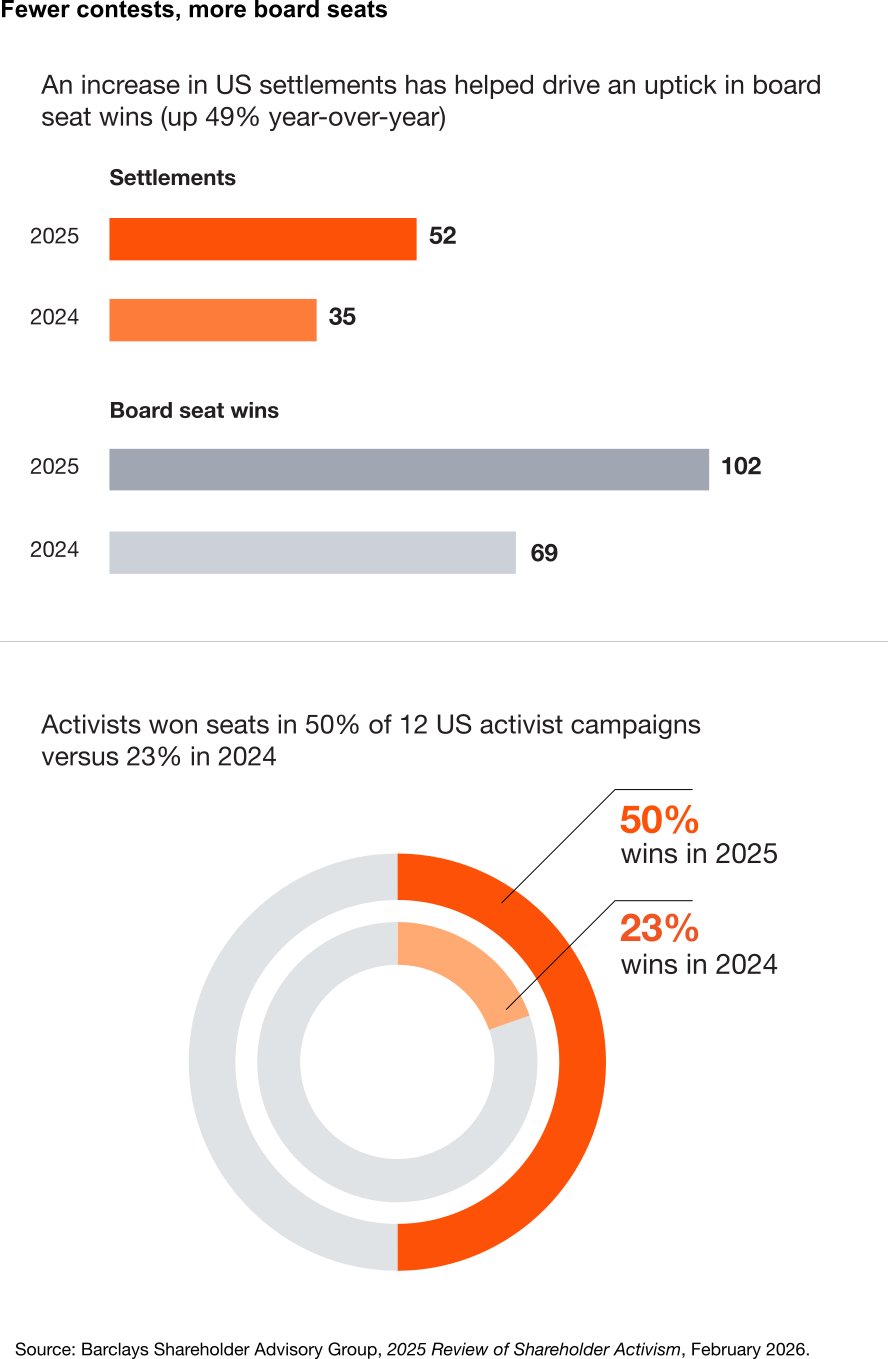
As deal markets and financing conditions improve, activists are once again leaning heavily into M&A-driven theses, including demands for asset divestitures, spinoffs, private transactions, or outright sales. Universal proxy has reinforced this trend by lowering the barrier to winning partial board representation, likely contributing to more negotiated settlements and split outcomes rather than all-or-nothing proxy fights. At the same time, activists are increasingly using lower-cost pressure tactics, such as withhold-vote campaigns and targeted opposition to individual directors, in order to build leverage, test shareholder support, and force engagement without launching a full contest.
The activist landscape itself is also changing. A growing share of campaigns are being launched by newer or smaller funds, often targeting small- and mid-cap companies, which can make activism harder to predict and more variable in tone and sophistication. Meanwhile, boards face a more complex shareholder and voting environment. Changes to beneficial ownership reporting, evolving interpretations of ‘passive’ ownership and engagement, the expansion of pass-through voting programs, and ongoing scrutiny of proxy advisors and shareholder proposals are fragmenting traditional signals of investor sentiment. Together, these shifts raise the bar for boards to proactively understand their shareholder base, pressure-test strategy and performance narratives, and assess and update governance frameworks, including advance notice bylaws and engagement protocols, before activism emerges.
An asset manager overseeing trillions of dollars in securities pledges to vote against the boards of companies that fall short on corporate governance as well as environmental and social matters. A hedge fund a fraction of that size threatens a proxy fight at a company it feels has too much cash on the balance sheet. Both fall under the umbrella of shareholder activism: seeking change because they think management isn’t maximizing their targets’ potential. But while they may share an ultimate goal, their tactics can differ greatly.
Some shareholders turn to activism because they feel it’s an effective way to increase the value of the companies whose stock they own. Others do so to address governance practices they believe are hurting long-term value. Or they take issue with the company’s products or business practices. Activism can take many forms. But the goal is the same: to motivate management and boards to make changes in the way their companies are run.
The tactics that shareholders use will depend on their objectives. What makes sense for an institutional investor with a long time horizon may not work for a hedge fund looking for a quicker return. You might even think about activist tactics as a continuum that begins with routine shareholder engagement. Not every request to meet with management is a prelude to more drastic forms of activism. But many shareholders who seek change will start by attempting to persuade. Others are more likely to start at the more aggressive end of the activist spectrum.
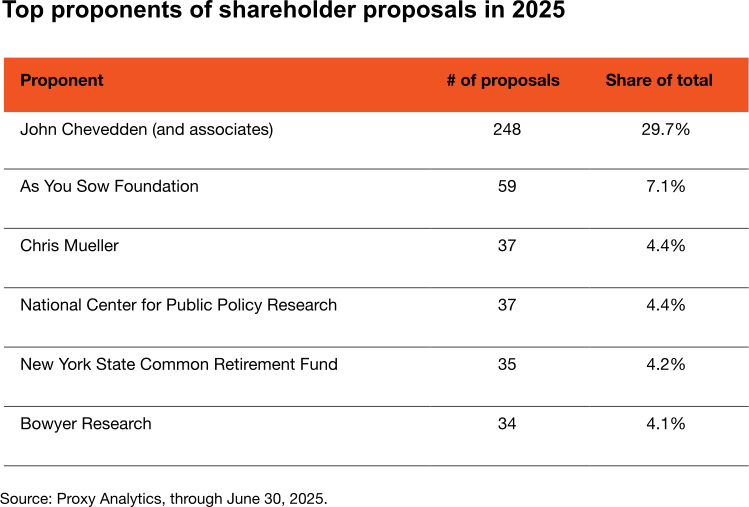
Shareholder proposals. In some cases, investors view a shareholder proposal as a way to begin the conversation with a company. Other times, institutional and retail investors submit—or threaten to submit—a shareholder proposal if direct engagement with the company and its directors doesn’t produce changes. Proposals can even be used as tools by labor unions. There, a union shareholder files a proposal that may act as a bargaining chip in its contract negotiations with the company.
These proposals often focus on governance practices or policies, executive compensation, or the company’s behavior as a corporate citizen. Proposals both supporting and opposing a company’s adoption of environmental and social policies in particular have become much more common in recent years. Traditionally, proponents watch how the major institutional investors are voting on issues and have a sense of which shareholders may be likely to support their proposal going in.
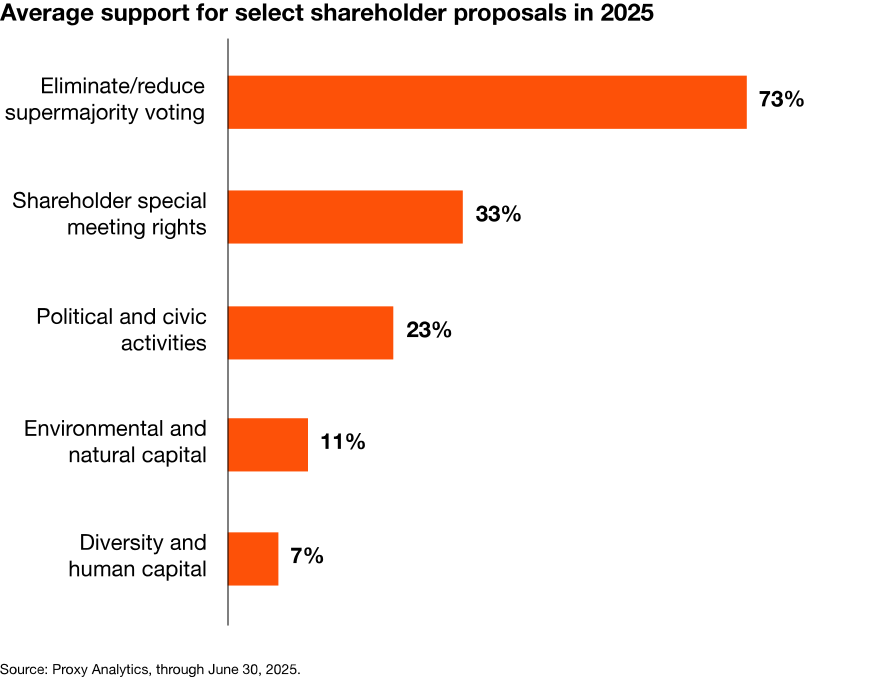
A recent tactic is for a proponent to file a proposal even if it is unlikely to pass to draw attention to a specific issue or to encourage market dialogue on a topic. This is one reason why support for environmental and social related proposals is lagging behind corporate governance proposals. Another is that overall disclosure of environmental and social matters has improved in recent years, fueled in part by ongoing activism.
Vote ‘no’ campaigns. Vote ‘no’ campaigns urge shareholders to vote against (or withhold their votes from) director candidates or other matters such as say-on-pay. Vote ‘no’ campaigns can send a strong signal about shifting shareholder priorities.
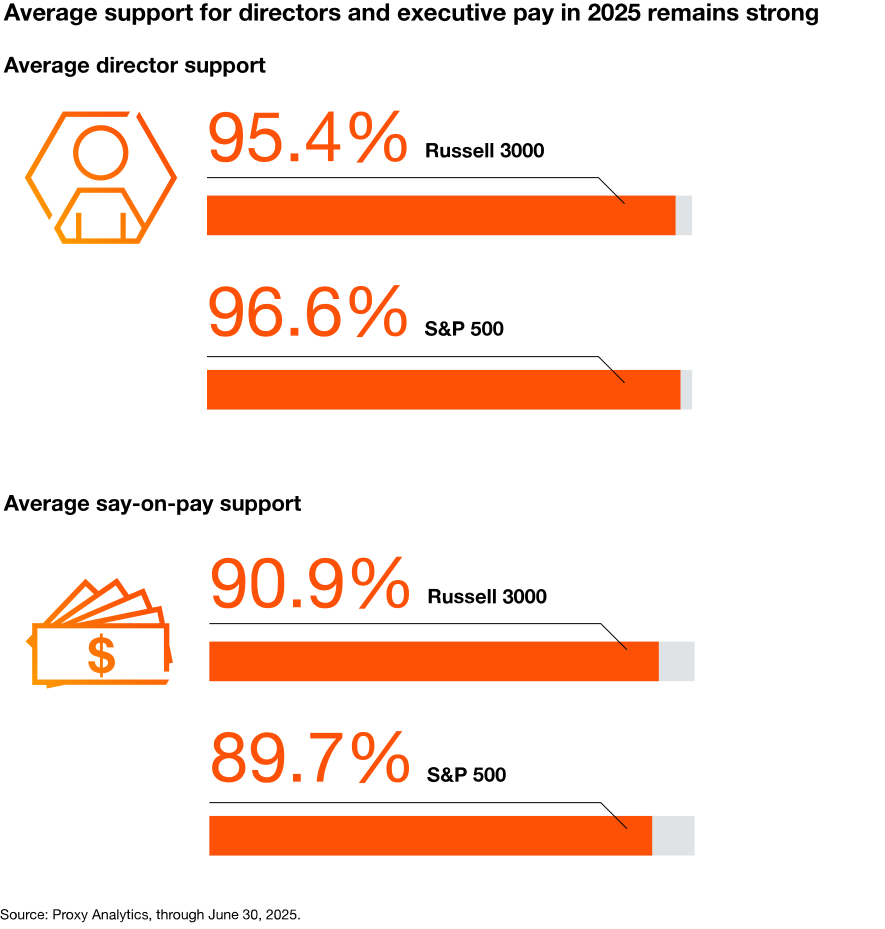
The vote doesn’t actually have to fail for a vote ‘no’ campaign to achieve results. Overall shareholder support both for directors and for say-on-pay is typically above 90%. So, if support levels fall to the 60s or 70s, it sends a stark message about shareholder dissatisfaction. It also generates media scrutiny and can affect a director’s reputation. Directors often serve on multiple boards, and low support levels at one company can affect how that director is viewed at his or her other companies as well.
Proxy fights. Shareholder activists may conclude that the best way to achieve their goals is to replace some or all of a company’s board. In that case, they advance their own slate of director candidates and try to persuade other shareholders to vote for them. Proxy contests can be expensive and controversial. Historically, they’ve been most closely associated with activist hedge funds, but advocacy groups have been testing their usefulness under the new universal proxy rules.
The precise activism playbook may vary from investor to investor, but there are several steps hedge funds commonly take to make the threat of a proxy fight more credible. They may try to win the support of a company’s other shareholders by circulating a lengthy white paper that lays out the case for the changes they’d like to see. Or they may publish an open letter to the company’s management or board listing their concerns. It’s a virtual certainty that documents like these will end up in the hands of the media, further ratcheting up the pressure.
Proxy fights are long, expensive, and draining for a company. Success isn’t assured for the hedge fund, either. That’s why activists and the companies they target frequently reach a settlement that heads off a full-blown proxy contest. As a result, the activist may receive seats on the company’s board or assurances from management that some of the changes it seeks will be enacted.
Some institutional investors have expressed concern that companies are settling too easily. Before rushing to settle, they urge companies to at least reach out to their significant shareholders to solicit their views. Sometimes these investors agree with the activist—and sometimes they want the company to hold their ground against the activist.
Every shareholder activist has a unique agenda. But history shows that companies that attract activist engagement tend to have some issues in common. Poor performance in the stock market, weak earnings compared to peers, governance missteps, and lack of attention to environmental and social matters can all trigger shareholder activism.
Poor financial or share performance. Shareholders are rarely happy to see a company underperforming its peers, hanging on to divisions that don’t fit with the rest of its business, or hoarding too much cash on a balance sheet. Whether they turn to activism as a result often depends on their investment strategy. The chances also tick up if there are other governance concerns.
Hedge fund activists are typically looking to unlock value they believe is going unrealized. Companies with a low ratio of market value to book value, excessive cash on hand, or lots of monetizable assets like real estate may fall into their crosshairs. Institutional investors are commonly less likely to support activism at a company unless it also suffers from one or more of the governance weaknesses.
Governance weaknesses. Governance problems can both indicate other weaknesses at a company and can have a detrimental effect on its value. Issues that may prompt investors to engage with a company, to submit a shareholder proposal, or take even more drastic measures may include:
Board structure and composition. Many institutional investors are intensely focused on board composition, including board diversity. Companies with practices that make it difficult to vote out underperforming directors may also draw the ire of shareholders. These may include:
Even absent these structural issues, some shareholders will engage with companies on board tenure and refreshment.
Shareholder rights. The inability for shareholders to call special meetings or take action by written consent commonly spark shareholder proposals and could draw extra attention to the company’s shareholder rights (or lack thereof).
Executive compensation. Companies with problematic pay practices, pay that is out of alignment with company performance, or that don’t respond after a low say-on-pay vote can all become targets of shareholder activism.
Material weakness. Less frequently, disclosure of a material weakness can sometimes prompt shareholders to vote against audit committee members. It’s especially likely if the company is not seen to be taking appropriate action to remediate the issue.
Environmental and social shortcomings. Perceived poor practices on environmental and/or social risks and opportunities can also make a company an activist target. Environmental issues include lack of disclosure of risks related to climate change and management of plastic waste. Social considerations like inadequate labor, health, or safety practices may also feature prominently. Activists also focus on the alignment of political spending and lobbying with a company’s public environmental and social policies.
Many of the largest asset managers have called for more disclosure in this area. They want companies to discuss how these issues factor into their strategies. And they want to know companies’ plans for confronting those challenges.
Ignoring shareholder concerns. Lack of responsiveness to investors can bring unwelcome attention. Sometimes an issue that has come up during shareholder engagement may evolve into a shareholder proposal. Other times, if the company hasn’t acted in response to a concern, the consequences can be more severe. For example, if a company’s say-on-pay vote garners low support levels, shareholders expect to see changes in the company’s incentive plans. If those changes don’t come, shareholders may launch a vote ‘no’ campaign targeting the directors on the compensation committee. The bottom line: it rarely hurts to hear a shareholder out, determine whether their arguments have merit, and, if so, consider acting in response.
Shareholder activism can come as a surprise. When a hedge fund presses a company to divest an underperforming asset or put itself up for sale, it can leave the management team and board scrambling. They may ask themselves why they didn’t see it coming. Even being on the receiving end of a shareholder proposal can feel like an unwelcome intrusion.
Directors have a key role to play in being prepared. They can anticipate which activists may engage with the company, the issues they may raise, and how other shareholders might respond. They can push management to address issues that may attract activist attention. Not only can these actions help ward off an activist, but they may also help improve the company’s performance and its relationship with key stakeholders. And when an activist does come calling, the board can help the company find constructive ways to respond and leverage the interaction.
When an activist comes calling, a company’s response is critical. An ineffective response may make things worse by giving the impression that management and the board are not attuned to shareholder concerns. While the activist’s scrutiny may be unwelcome, that doesn’t mean their concerns are without merit. An encounter with a shareholder activist can make the company stronger in the long run—if it’s handled effectively.
As activism—by institutional investors, hedge funds, and others—continues at a healthy pace, listening and being prepared are crucial. Boards have an important role to play in helping to navigate the changing landscape of shareholder activism.
{{item.text}}
{{item.text}}