

{{item.videoDuration}}
{{item.title}}
{{item.text}}

{{item.videoDuration}}
{{item.text}}
Executives are well versed in the financial reporting needed to meet local capital market requirements, but the rise of sustainability disclosure regulations is pushing them into less familiar territory. These requirements have the potential to significantly expand disclosure of non-financial information, testing a company’s ability to source, collect, and analyze data that may sit outside traditional reporting systems and processes.
All this comes at a moment when global stakeholder expectations are continuously evolving. The issuance of IFRS Sustainability Disclosure Standards by the International Sustainability Standards Board (ISSB) was intended to position the standards as a common language and comprehensive global baseline of sustainability-related disclosures. We’re seeing mixed success.
To better understand how financial institutions are responding to this emerging era of reporting, PwC and the Institute of International Finance (IIF) surveyed 24 IIF members that manage more than $18 trillion in assets. These financial institutions are preparing to, or already are, disclosing using the IFRS Sustainability Disclosure Standards, with adoption driven on a voluntary basis or by mandatory requirements across S1 (7 mandatory, 6 voluntary) and S2 (9 mandatory, 7 voluntary). The PwC‑IIF Global 2026 ISSB Adoption Survey explores how their adoption of S1 and S2 is being layered onto a multi-framework sustainability reporting environment.
Let’s look at six key findings that focus on reporting frameworks, data limitations, governance of sustainability reporting, materiality, and value creation.
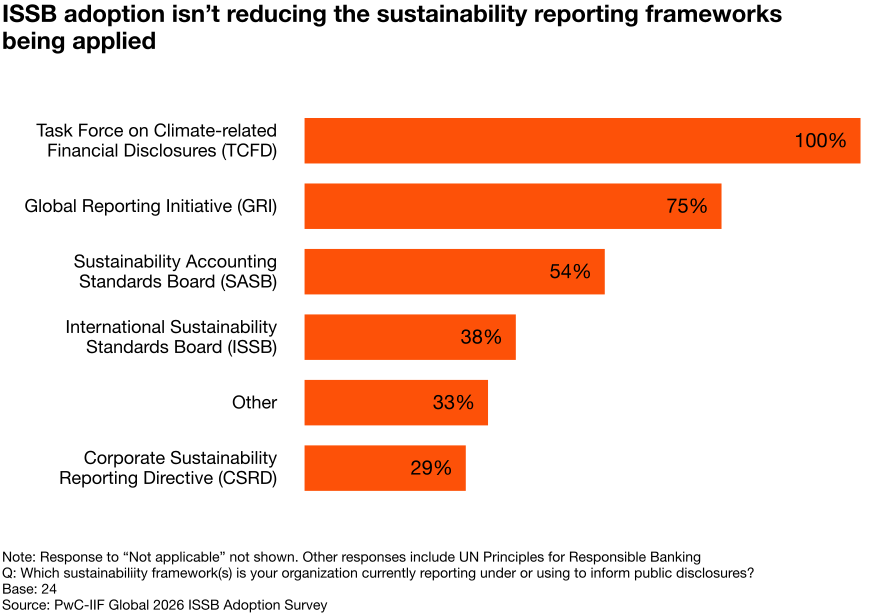
The survey makes clear that financial institutions continue to refer to multiple sustainability reporting frameworks. All respondents report using TCFD, with a significant number also using GRI (18 of 24), SASB (13), and a range of other local or supervisory frameworks. Compliance with ISSB is targeted toward using an entity’s financial materiality to evaluate what’s considered material to the primary users of financial statements. Other sustainability frameworks have different objectives, such as GRI which also considers the impact of an entity’s activities on the world (referred to as “impact materiality”). Other reasons for organizations continuing to use more established sustainability frameworks include having greater familiarity and a desire to maintain comparability and consistency in yearly reporting.
For financial institutions required to use multiple sustainability reporting frameworks, there may be an opportunity to use ISSB as a baseline for developing and maintaining disclosures while making adjustments as needed to meet unique local reporting requirements. Financial institutions can also reevaluate the number of sustainability reporting frameworks they use and re-underwrite which frameworks remain fit-for-purpose for stakeholder needs.
Maintaining the global ISSB baseline across capital markets that implement the standards—and avoiding amendments by lawmakers and regulators that deviate away from the baseline when adopting local market reporting requirements—can help reduce operational complexities and additional costs for organizations that are reporting at different levels (e.g., group-level and local subsidiary-level). This will also help maintain greater comparability of ISSB reporting across the industry.
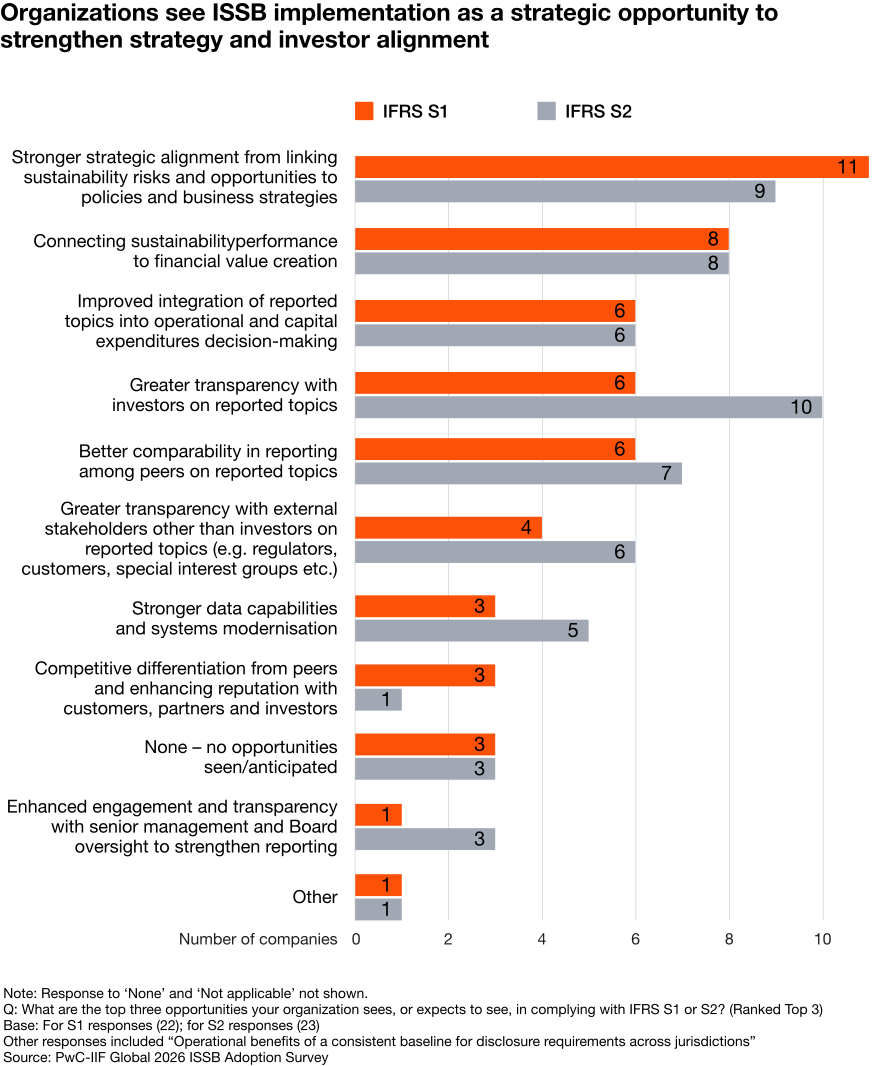
While often framed as a compliance exercise, survey respondents point to value beyond meeting regulatory expectations when implementing ISSB. Among those who have adopted or are considering IFRS S1 (22 of 24), stronger strategic alignment was the most frequently cited opportunity, with 11 of the 22 ranking it in the top 3. This was followed by the ability to connect sustainability performance to financial value creation, cited by 8 of 22 respondents in the top 3, and by opportunities centered on stronger integration of sustainability into decision-making, greater transparency, and improved comparability of disclosures.
The findings make clear that many institutions view the work of sourcing, collecting, and analyzing nonfinancial data as an opportunity to promote stronger strategic alignment by linking sustainability risks and opportunities to policies and business strategies. That mirrors what PwC found in previous surveys. Our Global Sustainability Reporting Survey 2025 revealed that more than two-thirds (70%) of companies that have already reported under CSRD or ISSB realized significant or moderate value beyond compliance from the data and insights generated through the reporting process.
In turn, mandating public reporting of material sustainability-related risks and opportunities could lead some organizations to reevaluate their strategies, policies, and actions. That could create additional accountability for organizations that are trying to meet the targets and commitments they've publicly disclosed to stakeholders. In addition, board-level governance is often required for ISSB reporting, elevating the mandate for reporting that meets investor-grade expectations.
For financial institutions still building ISSB capabilities, these findings underscore the importance of treating sustainability reporting as a transformation effort, one that pairs regulatory readiness with stronger data, technology, and AI foundations. To unlock stronger strategic alignment from ISSB reporting, institutions should consider integrating this effort across relevant functions and executives instead of it being treated as solely a sustainability-compliance initiative. The global 2025 survey indicates that 47% of respondents believe more effective use of technology would have improved reporting, while 46% think earlier validation and completion of data could help this effort.
Survey findings indicate that respondents who have adopted or are considering adopting ISSB believe reporting anticipated financial impacts is their most significant compliance challenge. Among respondents who have adopted or are considering IFRS S1 (22 of 24) or IFRS S2 (23 of 24), this challenge was cited by 10 of 22 respondents for IFRS S1 and 8 of 23 for IFRS S2. These findings highlight the ongoing challenges of quantifying decision-useful financial effects for stakeholders.
Estimating anticipated financial effects requires forward-looking assumptions over time horizons that are typically longer than those used for other financial forecasting and planning purposes. They require management and those charged with governance of reporting to gain comfort around these significant judgments. Standard setters continue to respond to feedback to provide greater guidance and to simplify reporting, including alignment between ISSB and European Union CSRD requirements. But the survey findings suggest that preparers still struggle with translating sustainability and climate risks into financial outcomes that are comparable and explainable.
The results also reflect a broader tension shaping sustainability reporting globally: the growing demand from investors and other users of this information for clearer insight into financial implications versus the complexity and operational costs needed to generate this data. In many cases, this is often new information being provided to comply with ISSB that may not otherwise be used internally by the organization for risk management or strategic decision-making purposes. Lawmakers and regulators looking to mandate ISSB should consider safe harbor provisions on good faith efforts, particularly on required forward-looking disclosures and data related to the value chain outside the organization.
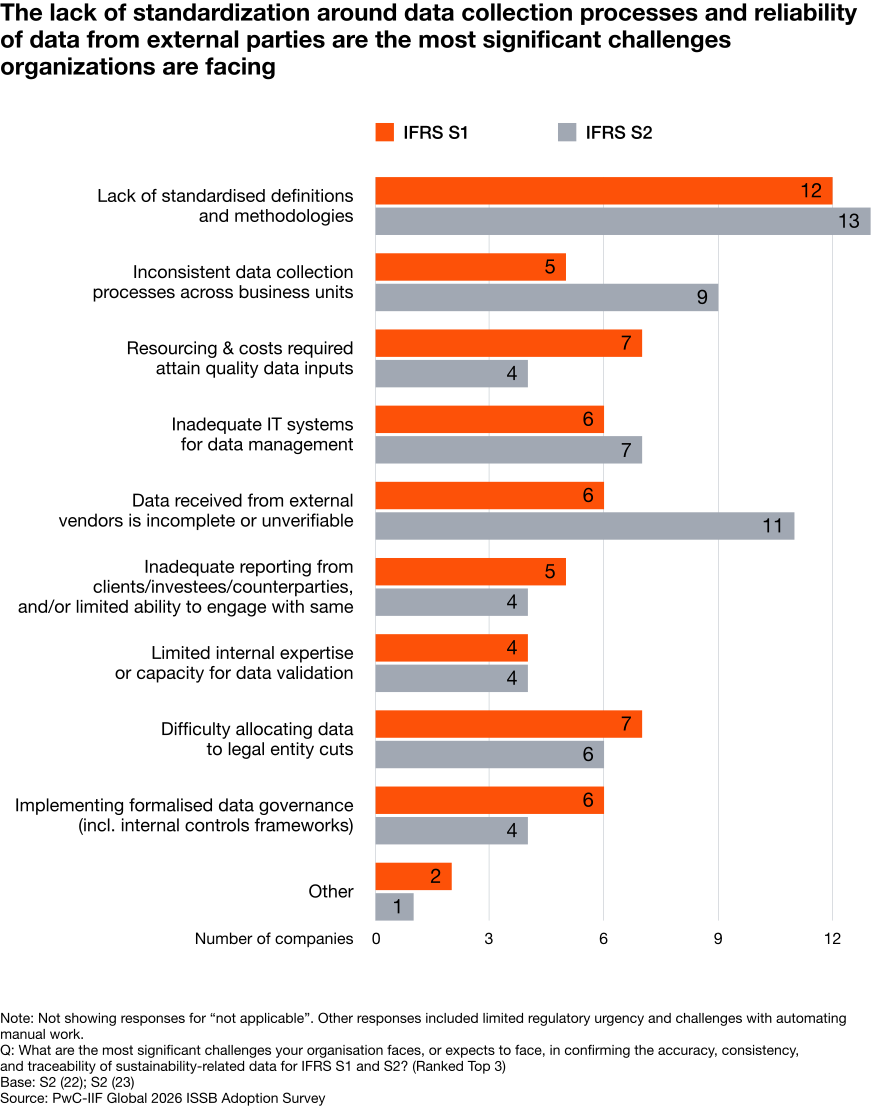
Respondents make clear that data limitations are one of the most significant barriers to confirming the accuracy, consistency, and traceability of information being reported under ISSB. Financial institutions point to immature internal systems, controls, and processes, alongside a growing dependence on external value-chain data—particularly for climate-related metrics—as key constraints on sourcing, collecting, and analyzing decision-useful information.
The biggest challenge cited is a lack of standardized definitions and methodologies. More than half of the respondents who have adopted or are considering adopting ISSB cite this challenge in their top 3 (12 of 22 for IFRS S1 and 13 of 23 for IFRS S2). The second-highest challenge relates to reliance on counterparty data to estimate downstream emissions. Inadequate reporting from clients or investees is ranked among the top-3 challenges by 48% of respondents (11 of 23) under IFRS S2 and 27% (6 of 22) under IFRS S1.
At the same time, emissions calculations of those who have adopted or are considering adopting IFRS S2 (23 of 24) continue to rely on spreadsheets (30%) or hybrid approaches (22%), underscoring how manual processes remain embedded in critical reporting workflows.
There are likely opportunities for financial institutions to gain cost efficiencies and to standardize data collection and measurement methodologies by making continued investments in technology, processes, and people to transform reporting. Companies can differentiate themselves by intentionally designing integrated operating models that align accountability with targeted capability investment, rather than forming siloed workstreams that lead to manual rework, weakening traceability, and increased risk of material errors.
Determining financially material information is foundational to ISSB reporting, as it defines the scope of disclosures provided in the report. Yet survey responses indicate that financial materiality determinations for sustainability reporting remains a much less mature aspect when compared to financial materiality determinations for financial reporting. Some institutions are developing centrally defined, group-wide frameworks (9 of 24) to assess financial materiality for S1 and S2, while others rely on legal-entity or subsidiary-level approaches, or a combination of both (4 of 24). One-fifth of the respondents (8 of 24) say this work is still in development.
Diversification in how financial institutions approach materiality—both across the industry and even within their own organization—may continue to drive variability in what is identified as material information, limiting consistency and comparability in reporting across immediate peers. However, as institutions continue to refine their methodologies alongside updated guidance from standard setters and maturity of practices among professional services, materiality assessments should become more consistent and comparable over time. This natural maturation should support clearer alignment in the scope of disclosures across organizational peers, helping ISSB reporting deliver more decision-useful insight to capital markets.
Survey results indicate that sustainability/ESG teams are playing multiple roles in an entity’s own interpretations and determinations of compliance with ISSB (14 of 24), followed by the finance function/controllership being involved 38% of the time (9 of 24). In many organizations, the emergence of mandated ISSB reporting has expanded the role of the sustainability or ESG management functions. This is in contrast to financial reporting where those responsibilities typically reside across various management functions such as controllership, finance, and legal/compliance.
Companies should consider clearly delineating roles and establishing shared accountability. Rather than concentrating compliance-heavy responsibilities within sustainability teams, or adding layers of oversight, financial institutions should consider designing integrated operating models that align accountability across sustainability, finance, risk, and technology. Doing so can reduce risks of noncompliance, promote scalable compliance as the landscape evolves, and unlock shared value through more rigorous, decision-useful disclosures. It will also allow the sustainability function to turn its attention to its more traditional objectives of setting long-term sustainability strategy and conducting engagement across the value chain with investors, suppliers, customers, and other stakeholders.
The findings also point to a potential execution constraint. None of the respondents report fully adequate internal technology and systems in place currently, and only 13% (3 of 24) say they have sufficient skills and headcount to support ISSB implementation.
Overall, the findings suggest that progress on ISSB adoption is real, but it is execution rather than intent that increasingly sets financial institutions apart. With rising numbers of lawmakers and regulators mandating ISSB, many large financial institutions should consider focusing on building the foundations that allow disclosures to be produced consistently and with confidence, even as requirements continue to evolve.
In the near term, that means accepting a multi framework reality while strengthening alignment, governance, and data consistency. But in a reporting landscape that remains complex and fast-moving, those that focus now on strengthening the foundations of thoughtful materiality frameworks, data collection and validation, and aligning people’s competencies and technology investments with execution will be better positioned over the long-term to meet any future expectations and to extract lasting value from the reporting effort itself.
About the survey
Between November 15th – December 15th, 2025, PwC and the Institute of International Finance (IIF) surveyed 24 IIF members that manage more than US$18 trillion in assets. The respondents consist of organizations that have implemented or are considering implementing IFRS S1 (22 of 24) and IFRS S2 (23 of 24).
PwC can help you build a reporting strategy
Key insights on global sustainability regulations
{{item.text}}
{{item.text}}