





{{item.videoDuration}}
{{item.title}}
{{item.text}}

{{item.videoDuration}}
{{item.text}}
Global companies planning to sell off non-core parts of their business can face various issues in separating operations, including disentangling supply chains, operations, and centralized shared services. These functions, and the technologies that they use, are woven together into a corporate “knot” that can create two major challenges for dealmakers.
First, entanglements make it harder to develop valuations. Like threads in a ball of yarn, it’s difficult to see how they all fit and what other “threads” they might touch below the surface. That makes it harder for buyers to develop valuations, shrinking the pool of potential suitors.
Unsurprisingly, untangling those threads can take meaningful time and effort and lead to unexpected issues. Which brings us to the second major challenge: Because those entanglements can increase the time required to get to closing, they can be a drain on the internal resources required to reach the finish line.
Many companies don’t consider developing an operating model for the to-be divested business until late in the stages of due diligence or even during the sign-to-close period. But laying out operating model plans even before bringing a buyer to the table can help.
In our experience, companies that design a thoughtful operating model early attract about twice as many serious buyers, and those buyers tend to be of higher quality.
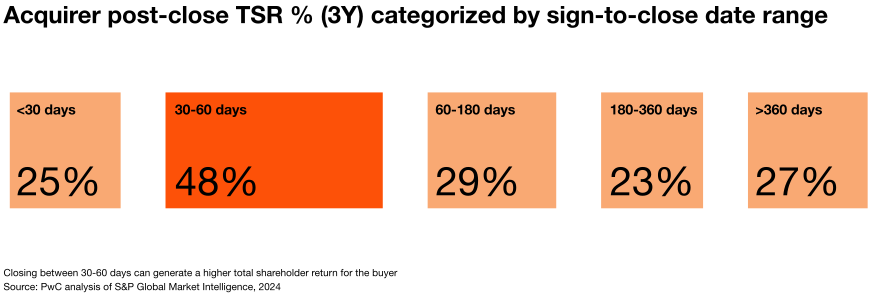
Companies that proactively build flexible, country-specific operating models or have ready-made templates to choose from can also close faster, reducing one-time and stranded costs, limiting customer impacts and ensuring business continuity.
The importance of Day One operating models
Both strategic corporate buyers and private equity firms often focus on a potential acquisition’s growth prospects, and developing an operating model that covers each geographic region helps to create a clear plan. Acquirers also stand a better chance of achieving the deal thesis if they complete the separation in a timely fashion and maintain smooth business operations afterward. Having a clear operations model from the start can make it easier for buyers to review the business thoroughly and feel confident about merging it. The result is a divestiture that attracts more interested buyers—both financial sponsors and corporate buyers—who are more likely to drive up the sale price in a competitive bid.
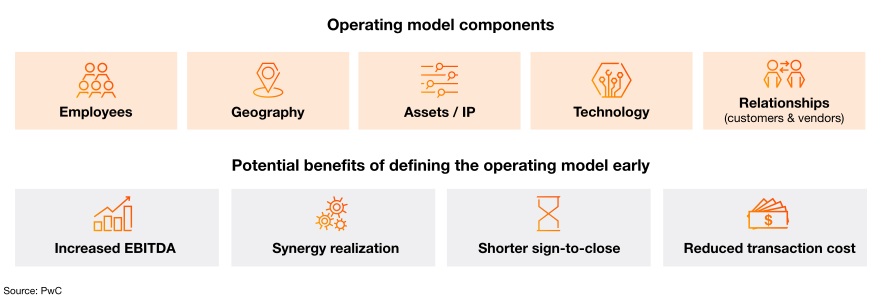
The benefits of operating models
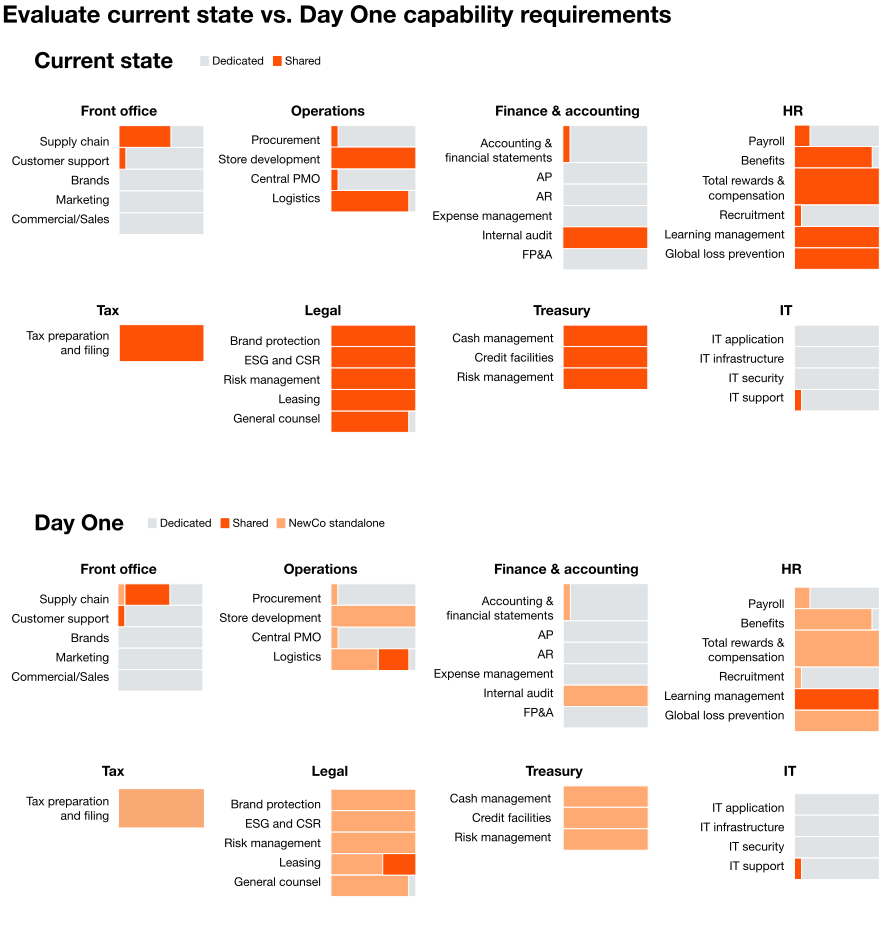
A Day One model establishes a plan for business continuity during the transition period as the buyer takes control. The goal is to avoid disruption to customers, employees, and business operations.
The model should include plans for everything from people, processes, and systems to contracts, data, facilities, and the global supply chain. For example, the model should address the challenge of navigating the tax consequences of transporting goods within a globalized supply chain while market authorizations and IT systems are still being provided by the seller under transition services agreements (TSAs).
As Day One nears, unprepared leaders often spend too much of their time reactively solving unexpected problems. Defining the operating model early can alleviate many of these problems, allowing corporate development teams to address the issues that most impact closing.
Strategic carveout considerations: Portfolio alignment and equity story
While Day One operating models are usually focused on avoiding disruptions, industry-leading companies also recognize more strategic benefits. They see the separation as a chance to rethink the business for growth. Instead of just maintaining operations in the short term, they align costs, capabilities, and capital to fit their long-term plans. This shifts the operating model from just a checklist to something that promotes meaningful results.
A clear Day One model not only makes a divestiture easier to manage but also builds a stronger story about the value of the separated business. By identifying which markets, assets and capabilities are core, and planning how products and services will be delivered after the deal—considering customers, pricing, products, distributors, compliance, and people—leaders can create a narrative that attracts both strategic buyers and investors, and builds confidence in growth.
An essential strategic question is: Which capabilities truly differentiate the business, and which can be simplified, outsourced, or transitioned? Day One planning should emphasize protecting and scaling capabilities directly tied to customer experience, innovation, or operational advantage while streamlining the rest. This emphasis helps the deal close more quickly and set the stage for higher profits and reinvestment in the future.
Carve-outs may pose risks to customer relationships and market share. Designing the operating model with customers in mind helps strengthen loyalty and reinforce brand value. Leaders should ask how the separation can enable faster decision-making, improved service levels, or entry into new markets. Addressing these questions early helps reducing the risk of losing customers and drive revenue growth.
Separations also can strain capital allocation, as leaders balance one-time costs, TSA dependencies, and stranded cost management. Strategic planning should focus on where to invest in the first 12–24 months post-close (e.g., technology infrastructure, digital capabilities, market expansion initiatives). Day One readiness should help quickly shift capital toward growth instead of funding extended transition costs.
Ultimately, Day One is just the first step in a longer transformation. A forward-looking operating model helps provide stability at close and prepares the business to adapt to future changes in regulations, technology, and customer requirements. Corporate development leaders should have a clear vision for what the business will look like at 100 days in and beyond, making it easier for governance, culture, and operating routines to help drive sustainable growth.
What operating model should companies consider?
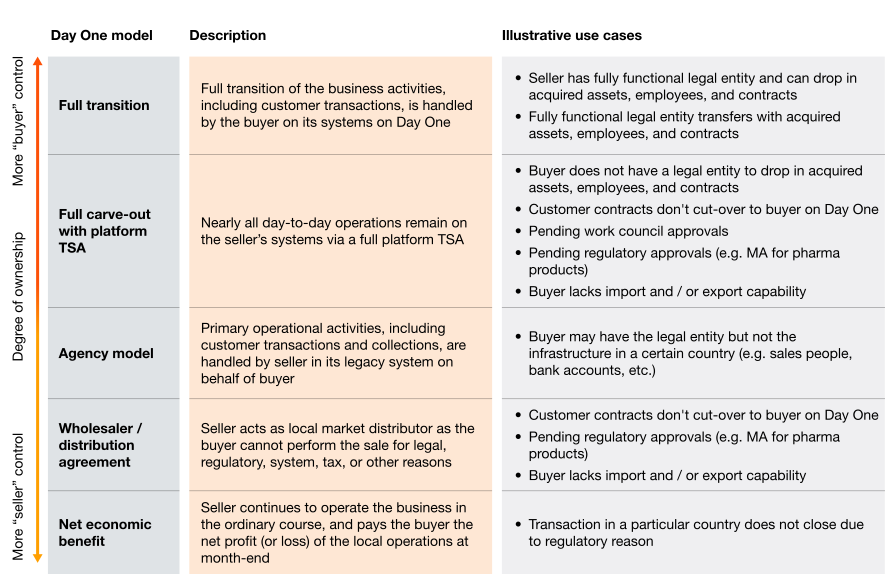
Let’s review five of the more common operating models and explain how they differ in the level of control for buyers and sellers. Note: In a global deal, the optimal operating model often varies from business unit to business unit and from market to market within the same transaction.
Divestitures often involve a large amount of uncertainty about a company’s future. Developing a Day One operating model early in the deal process can help provide clarity, facilitating a faster close. The model also can help provide a deeper understanding of potential synergies with a company’s operations, helping leaders evaluate what resources are required to create value. Together, these benefits help attract more interest in a divestiture, increasing the chances for a competitive bidding process while also making it more likely for the acquirer to achieve the deal thesis.
{{item.text}}
{{item.text}}


