Transformation Risk insights series

Data you can act on: Three questions about data readiness transformation risks

  • 6 minute read
  • February 03, 2026

This series explores how taking a portfolio-wide approach can help organizations align transformation efforts, reduce risk, and drive meaningful outcomes across business, tech, and controls.
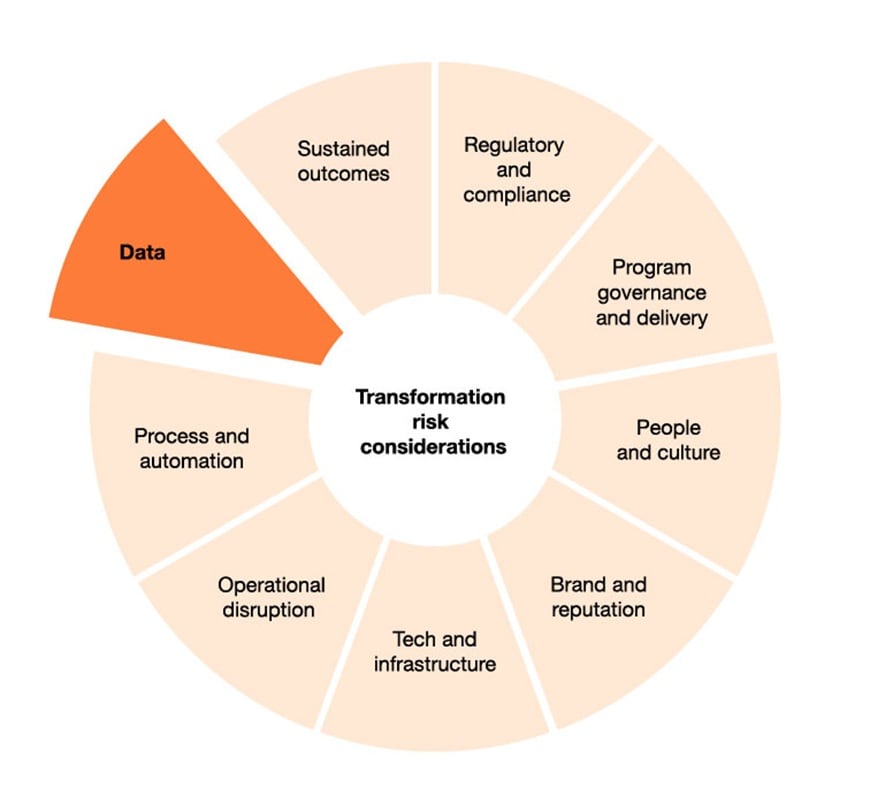
You’ve probably heard that data is your most valuable asset. It’s true—but only if your data is reliable, structured, and ready to act on. When it’s not, your transformation program can encounter risks that can derail your efforts.

Nearly every major business initiative, from AI adoption to cloud migration to finance modernization, depends on access to trusted data. That data needs to be clean, complete, and correctly structured to help power decisions, satisfy regulators, and meet strategic goals. But many companies dive into transformation projects without sufficiently assessing whether their data—or their data processes—are ready. The results? Use cases fail. Miscalculated metrics. Delays. Rework. Missed transformation goals. Rising expenses.

Data readiness isn't just a one-time cleanup. It’s about establishing practices for how your organization sources, moves, governs, and protects its data at scale—and helping confirm there’s clear accountability and decision-making along the way. That requires transformation leaders like you to get alignment across teams, set clear goals, and display a willingness to rethink how data flows through your business. The companies that most effectively take charge of their data—generating, protecting, and governing it in a data life cycle—will likely have the greatest opportunities for success.

"Low-quality or siloed data compromises analytics, decisions, and regulatory reporting, steering your transformation programs off course.”

Scott Penque,Principal, Digital Assurance & Transparency, PwC US

What are some of the most pressing data readiness transformation risks today?

Data risks have long existed, but expectations keep growing—from regulators, investors, and consumers. The proliferation of AI can introduce even more complex risks. Despite this, many organizations continue to underestimate the time, talent, and cross-functional coordination required to get their data ready before starting a transformation. Here are some of the more common pitfalls we see:

Things as simple as technical or data entry errors in spreadsheets, missing or misclassified data from legacy systems, inaccurate or incomplete requirements, and poor system integration can stop transformations dead in their tracks. Relying on low-quality data risks compliance issues, uninformed decision-making, and financial loss.

Example: You’re leading a transformation, and your team sets up a mock data load to test a new system. But the test doesn’t incorporate your most complex data or include measured outcomes. You move forward anyway—only to realize weeks later that your data structure doesn’t match operational needs, data isn’t loading correctly, and your reports don’t reconcile. Now, you have to retrofit fixes and delay go-live.

Without clear governance and named data owners to guide data conversion standards and business alignment, you risk differing standards and metrics, loss of accountability, and wasted work. Teams adopt inconsistent conversion standards and success measures, argue over which sources are “official,” and delay decisions on what is significant enough to fix. Strong internal guidance prevents inefficiencies from weighing down your transformations.

Example: You’re in a data-heavy initiative with multiple teams touching different systems. Without clear governance or defined decision-makers, your project suffers from duplicate efforts, conflicting definitions, and mounting tech debt. Valuable time and budget are lost just trying to make sense of it all.

Future-state governance should be more than a committee name. It needs data owners by domain, clear accountability for data quality, defined authoritative sources, and measurable data quality metrics to monitor against.

You think you’re transforming, but without a clear and confirmed strategy, you’re just migrating old problems into a new system. Organizations that rush data migration can end up with faulty data or delay or cut potentially transformative system features just to meet deadlines.

Example: You move legacy data into your new ERP without cleaning or restructuring it, hoping to deal with it later. Instead, the new system exposes the same inefficiencies—and your team spends months patching instead of progressing.

You need transformation help that you can trust, but you can’t just offload ownership and responsibility to your vendors. Without oversight like a strong project management office, your third-party “help” can end up making decisions that don’t fully align with your goals or business model.

Example: You rely on a third-party system integrator to run your data program. But they’re disconnected from your broader business context—meaning no one is watching upstream impacts and downstream risks. By the time post-integration issues arise, they’ve already moved onto other projects. Finger-pointing starts, and your team scrambles to reassert control and start remediation.

What can I do to help reduce data readiness risks right now?

Whether you’re just preparing for a major transformation or already mid-journey, there are immediate steps you can take to help reduce risk and build confidence in your data. Some of those steps will depend on the specific situations or types of data risks ahead of you, but there are a few general things you can do to lead to more successful transformations.

Take stock of where you are now, and also where you want to be. Before writing requirements or selecting tools, define what success looks like for your data—and for the business outcomes it supports. Get your data and process teams in the room early to guide architecture decisions with the right context. Their expertise can help direct and support your business goals, with data governance policies that can guide your transformation.

You don’t have to wait for all your data to be perfect before you can see real value—but assuming you can “fix the data later” is a risky game. Prioritize your most actionable data for early cleansing and migration, using the pre-implementation phase to run thoughtful, metric-driven tests to profile, confirm, consolidate, and complete your data. Focus on use-case alignment and measurable outputs to catch and remediate issues early.

Many organizations don’t have the clarity or bandwidth to manage transformations all on their own—and that’s normal! System integrators can supply critical muscle, but they shouldn’t be making decisions about your transformations in a vacuum. Set up governance structures that give your internal teams—especially compliance, finance, and risk—a seat at the table from day one. That way, you can focus on the business outcomes that matter to you, like increased productivity or more rapid growth.

Data issues don’t respect org charts. When ownership is unclear, siloed or fragmented views can create redundancies and inefficiencies, increase risk exposure, and derail your transformations. Cross-functional collaboration is essential for identifying and mitigating these risks. Build bridges across functions while assigning named data owners and decision rights, so issues are resolved quickly and consistently. Define who is accountable for end-to-end data quality. Assign owners for each data domain who are responsible for quality, approve remediation decisions, and sign off on conversion readiness. Establish authoritative sources of truth for critical data and document the policies, standards, controls, and materiality thresholds that determine what “done” looks like for your transformations. Then make ownership operational with practical routines: cross-functional issue triage that includes business and technology, clear acceptance criteria, and regular readiness checkpoints to surface defects early.

Train both technical and non-technical stakeholders in foundational data literacy so they can participate meaningfully in holistic transformation planning. Upskilling employees should include providing certifications in data governance, security, and privacy, along with targeted use of external subject matter specialists to assess and confirm your systems.

Where can I get help?

Don’t go through major transformations alone. When it comes to your data, you want to know it’s clean, complete, precise, and, most of all, reliable—and ready to start delivering the value you expect. But you don’t have to wait until you launch a transformation to start preparing.

PwC can help you reduce your data readiness risk through every phase of transformation:

When you’re just starting your transformation journey, our phase zero assessments help you decide what transformations would be ideal for your organization. If we’re your auditor, it’s already our job to understand your business inside and out: how you work and what datasets and reporting are important to your business model. Readiness and discovery assessments, as well as risk exposure analysis and gap identification, can likewise help you identify specific needs at any stage in your process.

Where is your organization particularly at risk? PwC assessments are designed to help you identify areas of risk early and provide insights into industry-leading practices, based on our extensive experience with industry-leading technologies. They help you identify data ownership gaps and unclear definitions, provide insights into SDLC documentation, and even assess migration strategy, roles, data validation processes, and more.

There’s never a wrong time to ask for help. Even mid-transformation, we can offer guidance with governance setup, operating models, and cross-functional enablement, so you can feel confident the data you’re working with is clean, holistic, and ready to deliver the value you planned on.

Supporting your transformation doesn’t end when you go live. That’s why we often recommend data life cycle and controls validation—helping you create, store, use, and eventually dispose of sensitive data in safe and responsible ways. We perform audit readiness and regulatory compliance, to help your transformations deliver business results within expected parameters.

With deep experience across assurance, risk, and transformation, PwC helps organizations turn data readiness into a strategic advantage.

Digital Assurance and Transparency

Powering digital progress through trust

Contact us

Scott Penque

Scott Penque

Principal, PwC US

Crystal Bye

Crystal Bye

Director, PwC US

Follow us