







{{item.videoDuration}}
{{item.title}}
{{item.text}}

{{item.videoDuration}}
{{item.text}}



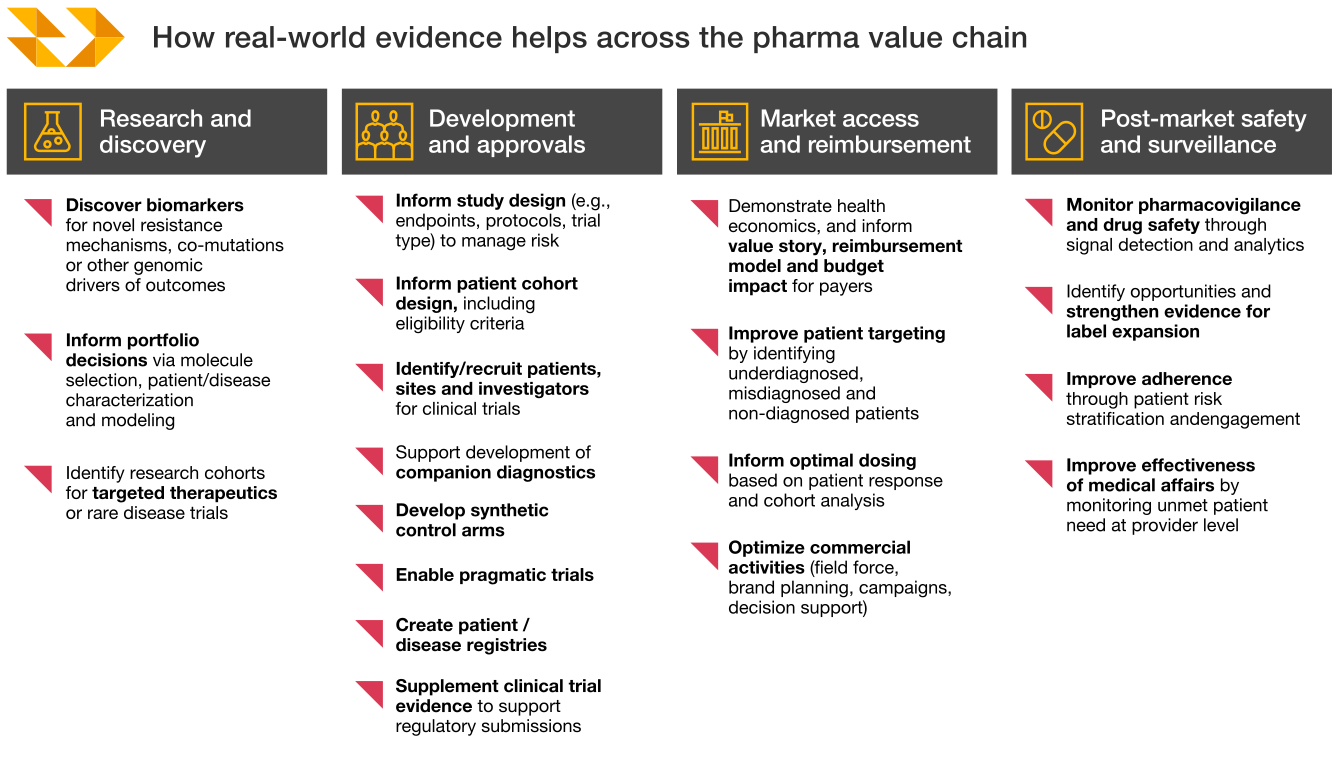
Understanding how medicines perform in the real world has the potential to transform the pharma business — from driving increased efficiency and cost savings in drug development, to helping identify new patient populations for marketed drugs. This can translate into higher profitability and shareholder returns, as we explain in our Next in pharma series on driving value growth.
The big challenge for pharma leaders now is learning how to leverage real-world data and evidence (RWE) as a sustainable competitive advantage in a landscape that has changed dramatically over the past few years.
Let’s review three rapidly evolving drivers of the RWE market, based on PwC research and recent interviews with RWE specialists working in pharma or in a vendor capacity with pharma.
The amount and types of available health data continue to grow at an incredible rate with the compounded annual growth rate (CAGR) of health data expected to reach 36% by 2028.4 At the same time, longitudinal data is becoming more prevalent — in some cases extending to several years of information on a patient’s health.
Available data is now more thorough due to the integration of multiple data sets. A fuller picture may now be drawn from electronic health records (EHRs) across provider organizations and sites of care, associated pharmacy claims data, genomics testing data, and patient demographic data. Several RWE vendors are also exploring ways to create differentiated value such as computer-assisted mining of clinical notes and use of derived/synthetic data to further enrich existing data sets.
Driven by this rapid evolution in data and related technologies, PwC anticipates spending on data products to increase at an 8% to 10% CAGR through 2028 with integrated, linked data sets leading the data segment with a CAGR of approximately 14%.5
Separately, the RWE analytics market is expected to grow at a 15% CAGR through 2029 as vendors face increasing competition and pricing pressures on data products and seek competitive advantages through sophisticated analytical platforms designed to generate insights across the drug development, care delivery and commercial life cycles.13
To take advantage of these improved RWE offerings, pharma organizations should consider the use of RWE to inform aspects of their product life-cycle management, including clinical development, product launches and efforts to stay competitive in the market.
Pharma should be looking to hire personnel — from medical professionals to data scientists to business leaders — who have experience in using RWE insights to improve business decisions. There is also an opportunity to leverage the rising number of advisory service offerings from RWE vendors for specific areas where in-house talent may be lacking.
Pharma companies can leverage multiple data types and predictive analytics on their own to improve clinical trials and post-marketing studies — however, RWE vendors may be able to deliver with greater efficiency and effectiveness.
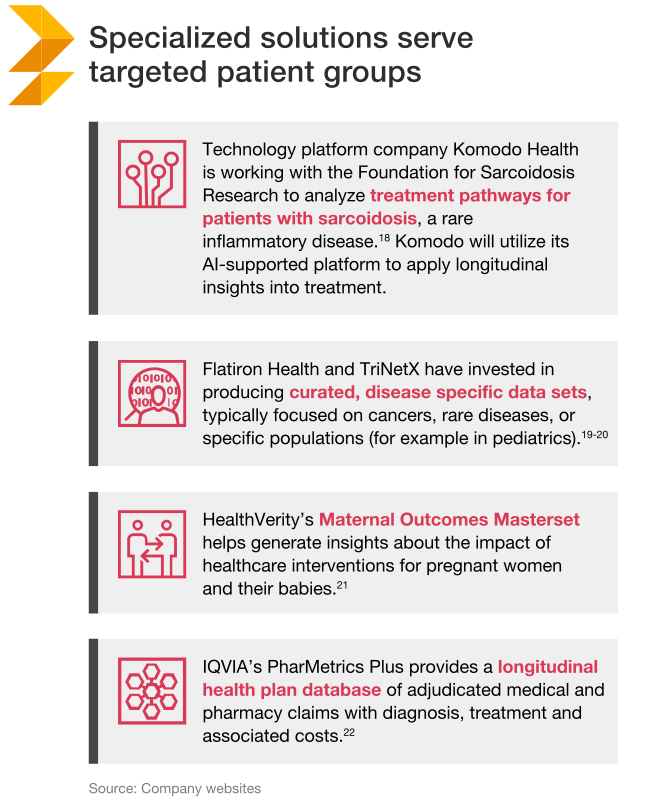
As the RWE ecosystem has matured, oncology and rare diseases have become the largest and fastest growing therapeutic areas for application due to their complexity and a relatively high unmet need in curative treatment.17
In order to capitalize on these opportunities and build solutions tailored to specific disease areas (and their underlying indications), RWE companies are investing in both technical and clinical experience as well as sophisticated analytics platforms with AI and natural language processing (NLP) technologies that are better able to aggregate data, fill gaps and harness the power of enhanced data sets.
Competition and specialization within the RWE market is producing more novel applications — such as external comparators, pragmatic trials and enriched studies — and it’s spurring more strategic relationships with topic and application specialists. This can translate into greater insights and improved outcomes for pharma pipelines and commercialized assets. Pharma companies should identify vendors by therapeutic area focus and actively manage a broader portfolio of RWE providers rather than selecting a few when starting an RWE program.
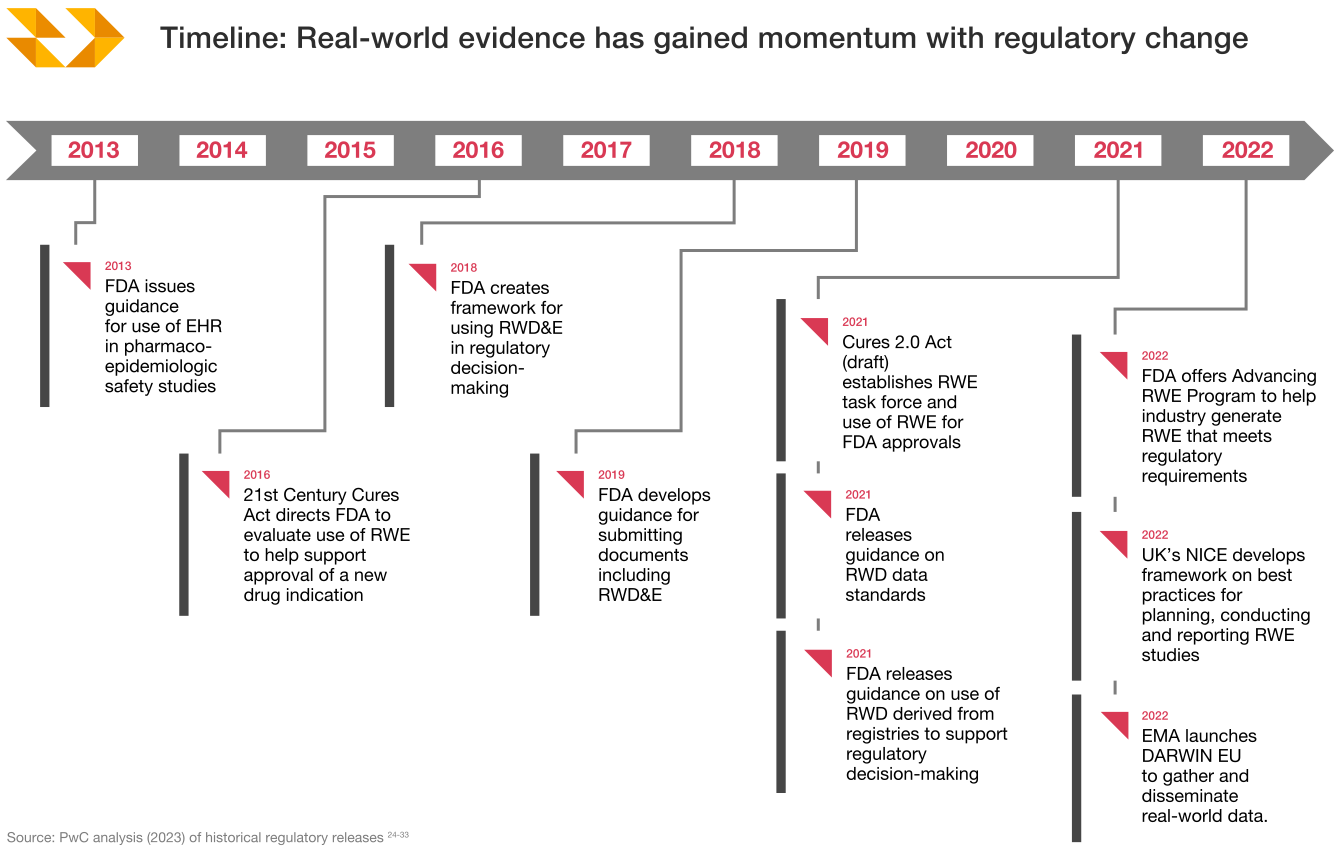
Dedicated RWE task forces, new data standards and guidance from regulatory bodies such as the US Food and Drug Administration (FDA) and the UK’s National Institute for Health and Care Excellence (NICE) are encouraging the use of RWE for a growing number of applications, including the evaluation of safety and effectiveness as well as use in supporting submissions and approvals. The European Medicines Agency’s (EMA) Data Analysis and Real World Interrogation Network (DARWIN EU) project has been gathering real-world data through a range of studies and is expanding.
Still, navigating the separate guidelines and data standards on a global scale can also increase the complexity of bringing a new product to market. As a result, RWE companies have sought to build international data sets and local regulatory knowledge via serial acquisitions and strategic collaborations. The acceleration of development of new regulatory guidelines has also brought an increased focus on regulatory-grade data sets for clinical trial design and other critical drug development activities.23
The rapid expansion of the RWE ecosystem is broadening what is achievable with real-world data while simultaneously increasing the complexity, investment and experience required for successful deployment across the value chain.
Pharmaceutical companies should keep their RWE strategies up to date and collaborate with leading companies to complement in-house capabilities and improve value capture across drug development and care delivery life cycles.
Here are five questions to consider when evaluating and updating your strategy.
With knowledge and experience that spans the pharma value chain and the RWE ecosystem, PwC can help guide you through the development of your RWE strategy and vendor selection process. Please reach out to one of our experienced professionals for additional information.
Angad Nagwan, Manager, Strategy& USA
Brian Wong, Senior Associate, Strategy& USA
Gage Kaefring, Senior Associate, Strategy& USA
{{item.text}}
{{item.text}}


