





{{item.videoDuration}}
{{item.title}}
{{item.text}}

{{item.videoDuration}}
{{item.text}}
On July 4, President Donald Trump signed into law “An Act to Provide for Reconciliation Pursuant to Title II of H. Con. Res. 14,” commonly referred to as the “One Big Beautiful Bill Act” (OBBBA).1 The OBBBA enacts significant changes to Medicaid and rescinds or does not continue major elements of the Patient Protection and Affordable Care Act (ACA) of 2010. The legislation is projected to reduce federal healthcare spending by approximately $1 trillion through FY2034 by implementing additional eligibility rules on government health plans, expanding administrative procedures around enrollment, modifying how states can obtain federal funding for Medicaid, and not extending ACA premium subsidies. These changes, coupled with other potential changes that reflect a net defunding to healthcare agencies (i.e. 25% funding reduction for HHS in the FY 2026 proposed budget), have the potential to accelerate a long-term transformation of the health system. As a result, stakeholders may be driven to engineer innovative models for delivering more affordable, preventive care. By harnessing rapid advances in medical knowledge, the system could shift its focus from treating illness to proactively preventing it, ultimately enabling greater control over national health spending.
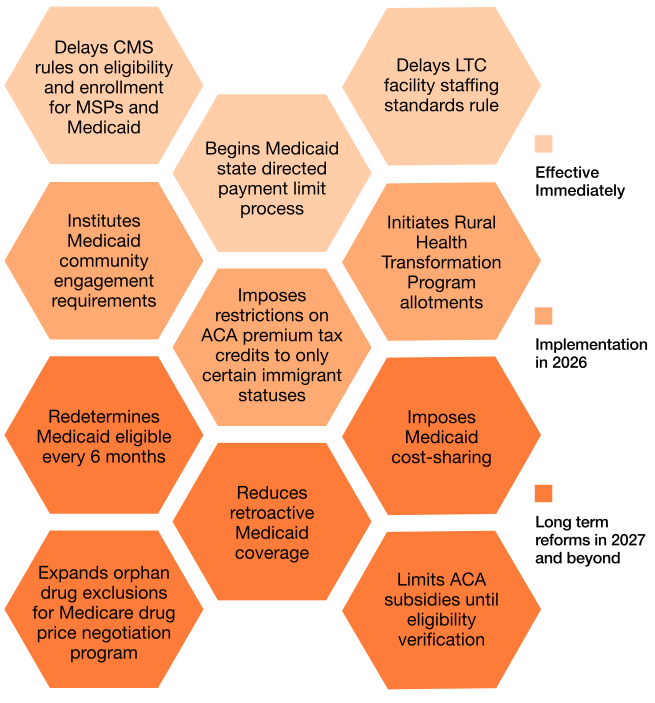
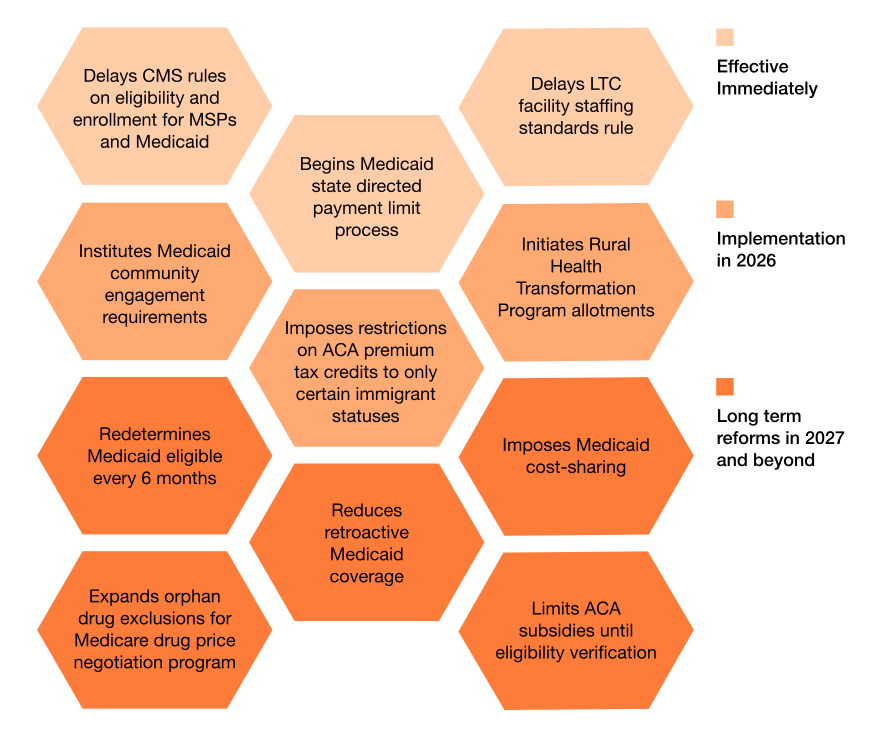
*Highest-cost provisions in the CBO score
The OBBBA is set to dramatically reshape the health industry, with the CBO projecting a $1 trillion reduction in federal healthcare spending between 2025 and 2034.4 Major stakeholders, from payers and providers to states and consumers, will be affected. In this rapidly changing landscape, scenario planning is no longer optional; it’s essential for anticipating and managing the impact. As operational challenges grow and funding becomes more limited, stakeholders should take proactive steps by embracing innovative technologies and strategically reallocating resources to maintain financial stability and deliver high-quality care.
The following assessment outlines the anticipated impacts of the OBBBA on healthcare stakeholders and identifies key “no-regret” actions that will be critical for long-term resilience.
Impact: Payers, particularly Medicaid managed care organizations (MCOs) and ACA Marketplace plans, are expected to experience significant impacts under the OBBBA. Many anticipate a reduction in federal and state funding, significant churn in plan membership, and increased operational complexity. Funding cuts may also lead states to scale back or eliminate optional Medicaid benefits, such as long-term services and support (LTSS), behavioral health services, dental care, and postpartum maternal health coverage, ultimately reducing the scope of Medicaid services. Additionally, anticipated premium increases on Marketplace plans, due to the ending of the APTC, could drive higher rates of beneficiary churn, disproportionately affecting healthier enrollees who may forgo coverage. This dynamic would further destabilize risk pools, add financial and operational strains on payers, and could cause some payers to exit certain markets.
No regret actions: For Medicaid MCOs, proactive collaboration with state partners will be critical, particularly in evaluating actuarial rate soundness and identifying which optional benefits should be prioritized amid constrained funding. Marketplace plans and Medicaid MCOs should harness technology and strategically deploy staff to support enrollment retention, as heightened eligibility and verification requirements can require additional assistance for appropriate beneficiaries to maintain coverage.
To mitigate these pressures, payers should consider the following measures:
Beyond these mitigation approaches, many payers will likely review which markets they offer plans in as reductions begin taking effect in 2026 and beyond. Payers should also consider strategies such as mergers and acquisitions (M&A), as well as exploring entry into alternative products.
Impact: Healthcare providers, especially hospitals and health systems, may experience significant pressures as federal Medicaid funding shrinks, and the number of uninsured patients grows. Provisions around Medicaid eligibility, including community engagement requirements, will likely increase administrative complexity for consumers to establish and maintain coverage; disenrollment is likely to be discovered at the hospital in many cases. As millions of Americans lose eligibility, uncompensated care is likely to grow. Some of the OBBBA’s provisions impacting providers are slated to go into effect over the next two years; however, some limitations to state provider taxes will be transitioned in over a period of years, bringing a need to remain agile as the landscape shifts.
No regret actions: Hospitals and health systems, particularly those in rural and underserved areas, continue to operate under considerable financial pressure. Persistent inflation in wages, medical supplies, and services has tightened margins across the board. The OBBBA’s $50 billion investment over five years in rural hospital stabilization offers a lifeline, but long-term viability will require more than funding.
To mitigate these challenges, hospitals and providers should consider the following:
Providers, faced with financial stressors, should avoid looking to the past for solutions. On the horizon are technological tools and biological insights that can help improve efficiency, quality, and affordability. Hospitals should think holistically about where the delivery of care is heading over the next decade and consider what steps they are taking now to prepare for a trio of drivers on the horizon, including economic shifts, exponential advances in technology, and leaps in our understanding of human biology and how to manipulate it.
Impact: The OBBBA is projected to decrease federal and payer drug spending in the short term due to the likely increase in the number of uninsured individuals. This dynamic may influence patient access to medications, and, in turn, investment decisions related to research and development (R&D), M&A strategy, and overall sales performance in the pharma and biotech sectors. The inclusion of a “fix” to the orphan drug exclusion in the Inflation Reduction Act’s (IRA) Medicare Drug Price Negotiation (MDPN) Program is a small victory that the industry has long sought. Before the OBBBA, orphan drugs approved for multiple conditions were still subject to price negotiations under the MDPN, which discouraged companies from pursuing additional indications or continuing investment in orphan drug development. While this adjustment offers some relief for orphan drug development, it will not fully offset the broader financial implications associated with changes to healthcare coverage and government spending. It should also be noted that while companies whose orphan drugs are now exempt from negotiation will benefit, companies who may have been further down the list for negotiation may now be eligible earlier, increasing the risk and impact on those companies.
No regret actions: Pharmaceutical manufacturers face increasing financial pressure as reimbursement models tighten and cost constraints grow. To remain competitive, companies should prioritize operational resilience and enterprise-wide efficiency, leveraging digital innovation and data-driven transformation to control costs and sustain profitability.
To navigate these challenges and position for long-term success, manufacturers should consider the following strategic actions:
Beyond these measures, forward-looking manufacturers will likely reevaluate therapeutic focus areas, global launch strategies, and go-to-market models to align with shifting payer expectations and patient access barriers. Mergers, divestitures, and partnerships may also play a role as companies reposition themselves in a more value-driven health economy.
Impact: The OBBBA contains provisions that look to provide incentives for increased investment and manufacturing by US companies, including pharmaceutical and life science companies. Complementing the Trump administration’s ongoing tariff policies aimed at promoting domestic drug production, the legislation allows for a permanent 100% bonus depreciation deduction for property acquired domestically, a restoration of the full tax deductibility for domestic R&D expenditures, and a new provision for immediate expensing of manufacturing facility costs. The provision also includes changes to the tax deductibility of interest expense and the calculation of the US foreign tax credit that companies may find favorable.
No regret actions: Business leaders are encouraged to promptly model the potential impact of these tax provisions to evaluate whether they effectively support their operations and help advance US based drug manufacturing. Companies have several options with respect to the ability to claim the benefits of full expensing and should consider the full effect of these and all the tax provisions on the effective tax rate and cash tax position.
This piece of legislation will be enacted as three important drivers continue to transform the health industry. Technological advancements, from AI to sensors to robotics, are scaling exponentially. Many of these advancements are uniquely suited for healthcare, allowing care to be more personalized, delivered remotely, and focused even more on anticipating and preventing health issues before they develop. Knowledge of human biology and how to maintain and re-establish health is also expanding through advances in genomics, proteomics, and personalized medicine. Finally, the relentless expansion in spending on healthcare in the US is reaching a ceiling. Stakeholders that can deliver efficient, outcomes-based care or prevent the need for it will be rewarded in this system.
The Trump administration has reshaped the healthcare ecosystem within its six-month tenure:
Combined, these policies are driving a shift in strategy, operational practices, and policy advocacy for every stakeholder in the industry.
The OBBBA makes significant changes to Medicaid and ACA eligibility and enrollment requirements, including:
These provisions could lead to a significant change in the size and composition of the uninsured population, increase uncompensated care, and impose new obligations on providers, payers, states, and consumers tied to Medicaid and ACA Marketplace coverage. Stakeholders may need to build or procure new IT systems, overhaul operational and compliance procedures, and invest in public-facing educational campaigns to help residents understand and meet new requirements. While some provisions go into effect immediately, others will be phased in over the coming years, requiring staged implementation planning and sustained resource commitments.
Under the OBBBA, healthcare providers may face increased constraints in securing payment for services, particularly for Medicaid-eligible patients who may be temporarily uninsured while their immigration status and eligibility are verified. Patients may experience disruptions to coverage due to new community engagement requirements. Efforts to enroll eligible individuals in Medicaid may yield fewer benefits as the retroactive coverage window shortens. Simultaneously, providers may see fewer patients with ACA Marketplace coverage as eligibility for subsidies narrows and documentation requirements increase.
Impact: As the uninsured population increases due to more stringent Medicaid and ACA Marketplace eligibility requirements, providers are likely to pursue more favorable contract terms with commercial payers to stabilize and safeguard revenue streams. These financial pressures will be compounded by a shifting payer mix, with a decline in both Medicaid and Marketplace enrollment expected to tilt the balance toward uninsured or underinsured patients. To remain compliant with the expanded operational mandates of the OBBBA, providers will need to significantly adjust their back-office functions. This may include new workflows to verify patient coverage status, distinguish between standard and expansion Medicaid eligibility, and collect copayments from expansion enrollees, many of whom may be unaware of their new cost-sharing responsibilities.
Providers are also likely to face challenges related to patient engagement and education. Under the new rules, Medicaid enrollees should meet and document community engagement requirements through state systems that are still in development. Many will likely be at risk of disenrollment if they fail to demonstrate eligibility biannually, potentially leaving providers with uncompensated care burdens. Additionally, Marketplace consumers could lose coverage due to shortened enrollment periods and more complex documentation requirements. Given these dynamics, providers have a vested interest in collaborating with states to raise awareness of new coverage obligations. Proactive strategies may include:
By investing in these support services, providers can reduce coverage gaps at the point of care, improve collections, and confirm that patients, particularly those with low incomes, retain access to timely, reimbursable services.
The expansion status of a state will play a critical role in determining how payers are affected by the OBBBA. In Medicaid expansion states, the most significant impacts will likely stem from changes to the Medicaid program, particularly the introduction of community engagement requirements and what optional benefits states decide to reduce due to limited funding. Community engagement requirements are expected to result in a higher number of individuals losing Medicaid coverage, which will likely place pressure on payers to manage a shifting risk pool and find alternative coverage solutions for those affected, while reduction in optional benefits will limit the care provided in certain state Medicaid programs.
In non-expansion states, the most notable effects will likely arise from changes to the ACA Marketplace. The elimination of the APTC and other Marketplace adjustments will likely directly affect individuals in the coverage gap who currently rely on Marketplace plans. Payers in these states will likely need to navigate an increasingly unstable market as coverage options become more limited, and consumers bear more of the financial burden.
The OBBBA represents a significant shift in Medicaid financing and governance. While Medicaid has long been a shared responsibility between federal and state governments, the bill narrows the flexibility that states have to fund their share and imposes tighter federal oversight. It also introduces new state obligations, such as verifying eligibility and tracking Medicaid beneficiaries’ compliance with community engagement requirements, but without providing new financial support. States will now have to manage these changes with fewer resources and less flexibility.
In the past, many states have relied on mechanisms such as provider taxes and state-directed payments (SDPs) to balance Medicaid budgets and maintain provider networks. The OBBBA limits these mechanisms, capping provider taxes, reducing SDPs, and introducing cost-sharing requirements for some expansion adults. Furthermore, the reduction in federal matching payments for Medicaid services will likely force states to find new ways to manage costs more effectively.
In addition to the Medicaid changes, the OBBBA also affects the ACA Marketplace. The elimination of APTC and other changes will shift more financial responsibility to consumers and states. This shift is expected to lead to increased premiums for some Marketplace consumers, potentially causing healthier individuals to disenroll from plans or seek alternative coverage. These changes could cause some payers to exit specific markets, creating further uncertainty for both consumers and payers alike.
Expansion status shapes exposure: states face distinct fiscal and enrollment risks, with Medicaid funding pressure concentrated in expansion states and subsidy-driven coverage loss most acute in non-expansion market.
| Medicaid work requirements | Impact on expansion states | Impact on non-expansion states |
| Medicaid work requirements | Severe impact: Larger Medicaid populations → greater exposure to work requirement provision, greater churn | Medium to low impact: Smaller Medicaid populations → less direct pressure. Many are on Marketplace due to coverage gap |
| Elimination of APTC | High impact for 139% to 400% FPL enrollees using Marketplace; Medicaid covers most under 138% FPL | Severe impact: Most Marketplace users are low-income and subsidy-dependent; affordability collapse likely, especially without Medicaid fallback |
| Coverage gap (interaction with federal subsidy changes) | No gap: Adults up to 138% FPL covered by Medicaid | Exposed: Adults between 34% and 100% FPL remain ineligible for subsidies or Medicaid, expanding existing gaps if subsidies end |
Impact: As states make tradeoffs between optional Medicaid benefits and other social safety net programs, the Medicaid landscape will further fragment. The long-standing adage “if you’ve seen one Medicaid program, you’ve seen one Medicaid program” will likely become even more pronounced. At the same time, the ACA Marketplace may see a higher concentration of sicker individuals or those with enough financial means to afford unsubsidized coverage, as eligibility for subsidies narrows.
Along with that, the limits in which states are able to draw down federal Medicaid dollars effectively recasts Medicaid as a leaner program with additional administrative requirements. To meet new requirements, states may need to invest in additional eligibility tracking, systems modernization, and compliance monitoring even as they deal with reduced funding. Providers, particularly hospitals that serve large Medicaid populations, may see shrinking revenue and less financial stability. Restrictions on SDPs and DSH payment reductions may squeeze safety net institutions on covered care, while narrowed eligibility for subsidized coverage may increase uncompensated care. Rural hospitals may see modest relief through allotments to states aimed at bolstering their finances. Payers, particularly MCOs, may be pressured to operate with greater efficiency due to reduced federal funding, and states may look to reduce capitation rates and scale back optional benefits. Plans may need to adjust risk strategies and invest in automated processing and analytics to keep up.
Ultimately, the OBBBA redraws the boundaries of Medicaid financing and makes it clear that where you live matters more than ever. As states restructure their safety net programs to meet fiscal constraints, we can expect a clear demarcation in how different states prioritize and deliver social support. This will likely result in greater variability in the availability, scope, and quality of benefits across the country.
The compounding impacts of the proposed decrease in funding for HHS, heightened oversight of fraud, waste and abuse, and changes to consumers interaction with the healthcare system due to the MAHA commission will likely shift how healthcare is provided and paid for in this country. The most resilient organizations will be those that act decisively now. Strategic investments in technology, data analytics, and alternative payment models will be essential. So too will be efforts to reimagine care delivery through prevention, personalization, and operational efficiency. Amid this change lies an opportunity: to rethink how healthcare is financed and delivered and to explore models that are more sustainable, efficient, and responsive to evolving population health needs. As provisions of the OBBBA are phased in, stakeholders will need to scenario plan to comply within the healthcare environment while managing the transition and maintaining business resilience. The legislation represents a significant policy inflection point, one that may reshape coverage dynamics, funding structures, and stakeholder responsibilities for years to come.
{{item.text}}
{{item.text}}