





How tech giants’ nuclear shift may reshape the energy landscape

  • Publication
  • March 14, 2025

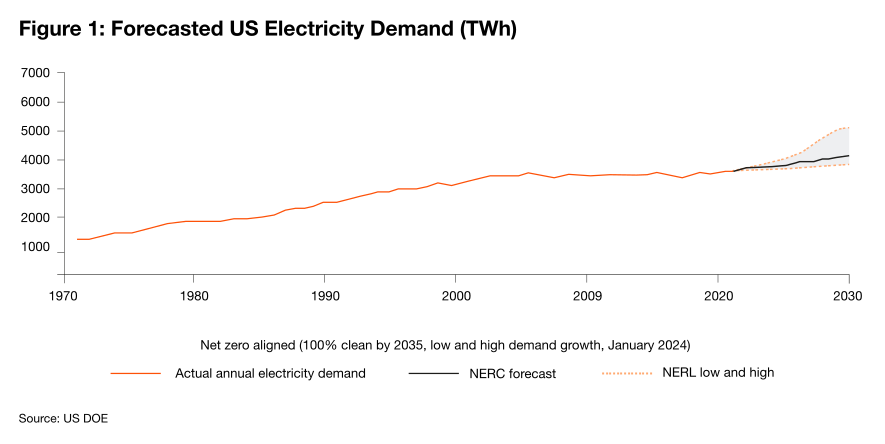
Tech giants sent a bolt of uranium-enriched adrenaline through the energy industry by announcing plans to power data centers with nuclear energy. Why the sudden shift to nuclear? After decades of stagnation, U.S. energy consumption is surging faster than reliable energy sources can deliver. Over the next decade, demand is expected to rise by as much as 15% to 20% (See Figure 1)1.

Expanding data centers, driven by the rapid rise of artificial intelligence, will account for a huge portion of that growth. By 2030, these power-intensive facilities are forecasted to consume nearly 10% of total U.S. electricity generation — double the 2023 figure2. Additional demand stems from reshoring manufacturing, building electrification, and electric vehicle adoption.

These trends highlight the need for reliable, scalable power sources to support economic growth and technological progress. While a diversified energy portfolio remains essential, nuclear power is emerging as a leading contender to meet this challenge.

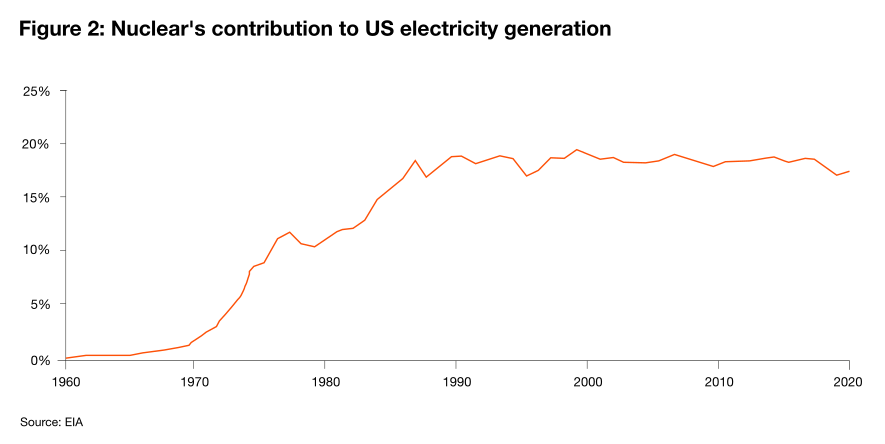
Nuclear has been key to the U.S. energy mix since 1957, growing steadily until the1980s when negative perception, cost overruns, and project delays stalled progress (See Figure 2). Today, nuclear represents almost 20% of the country’s total power supply and nearly half of its zero-carbon power, with 94 reactors generating roughly 100 GW of power3 (See Figure 3). However, with most plants over 40 years old, revitalizing infrastructure and adopting new technologies like small modular reactors (SMRs) is crucial for improving efficiency and meeting growing energy needs.

What makes nuclear power uniquely suited to meet growing energy demand? It is the only solution that delivers efficient, clean, consistent baseload power while also strengthening national security.

The case for nuclear

As electricity demand surges, the challenges of relying on fossil fuels—environmental, economic, and geopolitical—are clear. Zero-carbon alternatives such as solar or wind hold promise, but face significant limitations, including intermittency, geographic incompatibility, and land use requirements. Nuclear, by contrast, offers clean, consistent energy capable of serving high-demand facilities like data centers or contributing to the grid as baseload. Nuclear has a higher power density than other technologies, making it a prime candidate to meet demand growth particularly in areas with limited land availability.

Nuclear's low variable costs and 18-24 month refueling cycles support predictable pricing and insulate it from broader shocks - especially compared to natural gas prices, which are very sensitive to geopolitics, or renewables, which depend on weather4,5. This makes nuclear an important tool for building a resilient, predictable, and reliable energy system.

Diversified energy supply is vital to national security. While the U.S. once led reactor development, it has built only three since 2000, compared to 52 in China and 13 in Russia. This erosion of U.S. leadership carries far-reaching implications, from control over uranium supplies to the establishment of regulatory standards and nonproliferation efforts. Reclaiming leadership in nuclear power is not only an energy imperative but a national security priority6.

Next steps to nuclear revival: Innovation leads the way

SMRs are redefining nuclear power and offer a potential way forward to supplement the nation’s existing nuclear infrastructure. These small reactors, ranging from 100-300 MW, offer greater flexibility compared to larger, traditional reactors, which typically exceed 600 MW7. SMRs also introduce the potential for economies of scale through standardized design and construction. Moreover, SMRs can extend nuclear’s benefits to regions with smaller grids or industrial sites, such as data centers, where consistent and localized power is essential, and the local economy can also benefit.

While early efforts in SMR deployment, such as NuScale’s project, faced challenges like cost overruns, growing interest from tech companies and the energy sector is driving renewed momentum and attracting top talent. SMRs’ ability to complement the aging fleet while addressing modern energy demands makes them a transformative innovation in nuclear power.

In addition to renewed focus on SMRs, continued progress in advanced fission reactor technologies (e.g., fast neutron, molten salt, high-temperature gas-chilled) offer improvements in safety, economics, operational flexibility, and waste reduction. Fusion technology has similarly garnered a recent surge in investment and remains a long-term holy grail for the industry8.

To spur a nuclear renaissance and meet growing demand, we recommend a combination of short-term and long-term actions.

In the short term, with SMRs not expected to be operational until 2029, nuclear gains can be achieved by improving the nation’s operational, large-scale reactors. This approach has been supported by the Biden administration, which prioritized extending the lifespan of existing facilities, increasing rated power generation, and, in select cases, restarting prematurely decommissioned plants. These efforts seemingly align with the Trump administration's stated goals of “modernizing the Nuclear Regulatory Commission, working to keep existing power plants open, and investing in innovative SMRs.”

Gaining the support of regulators is crucial, as demonstrated by the recent 2-1 FERC decision, which rejected the expansion of behind-the-meter co-location power from the Susquehanna Nuclear facility to an on-site Amazon data center as more information was required.9 Additionally, today data center providers are turning to natural gas energy solutions due to their short build times relative to long nuclear construction projects. Advocating for regulatory clarity – and addressing bipartisan concerns around energy affordability – will provide a more streamlined path for nuclear construction and investment security for further nuclear development.

We believe a three-pronged approach is necessary for a robust and long-term nuclear energy industry: regulatory support, innovation and technology partnerships, and cost reduction strategies.

Striking the right balance between safety and efficiency is key to accelerating nuclear energy deployment. While the U.S. Department of Energy’s Idaho National Laboratory has identified ways to potentially cut reactor licensing and approval times in half, accelerated approval processes cannot overlook the critical issue of spent nuclear fuel management10. With fuel still stored at plants across the country, a permanent solution requires Congressional action to confirm safety and sustainable progress. Modernizing nuclear regulatory processes, while maintaining rigorous safety standards, is essential for enabling faster and more efficient nuclear development.

Public support is equally vital. A recent report from the Texas Advanced Nuclear Reactor Working Group highlights bipartisan backing for nuclear power across demographics. It found that individuals who feel informed about nuclear energy are significantly more likely to support it, underscoring the need for targeted information campaigns to build public confidence in nuclear safety and reliability11.

Addressing siting challenges and interconnection delays is the third major regulatory priority for scaling up nuclear deployment. SMRs offer two major advantages: their smaller footprint enables construction in areas too restrictive for traditional nuclear plants—an Oak Ridge National Laboratory study found nearly 27% of U.S. land could host an SMR, double that for conventional reactors—and their ability to be deployed in behind-the-meter configurations helps bypass siting constraints and interconnection delays. Effective deployment will require a holistic approach that considers geography, grid access, energy market dynamics, and available tax incentives12.

On the industry side, big tech companies are demonstrating demand for nuclear to power data centers. These include Google’s partnership with Kairos Power for 500MWs of power at a series of advanced reactor sites; Microsoft’s 20-year power purchase agreement with Constellation Energy to restart Three Mile Island Unit 1 (renamed as Crane Clean Energy Center); Amazon’s participation in X-energy’s $500 million Series C financing; and Meta’s 4GW nuclear RFP.

On the government side, continued support from the new administration of programs initiated under the Biden administration is critical to advancing nuclear energy's competitiveness. Key programs include the October 2024 SMR Program Engagement, which allocates $900 million to support first-mover teams, the Inflation Reduction Act (IRA) and Loan Program Office, which further improves nuclear’s competitiveness by offering tax credits and financing solutions13.

Robust cost reduction strategies are necessary to expand the nation’s nuclear footprint. The DOE anticipates that up to 65% savings between first iteration reactor construction and follow-on delivery would be possible as learning-by-doing, standardization, and build time reduction are embraced. Modulization and offsite construction can similarly increase component quality and thereby reduce on-site re-work.

Building durable supply chains remains an important lever to mitigate future cost pressures as the U.S. receives the majority of its uranium and enrichment services from abroad. In the past year, the U.S. initiated efforts to secure its nuclear energy supply chains with key allies and invested in domestic uranium mining and enrichment. Supporting efforts to reinforce the U.S. nuclear supply chain will enable future price stability. 

Conclusion

It will take a balance of short- and long-term moves to advance nuclear energy in the U.S. In the near term, power generation owners should explore extending the longevity and increasing the output of existing assets. Large energy users should pursue direct interconnections or off-take agreements to meet growing demand. Long term, SMRs offer scalable solutions assuming the necessary regulatory support, technology partnerships, and cost reduction strategies. And even longer-term, new advanced nuclear technologies should be stimulated and developed to reshape America as an innovation and nuclear leader. These measures will help nuclear energy take center stage in a sustainable and resilient energy future.

1 .S. Department of Energy, "Clean Energy Resources to Meet Data Center Electricity Demand," Office of Grid Deployment, August 2024

2 Electric Power Research Institute (EPRI), Powering Intelligence and Data Center Energy Consumption (Palo Alto, CA: EPRI, May 2024)

U.S. Department of Energy, "5 Fast Facts About Nuclear Energy," Office of Nuclear Energy, accessed 12/3/25

4 Guanghao Wang, Erwann Sbai, Le Wen, and Mingyue Selena Sheng, “The Impact of Renewable Energy on Extreme Volatility in Wholesale Electricity Prices: Evidence from Organisation for Economic Co-operation and Development Countries,” Journal of Cleaner Production 484 (2024): 144343

5 Jean-Louis Malon, Green Energy’s Intermittency Problem, Natixis Corporate Investment Bank, November 2024

6 David Gattie, “Competition Advance as a National Security Objective for US Civilian Nuclear Power Policy,” Georgetown Journal of International Affairs, June 3, 2024

7 U.S. Nuclear Regulatory Commission, "New Nuclear Plant Designs," accessed 12/3/25

8 World Nuclear Association, "Generation IV Nuclear Reactors," accessed 12/3/25

9 "FERC Order Rejecting Co-Location of Nuclear Facility and Data Center," Foley & Lardner LLP, November 2024

10 Stephen J. Burdick, J.D., Dr. John C. Wagner, and Dr. Jess C. Gehin, Recommendations to Improve the Nuclear Regulatory Process, Idaho National Laboratory, April 2023

11 Texas Advanced Nuclear Reactor Working Group, Report on Advanced Nuclear Reactors, November 2024

12 Safely and Responsibly Expanding U.S. Nuclear Energy: Deployment Targets and a Framework for Action, The White House, November 2024

13 U.S. Department of Energy, "Biden-Harris Administration Enacts Law Banning Importation of Russian Uranium," May 14, 2024

Contact us

Earl Simpkins

Principal, Strategy&, PwC US

Follow us