


{{item.videoDuration}}
{{item.title}}
{{item.text}}

{{item.videoDuration}}
{{item.text}}
Kids today are speaking up for themselves, and parents are listening. A 7-year-old knows exactly which brand of yogurt goes into the grocery cart. An 11-year-old adds lip gloss to her mom's online order. A 13-year-old uses a delivery app to get dinner, charged to a card that technically isn't his. And mom and dad? They're mostly fine with it.
Welcome to the world of Generation Alpha, where 70% of 7- to 14-year-olds own their own tablet, 72% use smartphones regularly, and 97% say they make purchasing decisions independently at least some of the time. With an average of 3.6 hours of recreational screen time daily—more than double the time spent playing outdoors or reading—these kids aren’t just consuming content. They’re also using what they learn online to change how their families spend money. According to PwC’s new survey of more than 1,000 children, ages 7-14, and 1,000 parents, kids in this generation have become some of the most influential consumers in their households.
97% of 7- to 14-year-olds say they decide what to buy independently at least some of the time.
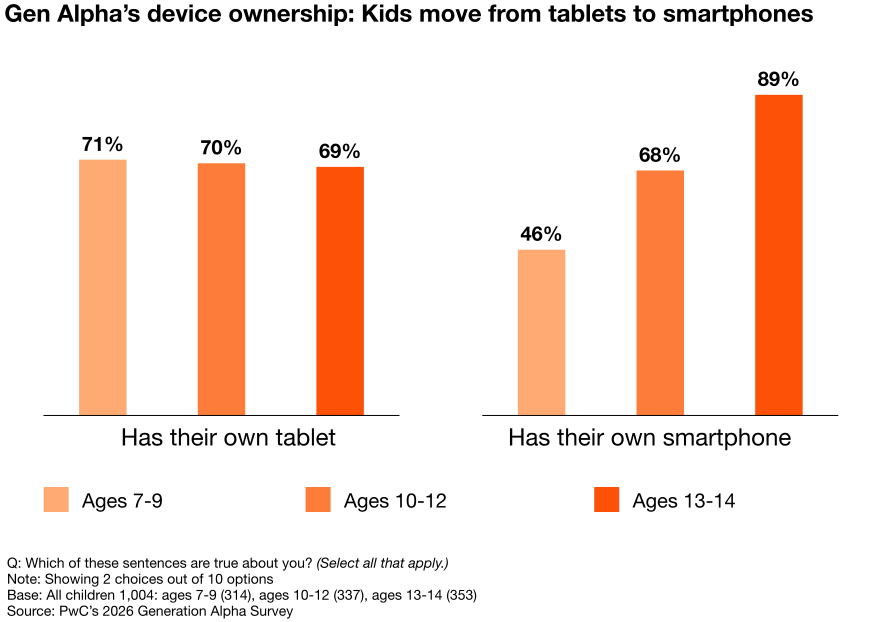
This generation spent their earliest years during the pandemic—going to school on screens and spending more time with family than friends. During that time, tech devices became a sort of crisis-management tool for many parents. Access started early, even for toddlers, and adoption stuck as those same kids became tweens. Among 7- to 9-year-olds today, 46% already own their own smartphone; by 13-14, it’s 89%. Tablet ownership starts at 71% and then flattens, likely as teens migrate to phones. Add in shared devices, and nearly every middle schooler has access to commerce.
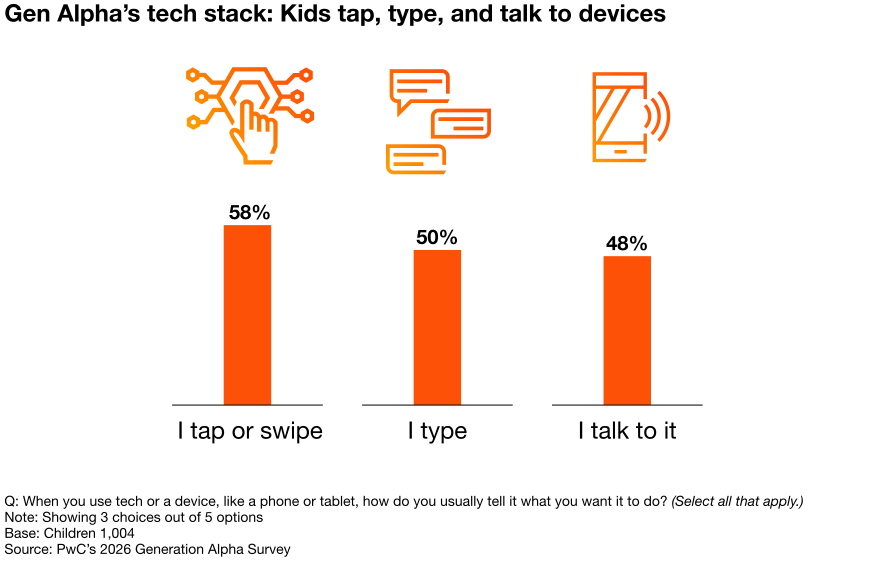
Most kids in Gen Alpha don’t think about technology any more than they think about running water—it’s just there. Fifty-eight percent tap or swipe, 50% type, and 48% use voice commands. They toggle seamlessly between modalities, swiping through social feeds, voice-typing homework, and asking devices to tell jokes. Among young teens (ages 13-14), 38% say they use AI tools for fun—a rate that rivals adoption across many corporate workforces.
On average, 7- to 14-year-olds spend 3.6 hours daily on screens for fun.
When asked what makes them want to buy something, 61% of Gen Alpha respondents point to social media—a figure that’s larger than peer influence (56%) and significantly outpaces traditional channels like TV advertising (48%) or in-store browsing (53%). Even among the youngest children surveyed, 7- to 9-year-olds, 57% say social media influences what they buy. For context, these are second- and third-graders scrolling past product placements in between gaming tutorials and slime videos.
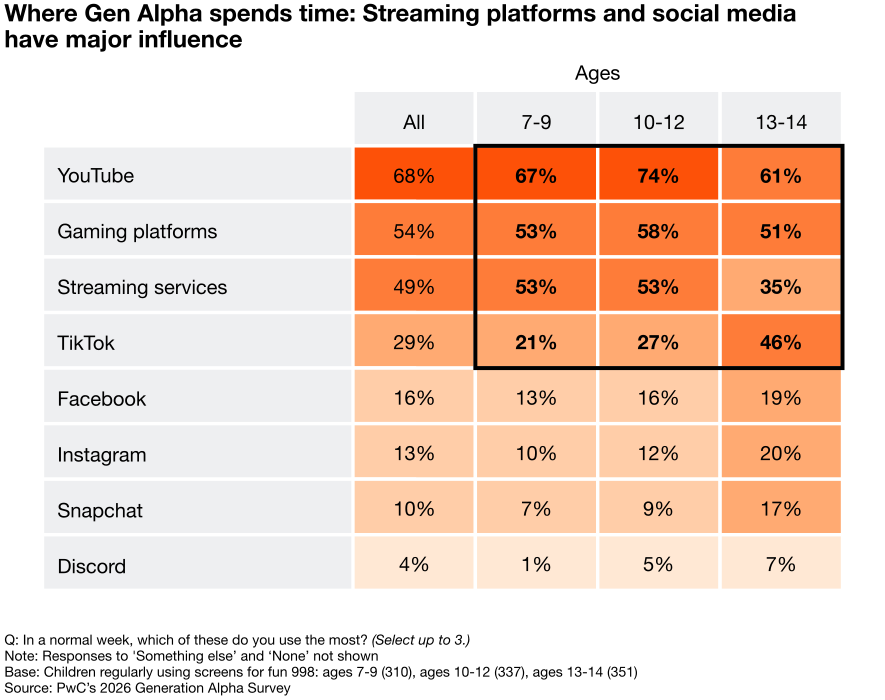
Sixty-eight percent of Gen Alpha respondents also say they use YouTube regularly, followed by gaming platforms (54%) and streaming services (49%). TikTok's influence rises sharply with age: Just 21% of kids 7-9 say they use TikTok regularly, but that number rises to 46% among young teens (13-14 years old). This data suggests that, over time, social media and gaming platforms become kids’ primary discovery engines, the places where brand preferences and purchase intent begin.
What makes kids stop using their devices? They cite boredom as their primary reason for abandoning an app (52%), followed by excessive ads (47%) and slow load times (36%). Just 36% say hitting screen time limits or adult intervention is the reason they put down the screens. Brands that fail to deliver frictionless, entertaining, relevant experiences will lose them—not because a parent intervened, but because Gen Alpha chose to leave.
Most kids in Gen Alpha (72%) say they buy food and drinks, followed by toys (57%) and clothing (55%). Digital spending is also significant, with gaming representing a major share of Gen Alpha’s budget: 53% purchase digital apps or one-time downloads, 34% buy subscriptions or passes, and 42% make in-game purchases. For retailers, gaming companies, and consumer packaged goods brands, the implications are immediate: This generation knows what products (and brands) they like, years before they even have their own significant income or credit.
Payment methods remain surprisingly traditional. Cash is still around, even for a generation that lives online. But we do see shifting behavior over time, likely as parents feel that kids gain maturity with age. For instance, kids’ use of digital payments or wallets rises, with 23% of 13- to 14-year-olds using them compared to 12% of 7- to 9-year-olds.
On average, however, the data for 7- to 14-year-olds shows that:
One of the most striking findings in PwC’s survey is how much commercial activity might be happening without parents realizing it. Fifty-two percent of kids report adding items to shared online shopping carts for parental review before checkout—a modern version of “Can we get this?” But nearly one in four kids (24%) say they independently order items using shopping apps or websites, and 25% do so via food delivery platforms like DoorDash or Uber Eats.
Meanwhile, parents see things differently. Only 19% of parents reported that their children are independently ordering via shopping apps, and just 14% think their kids are using food delivery apps on their own. That's an 11-percentage-point gap on food delivery, suggesting a meaningful disconnect between what kids do and what parents think they do.
Ninety-seven percent of children say they have at least some influence over clothing and accessories purchases (with 55% claiming “a lot” of influence), and about 94% of parents perceive that level of sway. But when asked about their influence on skincare and beauty products, 81% of kids report influence compared to 61% of parents.
Who’s right? Probably both. Parents may be underestimating how much their children’s preferences shape household spending, particularly in categories where purchases happen quickly and digitally. Meanwhile, children may be overestimating their influence, conflating having an opinion with decision-making. But the disconnect itself is revealing, and it echoes a shift already reshaping how some beauty and apparel retailers think about marketing to young people as they design store layouts and develop products.
This is not a generation that simply asks for things. They strategize. Sixty-one percent of kids say they add desired items to birthday or holiday wish lists—an approach that demonstrates planning and technical sophistication. A “list” today is often a curated slideshow or an aesthetic mood board with product links embedded—many built using the same tools their parents use for work presentations.
Forty-seven percent ask for items immediately when they see them in stores, and 44% ask right away when browsing online. About as many also negotiate or bargain (44%) and talk about an item multiple times before directly requesting it (43%). This data reveals kids who understand the art of the repeated ask. They’re strategic and creative planners, often connecting a purchase to an event like a birthday or a strong report card to improve their odds of approval.
In a typical week, 38% of Gen Alpha kids receive more than $20, a figure that rises to 51% among 13- to 14-year-olds. Seventy-nine percent of parents, and 86% of children, 7-14, report that kids earn their own money, primarily through chores (65%), good performance on things like grades, sports, and hobbies (50%), and small jobs for others (22%). This isn't passive allowance; it's earned income tied to effort. By the time Gen Alpha reaches adulthood, many could have a decade of entrepreneurial experience, whether selling limited-edition collectibles or side-hustling through digital platforms.
While Gen Alpha shares many common traits like digital fluency and commercial confidence, it’s far from uniform. These five personas aren't mutually exclusive (a child can be both a gamer and a young founder, or a fit checker and an outside kid), but they can help provide a useful framework for understanding commonalities and differences among kids today.
Generation Alpha isn't a future consumer segment waiting in the wings. The kids are participating now, influencing billions in household spending and building brand relationships that could last decades. For companies, here are three things to keep in mind about this increasingly powerful group of kids:
1. Design for collaborative decision-making. The purchase journey now includes a digitally fluent child who researches products and advocates for brands. Create experiences that respect both the child’s voice and the parent’s authority—shared carts, comparison tools, educational content—to build product literacy. And skip any potentially condescending messages; these kids know quality when they see it, and they’re learning commerce by doing. Brands that become part of that education can earn loyalty that extends into adulthood.
2. Meet kids where they are. If your brand isn't on social media, gaming platforms, and streaming services, you’re likely invisible to this generation. Influencer partnerships, in-app placements, and social commerce are foundational.
3. Earn their attention—and their parents’ trust. Boredom, excessive ads, and slow load times drive Gen Alpha away. Design for high standards and quick decision-making. These kids have dozens of alternatives one swipe away. But remember, they’re also generating behavioral data from an early age. Companies that collect or benefit from this data should build transparent, age-appropriate experiences. Getting this right isn’t just a compliance obligation; it’s a trust signal to the parents who control the credit cards.
This generation has grown up in a world where smartphones are both entertainment and storefront. For them, technology and commerce are just part of daily life—integrated into how they learn, play, and connect.
But here's what's easy to miss beneath the headline stats about screen time and spending: These kids are smart and sophisticated. They’re earning their own money, researching things before asking for them, negotiating with patience, and building fluency with AI tools most adults are still figuring out. The kids adding lip gloss to mom's cart today will likely be the same people one day launching companies, curing diseases, and inventing things we haven’t even imagined yet. Companies and parents that channel that energy well won’t just help raise better consumers. They can help shape a more resourceful generation of adults.
{{item.text}}
{{item.text}}