






Developing modern transportation is the right move
This article has been translated by PwC Indonesia as part of our Indonesia Infrastructure News Service. PwC Indonesia has not checked the accuracy of, and accepts no responsibility for the content.
Investor Daily - Langkah tepat bangun transportasi modern
17 October 2024
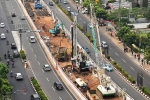
Jakarta, ID – President Joko Widodo's (Jokowi) initiative to aggressively develop modern transportation modes and systems, including the mass rapid transit (MRT) and light rail transit (LRT), during his 10-year administration is considered a suitable policy. This is particularly relevant for Jakarta and its surrounding areas, where the MRT and LRT operate, as these regions have high population density and mobility.
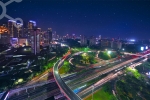
As a metropolitan area, Jakarta alone is home to more than 10 million people. Including its surrounding cities, there are approximately 29.7 million people in Jakarta, Bogor, Depok,
Tangerang, and Bekasi (Greater Jakarta) who are over five years old. This means around 4.46 million, or 15%, are commuters. Nearly every day, these individuals travel within Greater Jakarta to go to work or school.
If the capacity of mass transportation is limited, the number of people who can use it is also restricted. Among the approximately 4.46 million commuters, only 19.5% use mass transportation, while 79.0% rely on private vehicles. Consequently, this leads to traffic congestion, fuel waste, air pollution, and traffic accidents, all of which impose significant costs on the economy.
Therefore, to complement the Commuter Line (KRL) and the bus rapid transit system TransJakarta, the government is developing other modern transportation systems. These include the MRT in Jakarta (inaugurated in 2019), the LRT (inaugurated in 2018 in Palembang and in 2023 in Jakarta, Bogor, Depok, and Bekasi), and the Jakarta-Bandung high-speed railway, inaugurated in 2023. With these advancements, Indonesia is starting to catch up to developed countries around the world.
The Jakarta-Bandung high-speed railway utilises sophisticated technology, allowing it to reach speeds of up to 350 km/hour. It is the first high-speed railway in Southeast Asia.
Meanwhile, the idea to construct the MRT in Jakarta was initiated as far back as 1985 by BJ Habibie, who was the Head of the Agency for the Assessment and Application of
Technology (BPPT) at the time. The project officially began in 2013 when Jokowi was still the Governor of Jakarta and was inaugurated at the end of his first presidential term.
In addition to addressing transportation problems, the development of modern transportation systems is also expected to have a significant economic impact. By reducing the annual losses from traffic congestion, which amount to Rp100 trillion in Jakarta and its surrounding areas, modern transportation development can also provide a multiplier effect on the economy. This includes boosting economic activities and spurring property development near LRT, MRT, and high-speed railway stations.
Transportation observer and Deputy Head of Regional Empowerment and Development at the Indonesia Transportation Society (MTI), Djoko Setijowarno, stated that one of the key indicators necessitating the construction of transportation modes such as the MRT and LRT is the level of population density and mobility in the area.
Therefore, the development of the MRT and LRT during President Jokowi's administration is a prudent decision, as these systems are constructed and operated in Jakarta and its surrounding areas. "The population in Jakarta and its surroundings is very dense. The Commuter Line can no longer be solely relied upon as it is already overcrowded," Djoko told B-Universe recently.
Strong determination needed
He added that in every country, strong determination from its leaders is essential to develop modern transportation projects, such as the MRT, LRT, and high-speed railway. "It's the same abroad. France and Japan took a long time to construct an MRT, and there were many debates. Jokowi needed 30 years of debate to get it done. So, strong determination is crucial to realise these projects. Without it, there would be nothing but endless meetings," he stated.
Djoko further added that after they became operational, the MRT and LRT had a tangible impact on the mobility of the population in Jakarta and its surrounding areas. According to him, the MRT and LRT offer the time efficiency, comfort, and affordability that people seek. However, he noted that both the central and regional governments still have work to do in enhancing mass transportation by integrating it with feeders from residential areas.
Feeders are essential to encourage people, especially the upper middle class, civil servants, and government staff, to use the LRT and MRT. Feeders facilitate convenient access to stations from homes and vice versa. "Therefore, the feeders must be in good condition and comfortable, similar to the LRT," Djoko said on a separate occasion.
According to Djoko, the MRT and LRT are mainline transportation systems, and there is still a lack of transportation options that reach residential areas in Greater Jakarta. "There are more than 1,400 residential areas in Greater Jakarta, yet the number of transportation options that serve these areas is very limited. This is a significant problem, as overall transportation expenditure remains high," he explained.
Next Article: JTTS boosts logistics flow at Kuala Tanjung Port
Contact us