










A defining moment for telecoms
Globally, the telecommunications industry is at an inflection point, as it faces up to a set of powerful, converging forces including digital disruption, regulatory evolution, intensifying competition, and increasing pressure from shareholders for higher returns. Together, these factors are straining the traditional telecoms business model – built on vertically integrated networks and legacy revenue streams – to breaking-point and beyond.
As technological innovation and changing consumer demands continue to reshape the market, telecom leaders are finding themselves forced to confront a stark reality: the survival of their businesses hinges on reinvention. However, despite widespread acceptance of the need for transformation, many telcos remain tethered to outdated business models that limit their agility, efficiency, and ability to create value.
The good news? There’s a way to break out of this logjam. Business Model Reinvention (BMR)[1] is a process through which telecom companies can fundamentally reassess and transform their strategic, operational, and financial structures to create sustainable long-term value.
This transformation often involves shifting away from vertically-integrated legacy structures and towards specialised, modular business models, enhancing the business’s ability to monetise infrastructure, expand into new digital services, and leverage emerging technologies such as AI and cloud computing. The need for BMR in the telecom sector is strongly underlined by PwC’s latest Global CEO Survey[2], which finds that 55% of industry CEOs believe their companies will not survive another decade if they continue along their current trajectory. In contrast, telecom leaders who have successfully pursued reinvention strategies report higher growth, improved shareholder returns, and greater resilience to market volatility.
Against this shifting backdrop, this paper explores the necessity of BMR in the telecom sector, providing insights into emerging strategies, regulatory challenges and competitive imperatives. Drawing on recent thought leadership, real-world case studies and industry research – including insights from PwC’s Global Telecom Outlook[3] and PwC Strategy&[4] analyses such as Reinventing the telecom model: A ‘puretone’ approach[5] or The state of competition in telecoms[6] – we examine how telecom operators can reposition themselves for long-term sustainability and growth in a rapidly-evolving digital economy.
The Business Model Reinvention (BMR) Pressure Index
To track changes over time in the degree to which telcos are being compelled to transform their business, we have developed the Business Model Reinvention (BMR) Pressure Index. The recent results make compelling reading. As shown in the chart below, the pressure on telcos to reinvent their businesses has reached historic highs, rising to levels comparable with previous severe industry disruptions such as the dot-com bubble and much higher than those seen during the 2008 financial crisis. The current surge in pressure to transform is being driven by an array of forces including declining returns, technological shifts, and increasing regulatory scrutiny.
Figure 1: BMR Pressure Index for the global telecom sector, showing historical and forecast trends
Strategic shifts: Creating new business models, crossing growth frontiers
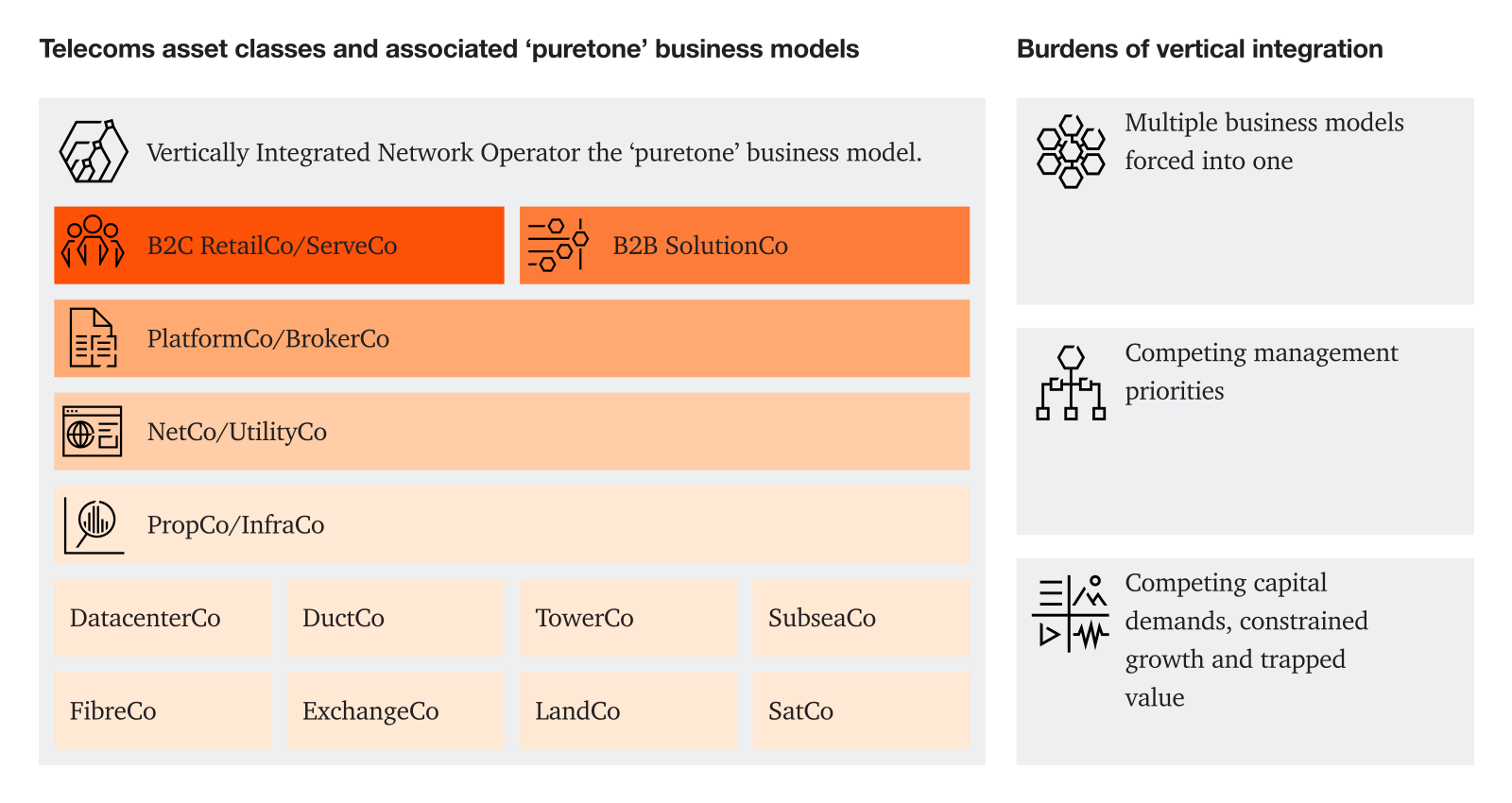
The clear message from our BMR Pressure Index? That to compete effectively in today’s evolving digital landscape, telecoms service providers must rethink and recalibrate their business models. And some forward thinking operators are already doing so, with the most progressive now navigating a strategic shift towards more modular, specialised business units. This new structure is often referred to as the ‘puretone’ model: an approach under which distinct business functions – such as infrastructure management, enterprise services, and consumer digital platforms – are unbundled and given a high degree of operational autonomy. The effect is to bring greater clarity and focus that ease the burdens imposed by vertical integration.
One of the most visible manifestations of this transformation is an increased focus on asset monetisation. Many telcos have begun to restructure their operations by creating separate entities for towers (TowerCos), fibre networks (FibreCos), and core network infrastructure (NetCos). These asset-light models allow telcos to release capital, improve efficiency, and attract specialised investment partners – all while freeing up time and resources to focus on higher-margin services.
Figure 2: The separation of telecom asset classes in the 'puretone' business model
What makes a ‘puretone’ pure?
As the momentum of the move toward puretone business model builds, our experience in this area has grown to include dozens of consulting engagements as well as countless conversations with telecoms executives, deals professionals and financial analysts. Drawing on this wealth of insight, we’ve identified a handful of attributes or ingredients that are critical to making a ‘puretone’ business model viable. The common features throughout are simplicity and clarity, mirroring the concept of ‘purity’.
Collating our insights, we end up with six categories of factors that determine the ability of a ‘puretone’ business to succeed – that is, attain competitive advantage and translate that into profitable growth.
Here are the six categories, together with some key questions to test out each of them:
No question, it’s possible to debate the trade-offs and realities associated with every item on this list. But we believe that, collectively, these six categories of factors build into a diagnostic framework providing a sound indication of a ‘puretone’ business’s chances of success.
Figure 3: BMR maturity - Diagnostic dimensions
Re-frame, Re-configure, Re-invent
The three-stage BMR Readiness Assessment Framework
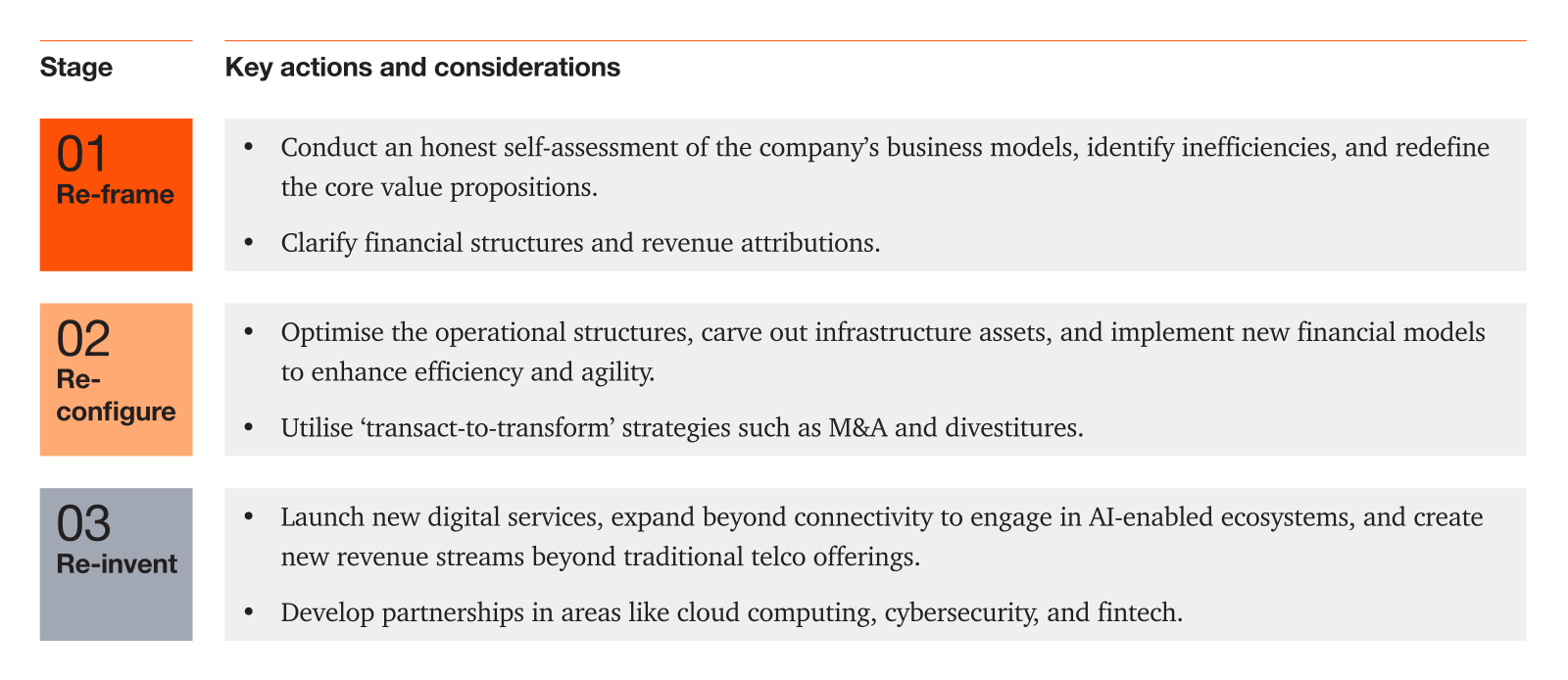
As telecoms operators evolve and progress towards transformation, they move through three distinct stages: Reframe, Reconfigure, and Reinvent.
Research shows that companies that navigate these stages successfully achieve stronger market positioning, greater diversification of revenue, and higher confidence among investors. However, this transition is neither automatic nor guaranteed. It requires deliberate action, investment, and leadership vision at each stage, as described here:
Figure 4: BMR Readiness Assessment Framework
The global BMR research and assessment findings
To assess the current status of Business Model Reinvention in the telecom sector, a global team of PwC industry specialists conducted an extensive outside-in analysis across more than 30 integrated telecom operators worldwide. The research evaluated each carrier’s strategic readiness for BMR, by capturing the current business unit (BU) structure and assessing – at a BU by BU level – the extent to which the six categories of ‘puretone’ conditions are being met.
Figure 5: BMR maturity scores by region and carrier[3]
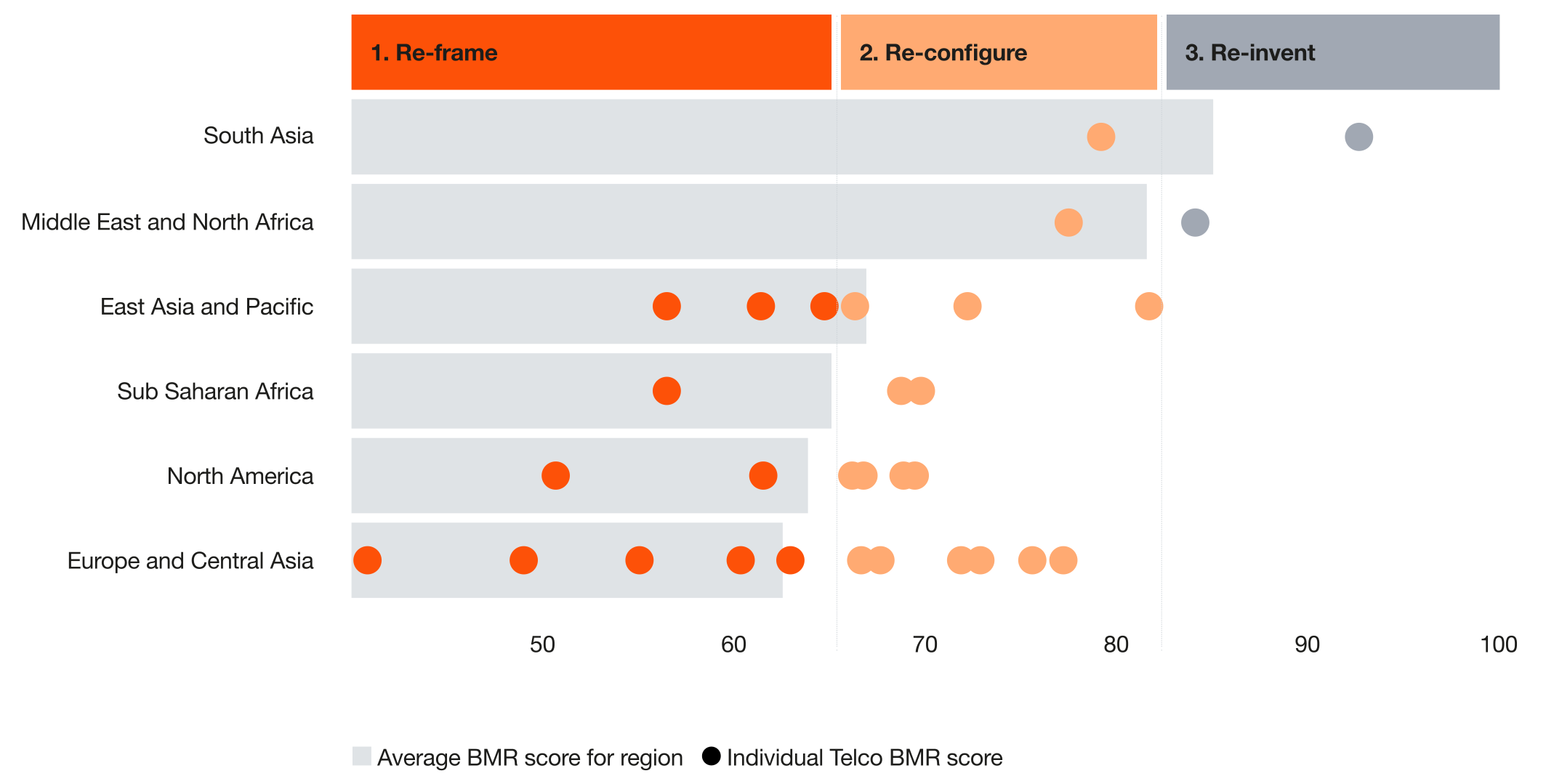
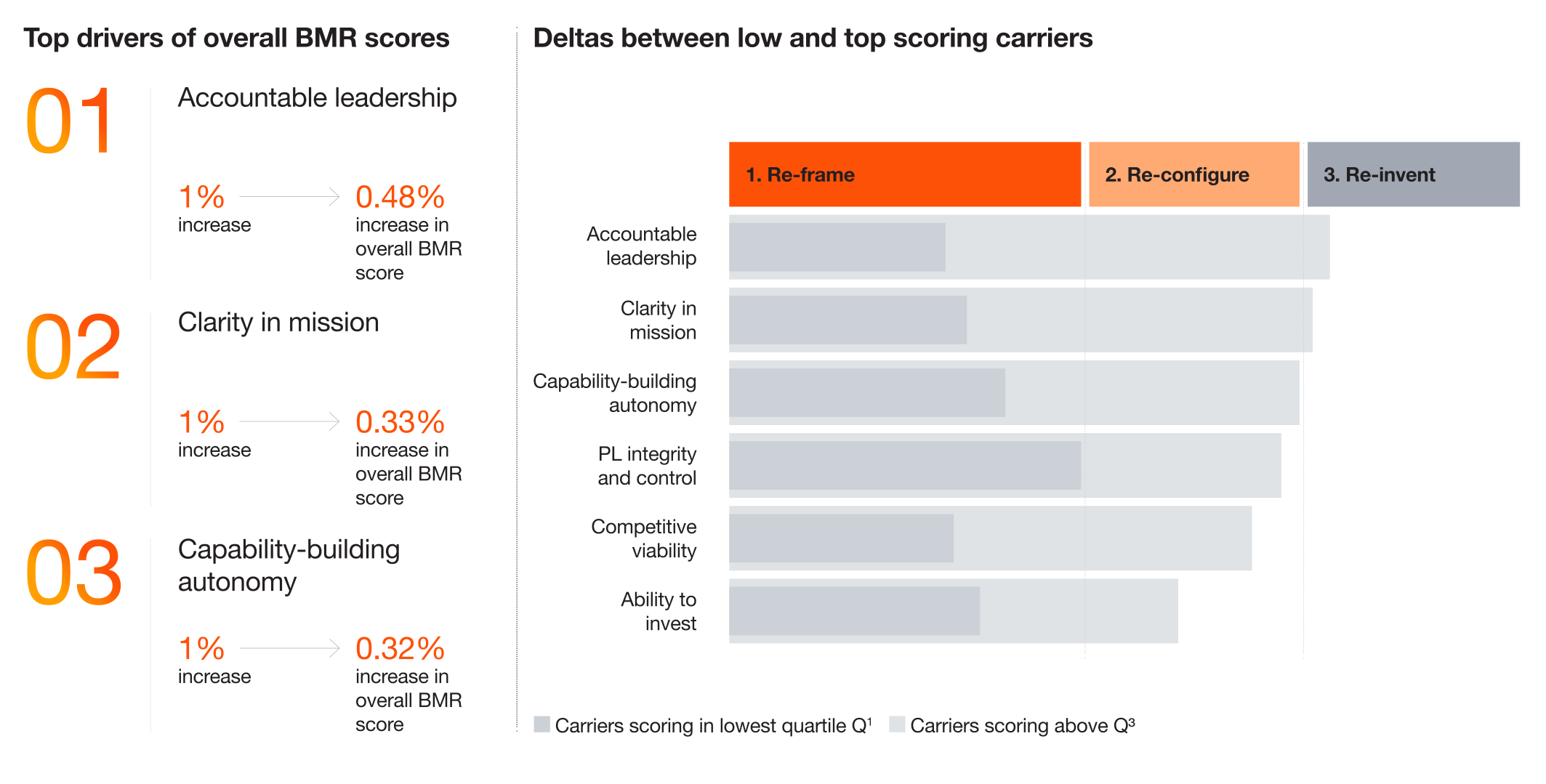
This approach gave us a clear view of each business’s stage of maturity in navigating reinvention. Some top line-findings? While virtually all the telcos analysed have embarked on the three-stage BMR journey, very few have reached the ‘reinvent’ phase – with most currently grouped in ‘reconfigure’. And companies’ level of BMR maturity is influenced by a small handful of attributes, led by accountable leadership and then clarity in mission.
Figure 6: Detailed BMR maturity assessment scores, highlighting the key drivers of BMR success[4]
A revenue breakdown across different operators’ business models
A further significant finding from our research is that, among telecom operators undertaking business model reinvention, the distribution of revenue across traditional telecom services, adjacent business models, and net new ventures varies significantly. Here’s what these three categories of revenue contain:
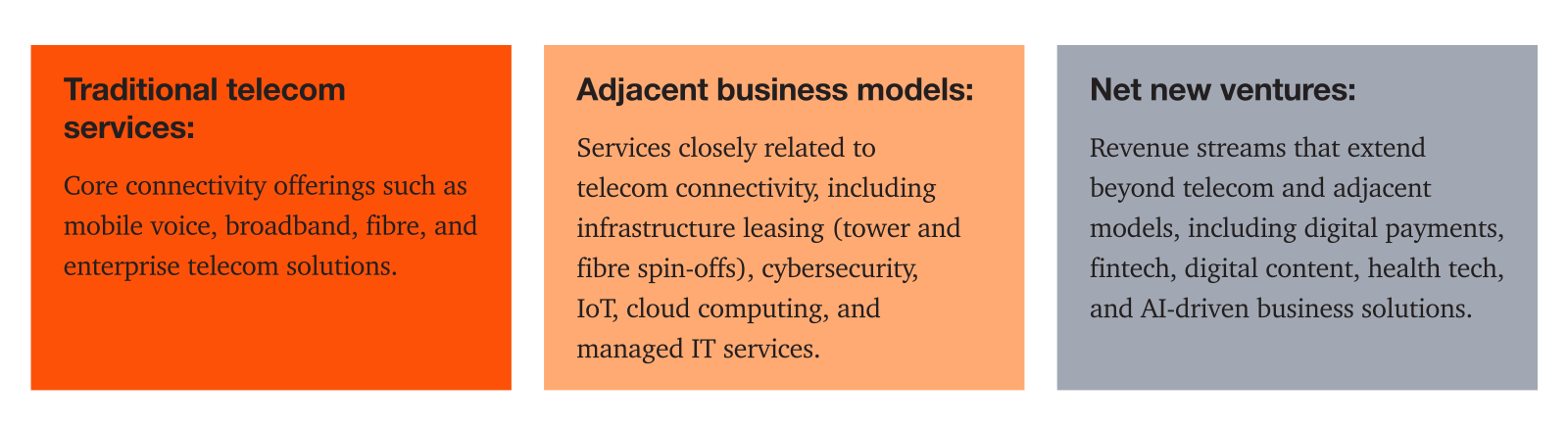
The percentage revenue breakdown between these three categories for the operators analysed in our research is shown below:
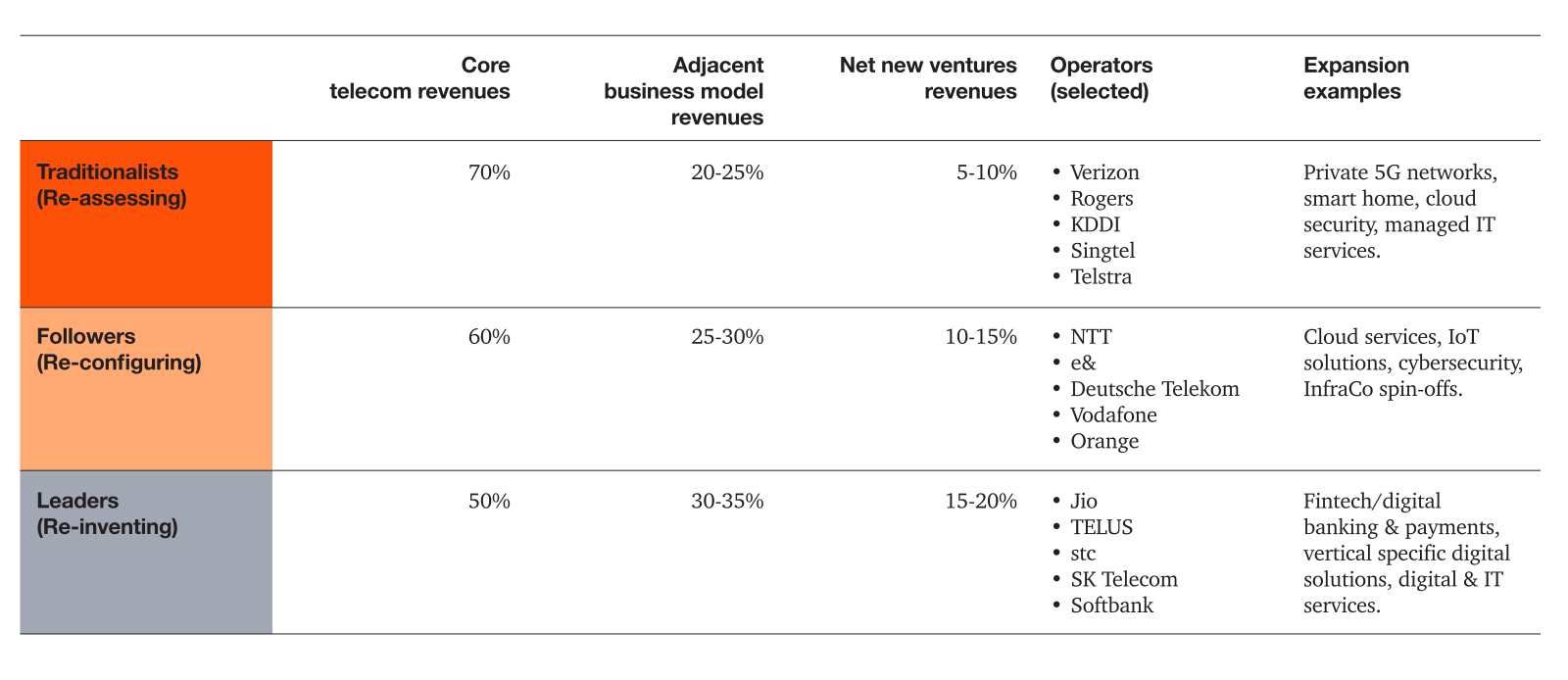
These wide variations in revenue distribution reflect how telecom operators are transitioning beyond their core business into adjacent and net new business models, leveraging infrastructure separation, cloud computing, fintech, and AI-driven services. Companies like Jio, Softbank, and TELUS have significantly expanded beyond traditional connectivity. Meanwhile, others such as Verizon, Rogers and KDDI are maintaining a strong reliance on core telecom revenue – but are gradually increasing their exposure to higher-growth digital services.
Common patterns and strategies in telecom reconfiguration and reinvention
When we examine the approaches to restructuring and reinvention being taken by telecom operators worldwide, we find that a distinct set of strategies and patterns emerge as being especially common across the industry. The most prevalent of these are set out and summarised in the table below. These strategies are closely aligned with the industry-wide shift underway towards asset monetisation, digital transformation, and new revenue streams beyond connectivity.
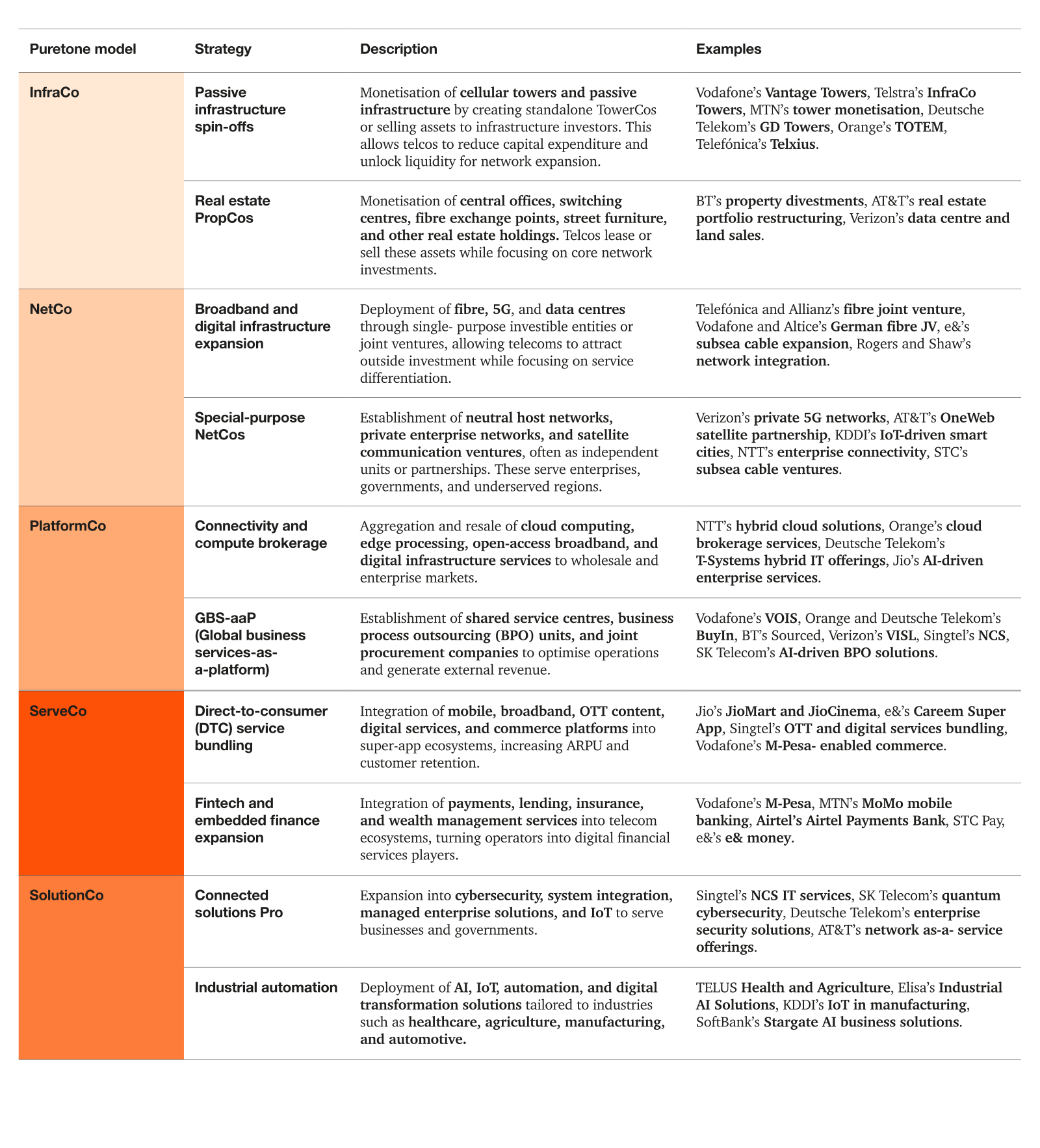
Looking across these common strategies, a number of patterns and correlations emerge for different models. These include:
By implementing these various business model reinvention strategies, telecom operators are navigating their way from legacy telecom providers to diversified digital services and infrastructure companies, securing long-term growth beyond traditional connectivity revenue streams.
Close linkage between BMR scores and financial performance
When we map operators’ Business Model Reinvention (BMR) scores against their financial performance, we find that a strong correlation exists between the two. Our analysis shows that telcos that have embraced structural change and business diversification have achieved increased market valuations and delivered stronger revenue growth. This reflects the fact that investors have responded favourably to telecom companies that successfully reframe, reconfigure, and reinvent their business models, rewarding them with higher earnings multiples and reaping improved shareholder returns.
Furthermore, a closer analysis of the BMR scores from our global sample of telecom operators reveals that those in the ‘reinvent’ stage tend to command significantly higher enterprise value (EV) to EBITDA multiples. The difference can be dramatic: operators that have successfully separated infrastructure assets, launched new digital services, or expanded into adjacent industries enjoy valuation premiums of 30% to 50% over their more traditional telco counterparts. This is largely because they have been able to reduce capital intensity in core operations while increasing the margins from value-added services.
Figure 7: The correlation between BMR scores and financial metrics, including revenue growth and EV/EBITDA multiples
A great example of the relationship between BMR and financial performance is Telstra, which undertook a multi year restructuring that culminated in the separation of its infrastructure business into an InfraCo while retaining a customer-facing services entity. This move enabled Telstra to unlock significant value from its passive network assets, contributing in turn to a 35% increase in its stock price over two years and a substantial uplift in investor confidence. With infrastructure now managed separately, Telstra’s remaining operations could focus on higher-margin services such as cloud solutions and enterprise IT offerings, further increasing profitability.
Another notable example is Jio Platforms, which strategically repositioned itself beyond traditional telecom services by integrating fintech, e-commerce, and AI-driven applications. By creating a digital ecosystem that encompassed payments, retail, and media, Jio attracted over US$20 billion in foreign investments from firms such as Facebook and Google. As a result, its enterprise valuation soared, with Jio commanding an EV/EBITDA multiple significantly above the industry average, reaching 17x compared to the global telecom median of 7x to 10x. This reinvention has positioned Jio as more than just a telecom provider: its diversified business model now aligns it more closely with technology conglomerates, thereby achieving a valuation premium.
These examples highlight the financial rewards that can be realised when telcos transition successfully from legacy business models to high-growth, diversified operations. The strong correlation we’ve revealed between BMR progression and financial performance underscores the importance of strategic reinvention for long-term value creation
Navigating the route to reinvention
Today, the telecom industry stands at a defining moment. Reinvention is not a choice; it is a necessity. AI is accelerating this transformation, opening up unprecedented opportunities in infrastructure, digital services, and customer engagement. The telcos that embrace innovation, adapt their business models, and invest in next-generation capabilities will shape the future of the industry. Those that fail to act risk being left behind.
We’ve created this white paper to serve as a guide to help telecom executives, investors, and policymakers understand the evolving landscape – and chart a course toward sustainable growth and leadership in the digital economy. The journey is not easy, but it’s imperative, and the rewards are substantial.
Is your business ready to undertake it?
About the authors






Telecom operators appear to be reinventing their business models. But are they really?
How to reassess and transform strategic, operational and financial structures to create sustainable value
Get more strategic insights to drive lasting transformation
Contact us