Turn insight into action
We help you solve the problems that matter most so you can act faster and move further.
What would you like to explore?
How we move

Domain defined
Where human needs, technology, and industries converge to move
The movement of people and goods is being reshaped by rising demand, climate pressure, infrastructure constraints, and rapid advances in digital and clean technologies. These same forces are also transforming cities, supply chains, and industries. Activities once organised around separate transport modes and sectors are being reconfigured into an integrated system. Speed, resilience, and sustainability are engineered together end to end in the new Move domain.
The Move domain redesigns how movement works at scale by bringing together mobility providers, manufacturers, energy, technology, logistics, infrastructure, cities, and capital. Read the sections below to explore how this convergence is redefining value creation, and to see where organisations can position themselves to compete as mobility becomes cleaner, smarter, and more connected.

How to win in the Move domain
The dynamics
Explore the Move domain
The Move domain reflects a shift from mode-specific transportation to an integrated, system-led approach to moving people and goods. Electrification, connected mobility, autonomy, and digital platforms are reconfiguring how mobility is designed, delivered, and experienced. As traditional value chains across road, rail, air, and sea converge, mobility is no longer organised around individual vehicles or journeys alone. Increasingly, value is created through the coordination of technology, energy, infrastructure, data, and services—improving efficiency, resilience, and sustainability across entire mobility systems.
Technology is accelerating the convergence of mobility into a connected domain. AI, sensors, connectivity, and data analytics enable vehicles, infrastructure, and services to operate as a single system. Organisations can improve routes, cut downtime, and strengthen safety before assets even move. Digital platforms don’t just enhance performance; they reshape how mobility is managed, how trust is built, and where control sits across the ecosystem. For leaders, the challenge is no longer adopting new technologies in isolation, but integrating them across vehicles, infrastructure, and services to unlock system-wide value.
Climate commitments, infrastructure strain, cost volatility, rapidly changing demand, and other pressures reshaping mobility cannot be addressed through incremental change. They require a reinvention of how mobility is delivered and monetised. Across the ecosystem, organisations are redefining their roles: shifting from asset ownership to mobility-as-a-service, from linear supply chains to circular systems, and from standalone offerings to platform-based models. Those that reimagine how they collaborate, scale, and capture value are better positioned to compete as mobility systems rapidly evolve.
The greatest opportunities in the Move domain are emerging at the intersections between industries. Automotive players are partnering with energy providers and technology firms. Logistics companies are embedding digital platforms and clean technologies across supply chains. Cities and infrastructure operators are working with private partners to redesign mobility networks. As business models change, value is moving away from vehicle sales and point-to-point transport towards integrated services, data-enabled platforms, and lifecycle solutions. Leaders who understand these shifts and act early can capture value as revenues are redistributed across the mobility ecosystem.
The Move domain does not stand alone. Mobility systems depend on how energy is generated and distributed, how assets are built and maintained, how materials are made, and how data flows securely across platforms. Electric vehicles link the Move domain to the Fuel and Power domain, while smart infrastructure connects the Move domain to the Build domain and circular mobility models, drawing on advances in the Make domain. Understanding these connections helps leaders see the full mobility system, and identify where partnerships, capabilities, and investment will matter most.
Featured insights
Value in motion
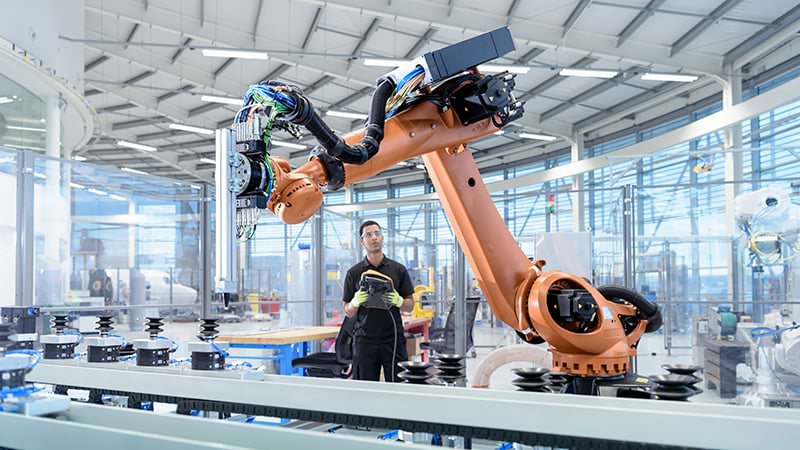
Discover the future of your industry with PwC’s Value in motion study. Learn how AI and climate change are reshaping industries to create new growth opportunities.
Sustainable mobility readiness index
A practical tool designed to show how ready cities are for sustainable mobility.

How connected cars can enable healthcare
Connecting car tech and data to healthcare systems can turn your driver’s seat into your next wearable.
Electric Vehicle Sales Review Q1-2026
Strategy& and PwC Autofacts® have analyzed electric vehicle sales worldwide in the first quarter of 2026.

What does the future of mobility look like?
The way we move people and things is changing—transportation is becoming more electric, more autonomous, and more informed by advanced technology.

Powertrain study 2025
This bi-annual Strategy& analysis provides an update on innovations in BEV platforms, powertrain efficiency, and eMobility market trends.
Key sectors
Explore the key sectors shaping the Move domain
Vehicles are becoming software-defined platforms. Downloadable features, subscription-based pricing models, and over-the-air updates are shifting value from one-off sales to recurring revenue and embedded commerce.
For automotive leaders, the opportunity is clear—redesign products and go-to-market models for XaaS, industrialise software delivery, and monetise vehicle data. Deliver more seamless connectivity, charging, safety, and services in collaboration with energy providers, telecoms companies, tech firms, insurers, and local authorities.
Professional expertise is being productised into platformable services—fleet management, financing, compliance, and uptime guarantees that scale. To drive adoption, leaders in business services need to focus on packaging outcomes with AI automation and API integrations. By adopting outcome-based pricing and collaborating with OEMs, fleets, cities, and technology vendors, they can create cross-sector offerings that propel growth.
Digitised factories, modular designs, and local pilot lines are setting the standard for hardware upgradeability and resilience across the Move domain. Industrial manufacturing leaders can secure supply, improve quality, and iterate at speed with the right partnerships. Invest in co-development labs to embed circular processes and create faster hardware-plus-software cycles. Then, team with OEMs, battery makers, tech providers, and logistics partners to translate strategy into seamless execution.
Real-time telemetry is reshaping the insurance landscape, turning protection into prevention. With dynamic pricing, proactive services, and embedded cover, user incentives and trust are evolving. Insurance leaders should focus on creating real-time, usage-based products. Deploy AI to proactively reduce risks and run pilots that reward safe behaviour. Work closely with OEMs, fleet operators, tech platforms, and regulators to drive widespread adoption.
Retail is moving beyond one-off transactions to offer embedded mobility experiences. In-vehicle commerce, curbside micro-fulfilment, and personalised offers are becoming integral to the customer journey. Retail leaders should combine merchandising and fulfilment within mobility platforms. Use first-party signals responsibly and develop subscription-led experiences. Collaborate with OEMs, logistics operators, tech firms, and payment providers to create seamless, always-on commerce.
Cloud, AI, connectivity, and edge computing are the digital backbone of mobility platforms, driving rapid innovation and secure data monetisation. Technology leaders need to streamline software delivery and provide developer APIs. Embed privacy and security by design. Co-invest in V2I/edge pilots with OEMs, utilities, cities, and logistics firms to support essential mobility services.
Electrified fleets, autonomous delivery, and micro-fulfilment hubs are redefining last-mile economics and elevating customer expectations. Leaders in transport and logistics should implement AI-driven routing and smart charging orchestration. Conduct autonomy pilots and collaborate with tech companies, cities, retailers, and energy operators. Coordinate curb, charging, and fulfilment networks to unlock new revenue streams.
Your next move
Turning Move domain insight into action
As mobility systems are reconfigured by electrification, digital technology, and climate pressure, leaders face complex decisions about where to compete, how to collaborate, and which capabilities matter most. We enable organisations to translate domain insight into practical action across strategy, technology, and sustainability.
The shift from traditional transport models to connected, multimodal systems is reshaping how value is created across the mobility ecosystem. We help leaders move beyond single‑industry perspectives toward cross‑sector orchestration—spanning vehicles, infrastructure, energy, data, and services—to meet evolving mobility needs and unlock new sources of growth.
AI, connected vehicles, data platforms, and automation are redefining how people and goods move across cities, regions, and supply chains. We empower organisations to integrate technology across the mobility value chain—from EV ecosystems and charging infrastructure to intelligent logistics and autonomous systems—improving efficiency, resilience, and customer experience while managing risk.
Sustainability and resilience are becoming core performance drivers in the Move domain. From electrification and circular supply chains to smart city mobility and public–private collaboration, we help organisations embed sustainability into mobility strategies and operations—enabling long-term value creation while responding to climate, regulatory, and societal pressures.
Domains of growth
Explore other domains of growth
The Move domain is part of a broader shift as industries reorganise around fundamental human needs. Explore how value is also being reshaped across other domains, and how these connections create new opportunities for growth.
Get in touch

Harald Wimmer
Partner, Global Automotive Leader and Global Smart Mobility Leader
PwC Germany

Ryan Hawk
Global and US Industrials and Services Leader
PwC United States
