Turn insight into action
We help you solve the problems that matter most so you can act faster and move further.
What would you like to explore?
Take on Tomorrow
About
New technologies are reshaping how people work and grow. Our podcast explores the biggest challenges for business and society.
Technologies that once seemed improbable are now reshaping how people work and grow. In Series 5 of Take on Tomorrow—PwC’s award-winning podcast exploring the biggest challenges facing business and society—we ask one critical question: How do bold ideas gain momentum?
Join us, as we speak with experts from around the world, each working at the forefront of innovation, to learn what it takes to move ideas from vision to reality. We examine who is accelerating progress and how they’re doing it: how to make leading-edge technologies commonplace, turn ambition into action, and scale breakthroughs at speed.
But what does it really take to scale progress? How do ideas move from edgy to essential? And how can that transition help businesses solve the world’s most pressing challenges?
Join us for Series 5 of Take on Tomorrow, to find out.
Subscribe
Listen and subscribe
Latest episode
Dorothy Kilroy: Healthcare has been historically something that happens to you, not something you participate in, and people really want that agency.
Anthony Bruce: It's businesses large and small, all engaged in this endeavour really to, to drive up population health and access to healthcare.
Dorothy Kilroy: The average person really doesn't have a good baseline understanding of their health.
Femi Oke: From wearables to home testing, the way we take care of ourselves is changing.
Lizzie O'Leary: Tracking your health is no longer something you only do during a doctor's visit - it’s part of our daily lives.
Femi Oke: Are businesses ready for this revolution… even those beyond the healthcare industry?
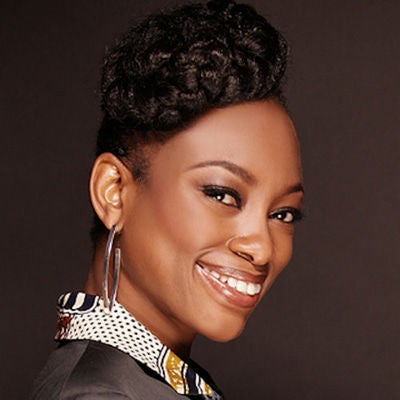
Femi Oke: I’m Femi Oke, a broadcaster and journalist.
Lizzie O'Leary: And I’m Lizzie O’Leary, a podcaster and journalist. And this is Take on Tomorrow, the podcast from PwC.
Femi Oke: This season we’re looking at how business can build momentum around bold ideas.
Lizzie O'Leary: Today, the healthcare industry is going through a major shift – there's more power in the hands of everyday people.
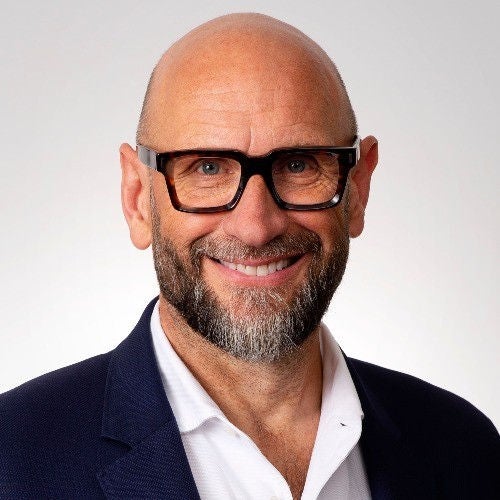
Femi Oke: Later we will hear how the OURA Smart Ring has created a new way of monitoring our health from the company's Chief Commercial Officer. But first, to get a finger on the pulse of the current healthcare landscape, here's Anthony Bruce, Global Health Industries leader from PWC UK. Anthony, so good to have you, welcome.
Anthony Bruce: Thank you.
Lizzie O'Leary: Anthony, what has changed in the last few years that's making a people powered health system possible now?
Anthony Bruce: I think a bunch of things have changed and, and are coming together. Technology is becoming much more personal. It's with us every day. It's 24/7 and it's much more pervasive than it was. You don't need to open a newspaper or look at the internet without seeing the emergence of new AI capabilities. A third thing I would say is consumer expectations, patient expectations are shifting dramatically,
Femi Oke: What does this mean for all types of businesses, though? Not just those that happen to work in health?
Anthony Bruce: Retailers are getting much more engaged in the health agenda, whether it's through, over, over the counter drugs, whether it's through a much more engaged consumer who comes into a store with a very specific set of questions and, and or requests.
Technology businesses are moving capital into healthcare also. New platforms are emerging. Large language models, for example, with a healthcare spin are, are being launched.
So I think it's businesses large and small all engaged in this endeavour really to, to drive up population health and access to healthcare.
Femi Oke: Anthony, we're gonna come back to you for more on what all businesses can learn from this shift. But now let's look at the tech driving it. Today it's wearables, and I'm thinking of things like smart rings or watches, for example, allow us to track our sleep, our heart rate, even predicted if we're getting ill.
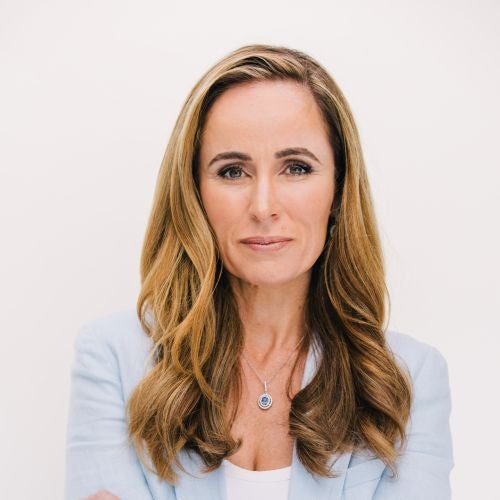
Lizzie O'Leary: And these tools are really popular. You cannot miss them on fingers and wrists, but they weren't always so common. So what moved wearable healthcare tech from the margins to so many of us taking part? To find out, I spoke to Dorothy Kilroy, the Chief Commercial Officer at OURA, the company behind the OURA Smart Ring. The OURA Ring is a smart ring that tracks more than 50 health metrics… From daily step counts and heart rate to how you’re sleeping each night. We began by talking about what it took to build momentum around their ring.
Dorothy Kilroy: It took many years to prove two things simultaneously. One, that the science was rigorous and two that, that you'd actually want to wear it every day. The NBA partnership in 2020 that was sort of a pivotal cultural moment for OURA,
Lizzie O'Leary: People seeing them on players.
Dorothy Kilroy: Yeah, exactly. You know, it wasn't just because of the athletes, but because it showed that OURA could perform under pressure in a real-world setting, right. This was sort of COVID and it was a really pivotal cultural moment for OURA. We've had over 80 peer reviewed studies now that feature OURA's technology and, and it matters when you're asking people to wear something that they're gonna base their health decisions on the data.
Lizzie O'Leary: Was there a, a moment that the company realised, oh, this is more than sort of a, a niche thing, that you were building real momentum, and not just in terms of the device, but also in terms of thinking about health, thinking about those metrics that you're talking about.
Dorothy Kilroy: There was many moments, a sort of a series of signals that compounded, I mentioned sort of the NBA bubble and the pandemic. That was a big change fundamentally in how people relate to health. People realised they almost had no baseline of their health, no way to know what normal looked like for them personally, which made it impossible to know when stuff was off. Women's health was another one of those big aha moments for us. So we created products around her cycle, pregnancy mode, and then researched back, understanding how physiology changes with the biometrics. We've had other big moments where we've had breakthroughs in science of the types of features that we're measuring. I'll give you a good example. We have a cardiovascular age feature, which is measuring the arterial stiffness- your arteries have a, a lot of elasticity and as you age, they get more rigid. And so giving people an understanding of where that is against their baseline, and then when they start to see their habits change and how that moves. Personally, I'll tell you my story on this. I started, uh, with a plus five cardiovascular age. So my, my arterial stiffness was five years older than my biological age, versus, my sort of peer set. And I really focused on cardio, fitness. I had kind of neglected it, uh, you know, with the struggles of sort of job responsibilities and raising a young family and ageing parents. And I was able to move that to a minus seven. And it was really empowering and motivating to see that it was actually that sensitive that it could move.
Lizzie O'Leary: I'd like to hear a little bit about, honestly, some of the bumps along the way. One of the things that our listeners really take from this is like, okay, how does a company face challenges and then learn from them. So are there, I guess, big challenges that you think about in terms of bringing OURA to the market and, and what did you learn from them?
Dorothy Kilroy: You can't just sell a better product when nobody knows that the category exists. You actually have to educate people on what they need something, before you can tell them why yours is the best. And what we learned was form and function cannot be trade-offs. Health technology only changes behaviour if people trust it enough to act on it, and people only trust it if it feels as good as it works. We also learned that the market education is a long game. The bet on scientific credibility felt slow at the time and in, in retrospect. I think it's given us, sort of, this distinct advantage versus our competitors, and it's been kind of the sustainable path for our growth.
Lizzie O'Leary: I wanna talk a little bit about how OURA fits into the healthcare system. The traditional healthcare model is reactive. We get sick, we seek treatment. What have you all seen from consumers about why people are looking for more data about their bodies, more, kind of, proactive insights?
Dorothy Kilroy: Yeah, I think that this is the really interesting insight that has been an accelerant to our business. People taking health literally into their own hands. It's made what has been invisible health risks, suddenly visible and personal. And people realise the traditional health system wasn't built to catch those problems. It serves you when you are sick. We call it sick care. But it really doesn't bring proactive healthcare and empower the actual user with their data. There's just a deep frustration in this. Healthcare has been historically something that happens to you, not something you participate in, and people really want that agency. For women, this is even more charged. Women have been chronically underrepresented in clinical research, and many foundational health studies have been conducted primarily on men. Wearables have this really great opportunity to close that gap. You know, we have longitudinal data across millions of women now across a broad spectrum of time. And when you start to get that population data on scale, on the female physiology that's never existed before, it gives you this other unique advantage that isn't just sort of a snapshot of a doctor's visit, but actually over time. We don't believe the consumerisation of health is about replacing doctors. We think it's about giving the individuals actually better tools themselves, so that when they do spend time with clinicians, they're more informed, they're more targeted, they're more useful. You know, a traditional sort of doctor's visit, you think about once a year, if you're lucky, and it's often sort of a five to 10 minute appointment. And the doctor's not with you 24/7 helping guide your decisions every day. Whether that's, you know, taking a walk after a meal, when you open the fridge, what you choose to eat, how you manage stress, all of those lifestyle habits that stack up. I think that's what's different about OURA. It's with you 24/7.
Lizzie O'Leary: I wanna learn a little bit more about the sort of anticipatory, predictive features, like how does that work? If you are tracking your data, and then what the AI tells you, here's what I see in that pattern.
Dorothy Kilroy: What we have found is that you also want to go further and ask not just sort of wellness type questions, but you also want to ask clinical questions. So one of the steps that we took is we integrated an AI powered care layer into our advisor product, and that actually gives our members right there and then whether it's, you know, I always think about nine o'clock on a Saturday evening when your doctor's office is not open, but you have a tonne of clinical questions, whether that is about your blood pressure, whether that is about your sleep, whether that's managing some other ailment or, disease that you may have, and you have that sort of on demand medical guidance. And when you need to go further, you can actually take that sort of, um, clinical evaluation or medical treatment and OURA will connect you then with a licensed physician in this partnership.
Lizzie O'Leary: I think for anyone who is looking to understand their health, there is a fine balance, right, between, like get as much information as you can about yourself, but also don't go overboard into crazy rabbit holes that turn you into a paranoid person. How do you thread that needle as a company to, you know, serve your members but not overload them?
Dorothy Kilroy: What is always surprising is how many of our members are actually managing a chronic condition, and they're anything but the worried-well, from diabetes or battling cancer or, challenged with other sort of ailments in their life, whether that's a fertility journey or some sort of phase of life, like perimenopause. And so I think it's always interesting to assume that there's sort of this worried-well group, but actually our data just does not suggest that at all. I think that actually most people, the average person, really doesn't have a good baseline understanding of their health, right? Many people struggle with their relationship with alcohol, and although we have plenty of data to suggest that this is not good for our health, it's still a hard thing socially and culturally to understand how it impacts us individually. Our members, we find have a 20% reduction in their alcohol, and some even completely abstain from it because they start to see what actually impacts their health. And I'll, I'll give you an example. I'm somebody who, when I have an alcoholic drink, my heart rate goes up by about 10 beats, which is huge difference. My husband, as an alternative. He doesn't have that reaction. And actually it doesn't impact him so profoundly. And so it's very individual. And so I think, without that data, you can't fully understand, you know, what is the impact of that on your life.
Lizzie O'Leary: There, there is concern though, that I have heard from doctors, for example, and this is a different example, but I'll, I'll give it to you. I have had cancer. I'm fine. But when I go and get my CAT scan, my doctor likes to say, don't open the chart before I'm with you. Because this is complicated. Because the emotional and physical possibilities of you processing that information alone is a lot. Do you worry about that at all, of people kind of being flustered by their own health data?
Dorothy Kilroy: We certainly think about it and I think this comes to the kind of the tone on - and the rigour - that we put into how we communicate with our members. We have found Lizzie though some of our members who have discovered based on sort of a disparate set of symptoms, but they're OURA data that they actually have cancer and they've taken that data into their clinicians and said, Hey, look at this. And so I think about those people who can use that data to say something doesn't feel right, and have some kind of like independent validation of that and then be able to use that.
Lizzie O'Leary: Before I let you go, I am really curious. Are there things you have learned about yourself that have surprised you or that you never really thought about before until you started tracking yourself?
Dorothy Kilroy: Yeah, you know, I was a, an avid marathon runner in my thirties, and I thought health meant doing more. And when I started to wear an OURA ring, I learned about recovery and stress was really a way to sort of manage my actual performance in every part of my life. Whether that was my, I sort of think of all of us probably listening on this, are, like corporate athletes, right? We're always trying to improve ourselves, better ourselves in whatever area of our career we're in. And then your, your home, your connections at home, your connections to your family. And in my mind, I always thought do more, work yourself to your brink. But actually what I learned was recovery was just as an important a part of any sort of performance, whether that was athletic performance, career performance, wherever that was happening. So I just learned I needed to spend more time recovering and to actually schedule that and to not feel guilty about it in a culture where we're sort of so go, go, go.
Lizzie O'Leary: I think you just described like the constant dilemma of the type A mother.
Dorothy Kilroy: Right, right. The juggle is real.
Lizzie O'Leary: Dorothy Kilroy, thank you so much for your time.
Dorothy Kilroy: Real pleasure. Thank you, Lizzie.
Femi Oke: Anthony Bruce, welcome back. Dorothy talked about healthcare, moving from something that happens to us to something that we actively participate in. This ability to keep a check on how we are doing physically, it's become known as the consumerization of health. What does that mean for the kind of work that you do and also for the health industry in general?
Anthony Bruce: I think what we're seeing is, a real, drive and, engagement with people, in their own health. So for me it's, it's a significant change for, for pharmaceutical companies, for healthcare companies, et cetera, et cetera. but I also have a huge degree of optimism that it can help make care more accessible, lower the price point, and make it more, pervasive. And, and, and what that's gonna do over time. If we can reconfigure, health systems around it, it's going to improve health outcomes and longevity, and take some of the, um, some of those societal ills away. So I'm hugely optimistic about it.
Lizzie O'Leary: What lessons are there in the health industry for leaders in other industries who are also looking for new ideas and, and new ways of creating value?
Anthony Bruce: I guess a few things. The winners in this area and the generalizable point that you're asking about is about being really centred around, in this case, the patient or the consumer. Where is demand shifting to because it's shifting fast. Staying really close to how people want to consume their health, where they want to engage with it, and, and what technology devices might they want to. That applies to banking and it applies to in other sectors. The second thing is trust. If we can build trust and health is so personal, in some cases very confidential, and very sensitive and governed by a number of regulations and so forth. But if we can build trust around health data and the sharing of it, we'll be better able to drive adoption.
Femi Oke: Anthony we are told as consumers to protect our data, to be sceptical, to be wary about where we leave our information online. So how does a company build trust with users who are told: Be careful what information you give out about yourself.
Anthony Bruce: Well, we did a consumer health survey recently, and that came out as, uh, one of the number one barriers to innovation here. So we can create the technology, we can create the platforms and organisations are doing that, but unless they can, show that they are treating, people with respect that the data's securely held, that they're transparent about that, and that they are very open about what they're doing with the data and not doing with the data. Because, that is the key thing that organisations need to be focused on. If you lose that, it's, it's very hard to build and very easy to lose.
Lizzie O'Leary: If you look into the future, where do you see the next wave of momentum building in health? Which ideas maybe feel really specialised today, but could be mainstream tomorrow?
Anthony Bruce: Think there's a couple of things. The use of technology in drug discovery. Taking the process and cost and effort and time involved in pharmaceutical companies, is taking sort of 10 years If you can do that, using technology, people are seeing that timescale coming down to, to low years and months. Now, we are some way off doing that at scale, but think about the access to lifesaving, life-changing medicines, if we can do that at scale across a number of different therapeutic areas. And then actually kind of going all the way the other way. I was talking to my mum and dad earlier, about them being able to do a consultation with their GP from home because my mum wasn't feeling well, couldn't get to the doctors. A simple thing, a video interview with a GP, these things can, can mean somebody can get an opinion that's reassuring, get a prescription, without having to wait three weeks or six weeks or get a bus to the GP surgery. So I think both high tech, at that end of the spectrum, the, the drug discovery end, but real-world impact in terms of real life, real people today.
Femi Oke: You are a business leader in the healthcare sector, so you know what is possible, what the innovations are, but for other business leaders outside of health, what are the two or three lessons that you could share or point to, that we can learn from?
Anthony Bruce: I think that the first would be, obsess about your patients, your consumers, and your customers. You look at the uptake of, of GLP1s, which has been faster than mobile phones. People didn't see that coming. Two or three big players got really close to their customers and followed them fast and made something available to them, and are generating significant return. So in that case, stay close to the consumer, and really obsess about what they care about, what they want, and what they're prepared to trade. Move fast and follow that. That's about experimentation, in a targeted way around what's the problem we're trying to solve. And then thirdly, the piece around, trust and safety. So I think for leaders, it's gotta be keeping close to your customers. Moving at pace and sustaining and building trust in your brand and in the way you work.
Femi Oke: Anthony Bruce, thank you so much for joining us.
Anthony Bruce: Thanks, Femi. That was great, a great conversation.
Lizzie O'Leary: Femi... I think listening to this episode, it makes me think about whether I need to take on an internal shift about how I regard my own health, as well as kind of thinking about this external shift of the products we use and the way we track our own lives. Uh, you know, I'm so used to sort of, you, you make your annual visit and that's what you do. This is a very, very different mindset.
Femi Oke: And Lizzie, what my takeaway was was that we often ask business leaders, how does that apply to all of us and all society? And with health, we're all involved. We don't have to look for an application that impacts society, and also it helps our awareness and our education as well. So that link between how is this important to us is a very short link. It's very obvious to see how AI and this kind of smart technology is impacting us already and will impact us more in the future.
Lizzie O'Leary: That is it for this episode – if we inspired you to think about your business in a new way, please follow Take on Tomorrow wherever you listen to podcasts. For more you can visit pwc.com/takeontomorrow
Femi Oke: Next time:
Josh Western: In-space manufacturing is going to create a fundamental shift in the way that we think about almost all of our technologies.
Femi Oke: What happens when the space economy moves from frontier – to foundation – and what are the industries that should be ready for take-off?
Lizzie O'Leary: Take on Tomorrow is brought to you by PwC. PwC refers to the PwC network and/or one or more of its member firms, each of which is a separate legal entity.
How can business help us take charge of our health?
Most people only think about healthcare when something goes wrong. But wearables, AI, and other new technologies are giving us access to more information about our bodies, and delivering it more often, than ever before—putting more control over our health in our own hands.
Hosts and guests
Hosts
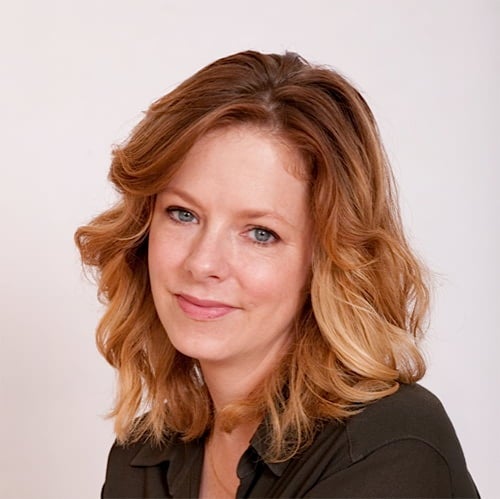
Lizzie O'Leary
Podcaster and journalist
Femi Oke
Podcaster and journalist
Guests
Dorothy Kilroy
Chief Commercial Officer, Oura
Anthony Bruce
Global Health Industries Leader, PwC UK
Special series
Episodes carousel
Our awards

2023 Shorty award
“Best Branded Podcast” series winner
2023 Webby award
“Best Podcast” series nominee
2024 dotCOMM award
Platinum winner for Business Podcast Series

2023 EDDIE award
Best new podcast of 2022