Turn insight into action
We help you solve the problems that matter most so you can act faster and move further.
What would you like to explore?
Driving healthcar(e) innovation
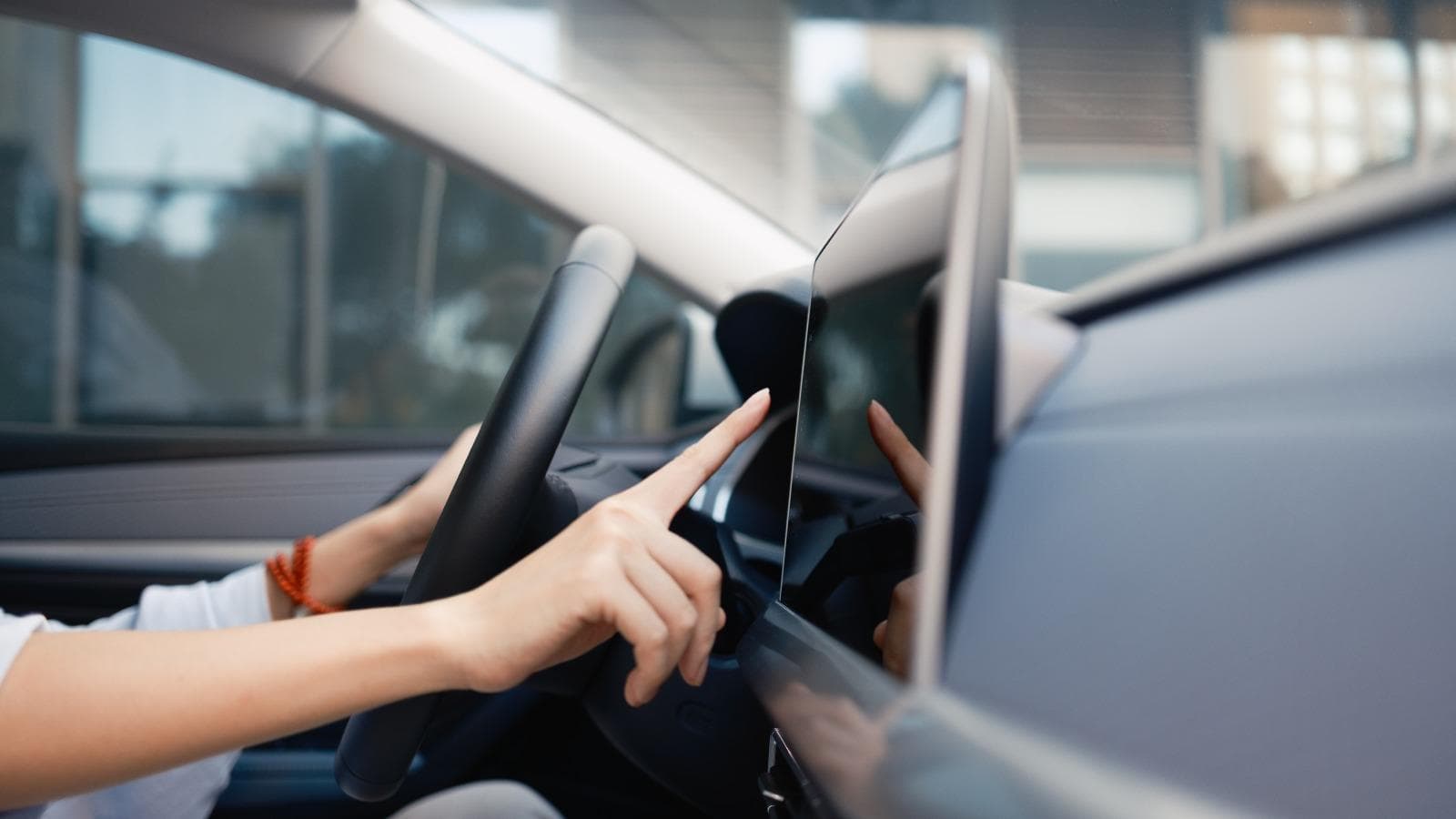
It’s not a typo. Connecting car tech and data to healthcare systems can turn your driver’s seat into your next wearable.
The takeaways
- Connected cars could turn time behind the wheel into a source of continuous health data, enabling better insights and more proactive care.
- For business leaders in automotive and health industries, connected car data could unlock new services, personalised offerings, and stronger customer loyalty.
- Capturing that value requires cross-sector partnerships, data integration, and clear privacy protections that earn consumer trust.
The opportunity
The most valuable commodity in today’s fast-paced world may be time. Which is why people often recoil at systems that waste their time. Consider some of the wide discrepancies in the way people spend time. Each year, the average driver in the UK spends 130 hours behind the wheel, while the typical person spends about 50 minutes with a general practitioner (GP). In the US, the discrepancy is even higher: drivers reported spending about 365 hours driving each year, while the typical person spends about 30 minutes with a primary care physician in the same time period.
But what if there was a way to turn all that downtime in cars into uptime for healthcare? By leveraging connected car technology, we could:
- integrate health monitoring directly into our vehicles, using the time behind the wheel to gather vital information and create an end-to-end chain of shareable data
- enable our cars to serve as early warning signals for cognitive decline
- use the steering wheel to transmit crucial information about how blood pressure and heart rates rise when the driver experiences stress.
Thirty years ago, cars were essentially isolated machines. The only connection they had to outside data was a radio. But think about what a basic connected car has today: sensors, cameras, navigation devices, internet connectivity—an entire suite of digital technology that enhances functionality and convenience for the driver. Importantly, in each case, these digital innovations have led to completely new products and services built around the connected car, including satellite radio, navigational apps, infotainment systems and automated driving assistants. Now imagine that those same connections and digital technologies could be deployed in the service of another large domain in which data and connections are playing a more important role: Care.
As we’ve noted, four key trends are redefining the future of Care, with the patient firmly at the centre:
- Preventative care focused on reducing risk before conditions escalate
- Personalised treatment plans tailored to individual needs and outcomes
- Predictive and proactive approaches that enable earlier risk identification and intervention
- Point-of-care delivery models that improve convenience, access and efficiency
The reconfiguration of global healthcare systems around these four principles involves comprehensive changes that go beyond individual sectors, requiring collaboration among numerous stakeholders. Value is being put into motion across the broader Care domain. And it is apparent that the automotive sector is one industry that can serve as a valuable partner in the health system transformation.
How it works
Better driving, better health
As cars are equipped with more and more high-tech sensors, and as their occupants are more likely to have wearables, cars can play a crucial role in drivers’ ability to monitor their health. For instance, body temperature, blood pressure, and perspiration can be monitored through the steering wheel, while sensors in the seat can monitor body weight, body fat, heart rate, spine position, and posture.
This data serves a dual purpose—ensuring safer driving by alerting drivers to potential health issues that could impair their ability to drive and supplying healthcare providers with valuable information for more comprehensive clinical assessments.
Addressing disease risk factors through innovative technology in smart, software-defined vehicles can empower individuals to take ownership of their own health and well-being, thereby reducing the burden on the healthcare ecosystem.
Continuous data
Realising the value of long-term monitoring
Tracking health data in the car for longer periods of time could potentially create sustainable new business models for a variety of stakeholders, whether they are payers, pharma companies, or solution providers. The data can be used to design personalised prevention programmes to consumers, tailor insurance packages, reduce sick days for employers, and offer complementary goods and services from solution providers.
The primary advantage of longitudinal data is that it is collected in a controlled environment over an extended period, providing invaluable insights into the changes in body parameters over time. This rich data set would enable healthcare providers to make informed decisions for early detection of health conditions as well as managing chronic diseases, moving beyond reliance on isolated data points from instances like GP visits. Going a step further, this data could also be used to track treatment performance over time.
By linking health-monitoring systems with external databases through third-party applications, this longitudinal data can be used to overcome data silos to provide personalised disease-prevention advice.
Real-time care
Responding to health events as they happen
Smart cars equipped with sensors can work in tandem with monitoring devices to help drivers identify changes that may warrant further investigation or require immediate attention. A potential case study for tracking disease development is dementia. Features such as GPS navigation with route memory, voice-activated commands, and driver-assistance systems that monitor the frequency of needed support all provide insights into changes in cognitive function. Additionally, cameras that recognise movements and facial expressions, coupled with monitoring of incoherent driving behaviours—such as confusing accelerator and brake usage or improper signalling—offer critical data points.
In the EU, the eCall system automatically dials an emergency number when vehicles are in accidents. As technology advances, vehicles could have the capability to perform emergency diagnostics, and in situations where drivers experience signs of a heart attack or another critical health event, the car could automatically call emergency services and provide vital information about the driver’s condition and location. This kind of immediate response can save lives and minimise health risks significantly.
New value pools
Breaking boundaries between health, automotive, and tech
Consumers will discover significant value in health monitoring within the familiar environment of their vehicles. But the integration of healthcare monitoring into mobility solutions—through various reconfigurations and new services targeting both B2B and B2C markets—will also create new value opportunities for payers, pharmaceutical companies, health tech firms and automotive manufacturers. We could imagine content creators and health organisations teaming up to provide personalised advice podcasts targeting drivers with specific health needs. Or drivers subscribing to emergency health-monitoring apps for their car. Or car lease payments that include preventative eye care insurance premiums.
For payers and health insurers, such integration could lead to savings on healthcare spending through early intervention, adherence management and disease prevention. For pharmaceutical companies, the data can be used for monitoring drug effectiveness and disease progression, which could help with measuring drug performance. For automotive manufacturers, such services can help differentiate their offerings from the competition and increase customer loyalty with little investment for use cases where data can be collected through existing systems and sensors.
Data and trust
Protecting privacy and security
A significant challenge underlies these efforts: privacy and data security. Having care and mobility companies collaborate in the ways we describe would require significant buy-in from consumers. Drivers and riders would have to consent to share their sensitive health information with end users in exchange for benefits that might be somewhat abstract. The transition to electronic patient records has raised awareness of the need to protect data privacy related to health.
That means all participants in these ecosystems will have to work diligently to educate consumers, communicate clearly, and be transparent about how they will protect data privacy and comply with the evolving regulations. As much as any technical capabilities, developing new products and solutions will require the capability to build trust.
The road ahead
Steps towards better health and well-being
To participate in these value pools, stakeholders will need to collaborate with big tech companies, start-ups, and digital health firms to integrate and analyse data sources. Stakeholders will have to be open to adopting new business models to deepen their understanding of diseases and help shape the future of how we care.
Some of these ideas may sound fanciful or far-fetched. But it’s worth considering how quickly technology has advanced, with once-futuristic products and services—including speaking navigation aides and watches that can monitor heart rates and blood oxygen levels—now commonplace. And the advent of autonomous driving will likely pave the way for even more innovations. Today, a car might be able to call an ambulance if the driver has a heart attack. Tomorrow, it may be able to take the patient directly to the emergency room.
Embracing this future means redefining our relationship with our vehicles—not just as modes of transportation but also as partners in our health journeys. In doing so, we can pave the way for safer roads and healthier lives, where every trip contributes to our well-being.
Contributors to this article include Dr. Raees Lunat, Radhika Pawa, and Lukas Rojahn.
Related content

The future of care
The healthcare industry is evolving into a dynamic ecosystem. Patients, practitioners, and industry players all stand to benefit.
10 min read
eReadiness 2026: Can electric mobility shift into a higher gear?
Further progress will hinge on the auto industry’s ability to convince prospects to take the EV plunge.
16 min read
When machines know our needs
As machines anticipate our needs, trust and inclusive design are key, balancing privacy, focus, and control in human-machine collaboration.
5 min read
Get in touch

Anthony Bruce
Global Health Industries Leader
PwC United Kingdom

Jonas Seyfferth
Director
Strategy& Germany

Thomas Solbach
Partner
Global Mobility Services
