Turn insight into action
We help you solve the problems that matter most so you can act faster and move further.
What would you like to explore?
Semiconductor and beyond
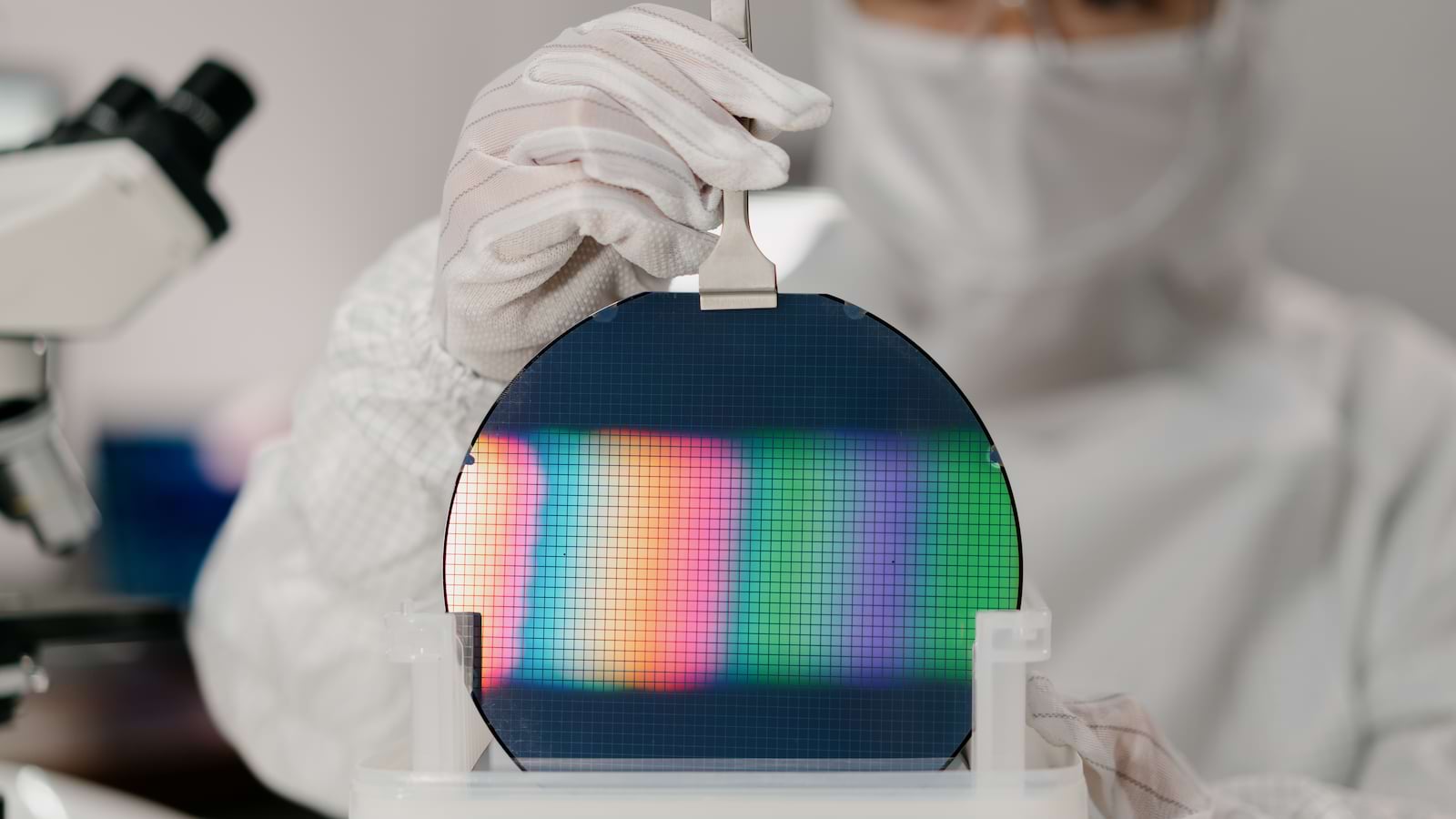
Semiconductors are an essential component in many innovations, yet chipmakers face uncertainty.
The takeaways
- The global semiconductor market is expected to grow at a compound annual growth rate (CAGR) of 8.6%, reaching around US$1 trillion in 2030.
- Industries including healthcare, agriculture, manufacturing, energy, and defence are constantly evolving; semiconductors can find their way deeper into more industries, driving efficiency and innovation.
- Securing advanced manufacturing tools has become a prerequisite for expanding semiconductor supply capacity; global equipment investments are likely to grow.
AI-powered manufacturing, autonomous vehicles, algorithmic drug discovery, smart grids. These and other innovations are creating new sources of value and enabling new business models. The common factor? Semiconductors. The computing power and connectivity that underpin innovation across industries rely on rapid, relentless advances in silicon speed and efficiency.
Yet this is also a time of uncertainty and transformation for chipmakers. Export controls, restrictions on critical materials, and shifting trade alliances are redefining the semiconductor landscape even as technological innovation continues. Now more than ever, industry leaders need to take a forward-looking approach, not only to maintain near-term competitiveness but also to understand how a new phase of industry reconfiguration could set value in motion.
PwC’s “Semiconductor and beyond” report provides insights for both semiconductor demanders and suppliers by analysing industry trends, demand across end markets, and the potential impact of emerging technologies.
Demand analysis
The semiconductor market could reach US$1 trillion by 2030
The global semiconductor market is expected to grow at a compound annual growth rate (CAGR) of 8.6%, from around US$627 billion in 2024 to more than US$1 trillion in 2030. Overall end-market growth may be propelled by the transformative impact of AI across industries, while server and automotive market segments grow at the fastest pace.
The car of the future may be more than just a mode of transportation—it may be a new form of home, a high-performance computer on wheels, seamlessly powered by semiconductors.
- With the electric vehicle (EV) market rapidly expanding, demand for electrified powertrains equipped with wide bandgap semiconductors such as silicon carbide (SiC) power semiconductors is likely to surge, expected to account for around 60% of the automotive power semiconductor market.
- By 2030, level 2+ autonomous vehicles are likely to account for around 70% of vehicles shipped. Enabling higher levels of autonomous driving significantly increases semiconductor content per car, from sensors to connectivity integrated circuits (ICs), electronic control units (ECUs), and processors.
- Software-driven vehicles may emerge as a new standard. This transition comes with architectural changes, where a central high-performance computer (HPC) and multiple ECUs play as one. Semiconductors can become the blood, muscles, and central brain of the vehicle.
Since the surge of generative AI applications in 2022, the amount of data generated and processed has expanded at an exponential rate. Servers and network equipment will likely be a backbone of intelligence permeating applications around us, powered by the continuous advancements of semiconductors.
- With the rapid growth of data traffic over the next five years, the market for semiconductors in data centres may exceed US$250 billion.[JF12.1] As the demand for smarter, more efficient servers capable of handling massive data traffic grows, AI accelerators may account for more than 50% of semiconductors used in data centres.
- Increased demand for data centres also drives the network equipment segment, as switches and routers become smarter when equipped with computing chips.
- The telecommunication equipment market might not attract as much attention as the growth of data centres, but with the worldwide spread of 5G, the gallium nitride (GaN) radio frequency (RF) semiconductor market is poised to grow at a CAGR of 5.5% until 2030, eventually powering around 90% of future base stations.
Although the home appliances market is relatively saturated, the drive for AI and the Internet of Things (IoT) is changing appliances to become even smarter and provide a new consumer experience, equipped with more chips. Moreover, new appliances are gaining more market traction, such as AR/VR and wearable devices.
- The traditional appliances segment is likely to grow with the integration of AI and demand for power-efficient appliances, leading to higher-performing AI processors. The system-on-chip SoC[JF13.1][MB13.2] market in AI appliances is likely to grow slowly but steadily, reaching around US$13 billion in 2030.
- The smart home experience can bring a new standard to the user experience. With this trend, the connectivity IC market will likely increase, with appliances using diverse connectivity standards based on circumstances, to enhance efficiency.
- Wearable devices, including hearables, smartwatches, and VR/AR gadgets, now feature an array of sensors, unlocking innovative healthcare and entertainment experiences. While microphones have had a relatively higher proportion in the sensor chip market in wearables, the role of image sensors, magnetic field sensors, and emerging sensors may expand significantly.
Although previously considered relatively saturated compared to other applications, the smartphone and PC markets are now facing new opportunities, driven by the growing demand for AI-optimised products such as on-device AI solutions.
- The market for AI-capable semiconductors in PCs is projected to expand from US$9 billion in 2024 to US$40 billion by 2030. Similarly, the market for AI-capable semiconductors in smartphones is projected to grow from US$10 billion in 2024 to US$43 billion by 2030.
- Low-power double data rate (LPDDR) that balances power efficiency with performance—critical for portable PCs and smartphones that cannot be charged all the time—is expected to continue evolving. It’s anticipated that it may achieve approximately a 50% improvement in power efficiency every two to three years.
- In the premium smartphone segment, the importance of cameras is growing, closely tied to advancements in semiconductors. Image sensors and image signal processors (ISPs) may undergo rapid innovation, enabling pro-like photo quality.
Industries around us—including healthcare, agriculture, manufacturing, energy, and defence—are constantly evolving, driven by global demographic shifts, productivity improvements from new technologies, the rise of new products, and climate risks. Semiconductors can find their way deeper and deeper into more industries, driving efficiency and innovation.
- The medical and healthcare semiconductor market can reach US$8.7 billion in 2030 with the expansion of medical service areas from diagnosis and treatment to prevention and aftercare. Both traditional and new medical equipment may evolve with more, higher-performance graphics processing units (GPUs), central processing units (CPUs), and biosensors.
- Power semiconductors are crucial to enable renewable energy growth. Especially for solar photovoltaic (PV), wind power, and smart grids, which require high power, SiC can be a major player here.
- Factories, farms, and aquaculture are adopting automation via sensors, AI, and GPS-guided machinery to monitor conditions and perform tasks with minimal human intervention.
- Semiconductors are actively integrated throughout the flow of defence. From training to radar detection, command, and counterattack, advanced GPUs, CPUs, application-specific integrated circuits (ASICs), and GaN RF [JF14.1]may face increased demand to reduce human casualties and increase mission success rates.
Supply analysis
Semiconductor end-to-to-end manufacturing landscape
Design, IP, and EDA
Fabrication is not the sole factor determining chip performance; instead, it hinges significantly on the design stage, including intellectual property (IP) and electronic design automation (EDA). Territories are pursuing unique strategies to achieve leadership in AI, HPC, and various sectors. Amid this trend, design is evolving to emphasise low-power, customised chips tailored for specific applications and to enhance profit.
IPA and EDA are becoming more important, and increasingly costly. Companies are now strategising to reduce these expenses or enhance their utilisation.
Fabrication
Fabrication capacity is expected to grow at a CAGR of 7% by 2030, primarily driven by the demand for AI. Significant differences in territorial specialisation strategies are evident among the logic, memory, discrete, analogue, and optoelectronics subsectors of semiconductor manufacturing. The United States is striving to reclaim global semiconductor leadership, while China is focusing on achieving self-sufficiency. Although strategies differ by territory, the intense investments indicate that the semiconductor landscape may undergo significant growth by 2030.
Packaging and testing
As nodes advance toward smaller scales, there’s a growing focus on enhancing performance through advanced packaging. Techniques such as decreasing interconnect lengths for higher speeds and adopting chiplet architectures for cost-effective and flexible die combinations are emerging as key innovations. Additionally, the advancement in packaging technology has increased the importance of wafer testing, as it enables detection of defective dies at the die level, preventing a single defective die from rendering the entire package unusable.
Equipment and material
Securing advanced manufacturing tools has become a prerequisite for expanding semiconductor supply capacity. Global semiconductor equipment investments are likely to grow at an annual rate of 7.4% until 2030, with over 70% of these investments concentrated in Asia. With evolving fabrication and packaging trends, combined with end users’ demand for higher-durability chips, materials such as silicon carbide and boron carbide are actively being adopted. These material innovations focus not only on cost reduction but also on extending lifespan to improve equipment utilisation.
What’s next?
New technological waves shaping the industry outlook
PwC has selected technologies likely to have a substantial relationship with semiconductors. Beyond 2030, with numerous technological innovations, semiconductors will likely remain a key component, while shifting their role. Advanced AI, driverless cars, humanoid robots, quantum computing, and brain computer interface (BCI) are emerging with high potential and feasibility, raising questions for players to prepare beyond 2030.
You can read further about the new technological waves and what questions they bring for proactive leaders in the semiconductor industry.
Related content
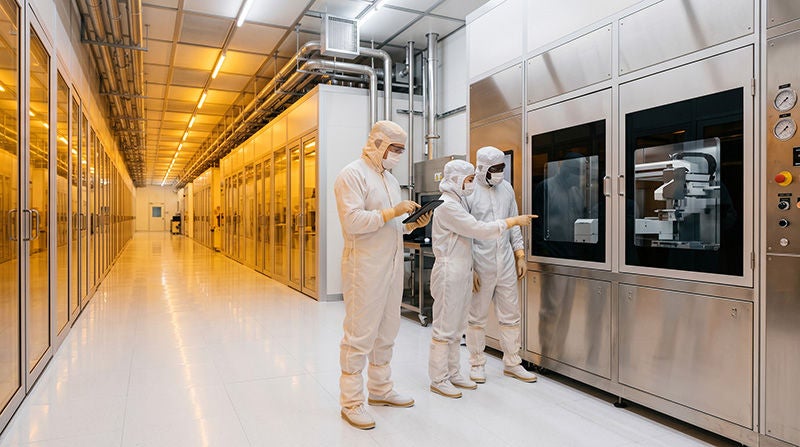
Who will innovate the next wave of AI semiconductors?
Investment in AI within the semiconductor industry is rapidly increasing, mainly driven by GPU-based AI chips. As custom AI semiconductors emerge.
6 min read

AI readiness: Shaping the future AI landscape
Discover how countries and regions are preparing for the AI era and how others can strengthen AI readiness by following their strategies.
5 min read

Beyond automation
Find out what agentic AI means for your organisation’s leadership, workforce and value creation, and why realising its potential starts with reinvention.
14 min read
Get in touch

Glenn Burm
Global Semiconductors Leader
PwC United States

Wilson Chow
Global TMT Industry Leader, Partner
PwC China
