










The Corporate Sustainability Reporting Directive (CSRD) is not just a compliance obligation—it signals a broader shift toward recognising people as a core dimension of business sustainability. The data required under CSRD and related regulations such as the EU Pay Transparency Directive goes beyond checklists. It equips organisations with visibility into the equity, health, and resilience of their workforce. This survey explores how businesses are beginning to engage with the complexities of workforce reporting—and why investing in data readiness today not only addresses today’s regulatory demands, but also lays the foundation for stronger decision-making, more effective risk management and stakeholder confidence.
Regulations like the CSRD, the EU Pay Transparency Directive, and the proposed UK Equality (Race and Disability) Bill are reshaping expectations around workforce disclosure. The information that HR teams are expected to gather is increasingly required at national, regional and international levels—aligned with frameworks set out by the ISSB and SEC bodies.
CSRD officially entered into force on 5 January 2023, with a subsequent Omnibus Package proposed in February 2025. Deadlines for compliance are approaching quickly. While the EU has “stopped the clock” on CSRD reporting requirements for some companies disclosing 2025 and 2026 workforce data, the directive remains in force.
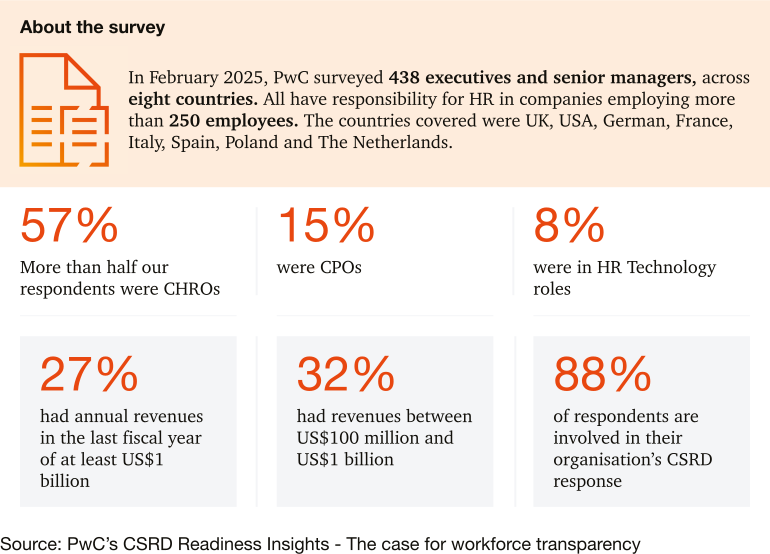
To better understand where companies stand in their compliance journey, we surveyed 438 executives and senior managers across eight countries—all with HR responsibility—on their readiness to report workforce data under the CSRD framework.
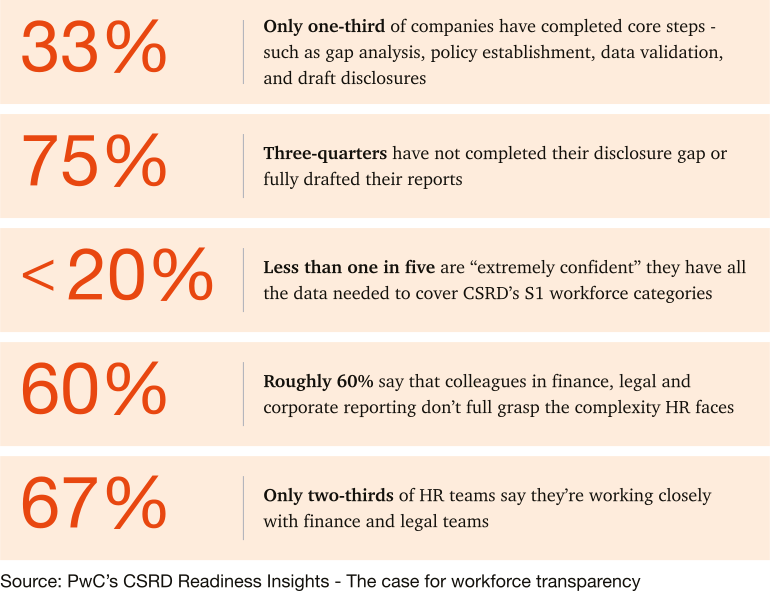
Companies scheduled to report in 2026 and 2027 (wave 2 and 3 companies) now have a two-year delay before reporting is required. This pause gives them additional time to prepare—and the evidence points to a clear need for it. We found a widespread lack of preparedness:
While the reporting timeline has been extended, the challenges remain—and companies within the scope of CSRD can’t afford to overlook them. Many continue to underestimate the complexity of HR-related disclosures - particularly as these now need to meet assurance requirements (be it limited or reasonable).
Companies need to invest the time now to assess their workforce status and ensure they have high-quality data outputs in place. Doing so meets sustainability reporting requirements—and prepares them for broader regulations, including such as the EU Pay Transparency Directive or the Equality (Race and Disability) Bill.
Companies need to be aware of common themes across these evolving regulations. Many are beginning to assess where requirements overlap—and how to manage workforce data more cohesively in response. As requirements continue to evolve in unpredictable ways, it will become increasingly important to keep pace with developments and ensure that workforce reporting and data are fit for purpose. The goal is to create a single, reliable source of workforce data—one that meets the evolving expectations of regulators, investors and other stakeholders.
The ultimate goal should be a ‘single source of the truth’ across the workforce dimensions that are and will be required to meet the current and future informational demands of regulators, investors and other stakeholders—whatever they may turn out to be.
Workforce data today: where companies stand
One-third of respondents confirmed they’ve completed each stage of sustainable workforce reporting—from identifying disclosure gaps to establishing policies and controls, validating data completeness and preparing draft disclosures.

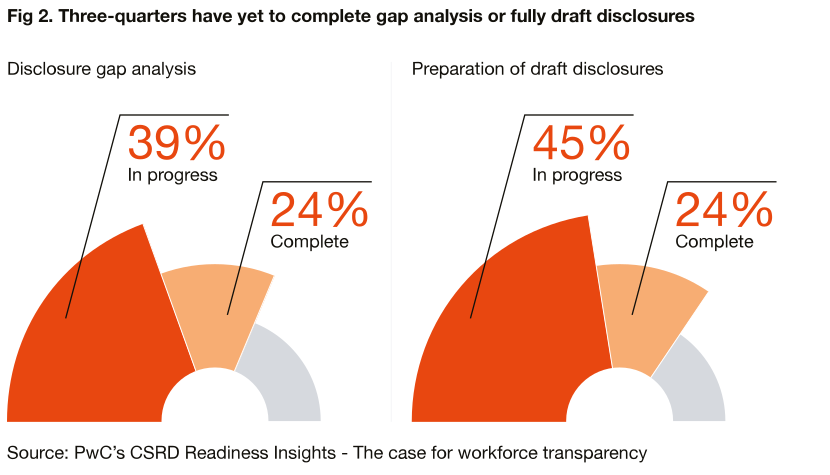
Progress in some areas remains limited. More than three-quarters of companies have yet to complete their disclosure gap analysis—and the same proportion haven’t finished preparing draft disclosures.
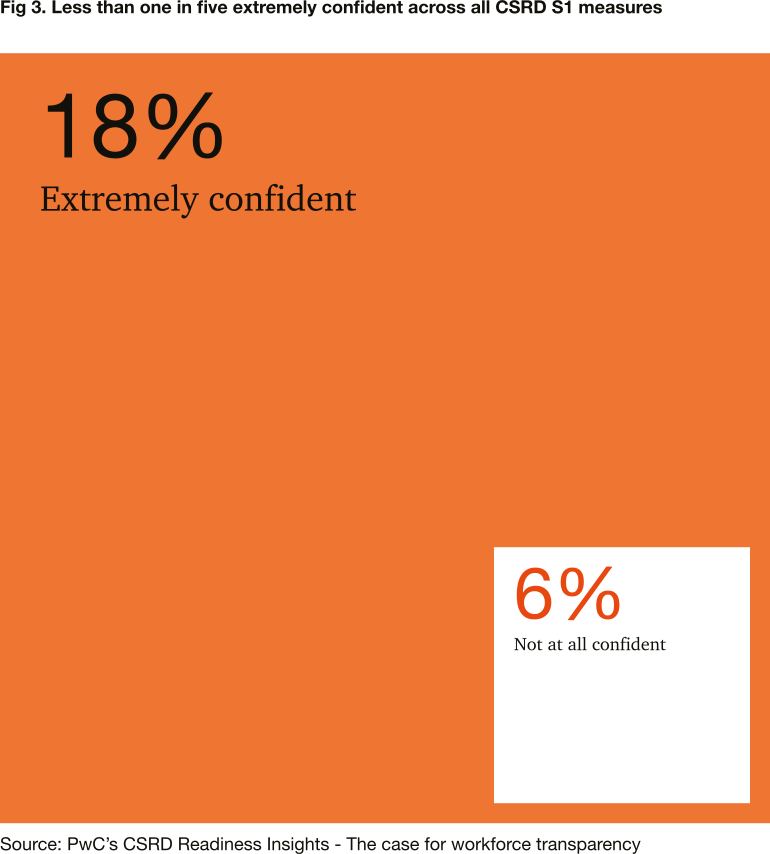
Companies scheduled to file in 2026 are significantly less confident in their readiness than early filers. Many report difficulty accessing workforce data needed to meet core CSRD topics—from defining their workforce to reporting on diversity and human rights. Fewer than 1 in 5 feel fully prepared to report across all S1 sub-categories.
Many are also hampered by a widespread underestimation of the complexity HR teams face in meeting workforce reporting demands. Roughly 60% say that colleagues in finance, legal and corporate reporting teams don’t fully grasp the challenges that HR teams face. And only two-thirds of HR teams say they are working closely with their finance and legal teams. This misalignment presents a risk—particularly as workforce data becomes more central to sustainability reporting.
Data under scrutiny: the assurance challenge ahead
High-quality workforce data must be a priority for HR and their cross-functional teams. It will come under increased scrutiny—and must meet the level of quality, reliability and detail that external validation and assessment demand.
The CSRD requires disclosures to be subject to meet assurance requirements (be it limited or reasonable) - something HR teams have rarely been subject to in the past. Our findings suggest that they must use the extra time now available to prepare accordingly.
We found that only one in five companies preparing to report in 2026 were confident that they’d be able to do so at an ‘assurance-ready’ standard (be it limited or reasonable).
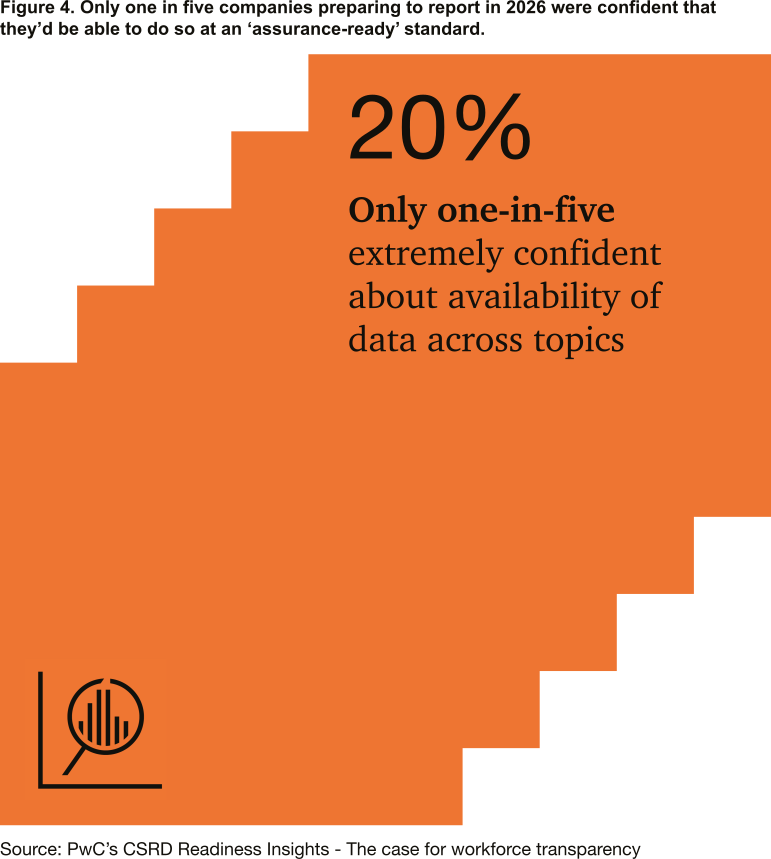
One in two companies say that they aren’t confident that they have the right data to report on each topic required under CSRD. The topics referred are in line with the topics noted in CSRD under S1 such as adequate wages, remuneration metrics and incidents, complaints and severe human rights.
A particular concern is the ability to define their own ‘workforce’—and the processes in place for them. Fewer than one in five are extremely confident in their ability to meet reporting requirements in this area to an assurance-ready standard. Workers’ rights and related issues across the value chain are also a key concern particularly as data in this area will be required to support reporting under other regulations—such as the EU Pay Transparency Directive. Even if CSRD is delayed, other uses for this data—will emerge—and should be borne in mind.
Building skills and resources for workforce disclosure
In addition to assessing how prepared companies felt to meet the demands of workforce reporting under CSRD, we asked how well-equipped they believed they were to meet both current and future demands. Given the relevance of workforce-related data to wider reporting requirements, companies were asked to assess their readiness across five key areas: software and technology; staff expertise; staff capacity; budget and management support.
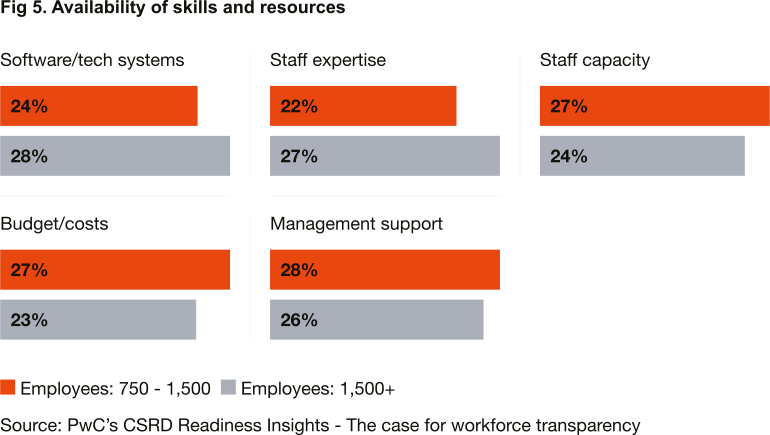
Lack of confidence in HR resources and skills
Overall, only around one in four of those due to report in 2026 ‘strongly agreed’ that their HR function has the full set of resources and skills needed to meet all the demands of reporting processes focused on sustainable workforce issues.
More than two-thirds aren’t confident they can deliver reporting that meets assurance standards. And across every subcategory, 2026 filers showed even less confidence than those reporting in 2025.
Unlocking the potential of AI in workforce reporting
Technology—particularly artificial intelligence—offers a scalable way to process data, recognise patterns and identify trends. As regulations evolve, AI helps bridge the gap. More than 75% of HR leaders believe it will play a critical role.
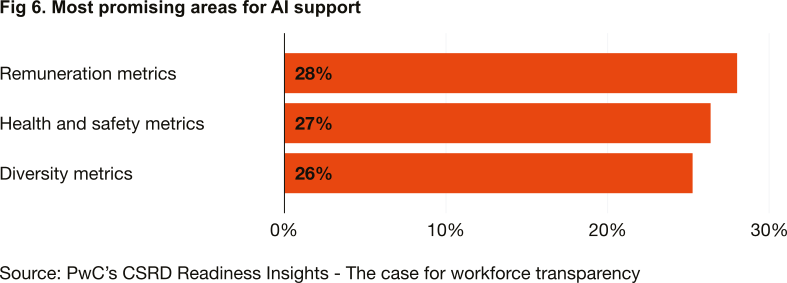
Aligning workforce strategy with sustainability ambitions
People and workforce are an increasingly central element of sustainability reporting. Yet just over a quarter of survey respondents said their sustainability and people strategies are fully aligned. Only just over a quarter believe this to be the case.
A disconnect between HR and reporting teams
One of the survey’s most striking findings: the disconnect between HR and other reporting functions. Nearly 60% of HR leaders say that finance, legal and sustainability teams don’t fully grasp the complexities HR faces. And just two-thirds report that cross-functional collaboration is working effectively.
This siloed approach is risky. Workforce data is inherently spread across HR systems, legal records, procurement tools and more. Closing the coordination gap is critical to success.
The way forward: practical recommendations
With the reporting delay in place, now is the time to act. These five practical steps can help companies stay aligned and make meaningful progress:
- Integrate workforce reporting with sustainability strategy
Embed HR teams into broader functions—including finance, legal, reporting and tax—to ensure workforce strategy is fully reflected in sustainability reporting. - Evaluate your current readiness
Conduct a thorough gap analysis to assess readiness for CSRD, Pay Transparency and other regulations. - Build and execute a readiness roadmap
Use insights from your gap analysis to develop a cross-functional reporting plan. - Invest in skills, systems, and technology
Ensure capabilities and infrastructure are in place to meet assurance-level reporting. - Stay on top of developments
Regulatory landscapes are shifting fast. Monitor emerging trends and identify opportunities to streamline data and reduce duplication.
PwC's Global CSRD 2024 Survey
Insights into the wider sustainability reporting standards of CSRD and how organisations are responding
Authors


The Corporate Sustainability Reporting Directive
Rethink your business with the CSRD to grow trust, value and performance
Sustainability reporting services
Unlock value through human-led, tech-enabled sustainability reporting