







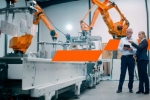


- Climate change could disrupt semiconductor production as copper, used to create semiconductor circuits, faces disruption from extreme weather and drought
- Semiconductors are integral to the modern digital economy, with the global semiconductor industry tipped to hit US$1 trillion by 2030
- One-third (32%) of global semiconductor production will be reliant on at-risk copper supply by 2035, PwC analysis suggests
- Companies are investing in water security and climate resilience to manage the potential disruption risk
- Analysis shows that climate risks are accelerating rapidly and highlight the business need to understand hidden risks across supply chains
LONDON, 8 July 2025 – One-third (32%) of global semiconductor production will be reliant on copper supply at risk from climate disruption by 2035, rising to 58% by 2050 if emissions do not decline, according to a new report from PwC, published today. The report finds that climate disruption risk poses a growing threat to the US$650 billion semiconductor industry, which is projected to exceed $1 trillion by 2030.
The report, the latest instalment of PwC’s Protecting People & Prosperity series, shows that copper mines, which require a steady water supply to function, face increasing risk from severe drought due to climate change. The analysis underlines the need for both copper exporters and semiconductor buyers to adapt their supply chains and practices if they are to manage the risks caused by climate disruption.
Glenn Burm, Global Semiconductors Leader, PwC South Korea, said:
“Semiconductors are the hidden lifeblood of modern technology, embedded in everything from computers and phones to cars and washing machines. It’s hard to think of a company that doesn’t rely on semiconductors in some way. They underpin economic security, are vital to unlocking the potential of AI and integral to renewable energy. We can act now by understanding and managing risks to supply, including the physical risks of climate change. Around the world, companies are adapting by boosting water production, diversifying supply chains, and strengthening climate resilience. There’s great progress, but businesses can and should do more. As AI and other technologies drive digital transformation, the importance of securing critical commodities will only grow.”
Copper faces growing threat from climate disruption risk
Today, copper from only one country or territory that supplies the semiconductor industry – Chile – faces severe drought risks. However, within a decade, copper mines in the majority of the 17 countries that supply the semiconductor industry face severe drought risks.
As a result, more and more of the copper supply that semiconductor production relies on is at risk. As early as 2035, at least 34% of every semiconductor-making territory’s copper supply is projected to be at risk of drought disruption.
The resilience imperative: mitigating the risks of climate disruption to copper miners and semiconductor makers
Semiconductor makers and buyers face an urgent need to strengthen supply chain resilience. While businesses are taking action, and 68% of investors believe companies should increase action to de-risk their supply chain according to PwC’s 2024 Global Investor Survey, more needs to be done.
Across the value chain, businesses should approach climate disruption as a commercial risk that needs to be managed. The various actions stakeholders can, and in some cases are already taking, include:
- Copper miners increasing water supply by investing in desalination plants, improving water efficiency and recycling water. Some copper miners, especially in Chile, are already taking action to protect their operations from drought through desalination.
- Semiconductor makers increasingly recognising climate risks and taking steps, including material innovation, such as using alternative materials; efficiency improvements, i.e., producing more compact circuits; diversification of suppliers; and recycling and leveraging the circular economy.
- Business leaders should first identify climate risks throughout the value chain, managing these risks through tactics such as supplier diversification, moderating reliance on a given commodity, and collaborating with suppliers and other partners across the value chain to build climate resilience.
Lynne Baber, Global Deputy Sustainability Leader, PwC, said:
“By uncovering hidden vulnerabilities across supply chains and operations, businesses can proactively shape resilience strategies that protect value at risk—whether financial, operational or reputational. Smarter climate adaptation unlocks agility, inspires innovation, and positions companies to lead in a more volatile world.”
About the Report
The report is the latest instalment as part of PwC’s Protecting People and Prosperity (PPP) series, which quantifies climate risks to key commodities. The report examines the scale of risks to semiconductor production, by tracing the global semiconductor industry’s copper supply back to copper mines across the world and then analysing how exposed those mines are to accelerating drought in coming years. To track precisely how accelerating drought could disrupt the semiconductor industry’s copper supply, we first identified the territories that are the world’s leading semiconductor producers. Next, we used trade data to find out where the top five semiconductor-producing countries get their copper. We traced both domestic sources and imports. Finally, we located all major copper mines in each copper source country. We identified which copper mines are in a location projected to experience severe drought risk (defined as predicted to spend at least 20% of the time in severe drought; the true time in severe drought could be much higher).
About PwC
At PwC, we help clients build trust and reinvent so they can turn complexity into competitive advantage. We’re a tech-forward, people-empowered network with more than 364,000 people in 136 countries and 137 territories. Across audit and assurance, tax and legal, deals and consulting we help clients build, accelerate and sustain momentum. Find out more at www.pwc.com.
Contact us