Turn insight into action
We help you solve the problems that matter most so you can act faster and move further.
What would you like to explore?
Rethinking learning in the age of AI
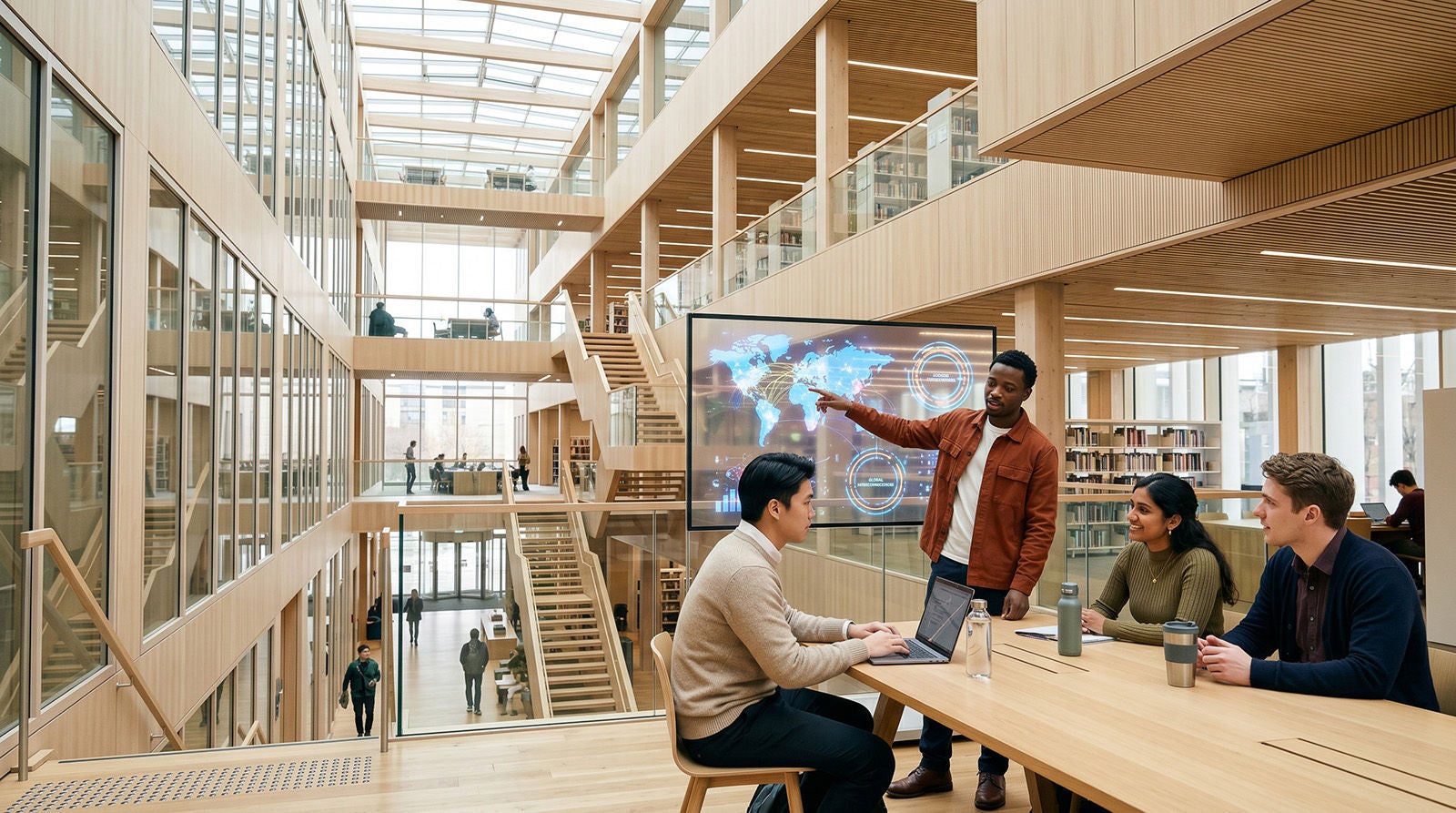
As technology continues to evolve, how can educators explore the potential of AI to personalise education and foster lifelong learning habits?
The details
AI is forcing schools to rethink their purpose—not just what students know, but who they become.
Eirik Sverd, Emerging Tech Lead Researcher, PwC US, a manager in our AI and Emerging Tech R&D Group, didn’t think much about school districts growing up. In Norway, nobody really does. Education, there isn’t a zip code lottery—it’s a national birthright. Same high standards. Same high expectations. Same chance, whether you live in Oslo or a fishing village two hours from the Arctic Circle.
So, when he landed in the U.S. and heard parents swapping tips like real estate agents (this neighbourhood's got a great elementary school, that one’s a disaster) he did a double take. “I didn’t realise until I moved here how fragmented the system is,” he says. “It’s wild that something as foundational as your education depends on your address.”
That disconnect between education as a public good and education as a postcode privilege was one of the first signs that something deeper was off. And it raised a bigger question: In a world of AI tutors, reduced attention spans, and post-pandemic burnout… what is school even for anymore?
That’s the question our team at PwC’s Emerging Tech lab set out to explore. What we found wasn’t just a broken system. It was an outdated blueprint designed for a world that no longer exists.
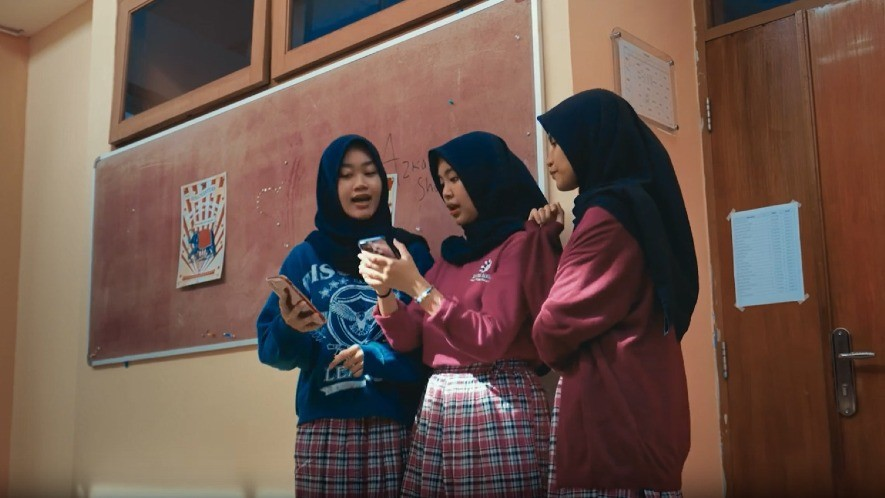
How can AI accelerate human potential?
A modern schooling system built for a different era
The core architecture of modern schooling hasn’t changed much since the 19th century. It’s still largely optimised for efficiency, standardisation, and compliance—values inherited from the industrial age, when the goal was to produce reliable workers at scale.
But that model no longer maps reality. Today’s students are growing up in a world shaped by automation, disinformation, and exponential change. The job market favours agility, empathy, and judgment—traits that rarely emerge from rote memorisation and standardised tests.
Our research confirmed what many educators have long suspected: academic credentials alone don’t prepare learners for real life. In the U.S., just 42% of recent college grads (Source: TalkerResearch, 2025) report feeling confident in their post-grad plans. Employers consistently cite communication, adaptability, and critical thinking as the top skills they can’t find.
Meanwhile, students themselves are tuning out. They’re not lazy, they’re unconvinced. They know instinctively that the system wasn’t built for the world they’re inheriting.
AI is forcing schools to rethink their purpose—not just what students know, but who they become.
Gary Goldhammer,
Marketing Communications Lead, AI & Emerging Tech, PwC United States
A triple threat to learning
If today’s students seem overwhelmed, they have every reason to be. Our research points to three converging forces that are reshaping how (and whether) people learn:
- Shrinking attention spans, fuelled by social media’s addictive design
- The lingering effects of pandemic-era remote learning, where essential human-to-human learning was lost
- The rise of generative AI, which allows students to bypass cognitive struggle with automated answer
Used wisely, AI has the power to unlock learning for more people, in more places than ever before. But if it simply replaces struggle with convenience, it risks hollowing out the learning process itself.
What we’re seeing is a crisis not of intelligence; it’s a crisis of engagement. Of meaning. Of purpose.
Reimagining the role of teachers
One of the most powerful findings from our investigation into this topic is this: students don’t need fewer teachers. They need different teachers.
In an AI-powered world, the teacher’s role is shifting from content delivery to human guidance. From lecturer to learning coach. From gatekeeper to steward.
Students don’t need someone to tell them what the Pythagorean Theorem is. They can look that up in seconds. What they need is someone who notices when they’re stuck—and knows how to coax them gently forward. Someone who pushes at the right moment and pulls back when it’s too much. Someone who can recognise when the struggle is productive, and when it’s defeating.
This is a deeply human role. It’s about trust, timing, and empathy. It’s not something AI can fake.
As Sverd puts it, “It’s not just about learning tools. It’s about mindset. We need to train students to be more reflective, more curious, more resilient.”
Toward a more complete vision of education
If our current systems are failing, it’s because we’ve been measuring the wrong things. Achievement is easy to quantify. Flourishing is not. We’re living in a refresh-all-the-time reality; traditional academic scores are the rearview mirror—useful for where you’ve been, lousy for what’s next.
“A 90% score on a test doesn’t mean you’ll navigate ambiguity, lead change, or think ethically,” says Sverd. “We need broader definitions of success.”
With this goal in mind, our team set out to redefine what success could look like.
What emerged is a framework we call the ‘Wheel of Life’: eight dimensions of human development that go far beyond academic performance. It includes emotional resilience, character, judgment, connection, physical well-being, and personal growth. These are the traits that make a life, not just a living.
A diagram of a diagram AI-generated content may be incorrect.
But these dimensions aren’t meant to be a new checklist or a narrow definition of success. A meaningful life looks different for everyone, and the wheel is about helping individuals focus on and choose the balance that matters most to them.
Imagine an education system designed around those qualities. Imagine report cards that reflect not just what students know, but who they’re becoming.
This isn’t about lowering the bar. It’s about rethinking the bar entirely.
Designing a future of learning
If AI is now embedded in how students’ study, think, and communicate, the answer isn’t to ban it—it’s to build around it. That means:
- Creating learning ecosystems, not just classrooms
- Supporting educators as facilitators, not enforcers
- Designing for equity and access, especially for underserved learners
- Focusing on skills that AI can’t replicate curiosity, empathy, creativity, discernment
We’re not suggesting a utopian overhaul overnight. But we are urging a shift from compliance to empowerment. From mass production to meaningful personalisation. From survival to self-actualisation.
Because in the end, the future-ready student isn’t the one who scores the highest. It’s the one who knows how to learn, how to adapt, how to care, and how to live.
That’s not a test score. That’s a fully realised human being living their best life at full potential.
Related content
Why the next era of AI is built on context, not clever prompts
As AI gets better at context, memory and intent, the burden is shifting from user to system.
4 min read
Think like an AI revolutionary to unlock lasting value
PwC’s Value in Motion research reveals major opportunities for leaders who embrace an AI mindset and master five critical skills.
8 min read
Why comparing AI to humans can only take us so far
Measuring AI against human performance made sense at first. Find out why that benchmark is becoming less useful and the questions to ask now
6 min read
