






{{item.videoDuration}}
{{item.title}}
{{item.text}}

{{item.videoDuration}}
{{item.text}}
It’s been a few week since TED in Vancouver and my head still hurts—in a good way.
It was refreshing to see that the conversations we’re having about AI are changing. This time last year, there were still plenty of people looking to be convinced that this technology was living up to the hype. But a year is a long time, and with agents writing much of our code, that scepticism seems outdated
Now that so many people I meet are beyond the “hmm, interesting” stage and want actionable advice, there’s one kind of question that keeps coming up: how do I win with AI?
An easy yet critical question to ask, and one which reflects understandable anxieties. There’s an intense amount of pressure on people and organisations to adapt AI quickly and get ahead. But once everyone has AI, where’s your edge?
My own answer to this question reflects the reality of working for a professional services company like PwC. Many of our clients tend to see “winning” through the lens of top line efficiency, or higher productivity at a lower cost. There are easy wins—minutes generated automatically when a meeting ends, for example—which impress the first time they’re deployed because they speed up existing workflows, but they rarely challenge whether those workflows need more fundamental reinvention.
This is the more interesting pattern that I see emerging in organisations that are further along in their AI transformations. These organisations have taken a step back and asked, “How would we design this if we were starting again from scratch?” After all, that’s what every startup is now doing—every new potential competitor takes AI as a given from the outset and will ruthlessly exploit the arbitrage opportunity AI presents over existing players in the market.
One of the challenges here is that incremental progress is both easier to justify and easier to implement. Improving productivity by ten percent is tangible and fits neatly into existing planning cycles and investment cases. But it also anchors your thinking to the past.
AI isn't just about optimisation; it reshapes work entirely. Focusing too narrowly on efficiency risks missing that larger shift.
This is particularly visible in areas like software engineering, where the nature of the work itself is changing. The teams I oversee are a case in point: they’re spending less time writing code directly and more time specifying what a system should do, allowing AI to generate, test, and refine outputs autonomously. Their role becomes less about execution and more about orchestration. Across every sector, from finance to research and development, the ability to analyse, predict, and create is expanding rapidly.
And that’s the irony. To “win” with AI is to accelerate the most human qualities within your organisation—making the hard calls, driving creativity and originality, and thinking strategically. Believing that “winning with AI” is about just having AI is as much of a mistake as a company in 1997 believing that all they needed to do to future-ready their business was launch a website.
Scott Likens Global Chief AI Engineer, Principal, PwC United StatesAI presents us with a society-wide opportunity to reconsider how organisations are designed. So many of the structures of modern business come from how the Industrial Revolution reshaped economies in the 19th and 20th centuries, but do those frameworks still make sense? A line manager is a natural fit in an automotive factory, but not necessarily in the context of AI agents working in a flat hierarchy to produce knowledge.
Information can move more freely upwards and sideways throughout an AI organisation, and processes can be interconnected in entirely new ways. This would have been impossible in a world of rigid departmental divisions and physical paperwork. AI can dissect problems differently, and, in doing so, often reveals inefficiencies that were previously hidden or accepted as inevitable.
Many years ago, as a junior engineer, I had the privilege of working on one of the first web browsers in the mid-1990s. So much of the trust we have in the architecture of the internet was just theoretical (try finding anyone under 40 who believes we used to use escrow to buy anything online.) It took time, effort, and a lot of collaboration and coordination across industries and governments to build the security standards that make modern tech platforms possible.
You can’t accuse today’s AI leaders of a similarly lackadaisical attitude toward security, trust, and governance. Relative to earlier computing technologies, these early days of AI are far more mature, the guardrails are being erected at a faster pace, and the criticisms (say, of hallucinations) are taken seriously, with corrective action prioritised.
We also need to think about the economic impact of AI adoption on the global economy. Our own prediction is that it will boost global GDP 15 percent by 2030. Growth will come both from the impact of AI within companies and from making AI accessible to as many people as possible.
The massive investments into compute that we’re seeing are extremely important for unlocking this kind of global impact. More and better LLMs for white collar work aren’t enough – we want to see frontiers being pushed back in physics, drug development, autonomous vehicles, energy generation, and more. AI will see the physical world just like we do and be able to interrogate it just like we do in the pursuit of science and discovery.
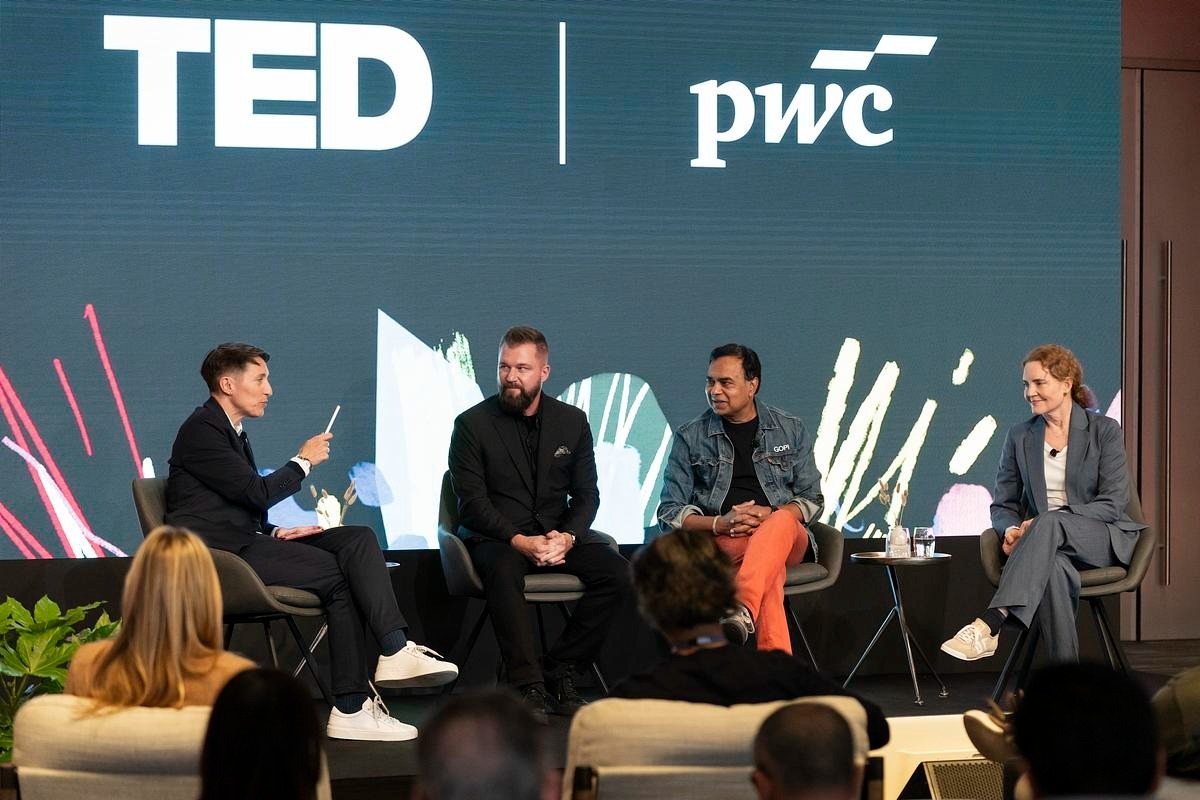
I know, this all sounds very utopian. What can I say, I’m an optimist at heart. I spend a lot of time talking with researchers, and they’re increasingly making these kinds of mind-boggling claims— as Gopi Kallayil reminds us, nodding to what his CEO Demis Hassabis has said, believes that by mid-century we could have cures for almost every disease.
The point of all this is to emphasise that there is a bigger perspective on this moment. Frankly, it’s increasingly why I do what I do. If we can help people go even faster through this process of AI adoption, and push for it to happen responsibly, then we all benefit.
Together, we all win.

Scale AI for your business
The future of AI, unpacked.
{{item.text}}
{{item.text}}


