










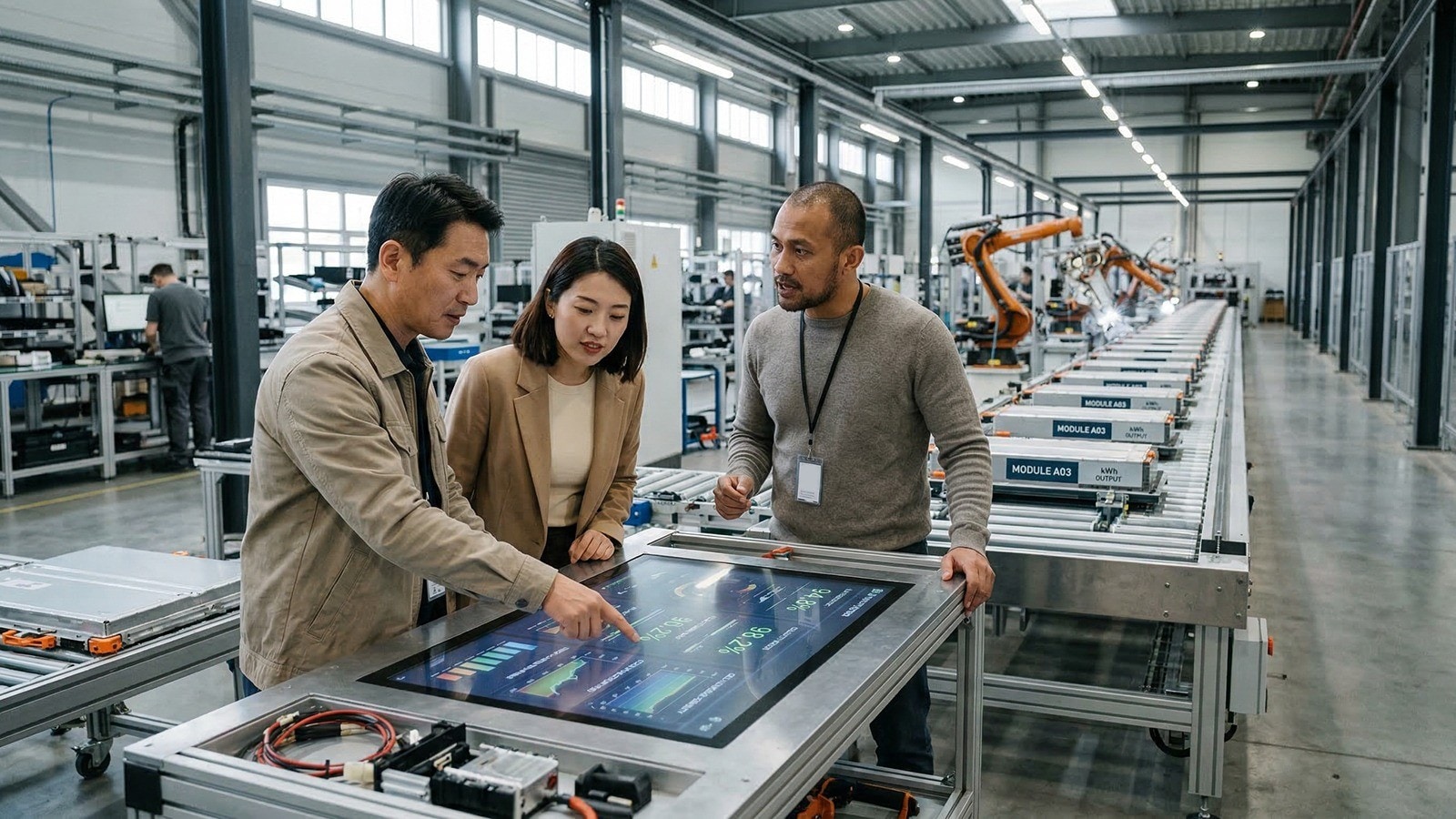
PwC’s ‘corridors of value’—three cross-border ecosystems spanning minerals-to-tech and mobility, clean power, and health and care—could represent more than US$11 trillion in gross value added by 2035. Early movers will be best placed to shape the alliances, capital flows, and standards that determine who captures that value, both in Asia-Pacific and beyond.
The takeaways: Shaping cross-border systems for resilience and growth
PwC research finds that ecosystem-based value pools called ‘corridors of value’ could help companies navigate fragmentation and unlock new sources of value in Asia-Pacific and other key markets.
The global economy is shifting. Supply chain fragmentation, assertive government intervention in strategic sectors, and global reallocation of capital are reshaping the landscape. Companies must actively orchestrate systems across sectors and borders to build resilience and drive growth.
Asia-Pacific's endowments remain fragmented. The region combines critical natural resources, deep manufacturing capability, large capital pools, and rapidly growing demand. Yet regulatory fragmentation, infrastructure gaps, and geopolitical friction continue to constrain its potential.
Corridors of value offer a system for resilience and growth. PwC research identifies three cross-border ecosystems in Asia-Pacific that together could represent US$11 trillion in gross value added by 2035. Capturing the value will require bold action from companies, and from governments, which play a vital enabling role. Companies that move decisively can unlock opportunities that spur their own growth while strengthening the entire region.
Early movers will shape competition. The next decade's winners won’t just adapt to disruption but will take the lead to form alliances, direct capital, and work with governments to shape standards and policies, positioning themselves at the most critical nodes of value creation.
US$7 trillion opportunity by 2035
Source: PwC data
Corridor overview: Minerals-to-tech and mobility links Asia-Pacific's natural resource endowments with its processing and manufacturing capabilities, powering the frontier of technology and mobility—including EVs, AI, and data centres.
Critical constraints: Control is concentrating in a small number of processing and high-tech manufacturing nodes for rare earth supply.
Corridor plays: Consider long-term offtake and equity investments in upstream and processing operations; tech partnerships in refining; performance-based, alliance-style contracts with profit- and risk-sharing; and consortium-level project financing.
US$1.7 trillion
opportunity by 2035
Source: PwC data
Only 15%
of clean energy spending recieved by developing markets outside China
Source: International Energy Agency
Corridor overview: This corridor treats Asia-Pacific's renewable endowments and capital pools as a connected system, linking places that can generate low-cost clean energy with the cities and industries that need it.
Critical constraints: Capital allocation and regulation shape what gets built and where. Taxonomies define what qualifies as ‘green,’ and risk-return considerations determine what is bankable.
Corridor plays: Consider co-investment in renewable generation and on-site industrial processing, carbon-credit generation from managed coal phase-out, long-term performance partnerships with clean tech manufacturers, and consortium-level financing.
US$2.4 trillion
opportunity by 2035
Source: PwC data
11 million
health worker shortage globally by 2030
Source: World Health Organization
Corridor overview: Millions live, work, retire, and seek treatment across Asia-Pacific, yet their healthcare coverage doesn't move with them. This corridor seeks to shift from nationally siloed systems to cross-border networks, and from reactive treatment to proactive, outcome-based care.
Critical constraints: Healthcare systems are designed for domestic populations, with regulatory and data frameworks that rarely extend across borders. Talent shortages reinforce the challenge.
Corridor plays: Consider alliance-style cross-border insurance cooperation, shared claims clearinghouses, outcome-based provider contracts, coordinated long-term care and medical tourism pathways, and wearables-enabled health data ecosystems.
These questions should anchor your corridor playbook:
- Where will power concentrate in the corridors that matter to the business, and is our position strengthening or eroding?
- What partnerships/alliances, capabilities, and processes will secure, or strengthen, our role?
- How should we best deploy our capital?
The challenge—and the opportunity—lies in summoning your team’s collective imagination to harness business model reinvention, institutional coordination, and capital.
Asia-Pacific’s next decade will be defined by cross-border systems of value creation, not individual industries. As supply chains fragment, governments intervene more actively in strategic sectors, and capital reallocates globally, competitive advantage will increasingly depend on who can connect resources, technology, infrastructure, finance, and policy across borders.
The region is uniquely positioned for this shift. Asia-Pacific combines critical natural resources, deep manufacturing capability, large pools of capital, and rapidly growing demand. Yet much of this potential remains unrealised, constrained by fragmented regulation, infrastructure gaps, talent shortages, and other structural factors.
Moreover, for decades much of the region’s trade and investment was relatively linear and transactional, reflecting an era of predictable geopolitics, low tariffs, and open globalization. As that era has vanished, the status quo has become a strategic liability.
What’s required today is greater connection. The way to build it is through corridors of value—cross-border ecosystems that connect production to markets, capital to needs, and policy to purpose. These corridors aren’t theoretical constructs, but practical systems already taking shape, linking complementary strengths across economies to unlock new value at scale.
We identify three such corridors in Asia-Pacific. Minerals-to-tech and mobility, clean power, and health and care together could represent more than US$11 trillion in gross value added in 2035. More importantly, they illustrate a broader shift in how value will be created and captured.
For CEOs and senior leaders, the implication is clear. The next decade’s winners won’t simply be those with the best products or lowest costs, but those that move early to shape these emerging systems. They’ll form alliances, direct capital, influence standards, and position themselves at the critical nodes of cross-border value creation.
Rich endowments, unrealised potential
Asia-Pacific’s edge starts with a massive economic tailwind, given that much of the world’s current and future economic growth is already concentrated there. Indeed, PwC’s Value in motion research shows that more than $27 trillion of economic value will be up for grabs between 2023 and 2035, with Asia-Pacific seeing the lion’s share, $14 trillion, over that time. The endowments powering this growth include critical minerals, large capital pools, world-class manufacturing know-how, and a young, innovative workforce, among others.
Today, however, Asia-Pacific still harnesses much of this resource base to power growth in other places. The opportunity is to foster resilience and growth within Asia-Pacific itself.
For example, resource-rich economies could anchor the energy transition supply chains powering East Asian manufacturing hubs, that in turn serve fast-growing markets in South and Southeast Asia. Regional financial centres could mobilise capital across the risk-return spectrum, while a youthful workforce drives reinvention. The region bursts with potential.
If the potential is so large, why hasn’t the region organised itself to capture it? For one thing, divergent rules, infrastructure gaps, and barriers to capital and talent flows prevent organisations from realising the region’s full potential. Differences between countries are stark. For example, Singapore ranks as the world's most open economy, while others are far more closed. Developing economies across Asia need an estimated $1.7 trillion annually in infrastructure investment, and 77% of Asia-Pacific employers report difficulty finding skilled talent where they need it.
On a deeper level, the answer is structural. National industrial policies are designed to maximise domestic advantage, not regional outcomes, and countries reflexively compete in this arena rather than coordinate. Value is distributed unevenly across supply chains, and firms operating in high-margin segments have had little incentive to invest in activities outside their core business, particularly those that are higher risk and lower margin. Orchestrating investment, regulation, and infrastructure across multiple jurisdictions introduces a level of complexity that most companies, and most governments, simply aren’t equipped to manage.
This isn’t to say that countries and businesses in Asia-Pacific are completely disconnected. They have always traded and invested. But those relationships tended to be linear and transactional, and they worked well enough in an era of predictable geopolitics, low tariffs, and open globalisation.
That era, however, is gone. As the world becomes more fragmented, transaction-based relationships won’t be sufficient. Without more deliberate coordination and deeper integration, the old ways of operating are becoming a strategic liability, exposing companies to supply shocks, capital inefficiency, and sudden loss of market access.
The best responses will be relational and include partnership-based or ecosystem-driven connections, strategic equity investments, cross-border alliances, shared infrastructure, consortium-level financing, and deeper operational partnerships. The goal is to link companies and countries into systems of mutual advantage.
With this goal in mind, we propose corridors of value as a solution: ecosystems connecting markets, capital, and capabilities in ways that benefit companies and countries alike.
A corridor close-up
For an example of corridor dynamics in action, look to the Nolans Project in Australia’s Northern Territory. Starting with early sitework in 2023 , this rare earths development by Arafura Rare Earths is the country's first fully integrated mine-to-processing operation for neodymium and praseodymium, which are critical inputs for EV motors and wind turbines.
What makes it a corridor play is how stakeholders structured it. Rather than relying on a single government or investor, Arafura first secured binding buyer agreements with end-users like Hyundai Motor Company, Kia Corporation, and Siemens Gamesa, unlocking financing from those buyers' national export credit agencies, South Korea's KEXIM, and Germany's KfW. Domestic Australian institutions took debt and equity in the project, too, helping to keep project risk manageable.
This demonstrates the corridor principles in practice. Australia's natural resource endowment is paired with East Asian manufacturing demand and European clean energy demand, underwritten by a mesh of alliances and public-private financing. This example shows that when anchor buyers, allied governments, and domestic institutions align around a shared strategic interest—in this case, accessing rare earths supply—previously unviable projects can thrive.
Three corridors in action
Our research identifies three distinct corridors of value across Asia-Pacific: minerals-to-tech and mobility, clean power, and health and care. We expect them to represent a combined gross value added of at least $11 trillion by 2035.
This isn’t simply a redistribution of existing economic activity. Indeed, our analysis finds the value could be much more, as these corridors protect and expand economic activity in three ways.
First, the corridors would build resilience in business models and supply chains, reducing the potential impact of disruptions that would otherwise mean fewer business transactions, weaker trade flows, and smaller economies. These risks aren’t hypothetical. The International Monetary Fund warned that large disruptions to rare-earth supplies could substantially reduce GDP. For manufacturing economies such as Japan and India (where rare-earth-dependent value added accounts for 1.7% and 1.3% of GDP, respectively) such disruptions would be damaging.
Second, corridors would lower the cost of capital by helping to redistribute risk according to the core strengths, strategic priorities, and risk appetites of various stakeholders. Here again, the opportunity is striking. The UN Conference on Trade and Development estimates there is a $225 billion investment shortfall in critical mineral mining projects through 2030. If corridor-style coordination mobilised funding to close even 20% of that gap, the second- and third-order effects on supply chains, employment, skills, income, public finances, and industry connectivity would add materially to economic resilience and growth.
Finally, corridors would create new demand, as cross-border health networks, abundant clean energy powering new industries, and integrated mine-to-manufacturing value chains all generate economic activity that didn’t exist before.
Let’s take closer look at the corridors in order to illustrate their defining characteristics—non-linear flows of value, multi-party consortia, strategic partnerships, reinvented business models, and a host of supporting enablers.
As you read on, keep these questions front of mind to help anchor your company’s corridor playbook:
- Where will power concentrate in the corridors that matter to the business, and is our position strengthening or eroding?
- What partnerships and alliances do we need to secure, or improve, our role?
- How should we deploy capital and build the capabilities to act?
As we’ll see, the immediate prize for companies is resilience, gaining more robust supply, diversified access to critical inputs, and a lower cost of capital. The longer-term dividend is growth, along with new value propositions, revenue streams, and profit pools.
Minerals-to-tech and mobility
The minerals-to-tech and mobility corridor transforms linear supply chains into tightly coordinated, cross-border ecosystems that link Asia-Pacific’s natural resource endowments with its processing and manufacturing capabilities. Spanning everything from mineral extraction to the transformation of those materials into advanced technologies and industrial products, the corridor powers the frontier of technology and mobility across EVs, AI, and data centres.
What distinguishes this system isn’t just its scope, but how it’s organised. Unlike traditional bilateral supply chains, multiple actors operate within a shared commercial architecture, with interwoven roles that leave them financially and operationally interlocked. Mining companies, processors, manufacturers, technology partners, and financiers are no longer connected through transactions alone, but through equity stakes, co-investment structures, alliance-style contracts, and consortium-level financing.
But the very features that make the corridor powerful also make it fragile. Value and bargaining power are concentrating in a small number of processing and advanced manufacturing nodes, many of which sit outside the reach of individual firms. The Chinese Mainland, for example, processes 60–70% of the world’s lithium and 90% of rare earth elements.
The implications are systemic and global. Disruptions at the processing or manufacturing stage ripple across the entire value chain, amplifying upstream and downstream impacts. Even relatively small shocks can have outsized consequences. In the United States, for example, the US Geological Survey found that a 30% disruption in gallium supply could cost the country $600 billion in lost output, or 2% of GDP.
For companies positioned anywhere along the value chain, exposure extends far beyond the parts of the system they control, often revealing significant resource value at risk tied to bottlenecks elsewhere in the corridor.
Consider the implications for CEOs. A mining company whose margins depend on throughput is no longer insulated by its upstream position; a refining bottleneck or export restriction elsewhere can suppress demand just as effectively as an operational issue at the mine itself. In this environment, resilience depends less on control within a single segment and more on alliances across the corridor.
This is precisely why corridor-style orchestration is emerging. Here’s how it could take shape.
Idea in motion
Imagine an EV manufacturer begins analysing its supply chain for risks and bottlenecks associated with copper and other key transition minerals. After accounting for commodity price swings, policy shifts, and supply chain concentration, the company estimates its resource value at risk for copper alone exceeds $1 billion.
As a result, it partners with a mining company to secure early access to the mineral. Instead of signing a traditional offtake agreement, however, the EV maker buys equity in the extraction and processing plant.
Next, a chemicals company is brought in as a technology partner to co-develop and co-invest in the refining process. Meanwhile, the mining company enters an alliance-style contract with a mining services provider. Compared with standard production contracts, the alliance delegates greater responsibilities to the services provider and sets shared KPIs and profit- and risk-sharing mechanisms to align incentives and ensure the miner is only exposed to commodity risk.
Then, the mining services provider subcontracts an equipment supplier to provide and maintain machinery under performance-based contracts. Finally, a bank arranges project financing at the consortium level, evaluating each party’s ability to meet its obligations under the partnership, rather than focusing on the financial performance of a single asset.
Later, as the corridor matures and end-of-life battery volumes grow, specialised recyclers feed materials back into the original supply loop, reducing dependence on virgin extraction and further strengthening the economics. This approach also adds resilience to the system through new sources of supply.
Clean power corridor
The clean power corridor starts from a simple but underexplored question: could Asia-Pacific’s renewable endowments and capital pools, joined in a connected system, link places that can generate low-cost clean energy with the cities and industries that need it? Because the region’s greatest renewable potential and its largest sources of demand rarely coincide, the corridor seeks to bridge that gap through coordinated investment, carbon markets and, over time, cross-border transmission that could allow energy itself to flow across borders at scale.
But the corridor’s more immediate shift may be even more disruptive. If power can’t yet move easily, couldn’t industries move to the power? After all, cheap geothermal energy made Iceland a global aluminium refiner despite having no bauxite. By extension, green steel in Western Australia, sustainable aviation fuel linked to Japanese offshore wind, and aluminium refining on Indonesian geothermal would become economically viable configurations within a clean power corridor.
What makes this system powerful, however, also makes it hard to realise. The energy transition is increasingly shaped by constraints embedded in capital allocation and rule-making systems that determine which projects get built, and which don’t. Across Asia-Pacific, the largest pools of patient capital—including major Japanese and South Korean pension funds, Australia’s superannuation system, and Singapore’s sovereign wealth funds—act as gatekeepers, shaping both the pace and direction of the transition. At the same time, taxonomies, carbon accounting standards, and credit-trading frameworks define what qualifies as ‘green,’ and therefore what is financeable at scale.
In this context, project viability can hinge on decisions made in regulatory bodies and other institutions that companies may not be paying enough attention to. A taxonomy that defines the clean energy transition differently, or a credit framework with distinct risk-return tradeoffs, can determine whether a cross-border investment attracts capital or stalls, prohibiting investment as surely as a grid failure. The gaps are stark. Developing markets outside China receive only 15% of clean energy spending.
For CEOs, this reframes the challenge. Locating or relocating capacity to take advantage of low-cost clean energy is no longer just an operational decision. This move also depends on engaging the capital allocators and rule setters who determine whether a project is investable in the first place.
Idea in motion
Imagine that an Indonesian utility operator, backed by a Singapore-based infrastructure firm, transitions its fossil fuel generation portfolio towards renewables, expanding geothermal capacity to power an aluminium refinery built around firm, low-cost baseload power. Raw materials are imported, processed using renewable energy, and exported, as Iceland has done for decades.
To further strengthen the economics, the operator seeks to generate carbon credits from the displacement of its own legacy coal and gas-fired generation, structured in alignment with Singapore's International Carbon Credit Framework. The approach also aligns with emerging Singapore-Asia taxonomy interoperability efforts on managed phase-out of coal plants, reinforcing the operator's transition credentials and broadening its appeal to institutional investors with climate-aligned mandates.
Notably, the clean technology manufacturers involved do more than simply sell equipment. They enter long-term partnerships that guarantee offtake and reliability, aligning their incentives with the success of the project.
Similarly, banks finance the integrated system based on long-term offtake agreements and carbon-credit revenues. No single participant could justify these investments on their own.
Health and care corridor
The health and care corridor is built on a different kind of flow where data, incentives, and access to care move across borders. In Asia-Pacific, millions already live, work, retire, and seek treatment across countries. Yet their healthcare coverage doesn’t travel with them.
The result is a growing portability gap between mobile populations and immobile health systems. This corridor seeks to close it by encouraging a shift from nationally bounded systems to cross-border networks, and from reactive treatment to continuous, outcome-based care.
How might the shift happen? An unlikely but instructive parallel is the airline alliance model. No single carrier could fly everywhere, but travellers needed seamless global journeys. The solution was structured cooperation: code sharing, shared lounges, reciprocal frequent-flyer programmes, and coordinated scheduling. Separate companies delivered a unified experience.
Of course, healthcare presents its own challenges. Healthcare systems across Asia-Pacific are designed for domestic populations, with regulatory frameworks that rarely extend across borders. Replicating an EU-style portable health insurance model would require treaty law and supranational enforcement that Asia-Pacific lacks.
Moreover, talent constraints complicate the picture. The countries that most need care, such as Japan and South Korea, aren’t necessarily best positioned to supply it, and rigid licensing regimes entrench the mismatch. ASEAN has introduced mutual recognition frameworks for medical professionals, but these remain advisory and exclude major economies such as Australia, the Chinese Mainland, Japan, and South Korea. The pressure is only increasing. The WHO projects a global shortfall of 11 million health workers by 2030.
Idea in motion
Imagine the airline alliance model brought to health insurance. For example, a person born in Kuala Lumpur, working in Singapore, and retiring in Chiang Mai would carry continuous coverage, health records, and risk history across borders—and decades.
What could start to make this possible is a ‘One Health’ alliance among insurers in Malaysia, Singapore, and Thailand. Each insurer would retain its brand and regulatory standing but jointly own the operating platform providing a shared digital health passport, cross-border claims clearinghouse, and common provider accreditation. When members need care abroad, coverage and health records are recognised seamlessly.
Coverage follows a person as they relocate, and premiums adjust gradually to reflect health status and local conditions. Outcome-based insurance rewards preventive milestones and enables bundled contracts with hospitals. For example, a facility performing knee replacements receives a base payment plus a performance bonus if the patient hits defined recovery benchmarks.
The cross-border dimension seeks to expand choice by allowing members to compare procedures across markets with transparent pricing and outcomes. Several mechanisms make this work. A shared risk framework, supported by AI-driven actuarial models, prices cross-border risks accurately. Savings from lower-cost treatment destinations are shared through premium credits. A regional clearinghouse, modelled on banking settlement systems, settles cross-border claims automatically so patients avoid upfront payments. Finally, a shared reinsurance pool prevents any one insurer from being overwhelmed by high-cost patients. Together, these tools would help turn cost disparities into a portfolio of care options.
Ultimately, the underlying principle for an integrated long-term care alliance would be to deliver care where quality, cost, and patient experience align. In essence, this is similar to today’s medical tourism, yet the alliance would seek to replace today’s chaotic, out-of-pocket model with more coordinated care pathways: seamless records transfer, virtual pre-operative consultations, and structured post-operative outcome tracking that holds providers accountable after patients fly home.
Despite the many barriers, we believe an alliance like we’ve described could start with a modest pilot. Two insurers, one Singaporean, one Malaysian (neighbouring countries with deep historical, economic, and social ties), could begin with reciprocal emergency coverage, settling cross-border claims through a shared clearinghouse. Narrow enough to be regulatorily manageable yet immediately useful given daily cross-border movement, this approach would also help establish the core infrastructure needed for broader integration. That includes federated health data to enable secure data sharing, along with the claims interoperability, and cross-border provider credentialing needed for broader integration.
Think bigger, move first
The three corridors explored in this article are hardly the limit of the opportunity. The corridor lens can be applied wherever cross-border complementary strengths exist but are underexplored.
Consider a corridor centred on the mission to reconfigure the global food system. Asia-Pacific is home to roughly 60% of the world's population, yet swathes of the region remain vulnerable to food insecurity, food loss, and climate-related yield losses.
The cold-chain logistics pioneered in Australia, Japan, and South Korea could be extended to the agricultural hinterlands of Southeast and South Asia, where spoilage remains chronic. Precision agriculture technologies from innovation hubs such as Singapore and Shenzhen could be deployed across the region's smallholder farms, transforming yields and reducing waste at scale. The potential impact is immense. The UN puts the global economic cost of food loss and waste at approximately $940 billion annually.
Or consider corridors designed to connect through improved plumbing of regional financial markets and digital infrastructure. While Asia-Pacific leads the world in the digital economy, connectivity remains uneven and capital markets fragmented. Submarine cables and data centres are expanding rapidly, yet they often stay nationally siloed. Disjointed payment systems and investment regimes create friction.
Could a more deliberate approach, one where corridors link digital infrastructure and cross-border investment with harmonised regulatory standards and deeper financial integration, lead to a step-change in digital trade, commerce, financial inclusion, and cross-border capital flows? Our research indicates that these corridors could bring over $1.2 trillion in additional gross value added across the region.
These opportunities aren’t confined to Asia-Pacific. The Americas hold vast critical mineral reserves—in Canada, Chile, and Peru, to name a few. An extension of the minerals-to-tech and mobility corridor across both sides of the Pacific could forge new connections and further diversify the concentrated chokepoints in critical minerals supply.
The broader lesson is this: whether spanning Asia-Pacific, linking the Americas to Asia, or bridging Europe and Australasia, corridors of value embrace the full, messy complexity of how modern economies and economic actors must interconnect for greater resilience and growth. They aren’t rigid taxonomies. The corridors we have examined in depth are intended to provoke and extend our thinking, not establish further boundaries.
CEOs’ corridor playbook
To move from insight to action, senior executives need to first interrogate their own position within the corridors. These questions should anchor your corridor playbook:
- Where will power concentrate in the corridors that matter to the business, and is our position strengthening or eroding? Map the cross-border and cross-sector systems emerging around your core business and identify where constraints are forming. Who holds the critical resources, process, data, regulatory access, or infrastructure? The value and risk across the corridors aren’t distributed equally. Be honest about whether your current position provides leverage in these corridors or whether that leverage is migrating to upstream suppliers, platform orchestrators, state-backed entities, or new entrants from adjacent sectors.
- What partnerships and alliances do we need to counteract that erosion—or build on strengths—and secure our role? Identify the specific relationships with peers, technology providers, investors, governments, and even competitors that would shore up your position in must-play corridors. Consider joint ventures that guarantee supply access, co-investment structures that share risk across borders and partners, and policy coalitions that shape the rules before they’re written. The partnerships you fail to form now will be the weaknesses others will exploit later.
- How should we deploy capital, and what capabilities must we build? Stress-test your investment thesis against corridor dynamics. Are you allocating capital to where value is migrating, or to where it used to be? Determine the specific capabilities, including integrating AI, risk management, multi-partner orchestration, data protections, and cybersecurity that corridor competition demands. Then assess candidly whether you need to build, buy, or borrow them.
The challenge—and the opportunity—lies in summoning the collective imagination, business model reinvention, institutional coordination, and capital commitment required to bring the corridors of value to life.
The authors would like to thank Michael Dobner, Sebastian Hanke, Atsushi Ito, Steven Kang, Goushi Kataoka, Renate de Lange, Amy Lomas, Melissa MacEwen, Sridharan Nair, Gil‑Ju Ryu, Ronit Sinha, Jeroen Van Hoof, and David Wijeratne for their contributions to this article.
About the author(s)




Value in motion
AI, climate change and geopolitical shifts are reconfiguring the global economy. We’ve mapped where value is moving over the next decade, so you can build a future-ready business to capture it.
Reinvention services
We turn reinvention into reality so you can unlock opportunity and grow.


