





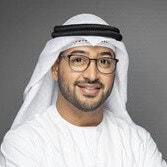
“CEOs in the UAE are entering the next phase of growth with exceptional confidence and intent. What stands out is how capital, innovation, and AI are being translated into sustained competitive advantage, supported by ambitious agendas and a thriving business ecosystem that has become one of the world’s most vibrant, resilient and opportunity rich. Business leaders are scaling AI, diversifying into new sectors, investing through uncertainty and nurturing talent as they pursue ambitious reinvention goals.”
29th-ceo-survey-uae findings
In the United Arab Emirates (UAE), CEO confidence is at a notably high level, underpinned by the country’s strong growth, capital inflows and accelerated adoption of artificial intelligence (AI). The country ranks among the world’s top investment destinations, with world-class digital infrastructure and major urban and transport infrastructure projects. Latest findings of PwC’s 29th Global CEO Survey have revealed that business leaders in the UAE are aligned with long-term national objectives and are implementing AI at scale not only to improve efficiency, but to unlock opportunities, create new revenue streams and drive sustainable growth.
Key findings for the region
% of CEOs in the UAE express strong confidence in economic growth in their own territory over the next 12 months, among the highest globally
The UAE ranks among the top destinations for international investment
Nearly eight in 10 CEOs in the UAE are confident about revenue growth prospects over the next three years
% of CEOs in the UAE expect to make one or more significant acquisitions in the next three years
% of chief executives say their company culture is enabling AI adoption, and % say they have a clear AI roadmap
% say they are planning enterprise-wide cybersecurity enhancements over the next three years
1 Confidence anchored in capital and long-term strategy
A significant 91% of CEOs in the UAE are confident about domestic economic growth over the next 12 months, significantly above the 55% global average and up from 80% last year. This is supported by high foreign direct investment inflows, a competitive economic system, stability and the abundance of economic and investment opportunities it offers across sectors.
Business leaders in the country have reported stronger near- and long-term revenue growth expectations than both their regional and global peers (see Figure 1). Nearly 80% are confident in revenue growth over the next three years and 59% expect growth to improve over the next 12 months. At the same time, almost half of business leaders in the country report spending most of their time on activities with a horizon of less than one year, more than twice the share of those who devote their time to activities beyond five years. This focus reflects CEOs balancing immediate performance pressures with the need to build organisations that remain resilient and competitive over the long term.
For the current fiscal year, UAE companies reported higher revenue growth (13%) than the global average (8%), and this translated into net profit margins of 14%, in line with region but ahead of the 10% result globally.
Figure 1: How confident are you in your company’s prospects for revenue growth over the next three years?
The UAE ranks among the top 10 destinations for international investment
The UAE has emerged as a global magnet for foreign direct investment (FDI), attracting US$45.5 billion in foreign direct investment in 2024 and is firmly on track toward its Dh1.3 trillion FDI target by 2031.1 According to our survey findings, it ranks among the top 10 global destinations for international investment.
For investors, the UAE is well positioned to offer macroeconomic stability, policy clarity and cross-regional connectivity. The World Bank expects the UAE economy to grow by 5% in 2026, rising to 5.1% in 2027,2 while non-oil sectors accounted for 77.5% of national GDP by the end of the first half of 2025.3
More than 1.4 million companies now operate across the UAE’s markets.4 Progressive labour market reforms, relaxed visa regulations such as the introduction of long-term Golden and Green Visas, expanded remote work and freelance permits and 100% foreign ownership across most sectors that make this a stable destination for global investors to park their capital. The introduction of a globally competitive 9% corporate tax, support for small and medium businesses through grants, loans and venture capital support. The NextGen FDI programme5 has also helped to attract investment.
The UAE’s expanding network of Comprehensive Economic Partnership Agreements (CEPAs) is reinforcing its role as a global trade and investment hub. By October 2025, the UAE had 20 CEPAs either signed or in force. Since the India-UAE CEPA came into force in May 2022, 6 it has opened avenues for AI, space technology, sustainability, and financial integration. Between April and February FY25, India’s goods exports to the UAE reached US$33.23 billion.7
The recent visit of His Highness Sheikh Mohamed bin Zayed Al Nahyan, President of the United Arab Emirates and the Ruler of Abu Dhabi, to India, marks a further deepening of the India-UAE partnership. The visit reinforced strong bilateral ties spanning trade, investment, defence, advanced technologies, and civil nuclear cooperation, highlighting the growing strategic and economic alignment between the two countries.8
The EU’s move to open bilateral trade negotiations with the UAE also highlights the country’s rising strategic importance as a regional and global trading partner.
2 Placing big bets on innovation and AI
Survey findings show that UAE companies place a much stronger emphasis on innovation than their global and regional peers: nearly three quarters (72%) said innovation is critical to business strategy (see Figure 2), compared with 50% globally, while more than half reported rapidly testing new ideas and 53% indicated they collaborate with external partners to accelerate innovation. 31% said they would tolerate high risk in innovation projects, higher than 25% of their global peers.
The UAE ranks 30th out of 139 economies in the Global Innovation Index 20259 and the government’s innovation agenda continues to be strengthened by efforts to embed artificial intelligence into the country’s research and development ecosystem.
Figure 2: To what extent do each of the following statements characterise your company’s approach to innovation?
The UAE’s AI momentum accelerated sharply in 2024-25, driven by large-scale deployment, global partnerships like the Stargate UAE initiative and record levels of investment in AI. Total AI-related investments for 2024-2025 exceeded Dh543 billion, with global firms announcing major investments in the UAE.10
The UAE National Artificial Intelligence Strategy 2031 aims to position the UAE as a global leader in AI by the end of the decade. As part of this national push, the country, supported by homegrown champions, is building a comprehensive digital technology ecosystem by deploying AI across priority sectors.
The business culture in the country is, therefore, defined by this assertive approach to artificial intelligence adoption across key sectors. For CEOs, AI offers a clear competitive advantage by automating processes, generating insights from large-scale data analysis, and enhancing engagement with customers and employees. 45% of CEOs surveyed in the UAE report using AI in demand generation, across sales, marketing, and customer service, higher than the global average. CEOs in the emirates are also much more likely than global peers to use AI in product enhancement, support services, demand fulfilment, 45% applied AI in support services and 38% directly integrated it into their offerings. (see Figure 3).
Figure 3: To what extent has AI been applied in the following areas of your business? (SUMMARY NET: To a large or very large extent)
Chief executives in the country are also highly confident in the foundational enablers required to scale AI across their value chain. They believe their organisational culture supports AI adoption, while the technology environments can integrate AI effectively, and clear roadmaps are in place. Confidence also extends to governance and investment, with many CEOs indicating that responsible AI processes and funding levels are sufficient to meet organisational goals (see Figure 4).
More than half of the CEOs surveyed in the UAE said their business was able to attract high-quality AI talent. The UAE is accelerating workforce upskilling in artificial intelligence through national initiatives such as the 1 Million AI Talents Program11, which aims to equip government teams with future-ready AI skills by 2027. UAE findings of PwC’s The Fearless Future: 2025 Global AI Jobs Barometer12 have indicated that AI-related job postings in the UAE have already doubled from around 5,000 in 2021 to 10,000 in 2024, reflecting rapidly growing demand for AI capabilities. The information and communications technology sector leads this demand, followed closely by professional and technical services. Business leaders are, therefore, set to increase hiring in the UAE across all levels, and much higher than their global peers.
For CEOs in the UAE, data access has been a constraint, with limited AI access to enterprise-wide data. This has emerged as the primary barrier to achieving full, organisation-wide impact. This challenge is, however, not unique to the UAE: globally, just 29% of CEOs say their data is fully accessible to AI systems. The gap reveals that while AI capabilities have advanced rapidly, the availability and quality of data have not yet kept pace, emerging as a key constraint on effective AI deployment.
Figure 4: To what extent do you agree with the following statements relating to AI use at your company?
3 Active dealmaking drives diversification
AI isn’t the only force reshaping business priorities in the UAE. M&A appetite is accelerating sharply, with almost three quarters of CEOs in the UAE (74%) expecting to make one or more significant acquisitions in the next three years, up from 63% last year, and well above the global average, where planned M&A has fallen from 54% last year to 41% this year.
According to PwC Middle East’s 2025 TransAct Mid-year Update, the UAE led regional M&A activity with 95 deals in H1 2025 in areas such as technology, industrials and financial services.13 The UAE findings of the survey have indicated that 74% of CEOs in the UAE will make one or more investments, worth more than 10% of their company’s assets, in the next three years – higher than 41% of their global peers and nearly 70% have already begun entering new sectors or industries (see Figure 5) in the last five years.
Figure 5: In the last five years, has your company begun competing in new sectors or industries in which it hadn’t previously competed?
The pro-diversification trend was visible last year, but has intensified this year and reflects a deliberate shift toward building new capabilities, accessing high-growth sectors, and forming cross-sector partnerships. This is evident in landmark transactions that cut across traditional industry boundaries. Telecom provider E&’s divestment of a 40% stake in Khazna Data Centers to technology group G4214 aims to create the UAE’s largest data-centre platform through the merger of their digital infrastructure assets, while diversified energy group ADNOC and Austria’s chemicals, fuels and feedstock company OMV’s agreement to combine their polyolefins businesses, will create a US$60 billion global chemicals powerhouse, as part of ADNOC’s growth strategy.15 This indicates how regional players are using M&A to reposition for future growth beyond core sectors. Reflecting this momentum, 40% of UAE CEOs expect more than one-fifth of total deal value to come from sectors outside their core industry, well above regional (37%) and global (16%) peers (see Figure 6).
Figure 6: Of the acquisition(s) that your company is planning to make in the next three years, what proportion of the total deal value do you expect will be from sectors or industries outside your own?
Technology, Media and Telecommunications (TMT) are the most attractive targets for expansion, with 55% of CEOs planning to grow in this space (see Figure 7). At the same time, there is strong interest in Consumer Markets, Industrials and Financial Services.
New geographies, increased market share, and access to new capabilities, customers, technology, and intellectual property were among the top motivations for such acquisitions. For example, CYVN Holdings’ recent US$2.2 billion investment in Nio goes beyond capital deployment, with plans to establish a new research and development centre in Abu Dhabi focused on autonomous driving and artificial intelligence, aligned with the UAE’s broader push to accelerate electric vehicle adoption as a core pillar of its Energy Strategy 2050.16
Figure 7: In which of the following industries (if any), outside of your own, will you seek to grow your business over the next three years?
4 Growing resilience amid geopolitical uncertainty
When asked about their top concerns, chief executives in the UAE cite business transformation, innovation capability, geopolitical events beyond their control and long-term business viability as areas requiring attention. (see Figure 8).
Figure 8: What is the question that concerns you most these days?
Among the most significant threats, cyber risk and geopolitical conflict are front of mind for business leaders, while climate risk has doubled compared with last year.
The perceived threat of cyber risks for CEOs in the UAE is higher than either the regional or global average. Although the UAE has a top-tier ranking in the International Telecommunications Union’s Global Cybersecurity Index17, the country’s economic scale combined with digital development still makes it a prime target for cyber-attacks. The country faces more than 200,000 cyber attacks every day, with the emirates of Dubai, Abu Dhabi, and Sharjah experiencing nearly 60 percent of these attacks.18
Among CEOs surveyed in the UAE, 36% believe their company will be exposed to cyber risks in the year ahead, compared to 29% in the region and 31% globally. However, CEOs are addressing the threat proactively, with 60% planning to improve enterprise-wide cybersecurity over the next three years, while 36% plan to reconfigure supply chains and reduce the reliance on foreign technology.
Despite elevated cyber risks and ongoing geopolitical uncertainty, CEOs in the UAE continue to demonstrate resilience in their investment outlook. Capital is being channelled into advanced technologies, AI infrastructure, energy, and industrial capacity – sectors aligned with national transformation priorities and critical to driving economic performance.
66% of CEOs in the UAE said these risks had little or no impact on their likelihood of making new, large investments and an almost equal number expected tariffs to have minimal impact on profit margins in the year ahead (see Figure 9). However, emerging external shocks and tariff changes could have implications for regional supply chains.19
Figure 9: Over the next 12 months, what will be the relative impact of tariffs on your company’s net profit margin?
The UAE’s growth story is no longer defined by ambition alone, but by its continued ability to execute at speed and with precision. Confidence among CEOs reflects a system that converts long-term vision into near-term action. Capital is flowing, AI is scaling, and sector boundaries are dissolving. The next test is whether businesses can consistently turn these advantages into differentiated performance and sustained value. As global volatility and tariff uncertainty persists, leadership advantage will increasingly come from making fewer, sharper choices, about how to responsibly deploy AI, how to build and preserve capability through partnerships and deals, and how to stay agile rather than retreating behind barriers.
Your next move

Contact us:
UAE Country Senior Partner, PwC Middle East
Consulting Partner, PwC Middle East