





PwC’s 29th Global CEO Survey Middle East findings point to a Financial Services sector accelerating its expansion beyond traditional boundaries. Nearly seven in 10 CEOs plan transformational acquisitions and around 30% of expected deal value is targeted outside core Financial Services activities. More than half have already entered new sectors over the past five years, supported by strong profitability and domestic growth expectations that exceed global peers. Leaders are using financial strength to build scale, embed AI at enterprise level and strengthen risk frameworks as the competitive landscape becomes more interconnected.
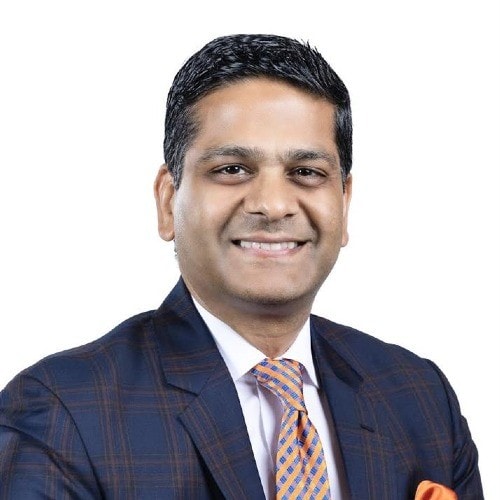
"Technology is completely reimagining the Financial Services sector. CEOs are embedding AI into core operations across the industry, with automation and digital platforms are now central to all sub-sectors – banking, asset management, insurance and new market entrants seeking to capture emerging sources of value. This is not the time to be reactive or to wait and see what AI might mean. The companies that win will not take timid steps, they will lead from the front, reshaping their business models with discipline, clarity and conviction."
Key findings for the region
%of Middle East Financial Services CEOs expect economic growth in their home markets to improve over the next 12 months
% of regional Financial Services CEOs are very or extremely confident in revenue growth over the next three years% plan at least one major acquisition worth more than 10% of company assets over the next three years
% of CEOs view innovation as a critical component of business strategy
Confidence anchored in domestic growth
Regional Financial Services CEOs are pairing confidence with decisive capital allocation, reinforcing their commitment to domestic markets. This reflects favourable economic conditions, resilient demand and the scale of ongoing investment across key Middle East economies. 82% of regional Financial Services CEOs expect economic growth in their home markets to improve over the next 12 months, representing a 33 percentage point increase on last year and significantly higher than the current 67% global figure (see Figure 1).
Figure 1: What do you believe economic growth (i.e. gross domestic product) will be over the next 12 months in your territory?

While near-term uncertainty remains, confidence strengthens over longer horizons. Two-thirds of Middle East Financial Services CEOs say they are ‘very or extremely confident’ in revenue growth over the next three years, exceeding global Financial Services peers (see Figure 2).
This sentiment reflects strong domestic economic conditions. According to the International Monetary Fund’s latest Regional Economic Outlook, growth across Middle East economies is expected to strengthen in 2026 as hydrocarbon production normalises and non-oil sectors continue to expand, with several GCC economies projected to grow above 3%.1 Inflation across much of the GCC has moderated relative to global peers, while financial systems remain well capitalised and liquid.2
Figure 2: How confident are you about your company’s prospects for revenue growth? (Very and extremely confident)

This outlook is reinforced by profitability. Although revenue growth is broadly comparable with global peers, firms report slightly higher net profit margins at around 14%, compared with roughly 10% globally. This provides balance-sheet flexibility and capacity to invest through volatility.
Leadership behaviour reflects this longer-term orientation, with regional Financial Services CEOs spending more time on long-term planning (around 23% focused on five-year-plus horizons), compared with 16% globally, underscoring a deliberate shift from short-term optimisation towards sustained value creation.
This confidence in domestic growth and long-term value is apparent when CEOs were asked which countries outside of their own, they plan to invest in. The vast majority of Financial Services CEOs are investing capital intra-regionally with a strong focus on Egypt, Saudi Arabia and the UAE, reinforcing the importance of regional scale, integration and long-term capital deployment. This investment focus reflects the pace of digital innovation across these markets that make the region an increasingly attractive destination for investment. Banks and financial institutions are continuing to actively shape the digital economy, serving as the backbone of online transactions and digital financial services while supporting broader economic diversification goals.
Innovation and AI move from pilots to core capability
Innovation remains firmly embedded in the strategic core of the Financial Services sector in the Middle East. Around 60% of CEOs view it as a critical component of business strategy, and more than half report active collaboration with external partners to accelerate development.
Health insurance in the Middle East, for example, is set to undergo significant transformation by 2030 as emerging technologies move from pilot initiatives to everyday implementation. AI-powered claims automation, blockchain-secured data systems and precision genomics are already reshaping insurer operations and redefining how individuals experience healthcare.
Growth in the GCC health insurance market will continue to be driven by the expansion of mandatory coverage, population growth and higher compliance rates. This expansion is expected to be strongly supported by technology, including real-time operational platforms, gamified wellness applications and wearable-enabled dynamic pricing models for certain customer segments. For beneficiaries, this shift will translate into more personalised care and improved health outcomes, as the system increasingly prioritises prevention over treatment, with technology acting as the central enabler of this evolution.3
This trajectory aligns with broader Financial Services transformation trends, from underwriting and credit assessment to fraud monitoring and service resolution, increasing automation and reducing manual intervention across front- and back-office processes. Digitalisation is simultaneously transforming transaction infrastructure, enabling faster processing, improved straight-through execution and more resilient payment ecosystems. Our recent report ‘The path to a Zero-Ops Future: Transforming GCC banking through intelligent automation’ notes that up to 90% of routine tasks are potentially automatable and over 60% of banks are already deploying automation tools.4
Survey findings from the Middle East’s Financial Services sector shows that AI adoption has moved beyond experimentation and into core operations. 32% of regional CEOs report extensive use of AI across support services, while deployment in demand generation (28%), products, services and customer experiences (25%) and strategic direction setting (22%) all exceed global industry averages (see Figure 3). This breadth of application indicates that AI is integrated into day-to-day business activity rather than confined to pilots.
Figure 3: To what extent has AI been applied in the following areas of your business? (To a large or very large extent)

Adoption is supported by organisational readiness. 71% of CEOs report having a clearly defined AI roadmap, while approximately 80% say their technology environments and organisational culture enable AI integration. Formal governance is also advancing, with nearly 70% confirming established Responsible AI and risk processes, well above global Financial Services averages (see Figure 4).
Figure 4: To what extent do you agree or disagree with the following statements relating to AI use at your company? (Agree)

Dealmaking and value in motion reshape portfolios
Confidence and capability are translating into more active portfolio repositioning. 69% of regional Financial Services CEOs plan to make at least one major acquisition worth more than 10% of company assets over the next three years, reflecting an appetite for transformational transactions rather than incremental expansion (see Figure 5). This is not only higher than last year’s figure, it’s a notable 28 percentage points higher than the global average.
Figure 5: How many major acquisitions, worth more than 10% of your company’s assets, is your company planning to make in the next three years?

Recent analysis in PwC’s 2026 TransAct Middle East report reinforces this momentum.5 Financial Services was the most active sector in the region, recording 172 transactions over the year. Banking, payments, asset and wealth management, and real-asset-linked financial platforms accounted for the majority of deal flow, reflecting a strategic focus on capability expansion and diversification rather than defensive consolidation.
Taken together with the 29th Global CEO Survey Middle East findings, this indicates that regional Financial Services leaders are not delaying portfolio decisions despite global volatility. Instead, they are using M&A as a deliberate tool to reshape their portfolios as value shifts across platforms, data and adjacent sectors.
Over half of Middle East Financial Services CEOs (55%) say their organisations have begun competing in new sectors or industries over the past five years, underscoring a structural shift towards new-sector growth rather than reliance on legacy revenue pools.
When asked what proportion of expected deal value will come from sectors outside their own, 30% of respondents indicated more than one-fifth. This signals that regional CEOs are using M&A to reposition their businesses as value shifts across the economy (see Figure 6).
Broader ecosystem dynamics reinforce this shift. Fintech has accounted for roughly one-quarter to one-third of venture capital deployment across the region in recent periods, underscoring sustained investor conviction in platform-based, technology-enabled financial models.6
Figure 6: Of the acquisition(s) that your company is planning to make in the next three years, what proportion of the total deal value do you expect will be from sectors or industries outside your own?

This expansion is focused on sectors where data, digital platforms and capital come together to create new value. Technology is the most attractive adjacency, as financial services increasingly depend on digital infrastructure and AI-driven capabilities. Regional diversification is also driving the growing convergence between financial services, technology and industry-specific ecosystems across the Middle East.
Threats and resilience come into sharper focus
Geopolitical conflict is the biggest concern for Middle East Financial Services CEOs, with 24% describing themselves as ‘highly or extremely exposed’ (see Figure 7). Exposure to macroeconomic volatility (19%) and cyber risk (18%) were also in the top three.
Despite cyber risk ranking among the top three threats, the share of CEOs who consider themselves highly or extremely exposed has declined from 33% last year to 18% in the current year. This shift suggests that sustained investment in cybersecurity infrastructure, governance and digital risk management is translating into stronger executive assurance. Digital risk is increasingly being managed through formalised controls, board oversight and enterprise-wide frameworks rather than viewed as an unpredictable disruption.
Figure 7: How exposed do you believe your company will be to the following key threats in the next 12 months? (Highly or extremely exposed)


Last year’s top threat - technological disruption - has dropped from 42% to 12% as AI and other technologies and governance processes have become more embedded into operating models. However, lower perceived exposure does not eliminate operational pressure.
As Financial Services CEOs accelerate AI adoption across products, operations and decision-making, commercial gains from technology will only be sustained if they are matched by resilient platforms, faster resolution times and strengthened fraud controls that protect customer trust. Cybersecurity sits at the centre of this response. More than half of regional Financial Services CEOs (59%) expect to significantly strengthen enterprise-wide cybersecurity over the next three years, making it the most common strategic response to geopolitical and macroeconomic uncertainty (see Figure 8). Reducing reliance on technology providers in less trusted jurisdictions and selectively exiting higher-risk markets also feature in CEOs’ plans.
Figure 8: To what extent do you expect your company to take each of the following actions in response to potential geopolitical risk? (To a large or very large extent)

Yet despite concerns, confidence in managing disruption is comparatively strong. 68% of regional CEOs say they are ready to lead an effective organisational response when disruption emerges. Internal constraints are less pronounced than among global peers. Technology limitations are cited by 18% of regional respondents, compared with 29% globally. This suggests that prior investment in technology modernisation and integration is translating into greater confidence in execution capacity.
What does the next decade look like for Financial Services leaders?
While our CEO Survey findings reflect the confidence of Financial Services leaders across industries in the near and medium term, PwC’s economists have also looked further out to the decade ahead across sectors and analysed how two major global megatrends – AI and climate change - are driving industry reconfiguration (see Figure 13) and the emergence of new domains of growth: markets where companies work across sector boundaries to meet fundamental human needs of how we build, care, feed, fuel, make and move, and how we connect and compute, fund and insure and govern and serve.7
Our analysis shows that in 2025 alone banking and capital markets in the Financial Services sector had the fourth highest pressure levels in the last 25 years as a result of climate change, rapid urbanisation, supply chain disruptions, while insurance markets had the third highest levels of pressure.8
For Financial Services leaders this creates opportunities to innovate, form new partnerships and new value pools by placing people at the heart of the ‘fund and insure’ domain so that we can build smarter, sustainable and inclusive systems for generations to come. New technology and market entrants are already accelerating this transition and PwC economists estimate that by 2035, the ‘fund and insure’ domain could generate up to US$410 billion in value in the region.
Figure 9: Industry reconfiguration in the decade ahead
Your next move:
With strong domestic momentum, AI embedded at scale and portfolios actively reshaped through M&A, the imperative now is disciplined execution and resilient growth.
Three priorities now stand out for Middle East Financial Services CEOs:
Embed AI into core decision-making and strengthen trust +
Move beyond isolated use cases to hard-wire AI into strategy, risk management, product development and customer engagement. As AI adoption deepens, enterprise-grade governance, transparency and accountability are essential to maintain stakeholder confidence. Invest in integrated platforms that enable real-time visibility, predictive maintenance and network optimisation across assets.
Ensure fairness in Financial Services
+
As AI and digital platforms reshape financial services, leaders must ensure innovation does not compromise fairness, transparency or accessibility. Governance frameworks should be strengthened, models rigorously tested for bias and meaningful human oversight maintained in credit, pricing, underwriting and investment decisions. At the same time, firms must preserve accessible, non-digital service channels to avoid excluding customers with lower digital literacy or limited access to technology. Digital transformation should broaden inclusion, not narrow it. The objective is clear: harness automation to enhance efficiency and outcomes, while safeguarding trust, accountability and inclusion at the core of financial services.
Build specialised, future-ready talent +
Financial Services CEOs must address skills gaps to ensure transformation keeps pace with ambition. This requires combining deep financial expertise, across banking, insurance, asset and wealth management, with advanced digital, data and AI capabilities. While automation can enhance efficiency and streamline processes, long-term competitiveness will depend on domain-led leadership that can interpret risk, manage trust and translate AI insights into strategic decision-making.
Watch our Industry Leaders Roundtable for more on PwC's 29th Global CEO Survey: Middle East findings, including deep insights into the key industries across our region. Recorded on 6 February.
Video
29th-ceo-survey-middle-east-findings-2026-industries video
40:41
More tools
Transcript

Contact us:
Sanjay Jain



Follow us


