




Providing clarity on all things tax and legal
PwC partners and thought leaders provide valuable insights on tax reform, workforce considerations as well as regulatory and other tax and legal developments to help you prepare your business for the lasting impacts of events and the future. Our tax and legal podcasts provide you with the latest regulatory changes, technical updates, and commentary on hot topics to help you create your business strategy.


The World Economic Forum describes the circular economy as “an industrial system that is restorative or regenerative by intention and design.” Unlike the linear model that creates waste and drains resources, circular systems return materials to the production cycle. Products and by-products are reused, recycled or repurposed — ideally powered by renewables.
In this episode, Amal Larhlid speaks with Melissa MacEwen, PwC’s Resource Use and Circular Economy Lead, and Jeremy Prepscius, Sustainable Supply Chains Lead in Asia Pacific. They talk about how circular models are being applied in the real world, where the barriers still lie, and why this shift matters for the Middle East.
More businesses and governments are adopting this model. As climate risks, supply disruptions and resource scarcity grow, circular systems offer a more stable path. It’s a chance to build resilience while cutting environmental harm.
Amal: At its core, the circular economy challenges the very nature of how we define progress. For centuries, growth has been measured by how and how much we extract, produce and consume. Supply chains were built on a linear mindset taken from the earth, transforming materials and discarding what's left. But what if true progress isn't about taking more? It's about making the most of what we already have.
Recent research shows that in Asia-Pacific alone, a circular economy approach could add up to $340 billion to GDP, while cutting emissions by 7.2%. What's not to like? And imagine the impact if the Middle East embraced the same shift? Could we unlock similar economic potential while tackling some of the region's biggest sustainability challenges? And what would it take to get there?
That's exactly what we are exploring today. Joining me are two very special guests from our global network who work on these challenges every single day. I'm delighted to welcome Jeremy Prepscius, PwC Hong Kong Sustainable Supply Chain Lead and Melissa McEwan, PwC New Zealand Circular Economy Lead.
I'm absolutely delighted to be here. Thank you very much for being with us.
Amal: We talk a lot about the circular economy, and it's a word that we hear, it's making the buzz, but what is it? I mean, it is very simple. It is extending the life of, you know, goods beyond their lifecycle. If we want today to, dig a little bit deeper and think about when countries make the shift towards a more, circular economy approach.
What is it really working? And, Melissa, maybe I will start with you.
Melissa: Thank you very much, and great to be here.
Both the private and public sectors have a really important role to play in this transition. I think we'll talk a little bit more around transition planning through the course of this podcast. You rightly outlined that it's all about extending the lifespan of resources and recycling any waste back as inputs.
We actually have a globally recognised framework called the 9R Framework.
Amal: We love frameworks.
Melissa: Yeah. What that does is it shows that circular economy is really much more than recycling. We kind of had a mindset shift in a practice shift over the past few years. I think we've all heard of three R's reduce, reduce, reuse, recycle, and that concept really tackled an environmental problem. You know, it was all about cleaning up waste in the environment.
But what it didn't do is think about the economic potential behind that. The nine Rs expands that. It starts with the design of products, and actually 80% of environmental impacts are locked in at that stage. That's very, very important. And then adds actions in the middle of the value chain, things like reusing, remanufacturing, and things that require reverse logistics, which I'm sure my colleague Jeremy will talk about.
Then ending up with recycling which is still a really core pillar of this, but it's just not the only action. We're seeing circular economy emerge. It really depends where you are in the world and what sector, what industry, and the level of maturity. But we are seeing it in retail and consumer markets, industrial manufacturing and construction very important, in this part of the world.
Amal: We actually talked about construction in another episode.
Melissa: I heard. I look forward to hearing that one as well.
I think there's a framing of how you think about circularity, so you can think about value at risk. Any, company that has, you know, products or materials that are going to be highly regulated should be thinking about this. Plastics is one, you know, we don't know the outcome of the plastics treaty yet, but that might have an impact.
If your business is using critical materials (lots of global discussion on that right now), then it's about value capture, efficiency measures essentially. Where can I cut waste because I'm saving material input and that saves me cost, or I'm saving on waste management costs as well by reducing the amount of waste. Then the really exciting bit, which I'm really excited to talk about here, is value creation.
So is there a new product or a new service, a new business unit that you can set up? And the government has a really key role in enabling all of that and putting the frameworks and regulations and incentives in place to really accelerate. Again, as I said, you know, we're not there. Maturity hasn't been achieved but I think this region is a really exciting one to talk through what the opportunities are.
Amal: Really interesting. So it's not only about the environment. There is also a huge opportunity for value creation. Let’s dig a little bit deeper into that, Jeremy. What are your thoughts on this one.
Jeremy: To build on the value creation bit, because that takes us into both sustainability and into supply chain as well.
If you think about what is circularity, it's really understanding how you are helping your customers, your consumers, and what happens to what you have created afterwards. And where does that go back to. As you think about this, it really boils down to this idea of how do we build sustainable consumption and we connect that to sustainable production.
A supply chain or a value chain perspective is ultimately how you buy, how you operate, how you sell, and how do you connect that back. The one thing that really makes me excited is if we take that and put a sustainability lens on top of it, it basically is understanding different stakeholders across the value chain to make sure you're maximising your value to those stakeholders and using that thinking to begin to unlock: where does that transformation opportunities sit? And so it's the social elements. It's the environmental elements.
It's the enablement of the governance pieces that sit behind that, putting those on top of circularity will get you to: “oh, okay, here's the opportunity for a new business model. Here's the opportunity to take that raw material and recycle it back into our value chain. Here's the opportunity for us to leverage our energy infrastructure to enable the reduction of carbon within the value chain”.
You start connecting the top and bottom of the value chain. That's when it gets really interesting. And that's the value transformation opportunity.
Amal: Oh that's fascinating. And if I may Jeremy, I would stay with you. We are talking about global trends and what has been done in other countries. But if we want to bring it back to the region, you have seen the speed of development, construction, for example, projects, just to name one sector, but you have energy, and a lot of other sectors. How do you think the region could make the most of like circularity to adopt it here? Are there any conditions, key success factors for the region actually to make the most of this opportunity?
Jeremy: So to build on what Melissa has already started with, and I'm sure she'll come back to.
To begin with, taking some key areas to invest in and whether it's the UAE, Saudi Arabia, Qatar, investing in large scale recycling and waste infrastructure programs. That's a great start. And then that starts to allow you to unlock what else needs to happen.
A policy environment of course is absolutely necessary. That creates an environment in which businesses operate. How do we think about consumer engagement within that environment, where the government will have opportunities for business to play a role in that as well. How do we think about SMEs engagement within that space. Because we need to bring the entire economy along as we go on this circularity journey. Then, how do we connect that to all the potential opportunities or inefficiencies that might exist?
Whether it's in food waste or harvest or road transport or, cold chains that exist that all contribute to waste along the value chain, not just at the point of use, but getting there. That holistic solution that becomes interesting. Of course, it all gets tied to the future technology and digital and the rest of it. Ultimately it comes back to taking certain areas, investing in them, but thinking about them broadly with the viewpoints of multiple stakeholders as you do that.
Amal: Melissa, do you have any thoughts on the policy elements and the role of government? I mean, Jeremy was talking about, you know, the fact that it's an ecosystem and you need contributions from a number of stakeholders. What's your thoughts.
Melissa: Absolutely. There's a kind of semi standard timeline we're seeing with the development of policies on circular economy. It does differ. I think this region has an opportunity to really go fast and be quite innovative.
Amal: This region likes to move fast.
Melissa: I know, I know, it's great. What we usually see is first some single use plastics policies, then moving to an extended producer responsibility policy. That's where the government puts in a policy that makes, produces responsible, for that product through the entire lifecycle. Then we tend to see territories create circular economy action plans at a national level.
What we're starting to see emerge in different parts of the world is sector-specific transition plans for circularity. You referenced our recent research out of Asia Pacific, which has some really impressive numbers when you look at a region as a whole. What we also did was we looked at the impact on key sectors. And there there's a mixed picture.
There's some sectors really benefiting and some sectors seeing a decline if they don't plan for circularity. What we see actually in the market is this is happening already, but it needs governments to support it. We see, for instance, the world's largest battery manufacturer that are also recycling EV batteries. They're breaking down those silos between sectors that used to be separate and actually integrating their supply chain and capturing that value, which otherwise someone else in a recycling or maintenance and repair sector would capture.
So that's what I think the first thing with policy then, Jeremy mentioned finance. Really important, something we need to crack still for circularity. Climate financing is a little bit more mature at this point, still issues but a little bit more well understood. There're frameworks for what constitutes a circular investment that tend to be missing and that's because it's new. It's emerging.
We also need to think about - we have great you know one off example of businesses saving money or creating new value from circularity, but we're not measuring that consistently. And that would be really helpful in order to prove to financial institutions this is the ROI of circularity and give them the confidence to invest.
Qatar has a green bond at the moment. You know, things like that. Building in circularity into investment frameworks would be really, really helpful to accelerate change.
Amal: I think we need to probably share more the success stories and case studies, because that inspires others. It also brings to life what we are talking about. It's really important. You mentioned policies at national level, what different countries are doing. But how about cross-border collaboration in this area.
Is that something that could actually accelerate the impact that circularity could have?
Melissa: That's the big question, right? We're seeing a lot of geopolitical changes at the moment. Is that going to mean that we're going to move to more regionalisation? That's an interesting concept because we also need to think about competitiveness. You know, not every single territory in the world can be great at critical raw material recycling that the investment there is huge.
We need to look at what the competitive advantage could be in each place. You know, looking at things like free trade zones could be an option. Could those be areas where you actually concentrate? Industries that can share, reuse waste, amongst them, it's called industrial symbiosis. That's one thing. But we're quite far off amending a trade agreement, as you know, it is a really, really lengthy process.
So we need to look at what is called waste, do we need to redefine that so that we actually enable the cross-border movement of things that are called waste at the moment, but are actually going to be re utilised?
That's a sensitive topic as well, because what we also need to avoid is shipment of waste that actually ends up in a place where it's not valued and is left in the environment.
So very, very tricky topic, but interesting.
Amal: Jeremy, I see you nodding.
Jeremy: Let me have the other half of this in a way. If you think about circularity, there's sometimes the thought about as post-consumer and then back. Right. But what we're seeing is the establishment of a, in essence, global regime in bits and pieces and starts regarding traceability of product from raw material up. And that exists, right? An increasing number of companies must do that, sometimes for environmental and social reasons, sometimes because of the European Union deforestation regulation.
It may also have a relationship to the carbon border adjustment mechanism. The Corporate Sustainability Due Diligence directive does say thou shalt understand and that by supply chain. If you think about US Customs and Border Protection and 19 U.S.C. 1307, which is the forced labor law, I'm understanding what and where and how product was created. Understanding where it came from is often the first step to “oh, and now it gets there”.
What happens after that? The illumination of global supply chains is starting. And I think there's a really interesting opportunity to look into the supply chains and build small circularity loops as well as big circularity loops.
Amal: I mean, you mentioned a number of pieces of legislation that actually can help. How can companies (because they are also part of this ecosystem) actually navigate the regulation or the regulatory environment that is always changing? I mean, it’s a question I receive a lot from clients. They ask - what's the new legislation, how to interpret it, but also what's in the pipeline.
They want to know what's going to come their way. Here in the Middle East, we don't have something similar to the European Green Deal, for example. There is uncertainty around regulation and policy. Do you have any thoughts on that?
Melissa: I mean, yeah, you're absolutely right. It's not always the regulations that are in the local territory, you are dealing with a multinational that has operations, or markets elsewhere and places they need to retain access to export goods to. And probably applied for ourselves, but having a global advisor who has both the local territory knowledge on is able to bring the understanding of those movements in other regions in the world is really, really helpful.
Look, it is difficult at the moment because we see Europe putting out regulations and then scaling them back. It's a very volatile time. Equally, if you don't start preparing now, leaving it to the last minute will be much, much more expensive. So that's what we're thinking is important.
Jeremy: Let me build on that. The interesting date this year is July 24th and that's Earth Overshoot Day. At that point, the world will have consumed the world's resources in essence for the year July 24th. So it will take more than approximately 1.8 worlds to sustain the world's life cycle, a lifestyle going forward. And that day becomes earlier each year.
It shows the idea of how we have to build towards sustainable consumption.
The second one is, look, is climate change real or not? It is. We and our children will inherit the world that we create. The third is that the cascade of regulation is sometimes not really easily anticipated. You can see this and the changes that we're experiencing right now and for various reasons. And so for me, the question is, as you have companies that begin to look into the future, are a few simple bets now, the right way to start approaching potential larger impacts in the future? Or is it: Well, we will wait and do that later.
And I agree with Melissa. The most expensive thing to do at the end of the day is wait and react versus invest and seek the opportunity, right? Because when you react, it's always too late.
Melissa: And that's the kind of take it off as well. The people within businesses who need to respond to this should not just be the sustainability team or the person responsible for reporting. Yes, that might be the immediate need, but it's about thinking about what your business is going to look like in the future, and it will still be competitive.
As Jeremy said, what's the opportunity reframing this? You know, we have a task to do now, but let's not just make this a cost. Let's turn this into something that benefits us later on.
Amal: Absolutely. The cost of no action actually is you just can't afford it as a business. You need to think about, if you don't change, if you don't transform, will you exist in the first place? in a few years?
Let me now turn to technology. I mean, we can now have a conversation without mentioning technology and AI in particular.
We are recording this podcast from the UAE and the UAE is the first country to have nominated a minister for AI. There is a huge investment and interest and collaboration and creating the ecosystem for AI to accelerate its impact on business, but also its impact on sustainability.
What are your thoughts, Jeremy, we start with you, especially when it comes to supply chain?
Jeremy: I think there’s a huge opportunity here, and it really comes down to three major factors. So what exactly is driving the issue? Is it waste? Is it overuse? Are we looking at inefficiencies in the logistics systems? Or perhaps it’s the absence of a proper cold chain, or spoilage happening at the retail level? The key is being able to accurately measure and understand these factors, quickly and cost-effectively. And when we can apply AI to that process to uncover patterns and identify potential solutions, that’s when things start to get really interesting.
Second thing, that big data and the ability to pass it should also allow us to think through impact on stakeholders, because as we go down a circular road, there will be business disruption. There's going to be business disruption anyway. How do we put that in context and how do we ensure that SMEs have the capability, learning knowledge, access to information and analytics to think differently?
How do we ensure that consumers are educated, brought along and are part of the journey? Otherwise, this won't work.
How do the jobs that this will create? How do they become fair, safe, equitable, with opportunities for means of redress as necessary? That's where the digital infrastructure behind that will enable progress over time. I find it entirely fascinating and interesting.
There's going to be challenges and pitfalls as we go through it, but we need to get started. We need to get working and we need to go faster.
Amal: Yeah. And I think we already started working on this. When you look at how AI is allowing us to see the future through modelling different scenarios and modelling the cost of not action versus the cost of action, for example, or, and the opportunity for action. That's a very powerful case study.
And maybe Melissa, same with case studies, especially at a global level. Any that you could share with us?
Melissa: Yeah. Yeah, absolutely. I mean, first of all, it's so exciting that there is an AI minister who is very impressive and forward thinking.
I guess, you know, within the waste sector, there's AI technology being deployed and waste sorting, which makes the whole process much more efficient; able to recover more high value materials, even on the collection side.
Quite a few places around the world now, bins on the road, have embedded AI. When they're full that routes, garbage truck or collection truck to come and empty it when they're not, they don't get that signal. That also saves CO2 in the transport rate.
Construction sector. There's a global construction company which invested in a smaller tech company with an AI solution that they developed together, which looked at all of their construction sites. What construction and demolition material was being generated there and created a way of rerouting that between sites, so they were saving on materials by being able to reuse them. Still in the construction sector, there's a lot of innovation, as I'm sure you know, around green materials, AI can help predict the durability of those materials, the lifespan of those materials in order to make the right choices in terms of balancing the environmental benefits and the performance of that material.
Going back to - you took the words right out of my mouth - scenario modelling. Also zooming out, AI allows us to actually think around systems transformation, which is something that is often talked about but is quite hard to do in practice. Now, we have this enabler that can help us do that. The transition planning we were talking about, really looking across an economy and how pulling a lever here is going to affect a sector there, just to make the right decisions.
Jeremy: Yeah. I think that AI is an enabler, but the ability to put human at analysis and engagement is actually fundamentally important so that we create solutions that are bought into by society, and that becomes really important. So AI is fundamentally an important factor to achieving solutions, but it is not the solution itself.
It's an enabler of the solution. And that comes from analysis and engagement.
Amal: So humans are still needed. That's good news. A lot of people say, well are we going to have a job in, you know, few years. But yeah, absolutely. But that's a different debate.
Let me now talk a little bit about businesses and the competitive advantage that circularity and sustainability more broadly can actually bring to them and can help them to position themselves and grow their business because it is literally a business case for sustainability and for circular economy.
So, any thoughts on that, Jeremy?
Jeremy: At the fundamental level, and I know of companies who are thinking this way.
Now, the closer you get to pure raw material, pure energy and pure value creation, you are creating ultimately highly circular value propositions for your clients or customers. If you're in an equipment manufacturer where ultimately, it's energy for smelting or recycled back materials, or whether it's in aluminium cans or thinking through that, getting back to really fundamental basics, what is the raw material input? Where does the energy come from, and how does that create value plus the logistics chains to get that back to you, think about that as a small circle. The more we create more of those, that is a really interesting opportunity.
Amal: There's actually a really good point. Maybe now a question probably to address some of the scepticism that we see outside. The fact that sustainability and circularity are all about cost, how about the opportunity? How about the business case for circularity? How can actually business take advantage of circularity to have a competitive advantage in the market, and to grow their business?
Because there is a business case for sustainability and for circularity in particular.
Melissa: Yeah, absolutely. So I mean, as I said, this hasn't been cracked yet. It's not mature. But we do have really exciting examples globally of where businesses are really seeing the benefit of implementing circularity. There are various different circular business models. One example, if I just, you know, start throwing some out there. A manufacturer of industrial machinery, based out of Europe, they created a new business unit which is their re-manufactured line. They take back equipment such as tractors, repair, refurbish, and resell with the quality mark and the guarantee. And that's valued around $8 billion.
Amal: Wow. That's a big number. Yeah.
Melissa: Another European car manufacturer - it's not all out of Europe - has created a factory in, where they take, cars that have been damaged in accidents, and they repair them. They have agreements with insurance companies in order to provide that service. So all these things are completely new revenue streams that wouldn't otherwise exist.
It kind of goes back to what I was saying, the three ways of thinking about the value with circularity. What value is at risk and what am I worried about? What can I capture? Little efficiency things. Do you have post-production waste that's sitting on a factory floor that actually has a value? In Bangladesh, I think the value of cotton, on an annual basis, that sits on the factory floor is around 100 million U.S. dollars.
That's not nothing. Yeah.
Amal: Do they know that? Well, they do now.
Melissa: Then it's the value creation. So what's the new revenue opportunities coming back to how we need to think of this within businesses. You know, we're seeing these examples I think to a great degree, it takes leaders within an organisation who are quite visionary, who are willing to pilot something and then scale it.
And then it takes breaking down silos. Sustainability really in the context of circularity and resource management, it can't just be a sustainability issue. The CFO needs to be involved. The CEO needs to be involved, if you're really looking at a business model transformation in the future. We're seeing examples. What we need is more innovative leaders, more people willing to pilot and scale. Sometimes it won't work, sometimes it will. Yeah, but I'll probably leave it there. How about you, Jeremy?
Jeremy: Maybe at just a slightly higher level and synthesize that. And we did some writing together and there were four things we identified: one was building a purpose driven platform. What are we trying to achieve here? Is it the solution for the $100 million of scrap on the cutting room floor of our industry in Bangladesh, or what is it?
The second one is: go into this with an open mindset of analysing and finding notes of opportunity. You're not going to know the solution at the start. You need to go through and do that discovery process. The third one is: approach that process with the ability to speak, to listen to and work with others. So a collaborative approach within your value chain, you have many business partners who have lots of expertise in areas that your business won't.
How do you harvest? Bring that together and build those ecosystems, because the solution isn't going to necessarily coming from one company. It will come from an ecosystem. And then if you can put those together, how do you find the transformation? How do you find the transformative business opportunity? That's where this all comes from. Right? So if we can go down those roads and think about that in local communities, in broader economies, and ultimately up and down value chains, that's where we need to go.
Amal: I really like this framework, actually, Jeremy. These four points are really very powerful. To me, it seems like it's not whether companies should embrace circularity, is like when and the sooner the better, because then they can also be or have that first mover advantage in certain industries and make the most of the opportunity out there.
Thank you so much for being with us today. That was fascinating.
Circularity challenges how we think about value. Is waste and avoidable or just poor design? In nature, for example, nothing is wasted. Everything has a purpose. Supply chain should follow the same principle: regeneration instead of depleting. Technology, policy and business strategy will help. But the real shift is in the mindset.
Circular supply chains aren't just about reducing waste. They create self-sustaining systems, resilient and efficient by design. The real question isn't just about how we transition, but how we redefine success; not by how much we produce, but how well we use what we already have. If you found this conversation valuable, subscribe and stay connected for more conversations on sustainability and innovation.
Hosts
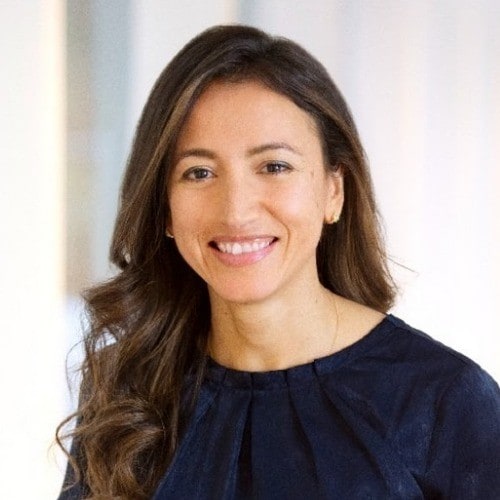
Amal Larhild
Partner | Tax and Legal Services
EMEA Sustainability Leader for Governments, PwC Middle East
Guests

Le Tilahun,
Director| Circular Economy Lead, PwC New Zealand

Jeremy Prepscius
Managing Director, Asia Pacific Sustainable Supply Chain, PwC Hong Kong


© 2017 - 2026 PwC. All rights reserved. PwC refers to the PwC network and/or one or more of its member firms, each of which is a separate legal entity. Please see www.pwc.com/structure for further details.This content is for general information purposes only, and should not be used as a substitute for consultation with professional advisors. This website contains content generated by or created with the assistance of AI.