




Data and projections: June 2021

Chart of the quarter
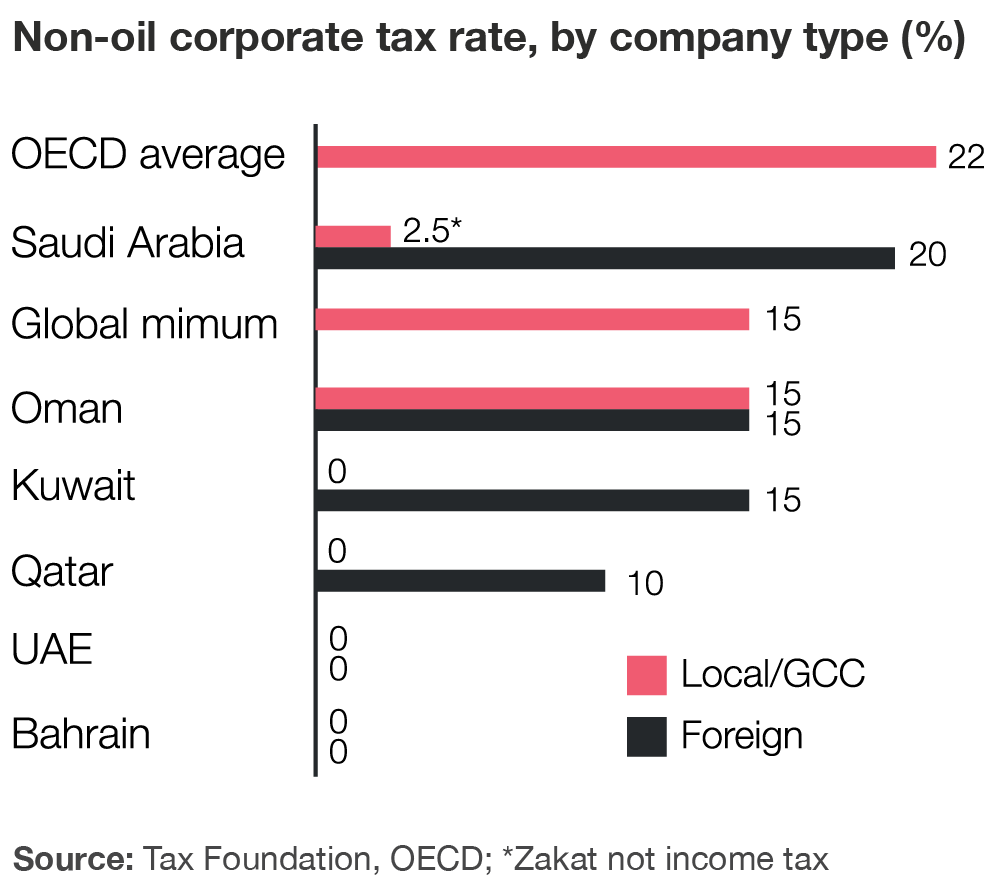
Efforts by the OECD’s BEPS working group to reform global corporate tax policy, to discourage avoidance, finally seem to be making progress. The G7 has backed a global minimum rate of 15% on the largest 100 multinationals, permitting home countries to make up any shortfalls. The G20,which includes Saudi Arabia, is expected to endorse a modified version of this proposal.
This could have implications for the GCC states, which have among the lowest corporate tax rates globally. UAE, Bahrain and Qatar tax foreign companies at below the proposed global minimum and only Oman taxes local companies at this rate. In addition, the GCC has tax-free zones and sometimes offers tax holidays (as Saudi Arabia has recently done for multinationals relocating their regional hubs).
The impact of new rules on the GCC will depend very much on the details agreed. If they remain limited to the largest multinationals, few changes may be needed (Aramco is on this list, but the oil sector may be excluded). If the scope is broader, including covering untaxed payments from subsidiaries to parents in the GCC, then rates may have to rise. That could fit with efforts to boost non-oil revenue but would reduce one key aspect of the GCC’s competitiveness at a time when the region is trying to attract investment to help with diversification.

Contact us



Richard Boxshall
Global Economics Leader and Middle East Chief Economist, PwC Middle East
Tel: +971 (0)4 304 3100