





Findings from PwC’s 29th Annual CEO Survey show that Transport and Logistics CEOs in the Middle East Believe that resilience, not efficiency alone, defines competitiveness. A structural “uncertainty cost” now underpins global commerce, as businesses absorb the premium associated with political risk, price volatility and climate-related disruption. Contingency planning, once episodic, is now embedded in strategic decision-making.
Against this backdrop, leaders in this sector are expressing strong confidence in the region’s growth trajectory. The sustained public and private investment in ports, rail, aviation and digital trade systems is reinforcing the sector’s long-term fundamentals. Equipped with this scale, capital and strategic alignment, regional leaders are ready to navigate the challenges, positioning the Middle East as a resilient, connected hub of global trade.
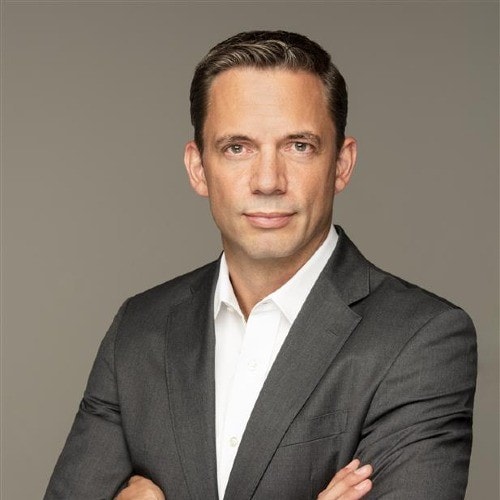
“The survey results point to a sector that is well positioned, but under no illusions about the challenges ahead. Transport and Logistics leaders are investing, adopting AI at scale and reshaping portfolios, while recognising that resilience, governance and talent will increasingly determine who sustains momentum in a more complex environment.”
Key findings for the region
% of Middle East T&L CEOs expect economic growth in their own territory to improve over the next 12 months, the highest confidence level of any sector surveyed
% of regional T&L CEOs are extremely confident in revenue growth over the next three years, despite more cautious expectations in the near term% say AI has already increased revenues, more than double the global average and evidence of scaled operational adoption
% are planning at least one acquisition worth more than 10% of assets over the next three years
% say their organisations are prepared to lead an effective response when disruption emerges, underscoring strong resilience capabilitiesLocal momentum underpins investment confidence
Confidence in domestic economic growth among Middle East Transport and Logistics CEOs surpasses that of global peers and CEOs from other industries surveyed in the region, such as Consumer Markets, Health Industries, Financial Services, Technology Media and Telecommunications and Energy Utilities and Resources. All respondents surveyed in this sector expect economic conditions in their home markets to strengthen in 2026, up significantly from 70% last year (see Figure 1).
Figure 1: What do you believe economic growth (i.e. gross domestic product) will be over the next 12 months in your territory?

Although the combined weight of geopolitical tension, tariff volatility and fuel price instability has created a disruptive environment for the global transport and logistics sector, the Middle East, particularly the GCC, has strengthened this sector through a deliberate shift toward smart trade diplomacy, translating diversification agendas into tangible East-West trade corridors, and more integrated supply chains.
National transformation programmes are positioning transport and logistics as a cornerstone of economic modernisation, backed by sustained public and private investment in ports, airports, rail and road infrastructure. There is also a focus on AI-enabled digital systems that enhance efficiency and transparency. Increasing cross-border coordination, regulatory alignment and landmark initiatives such as the GCC Railway Project are reinforcing regional integration and scale, underpinning the strong confidence expressed by Middle East Transport and Logistics CEOs in the sector’s growth trajectory.1
Findings of the survey have confirmed that given the sensitivity to geopolitical volatility, tariff uncertainty and fuel price pressures, confidence over the next 12 months remains measured. Three-year revenue confidence is in contrast significantly stronger at 85% (see Figure 2), and higher than other regional industries surveyed. In the region, key economies with diversified economic strategies continue to demonstrate resilience, even as globally exposed trade hubs navigate short-term softness.
Figure 2: How confident are you about your company’s prospects for revenue growth?

The confidence born from cooperative top-down regional planning has resulted in strong performance in the most recent fiscal year where Middle East Transport and Logistics CEOs reported average revenue growth of 11%, alongside net profit margins of 10%, higher than global averages.
Intra-regionally, Saudi Arabia and the UAE stand out as the most attractive markets for investment in transport and logistics across the region, thanks to their strong domestic demand and ongoing economic diversification. The sustained expansion of downstream industries, particularly in manufacturing, trade and petrochemicals, directly drives demand for logistics services, making transport and logistics infrastructure a critical enabler of broader economic growth. 48% of Middle East Transport and Logistics CEOs expect to direct the greatest proportion of investment to the UAE over the next 12 months, followed by 36% to Saudi Arabia.
Innovation and AI become integral to logistics performance
For Transport and Logistics leaders in the Middle East, innovation is no longer defined by experimentation or isolated pilots. In recent years, GCC nations have moved decisively towards the deployment of advanced digital technologies in logistics, trade, and transport infrastructure, laying the foundation for next-generation capabilities.
Figure 3: To what extent do each of the following statements characterise your company’s approach to innovation? (SUMMARY NET: To a large or very large extent)

At a policy level, governments have elevated AI to a national priority, embedding predictive analytics across fleet routing, port optimisation and demand forecasting, supported by significant investment in data centres and digital infrastructure.
Saudi Arabia has actively promoted digital twin frameworks for logistics planning, simulation, and predictive operations. Blockchain is also being deployed in major ports such as Jebel Ali in the UAE to enhance cargo verification, customs clearance and chain-of-custody transparency. At the same time, pilot driverless delivery vehicles have begun operating in the UAE, combining urban logistics with emerging mobility systems. As ambient drone logistics, last-mile automation, and port robotics mature, GCC states are well placed to adopt them, especially in controlled zones and smart cities.2
AI adoption within companies reflects this broader ecosystem shift. 56% of the Transport and Logistics CEOs surveys reported extensive use of AI in demand fulfilment including supply chain and logistics operations (almost double the regional average, and four-times as much as global peers), while 50% would apply AI across demand generation, such as sales, marketing and customer service (vs 39% regionally and 22% globally) (see Figure 4). AI is also being integrated into products, services and strategic decision-making at rates well above regional and global averages.
Figure 4: To what extent has AI been applied in the following areas of your business? (SUMMARY NET: To a large or very large extent)

Survey findings show that Middle East Transport and Logistics CEOs feel structurally well positioned for AI adoption, with clear scaling priorities ahead. A strong 76% say their technology environment enables AI integration, and 71% believe their organisation can attract high-quality technical AI talent, the highest among all the six industries PwC surveyed in the region. In fact, Transport and Logistics CEOs in the Middle East expect AI adoption to reshape, rather than reduce, their workforce over the next three years, with many planning to increase hiring across the region, particularly at junior and mid-level roles, as new technology-enabled capabilities become critical for data-driven governance, real-time visibility and building resilience amid global supply chain volatility.
Cultural readiness is also strong for CEOs in this sector at 71%, suggesting AI adoption is not facing internal resistance. However, scaling challenges remain. Only 50% believe their AI investment is sufficient to deliver their goals and less than half indicate that their organisations have formalised responsible AI and risk processes. Data access also remains a structural constraint, with just 12% saying their most-used AI tools have access to all organisational data (see Figure 5).
Figure 5: To what extent do you agree or disagree with the following statements relating to AI use at your company? (SUMMARY NET: Agree)

M&A reflects strategic repositioning
Confidence and capability are translating into more active portfolio reshaping in the Transport and Logistics sector. Appetite for major transactions continues to rise, with 76% of CEOs in the sector planning at least one acquisition worth more than 10% of company assets over the next three years, up from 60% last year (see Figure 6).
Figure 6: How many major acquisitions, worth more than 10% of your company’s assets, is your company planning to make in the next three years?

Cross-border dealmaking is increasingly shaping the region’s transport and logistics landscape, blending technology, infrastructure and energy transition ambitions. The focus on new sectors and industries is evident with nearly 60% of CEOs in the region’s Transport and Logistics sector indicating that in the last five years, their company had already begun competing in new sectors or industries – a jump from 37% last year. This signals a sustained push beyond traditional models and into higher-value, integrated offerings.
These ambitions are materialising through strategic partnerships. DP World’s partnership with PayPal3 connects UAE trade flows with a global digital payment infrastructure. In Saudi Arabia, Ericsson’s agreement with Saudi Arabia Railways4 brings Swedish 5G expertise into the Kingdom’s rail modernisation programme, strengthening connectivity and operational reliability across a nationally significant transport network. Meanwhile, clean energy leader Masdar’s collaboration with Etihad Rail is positioning the UAE’s rail backbone to support the cross-border movement of green hydrogen, ammonia and sustainable aviation fuel, linking domestic infrastructure to emerging global low-carbon energy trade corridors.5
Figure 7: In the last five years, has your company begun competing in new sectors or industries in which it hadn’t previously competed?

Risk, readiness and trust come into sharper focus
Operational agility remains a defining strength for Middle East Transport and Logistics leaders, as exposure to risk is rising. Geopolitical conflict now ranks as the top concern, with 56% of business leaders in this sector reporting high or extreme exposure, up sharply from 43% last year, reflecting heightened regional and global tensions. Cyber risk remains elevated at 44%, though slightly lower than 53% in 2025, suggesting improved mitigation or recalibrated risk perception. Exposure to macroeconomic volatility has moderated to 35% from 47%.
Climate change risk, however, has risen materially, from 13% last year to 32% this year, signalling growing recognition of both physical risks in logistics networks. Extreme weather events, such as rising temperatures, water scarcity, and occasional sandstorms, are putting pressure on warehouses, transportation, and storage facilities and making it critical for companies to embed climate resilience into their operational DNA.
Meanwhile, concern over the availability of key skills stands at 19%, down from 30% last year, suggesting improved talent pipelines or stronger workforce planning.
Figure 8: How exposed do you believe your company will be to the following key threats in the next 12 months?

Figure 9: Compared to last year (2024), how has geopolitical uncertainty (including tariffs) impacted your company’s likelihood of making new, large investments?


Despite constant geopolitical tensions in the region, raising fears of conflict and disruption most of the Middle East Transport and Logistics CEOs say their organisations are ready to lead an effective response when disruption emerges. Over the next three years, leaders in this sector plan to respond through planned resilience rather than retrenchment, strengthening cybersecurity (62%), reconfiguring supply chains (44%) and reassessing technology dependencies (44%).
What does the next decade look like for Transport and Logistics leaders?
While our CEO Survey findings reflect the confidence of Transport and Logistics leaders across industries in the near and medium term, PwC’s economists have also looked further out to the decade ahead across sectors and analysed how two major global megatrends – AI and climate change - are driving industry reconfiguration (see figure 10) and the emergence of new domains of growth: markets where companies work across sector boundaries to meet fundamental human needs of how we build, care, feed, fuel, make and move, and how we connect and compute, fund and insure and govern and serve.6
PwC analysis shows that in 2025 alone, the Transport and Logistics sector faced a competitive pressure higher than at any point in the past 25 years, making reinvention essential for long term viability.7 For Transport and Logistics leaders this indicates transforming existing processes, such as implementing AI to identify risks in advance and optimise routes but also creating new value pools by placing people at the heart of the ‘move’ domain so that we can build smarter, sustainable and inclusive systems for generations to come.
By 2035, PwC’s economists forecast that the Middle East’s evolving “move” domain will be driven by smarter, more resilient systems that embed new technologies, transforming the way we move people and things around.
Figure 10: Industry reconfiguration in the decade ahead
Your next moves:
With confidence anchored in regional fundamentals but risks intensifying, the imperative now is to see how effectively risks, data, and emissions are managed across borders. This evolution presents an opportunity to help shape the region’s role as a reliable, connected, and sustainable architect of global trade.
Five priorities now stand out for Middle East Transport and Logistics CEOs:
Embed AI into core operational decisions +
AI is already shaping planning, fulfilment and customer operations across the sector. The next phase is to hard-wire AI into day-to-day decision-making and performance management, rather than treating it as a standalone capability layered onto existing processes.
Partner to shape regional trade ecosystems
+
Actively collaborate with governments to co-develop logistics hubs, special economic zones and energy-transition infrastructure. Participate in shaping digital trade facilitation platforms and data-sharing standards to ensure business priorities are embedded in policy and infrastructure planning.
Embed digital trade readiness +
Invest in interoperable data systems, digital trade platforms and real-time visibility tools that enhance cross-border transparency and compliance. Strengthen digital trust infrastructure and align with evolving global standards to ensure seamless participation in digitally enabled trade corridors.
Strengthen supply chain resilience in trade strategy
+
Transport and logistics companies should prioritise resilient supply chains that can withstand climate shocks, geopolitical disruption and shifting trade routes. Diversification, routing flexibility and stronger risk monitoring will be critical to maintaining continuity. Regional players can further strengthen resilience and competitiveness by investing in alternative marine fuels, green port infrastructure and digital bunkering capabilities.
Localise strategically to capture regional advantage
+
Align operations with GCC industrial expansion by selectively localising manufacturing, processing and value-add activities such as assembly, packaging and certification. Use the region as a high-efficiency re-export and consolidation hub to shorten delivery times, while maintaining global sourcing where it delivers superior efficiency.
Watch our Industry Leaders Roundtable for more on PwC's 29th Global CEO Survey: Middle East findings, including deep insights into the key industries across our region. Recorded on 6 February.
Video
29th-ceo-survey-middle-east-findings-2026-industries video
40:41
More tools
Transcript

Contact us:
Dominik Baumeister



Follow us


