





CEOs in Qatar stand out for their confidence, ambition and readiness to reinvent. The latest findings of PwC’s 29th Global CEO Survey: Qatar findings show business leaders optimistic of the growth outlook, decisive in their investment plans and increasingly focused on reinvention.
The country is prioritising critical, high-impact initiatives over discretionary spend, with a more coordinated, outcomes-driven approach across national and sectoral agendas that include ensuring sustainable economic growth, developing a future-ready workforce, building intelligent infrastructure, advancing innovation and improving quality of life.
While 2025 already signalled a mildly expansionary stance, the 2026 budget accelerates this momentum, with total estimated expenditures at QAR 220.8 billion, up by 5% compared to 2025.1 A more conservative oil price assumption alongside expectations of slightly higher revenues reflects growing confidence in LNG volumes and sustained non-oil momentum across tourism, real estate, logistics, transport, and services. The budget also marks a clear pivot towards social infrastructure and service quality, with significant increases for health and education, and continued emphasis on municipalities, environment, and sports, highlighting a quality-of-life and human-capital-led growth model rather than a singular focus on mega projects.
For Qatar’s business leaders, this points to a more stable, policy-anchored growth environment, where success will increasingly come from aligning capabilities with national priorities and building long-term partnerships across priority social and non-oil sectors. CEOs are scaling artificial intelligence across operations, products and services – ready to invest despite geopolitical uncertainty and pursue acquisitions to enter new sectors and find new sources of growth. At the same time, they are sharpening their focus on cybersecurity, climate risk and long-term viability, signalling a clear shift toward sustainable value creation. As Qatar looks ahead to 2030, its business leaders are actively shaping a more innovative, resilient and competitive economic future.
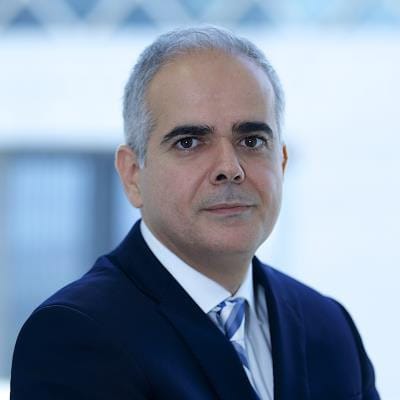
"CEOs in Qatar are entering the next phase of growth with exceptional confidence, clarity of direction, and long-term purpose. Sound economic diversification policies, a strong focus on non-hydrocarbon sectors, and sustained investment in human capital continue to reinforce Qatar’s forward-looking vision. As new investment opportunities open, business leaders are scaling AI, pursuing strategic acquisitions, and aligning closely with national priorities to drive efficiency and build a more innovative, resilient, and competitive economy."
Key findings for the region
% of CEOs in Qatar expect domestic economic growth to improve over the next 12 months
% of CEOs are confident in their companies’ revenue growth over the next three years% of CEOs plan to pursue at least one significant acquisition in the next three years, more than double the global average of 41%
% cite a strong organisational culture that supports AI adoption
% of CEOs say geopolitical instability will have little or no effect on their likelihood of making large new investments, demonstrating resilience and a willingness to invest through uncertainty
1 A robust growth model delivers confidence and momentum
Through a combination of economic foresight, disciplined policymaking and substantial hydrocarbon wealth, Qatar has achieved a rare level of economic predictability in an increasingly uncertain global environment. Reforms under the Third National Development Strategy (NDS3) are accelerating diversification, strengthening competitiveness, and lifting productivity in high growth sectors such as technology, renewable energy, infrastructure and tourism, while large-scale LNG expansion continues to underpin fiscal and external stability.
This structural resilience is clearly reflected in business confidence. An overwhelming 97% of CEOs in Qatar expect domestic economic growth to improve over the next 12 months, a sharp increase from 63% last year, (see Figure 1) the highest confidence level across the GCC and well above 55% of global peers who share the same outlook. This confidence signals strong conviction in the country’s growth trajectory.
According to the IMF, Qatar’s economic growth recovered to 2.4% in 2024, driven by non-hydrocarbon growth of 3.4%, reinforcing the view that diversification is translating into tangible economic outcomes.2
Figure 1: What do you believe economic growth will be over the next 12 months in your territory?
This confidence extends beyond the macroeconomic outlook and into company-level performance. In Qatar, 84% of CEOs have revealed stronger confidence in their companies’ revenue growth prospects over the next three years (see Figure 2), significantly higher than 49% of global peers and above the GCC average of 76%. This marks a sharp year-on-year increase up from 53% in last year’s survey.
The 2026 budget strengthens this growing confidence in Qatar’s economic fundamentals, reflecting a deliberate shift toward long-term, outcomes-led growth, anchored firmly in the NDS-3. Revenues have edged up slightly to QAR199 billion, with oil and gas at QAR154 billion and non-oil revenues rising to QAR43 billion, despite a more conservative oil price assumption of US$55 per barrel.3 The additional spending is clearly targeted, with strong emphasis on health and education, sustained investment in the environment, and incremental increases across sectors such as sports, transport, communications, social services, tourism, logistics, and real estate.
Figure 2: How confident are you about your company’s prospects for revenue growth over the next 12 months and over the next three years?
Businesses in Qatar are also benefiting from growing intra-regional investment appetite, with the country now ranking among the top five destinations where Middle East CEOs expect to allocate the largest share of their companies’ investment over the next 12 months.
Investors are drawn to Qatar’s business-friendly regulatory environment, strategic focus on digital and AI adoption, low inflation and high resilience to external shocks. Greenfield investments are further enhancing Qatar’s appeal as a destination for sustainable, long-term capital deployment, supporting diversification beyond hydrocarbons. The Ministry of Commerce and Industry’s 2024–2030 strategy aims to further strengthen the investment environment and deliver 3.4% annual growth in non-oil sectors, strengthening Qatar’s position as a competitive and future-ready economy.4
2 Reinvention powered by AI
Qatar considers artificial intelligence as a cornerstone of its economic and strategic future and has been steadily developing its AI ecosystem as part of its broader digital transformation agenda. Its leadership has embedded AI across government, energy, healthcare, education and urban development sectors.
This transition from experimentation to scale is reinforced by partnerships with global leaders, such as with Canada’s Brookfield to create a US$20 billion partnership to build advanced AI infrastructure, such as data centres and computing facilities.5 Through Qai, a unit of the Qatar Investment Authority, the venture will invest mainly in Qatar and selectively overseas, combining Brookfield’s operational expertise with QIA’s capital to support the country’s fast-growing digital and AI ecosystem.
This commitment to applied AI is also visible in how public institutions are transforming their own operating models. The Investment Promotion Agency Qatar, known as Invest Qatar, has, in fact, been one of the first investment promotion agencies in the world to adopt advanced technology in the form of Ai.SHA, leveraging GPT capabilities to enhance investor engagement and business decision-making.6 The early adoption of such tools by government entities is helping to normalise AI use across the economy and build confidence around it.
This is also reflected in the overall confidence in AI use among businesses. In Qatar, 84% of CEOs report having clearly defined roadmaps for AI initiatives, 81% cite a strong organisational culture that supports AI adoption, and 77% say they have access to the right technology environment to integrate AI at scale. As a result, AI is being embedded across core business functions, from demand generation and fulfilment to support services and directly into products, services and customer experiences (see Figure 3). Nearly three quarters of CEOs in Qatar have reported increased revenue as a direct impact of AI, significantly higher than 29% of their global peers.
Figure 3: To what extent has AI been applied in the following areas of your business? (SUMMARY NET: To a large or very large extent)
While globally, CEOs have indicated the risk of AI displacing jobs, particularly at junior levels, chief executives in Qatar take a different view. Many see AI as a catalyst for net job creation. This confidence reflects not just corporate optimism, but alignment with Qatar’s broader national workforce strategy. The Qatar Digital Agenda 2030 aims to create more than 26,000 jobs in the information, communications and technology sector by 2030 and increase the ICT contribution to non-oil GDP by QAR 40 billion.7 There are targeted programmes to attract, develop and retain digital talent, ensuring that workforce growth keeps pace with technological ambition. Early initiatives, such as the Ouqoul platform, are expected to evolve by 2026 into more data-driven tools that support national workforce planning, streamline the hiring of graduates from universities in Qatar, support private-sector recruitment beyond nationalisation programmes, and help employers access a broader pool of qualified talent. 8
By 2030, Qatar envisions a bold and distinctive future shaped by strategic foresight and innovation across sectors. Nearly half of the CEOs surveyed in Qatar viewed innovation as a critical component of their business strategy, same as their global peers, but they demonstrate significantly higher appetite for experimentation and collaboration. In addition to this:
68% of CEOs indicated they were open to testing new ideas with customers or end-users (against a global average of 31%)
39% would collaborate with external partners such as research and academia to accelerate innovation (vs 33% globally)
32% would tolerate high risk in innovation projects (ahead of 25% globally)
The mindset is already translating into outcomes: more than half of CEOs (52%) report that over 10% of their revenues now come from new products or services. Innovation hubs, such as the TASMU Innovation Lab connects public-sector priorities with Qatar’s growing R&D ecosystem and global technology partners, helping translate experimentation into tangible, scalable solutions.9
3 Deals driving diversification
A significant 90% of CEOs in Qatar will make at least one major acquisition in the next three years, which is worth more than 10% of their company’s assets, almost double the number from last year.
Diversification is becoming a major driver of growth in Qatar, with more than half (55%) of CEOs competing in new sectors over the past five years, up from a third last year, and compared with 42% of companies globally (see Figure 4).
Figure 4: In the last five years, has your company begun competing in new sectors or industries in which it hadn’t previously competed?
Looking ahead, consumer markets (including tourism and hospitality) and technology, media and telecoms, in particular AI and digital transformation, are the sectors where most CEOs in Qatar want to expand into over the next three years (see Figure 5).
Figure 5: In which of the following industries (if any), outside of your own, will you seek to grow your business (including partnering with others to do so) over the next three years?
4 Growing resilience despite few concerns around uncertainty
When asked about their primary concerns, CEOs in Qatar highlighted personal legacy, the need to build resilience to future shocks, the urgency of transforming their organisations at pace, and the challenge of sustaining long-term viability in an increasingly complex and uncertain environment.
Geopolitical conflict remains the most significant perceived threat in the year ahead (see Figure 6), in line with sentiment across the Middle East, followed by climate change and cyber risk. Notably, the share of CEOs in Qatar who feel highly or extremely exposed to cyber risks has declined by around 30 percentage points year-on-year, signalling growing confidence in organisational cyber resilience.
It is likely that this shift reflects sustained investment in cybersecurity capabilities, stronger governance and increased board-level oversight, as well as a broader normalisation of cyber risk as an embedded, managed aspect of day-to-day operations rather than a stand-alone existential threat. Nearly half of Qatari CEOs plan to further strengthen enterprise-wide cybersecurity over the next three years, in line with global peers, while a similar proportion intend to reduce reliance on technology providers from jurisdictions they consider less trustworthy.
Importantly, this heightened awareness of external risk has not translated into investment paralysis. Despite ongoing geopolitical instability, nearly half of the CEOs surveyed in Qatar said they would capture new business opportunities that arise from disruption, significantly higher than 29% of their global peers and 61% said such conditions had little or no effect on their likelihood of making large, new investments, a higher level of confidence than the global average of 54%.
Figure 6: How exposed do you believe your company will be to the following key threats in the next 12 months?
Looking forward, growth opportunities in Qatar will increasingly favour businesses that can deliver measurable outcomes in priority areas such as artificial intelligence, innovation, and future-ready initiatives. The sustained focus on human capital, quality of life, and advanced research, development, and innovation creates a strong foundation for attracting global talent and accelerating AI adoption across sectors. Over the next few years, leaders that invest early in AI, build differentiated talent strategies, and partner closely with government on national programmes will be best positioned to capture value as Qatar moves into the next phase of its economic transformation.
Your next move

Contact us:
Bassam Hajhamad
Consulting Partner, PwC Middle East