
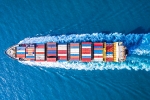





Geopolitical disruptions can act as a catalyst for trade reinvention, accelerating investment in alternative corridors, deepening the use of digital supply-chain tools and reinforcing the need for stronger coordination across GCC economies
The disruption caused by the recent escalation in the Strait of Hormuz and the closure of parts of Middle East airspace presents a different, and in many ways a risk more severe than earlier trade and logistics shocks. The Strait of Hormuz is not just a container chokepoint; it is the world’s most critical commodity corridor (see Figure 1)1 moving around 20% of global seaborne jet fuel, 20% of global seaborne natural gas, 10% of seaborne diesel, 23% of ammonia, 33% of helium, half of all seaborne sulfur and 9% of global aluminium.2
What makes this situation different is the type of cargo involved. Some oil volumes can still be redirected through pipelines or alternative routes in Saudi Arabia, the United Arab Emirates (UAE) and Oman, even if at higher cost. But liquefied natural gas is far less flexible. LNG depends on specialised cryogenic infrastructure, dedicated tankers and import terminals, which means lost flows cannot easily be replaced or rerouted. That makes the supply shock deeper, leading to a more gradual recovery.
The same is true for several non-energy commodities that pass through the Strait, such as nitrogen-based fertilisers. So, if shipping through the Strait of Hormuz breaks down, it could create two layers of disruption. The first is an immediate supply shock affecting critical commodities, from LNG and ammonia to sulfur and aluminium. The second is a replacement shock: buyers rush to secure alternative supplies, increasing competition, raising input costs and ultimately passing those costs on to consumers.

Reference: Lloyd's List
This is what distinguishes Hormuz from the earlier Bab el-Mandeb disruptions in the Red Sea in 2023. In the case of the Red Sea crisis, container traffic could still be rerouted, even though it involved longer transit times, higher costs and greater operational complexity. During those disruptions, an estimated 4-5 million TEUs3 (see Figure 2) of transshipment traffic were rerouted across the Mediterranean and Arabian Gulf ports – showing that the regional shipping and logistics network could adjust, but only at the cost of higher expenses, longer transit times and greater operational complexity.

Reference: PwC Analysis
Compared to that, the Strait of Hormuz disruption could limit gateway access itself, forcing a deeper reliance on inland logistics and multimodal workarounds. In the current situation, container traffic through the Strait of Hormuz has decreased with only ad-hoc transits, while an estimated 0.5 million TEUs are currently stranded within the Gulf Cooperation Council (GCC), either at sea or within hinterland nodes. This could create mounting pressure on equipment availability and inland logistics capacity (see Figure 3).
Unlike oil, where flows have been adversely impacted, but not entirely halted, the impact on containers is being felt mainly through the collapse of transshipment traffic. Around 1-1.5 million TEUs4 of transshipment volume (monthly estimates) have been affected as activity has declined at key hubs such as Jebel Ali and Khalifa ports. However, contingency plans have been activated for ensuring flow of gateway traffic through alternatives.

Reference: MDS Transmodel
This situation is, therefore, stress-testing a region whose role in global trade has been shaped over the past 30 to 40 years through sustained investment in ports, aviation hubs, inland logistics and increasingly integrated multimodal corridors.
Shipping routes have been diverted, energy flows reduced and supply chains have been stretched across longer, more complex pathways. Air cargo has also come under significant strain as a result of the conflict. Widespread airspace closures have limited key transit corridors linking Asia, Europe and Africa, leading to a 16–22% reduction in global air cargo capacity, with sharper declines of up to ~39% on key intercontinental routes.5
Even where flights continue, rerouting has extended flight times, reduced aircraft utilisation, and tightened available cargo capacity. Despite these operational pressures, aviation and road freight remain central to regional adaptation, with air cargo ensuring continuity for critical and time-sensitive goods and cross-border trucking corridors across the GCC carrying a growing share of diverted container volumes.
As the situation continues to evolve, it remains unclear whether these changes signal a lasting reordering of global trade, or a temporary deviation from a system built and refined over decades.
Historically, the region has occupied a pivotal position in global commerce, linking Asia’s manufacturing hubs with Europe and Africa through key trade corridors. Across the GCC, national visions increasingly emphasise trade diversification, connectivity and sustainability as levers of competitiveness. This strategic importance is reflected in the scale of traffic moving through its maritime chokepoint.
When flows are disrupted, alternatives are limited, and impacts transmit rapidly across global markets, reflecting in both declining vessel activity and heightened market concern over the rising price of Brent crude.
From resilience to reinvention: Regaining momentum in a fragmenting trade system
The current disruption has reinforced a critical truth: responsive resilience alone is no longer sufficient. While the Middle East has demonstrated an ability to absorb shocks, through rerouting cargo, activating inland corridors and leveraging aviation and logistics networks, the next phase will require a deliberate shift from responsive resilience to proactive reinvention.
The region’s structural strengths remain intact. Its geography continues to position it as a natural bridge between Asia, Africa and Europe, while its ports, airports, and logistics ecosystems remain among the most advanced globally. However, the situation has introduced a new dynamic: trade flows are now more contestable.
Cargo that was once structurally anchored in the region has been redirected. Supply chains have adapted, and alternative routes, though less efficient, have been tested and, in some cases, partially embedded into operating models. As a result, the return of trade flows cannot be assumed, it must be actively earned.
At its core, global trade operates on predictability of transit times, cost and infrastructure reliability and geopolitical stability. The recent geopolitical uncertainty have challenged that. For shippers and carriers, the experience of sudden chokepoint closures, rapid cost escalation, and limited visibility across multimodal routes has reinforced the need to diversify risk.
This aligns with a broader global shift toward corridor resilience, where trade is increasingly routed through systems that offer not just efficiency, but reliability under stress. For the Middle East, this means evolving from being seen as a fast corridor in stable times to a reliable corridor in all conditions. Restoring volumes will therefore depend on re-establishing predictability, strengthening operational continuity, and enhancing end-to-end visibility across supply chains.
Scaling multimodal resilience
One of the clearest lessons from the recent conflict is that ports, airports and roads, while already considered critical infrastructure, must operate as part of a fully integrated trade system.
Increasingly, global trade competitiveness depends on the ability to combine physical infrastructure with digital systems and aligned policy frameworks. This integration becomes essential during disruption. Inland corridors require synchronised customs processes, air cargo depends on efficient ground operations, and multimodal routing demands real-time visibility across the entire supply chain.6
While the current situation has exposed gaps, it has also highlighted the opportunity to address them.
In the short term, resilience will rely heavily on road transport. While flexible, this approach is costly and difficult to scale. Over time, a more balanced system will be needed, one that reduces dependence on any single mode.
Looking ahead, priorities include:
Significant investments across the GCC in rail and corridor development, alongside expanding aviation capacity, are already underway. The next challenge is ensuring interoperability across borders, systems, and stakeholders, as we have explored in PwC Middle East’s latest report, 'Smart trade diplomacy: Enhanced alliances in a multipolar world', which was launched at the 2026 World Government Summit.
The next phase of trade growth
Beyond recovery, the region faces a more strategic question: how to position itself in a global trade system that is becoming increasingly fragmented and regionally anchored.
For the Middle East, this means both risk and opportunity. Some flows may not fully return. At the same time, the region has the potential to position itself as a central node within emerging trade corridors, one that offers reliability, connectivity, and integration.
Capturing this opportunity will require expanding trade partnerships, strengthening value-added logistics capabilities and investing in industrial capacity to reduce reliance on transit trade alone. Competitiveness will increasingly depend on ecosystem strength, how effectively infrastructure, policy and industry align to support trade.
Encouragingly, the current disruption may act as a catalyst. It has accelerated investment in alternative corridors, increased adoption of digital supply chain tools, and reinforced the importance of regional coordination across GCC economies.
If the lessons of this disruption are translated into coordinated action, the Middle East is well positioned not only to recover, but to emerge stronger, more resilient, and more central to the future of global trade.
Smart trade diplomacy: Enhanced alliances in a multipolar world
Authors
Contributors:
Anushree Kejriwal: Senior Manager, PwC Middle East
Said El-Tabari: Senior Associate, PwC Middle East


