






Supply chains across the Middle East are being tested in real time, with disruptions driving delays, cost volatility and supplier uncertainty. The challenge for organisations is responding while under pressure – identifying critical dependencies, stabilising flows and making informed trade-offs as conditions continue to shift
As regional and global disruptions grow in frequency, scale and cost, the pressure on supply chains is intensifying. The disruption around the Strait of Hormuz is likely to increase market volatility, logistics delays, demand shifts and supplier instability – making the movement of goods, services and information less predictable (see Figure 1). What began as a regional shock may now cascade across industrial value chains, exposing how rapidly geopolitical disruptions can test resilience, continuity and the ability of organisations to respond at speed.
Figure 1:
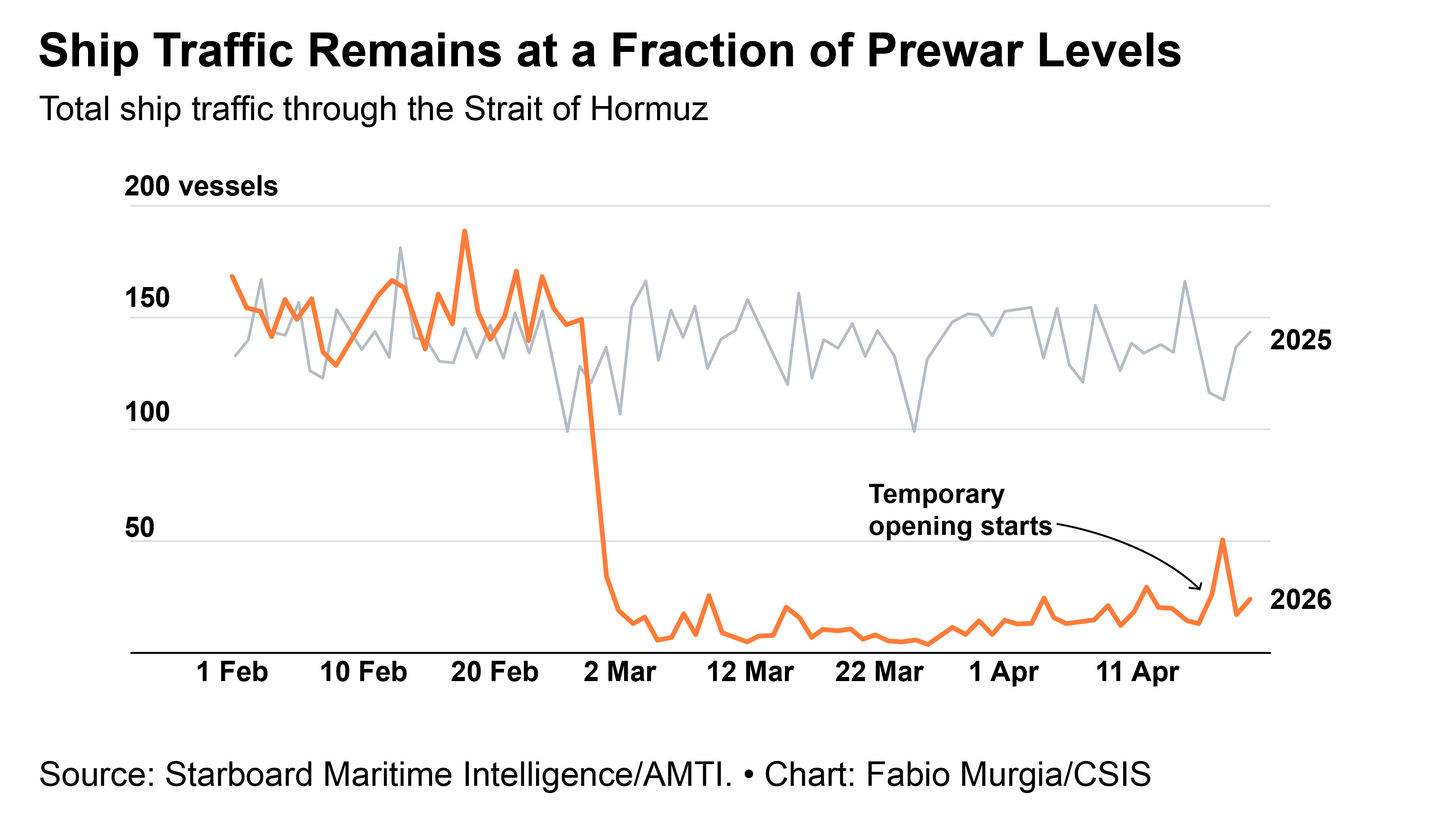
Under these circumstances, companies need effective supply chain strategies to ensure faster market responsiveness, cost reduction and enhanced resilience to ensure the continuous flow of goods, services and information to meet customer needs.
Understanding the vulnerabilities
Many organisations are constrained by limited visibility into where vulnerabilities are concentrated. Sometimes they do not have a clear view of their most critical products, relying too heavily on certain suppliers or routes or how long they can keep operating if part of the network is disrupted. These gaps become more serious when disruption spreads quickly across suppliers, ports, trade routes and inventory. An organisation cannot respond well to disruptions it has not clearly mapped or understood.
Figure 2:
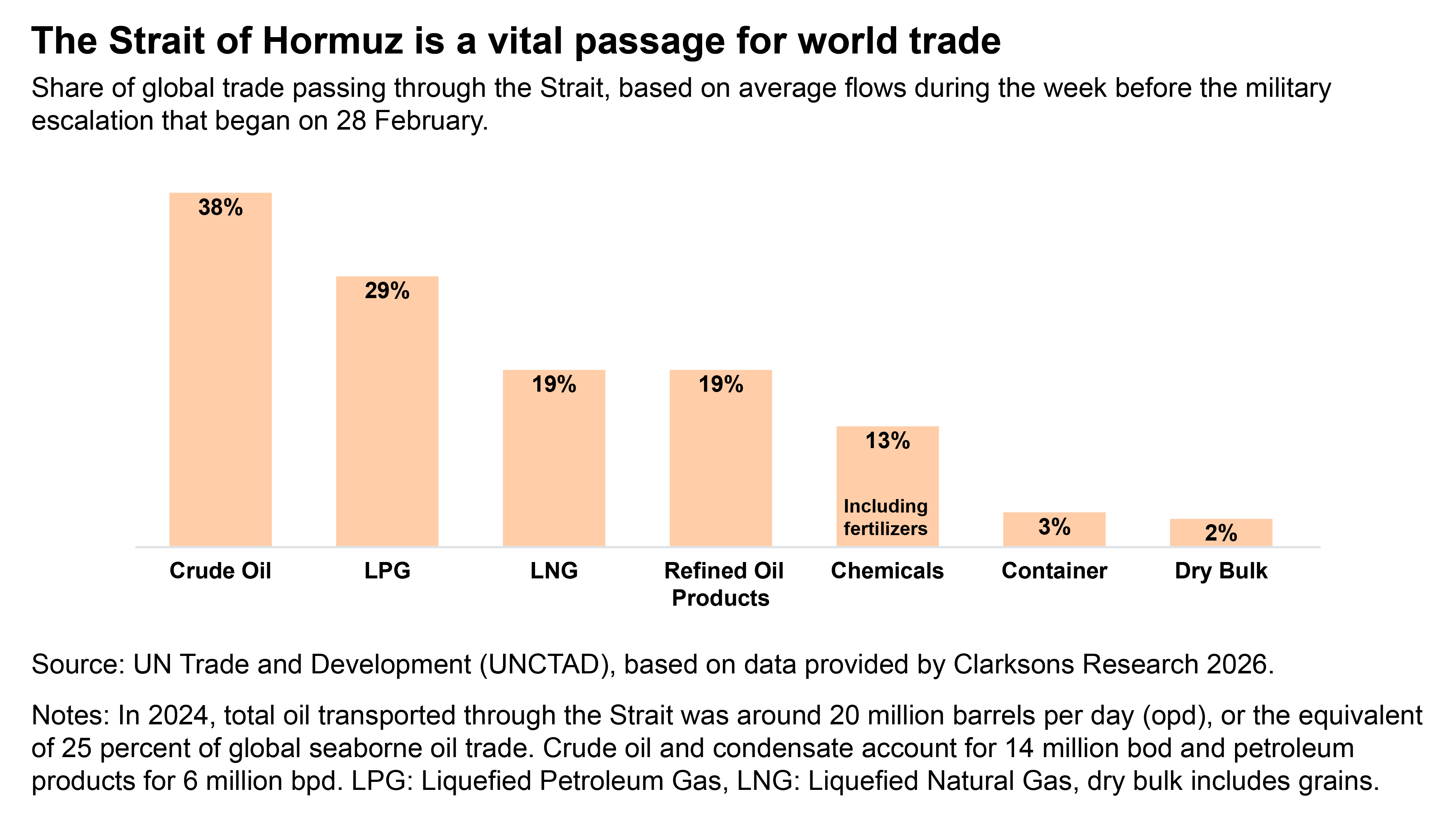
The operational impact can be abrupt. UNCTAD reports that daily ship transits through the Strait fell by 97% from an average of 129 per day between 1 and 27 February (see Figure 2) to near-zero levels immediately after the escalation. For supply chain leaders, that is the core resilience challenge: disruptions do not arrive as gradual inconveniences, but as sudden breaks in flow that compress decision time and expose untested dependencies.
Where organisations should focus now
To strengthen resilience, protect performance and support wider economic priorities, supply chain leaders should focus on a set of immediate actions:
The resilience framework
Resilience depends on more than broad visibility and the ability to turn fragmented signals into timely decisions. In practice, this means developing four connected capabilities:
Anticipate emerging risks across global trade flows early enough to act ahead of disruption
Absorb and operate under stress without systemic failure, while maintaining continuity despite local shutdowns
Adapt to reconfigured trade flows in real time as conditions shift
Recover swiftly once a disruption has occurred
These capabilities provide the foundation for a more proactive resilience approach.
To help organisations withstand disruption and respond with greater speed, flexibility and control, PwC Middle East has developed a comprehensive framework that links strategy, governance and execution.
It starts with a clear strategic foundation, defining the scope, priorities and policies for resilience, supported by an operating philosophy and governance mechanism that embeds accountability across the organisation.
From there, the framework translates into three core execution areas: assessing resilience through supply chain mapping and the identification of critical risks and chokepoints; building resilience through sensitivity analysis, targeted resilience levers and early warning systems; and driving continuous improvement through risk monitoring, performance tracking and business continuity reporting.
Underpinning all of this is an operating model that combines governance, defined roles, standard processes, resilience metrics and enabling tools and platforms. This creates a structured and practical approach to help organisations move from reactive disruption management to proactive, enterprise-wide resilience.
The framework includes an AI-powered early warning system that monitors internal and external signals to identify potential risks early and provide advance notice of potential disruption.
A roadmap for capability building
A strategic approach to supply chain resilience requires more than isolated interventions. It needs a phased roadmap that builds capability over time while enabling faster execution when disruption occurs.
Our three-phase model begins with establishing the baseline, assessing the current state of resilience, identifying critical products and risks, and putting in place the core fundamentals of strategy, policy, procedures and governance.
It then moves into capability building, where organisations develop supply chain maps for critical products and services, design tailored resilience strategies at supply chain and product level and deploy digital enablers such as early warning systems.
The final phase focuses on execution and monitoring, embedding resilience into day-to-day operations through active strategy implementation, risk monitoring, performance measurement, continuous refinement and organisation-wide training and awareness.
As organisations adapt to a new reality in which volatility is no longer cyclical but structural, and disruption has become a persistent feature of the operating environment, those most likely to perform better will be the ones with the clearest view of what is truly critical. Stronger resilience will depend on identification of vulnerabilities, more serious testing and faster adaptation before critical flows are affected. Increasingly, supply chain design choices will shape not only organisational performance, but also long-term economic security, strategic resilience and competitive advantage.
Authors


