
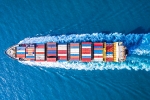




Maritime agencies are under immediate pressure as trade disruptions in the Middle East continue to unsettle routes, schedules and port operations – driving delays, higher costs and constant operational strain. The priority now is improving visibility across the port call, tightening stakeholder coordination and responding faster as conditions change. Agencies that move quickly to streamline workflows, digitise critical touchpoints and deliver real-time updates can stabilise performance and protect margins
Maritime agencies are among the least visible yet most consequential actors in global trade, effectively connecting ports, shipping lines, authorities and service providers to keep trade moving. Through this coordinating role, they underpin the flow of more than 80% of goods traded worldwide by volume.1
The evolving conflict in the Middle East has created a wider global supply chain disruption, resulting in a far more demanding operating environment for agencies as conditions on the ground remain fragile. The traditional delivery model is, therefore, coming under strain. Coordination can become fragmented, delays may build across the port call, costs are likely to rise and service consistency can become harder to maintain. The result is wasted time, inefficiency and customer dissatisfaction.
These pressures are also being amplified by the rapid transformation of the wider port and shipping ecosystem that are now adopting artificial intelligence (AI), Internet of Things (IoT) tools and predictive scheduling to improve planning and throughput. In the United Arab Emirates (UAE), for example, cargo clearance and delivery orders are now handled through digital trade platforms. Agencies need to integrate into that environment to stay relevant.
Client expectations are rising in parallel. Shipping lines and logistics providers increasingly want proactive service, cost transparency and real-time updates through self-service portals and application programming interfaces. Visibility is no longer optional. It is part of the core service.
Trade routes, regulations, crew rotations and disruptions arising from geopolitical conflicts, pandemics and climate-related port closures now require faster, more intelligent responses. Agencies can no longer act only as executors. They are being pushed towards a “thinker-doer” model in which they act as planners, advisors, integrators and risk mitigators.
Multiple functions, one orchestrated operation
The growing complexity of maritime agencies becomes clear when looking at the range of activities they must coordinate across a single vessel call. Their role typically spans six core functions: liner commercial services such as bill of lading2 and delivery order release; port agency services including berthing coordination, documentation, compliance and disbursement account handling; husbandry services covering crew changes, medical care, provisioning and spares; shorex and turnaround services for cruise passengers, excursions and transit; specialised services for breakbulk, reefer cargo, offshore logistics and emergency operations; and chartering and brokerage, including vessel-cargo matching, freight negotiation, laytime planning and post-fixture operations.
Traditionally, each function is delivered by a small team of local agents who must manage expectations across a wider operating ecosystem that includes shipping lines and owners, ship managers, terminal operators, customs and government bodies, and third-party providers such as surveyors and inspectors.
In the current environment, pressure is showing up across all six core functions at once:
- Liner teams could be dealing with slower documentation release and more frequent changes to delivery timing
- Port agency teams could be managing berth uncertainty, tighter compliance checks and shifting port instructions
- Husbandry teams are likely to be navigating crew movement constraints
- Shorex and turnaround teams may be adjusting passenger and transit plans in response to schedule volatility
- Specialised services may be facing tighter windows for offshore and breakbulk handling
- Chartering teams might be contending with route changes, laytime pressure and greater freight volatility
Without strong orchestration, the ecosystem can quickly fragment into last-minute calls, long email chains and missed operational windows.
Immediate actions to pivot under pressure
In demanding conditions, the priority is to move quickly from a ‘traditional’ to a more ‘intelligent’ orchestrator. That shift is neither simple nor linear. It requires deliberate investment in digital capability, service integration and operating model alignment to build a more connected, responsive and resilient organisation.
While many maritime agencies have already introduced digital tools and coordination mechanisms, these often remain fragmented across functions and geographies. The immediate opportunity is to bring these together through a centralised intelligence layer, enabling real-time visibility, faster decision-making and more consistent execution across the port call lifecycle.
Here are the four strategic actions that can be taken:
Looking beyond the current disruption – how maritime agencies can move from traditional operator to intelligent orchestrator
To move from fragmented execution to integrated orchestration, maritime agencies need a clear path for capability building. PwC’s maturity model provides a practical framework for that journey.
First, the framework identifies the four stages of the maritime agency ‘maturity curve’:
Level 1 – Foundational operator
Coordination is largely manual, delivery is managed port by port and there is little central visibility of data or performance. Many small and mid-tier agencies still operate in this way, relying on local expertise, spreadsheets and informal relationships.
Level 2 – Digitally enabled specialist
Basic tools are introduced for areas such as disbursement accounts, compliance and port calls, but they remain confined to functional silos. Productivity may improve within individual activities, but integration across functions and external partners remains limited.
Level 3 – Integrated service platform
Services are bundled more effectively, dashboards provide a more unified view of activity and automation starts to reduce repetitive manual work. Agencies at this stage can offer greater visibility, more standardised delivery and a more connected client experience.
Level 4 – Intelligent orchestrator
The agency operates through a unified platform supported by AI-powered workflows, remote-enabled coordination and predictive planning. Data is connected across functions, decisions become faster and the operating model begins to resemble a command centre rather than a collection of local agency teams.
Then, it guides agencies on how to move up the maturity curve - which requires a different focus at each stage:
Level 1 to Level 2 – digitise core workflows such as disbursement accounts and port calls.
Level 2 to Level 3 – connect service lines and client platforms.
Level 3 to Level 4 – introduce AI, build command-centre capabilities and enable coordination at scale.
The move from Level 2 to Level 3 is often the hardest in operational terms, but it is also where the biggest value begins to appear. It marks the shift from improving individual tasks to delivering a more integrated and higher-quality service. The benefits can include lower costs, stronger client retention and more scalable growth.
Agencies that take a phased approach, grounded in operational reality and guided by a clear maturity path, will be better placed to move beyond fragmented delivery and develop the capabilities of an intelligent orchestrator.
The intelligent orchestrator:
Rewiring maritime agencies to navigate disruption
Author

Contributor:
Dipesh Guwalani, Senior Manager, PwC Middle East


