




How cities can rethink infrastructure for sustainable growth
Beyond pipes and roads

Integrated, data-driven and sustainable infrastructure is key to creating cities that are resilient, inclusive and future-ready
Introduction
City infrastructure has long been seen as a way to deliver essential services, keeping water flowing, lights on and transportation systems running. But its impact goes far beyond functionality. Infrastructure is considered one of the key catalysts to city growth across a multitude of dimensions, ranging from economic growth, mobility, sustainability, social equity, innovation and enhanced governance. Across its economic dimension, a World Bank review of over 100 academic studies finds that infrastructure investment typically carries a fiscal multiplier of around 1.5 within two to five years – meaning every dollar invested generates approximately US$1.50 in economic return.
The GCC’s project pipeline exceeds the US$1.5trn mark, shaped by a rapid adoption of AI-driven planning and modular construction across capital projects. In cities around the world, infrastructure has often been shaped more by national priorities than local needs, limiting its ability to drive meaningful economic and social growth. To unlock its full potential, modern cities must move beyond reactive maintenance and adopt proactive, integrated strategies that position infrastructure as a strategic enabler of development, sustainability and resilient, smart urban ecosystems.
From Passive to Proactive
Most city authorities focus on maintaining existing infrastructure and responding reactively to challenges. Cities that thrive in the future will proactively shape infrastructure to unlock and maximise economic opportunities. Forward-thinking cities are adopting:
Integrated infrastructure planning across transportation, energy, water, and digital systems.
Resilient and sustainable policies including green infrastructure and renewable energy.
Data-driven decision-making leveraging real-time data and AI.
Public-private partnerships and innovative financing models.
Equity and inclusivity to ensure access for all residents.
The I-CORE Framework
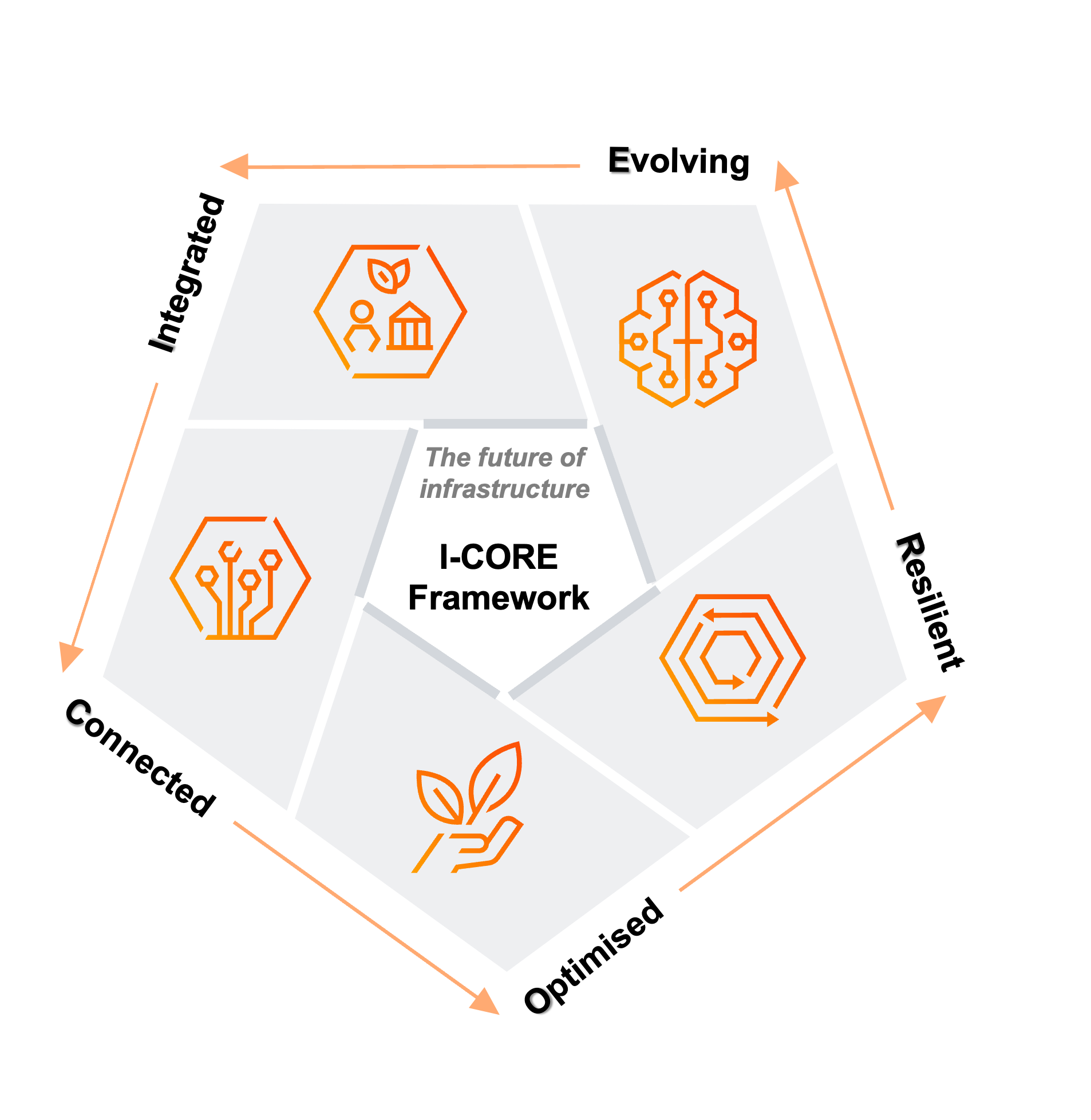
PwC’s I-CORE framework outlines five guiding principles for future-ready infrastructure: Integrated, Connected, Optimised, Resilient, and Evolving. These principles enable holistic planning, hyper-connectivity, efficiency, climate resistance, and adaptability.
Regional Performance
Examples from the Middle East include Dubai achieving nearly 90% treated sewage reuse, Abu Dhabi reducing water losses, Riyadh modernising power grids, and Dubai leading the region in sustainable mobility readiness. Cities like Abu Dhabi have made notable progress in green space per capita, while others still fall short of recommended levels. On essential services, Riyadh, Dubai, and Abu Dhabi have achieved high coverage for power and potable water, but some cities need improvement in stormwater network efficiency. Despite these advances, gaps remain in climate resilience, with recent extreme weather events exposing vulnerabilities.
A Call to Action
The cities that will lead in the coming decades are those that treat infrastructure as a growth platform. This requires a fundamental shift in mindset—from reactive to proactive, from siloed to integrated, and from maintaining the past to building for the future. Adopting I-CORE principles, integrating planning, and investing in resilience will unlock opportunities, attract business, and improve quality of life. Viewing infrastructure as a catalyst for growth can enable cities to access new opportunities, attract businesses, and enhance the quality of life for residents.
Beyond pipes and roads - How cities can rethink infrastructure for sustainable growth
Contributors
Rayan Bou Saleh
Senior Manager - Advisory
Majd Hamadeh
Manager - Advisory
Majd ElAhmadieh
Senior Associate - Advisory


