




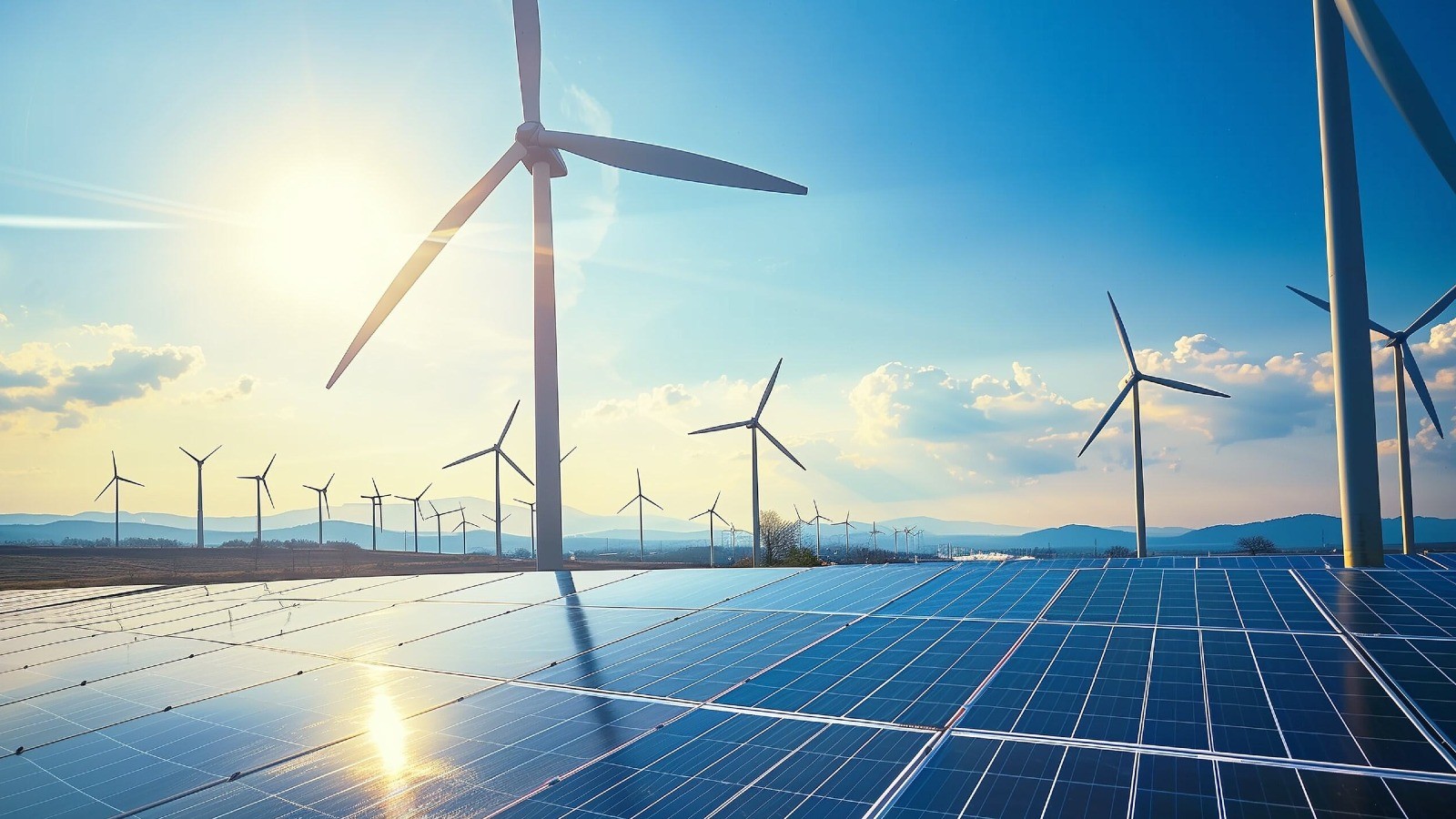
Over 80% of the world’s energy still comes from fossil1 fuels and they will continue to play a major role for the foreseeable future. An abundance of these fossil fuels, combined with the ability to produce the world’s lowest-cost energy resources, allows major GCC economies to hold a strategic position of advantage. They are well positioned to remain the energy suppliers to the world, while adding renewables to their current energy mix.2
Moreover, the acceleration of climate change underscores the need for decarbonisation, while population growth and urbanisation increase the demand for reliable and affordable energy solutions. At the same time, disruptions to global supply chains and resource nationalism are prompting a reassessment of energy security and resilience.
A new era of energy, resources and sustainability
In this context, conventional energy models are proving to be increasingly insufficient for today’s production, distribution and consumption. Innovating is now a critical and strategic imperative for those aspiring to lead the next era of energy businesses as well as to navigate the trilemma of affordable, available and clean energy – and CEOs in the Middle East's energy sector are stepping up to drive it.
Earlier this year, PwC’s 28th CEO Survey Middle East Energy, Resources and Sustainability findings indicated that three quarters (74%) of regional energy CEOs believe their companies must transform within the next decade to remain viable, higher than their global counterparts.

This striking figure indicates that leaders in this sector recognise the changes accompanying the energy transition as a significant opportunity - and they’re already taking positive steps to seize the moment. The sector must embrace innovation and adaptability - redefining business models, diversifying revenue streams and integrating cutting-edge technologies such as AI to remain competitive and resilient.
New strategies, new partnerships, new opportunities
Over the past five years, a third of energy CEOs in the region have focused on developing new products and forming collaborations with other organisations, closely aligning with the global average of 38%. Looking ahead, our survey also revealed that 50% of regional CEOs in this sector plan to increase their headcount within the next year.
Technology, climate adaptation strategies and changing consumer expectations are also driving industry convergence. Businesses across all steps of the energy value chain need to rethink strategies, form unique partnerships, and explore new markets, or risk becoming obsolete. In the region, companies such as ADNOC and Abu Dhabi Future Energy Company (Masdar) are forging partnerships with technology firms such as Microsoft, driving innovation in renewable energy solutions.3
AI must be embraced, and the region is doing just that
As AI applications proliferate in 2025, we need to assess whether it’s simply an efficiency tool - optimising margins in the energy industry, or a true game changer that drives breakthroughs.4 While AI’s rise brings significant energy demands, it also unlocks powerful efficiencies - from smart grids to predictive maintenance to specialty materials, and creates major opportunities in emissions reduction, energy efficiency and low-carbon solutions.
The winners in this space will be those who move beyond experimentation to full-scale AI integration, reshaping how energy is produced, distributed and consumed. Of CEOs in the energy sector who responded to the survey, 88% believe that GenAI will be systematically integrated into their business processes and workflows over the next three years – significantly higher than the global average of 76%. Additionally, 79% are integrating it into workforce and skills (compared to 68% globally) and 77% into the development of new products/services, higher than 63% of their peers globally.
The growing risks in a volatile landscape
As energy systems become more digital and interconnected, the attack surface expands, making cybersecurity crucial. Mitigating these risks demands layered strategies, blending strong cyber defenses with agile risk management for internal and external threats like geopolitical conflicts, tech disruptions, workforce shortages, and inflation – these are major concerns for over 30% of CEOs in the energy sector.
Balancing climate commitments with commercial viability
In the region, climate-focused investments are rising due to regulatory pressure and shifting customer expectations. Our survey shows that over three-quarters of CEOs in the energy sector have initiated climate-friendly investments in the past five years. But profitability remains paramount, with only 15% of CEOs in the region willing to accept a lower rate of return on climate-friendly investments than the minimum acceptable amount set for other initiatives. To drive meaningful change, investment strategies in the energy sector must better align sustainability goals with financial performance. For example, the cautious approach toward hydrogen investments in the region underscores the need for climate solutions that are both environmentally and economically viable.

In the coming years, as we navigate the energy trilemma, businesses need to rethink strategies, form unique partnerships, and explore new markets, or risk becoming obsolete. Adaptability will be at the heart of how we successfully do this.
Resources
1 https://www.energyinst.org/statistical-review/home
2 Arabian Gambit: The Path To Leadership In a Shifting Global Energy Landscape
3 https://masdar.ae/en/news/newsroom/adnoc-and-masdar-collaborate-with-microsoft-to-drive-ai-deployment-and-low-carbon-solutions
4 https://www.pwc.com/m1/en/media-centre/articles/seven-energy-trends-you-cannot-ignore-in-2025.html#:~:text=7%3A%20AI%3A%20A%20disruptor%20or%20optimiser!&text=For%20instance%2C%20a%20single%20GenAI,us%20more%20clarity%20on%20this!&text=These%20are%20exciting%20times!
Author
Partner and PwC Middle East Energy, Resources & Sustainability Leader, Strategy& Middle East


