


Objectives of the New System
- Near real-time access to invoice data for the Financial Administration will enhance monitoring and fraud detection capabilities
- Invoices will be transmitted via the secure Peppol network, reducing the risk of forgery, inaccurate documentation, and data loss, which will enable proof of delivery
- Invoices will be issued in a standardized structured XML format, enabling automated processing and reducing the need for manual data entry
- Reduced scope of control statement reporting with a potential phase-out of the control statement in the future
Obligation to Issue and Receive Electronic Invoices
As of 1 January 2027, domestic VAT-registered businesses will be required to issue and receive structured electronic invoices for domestic B2B and B2G transactions when supplying goods or services to another Slovak taxable person or a non-taxable legal entity.
Recipients whose suppliers are required to issue an e-invoice will have to be able to receive such an invoice in the appropriate format.
An electronic invoice will be a document that has the following characteristics set out by law:
- contains legally required details,
- Is issued, transmitted, and received in a structured electronic format allowing electronic and automated processing,
- Complies with the technical and format specifications set out by a generally binding regulation of the Ministry of Finance of the Slovak Republic.
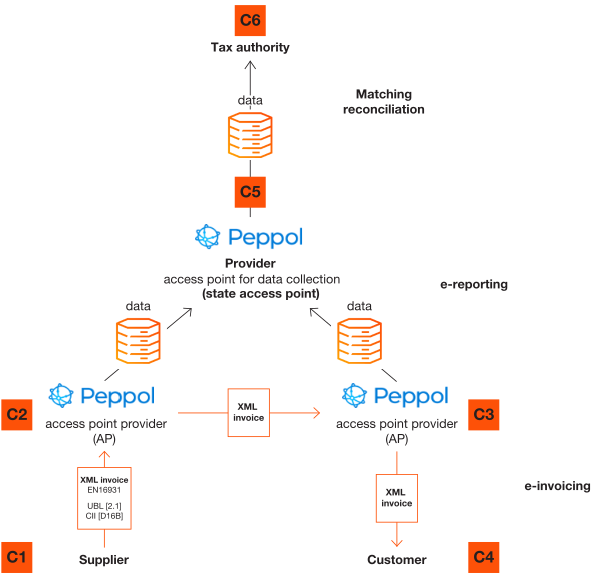
Electronic Invoicing Model
How to Prepare?

How can we help you
- We will organize a professional workshop focused on the requirements of the e-invoicing system and its impact on your company.
- We will analyze and map your invoicing processes, identify necessary adjustments, and propose concrete implementation steps.
- We offer our own IT solution for automated processing and exchange of electronic invoices in compliance with legislation.
- We provide training and support for your employees throughout the entire transformation process.
Subscribe to our PwC Newsletters
Contact us






Follow us


