














Martin Leung, Tax Partner, PwC Canada
“I had grown up in the firm, so it felt like coming home to familiar faces, and I really appreciated having access to world-class talent.”
For our Alumni Boomerang spotlight series, we spoke to Martin Leung, who left PwC Canada in February 2022 for another professional services firm. Martin returned in July 2023 as a director in private company tax services at the PwC Vancouver office. We explore Martin’s journey of learning, leadership, and coming back home to the firm.
Welcome back, Martin!
Martin, you’ve had an impressive career at PwC Canada. What were the most pivotal moments that shaped your career journey from summer intern to tax partner?
There were a number of pivotal moments for me at PwC Canada. The first wasn’t so much a single moment—but it was starting out with a large group of hires in the Vancouver tax practice. Going through those early years as an associate and senior associate with that group helped build a sense of camaraderie and resilience—long hours, busy seasons, exams. Many of those colleagues remain valued contacts and friends, both within PwC Canada and as alumni in the industry.
Another key milestone was successfully completing the Common Final Examination (CFE), earning a place on the honour roll for the first exam, as well as being the BC valedictorian. I’ve always been a bit reserved, but that experience put a spotlight on me and gave me confidence that I knew what I was doing, at least technically. It pushed me out of my comfort zone.
Not long after I passed the CFE, I was feeling burned out and had a really good conversation with one of my mentors, the person who first hired me. I wasn’t doing work that inspired me, and my mentor recommended I try working with a senior partner in M&A tax. That partner invested a lot in my development and worked closely with me for years, and that helped me build skills and confidence. It was one of the experiences that really shaped my career, and it still pays dividends today.
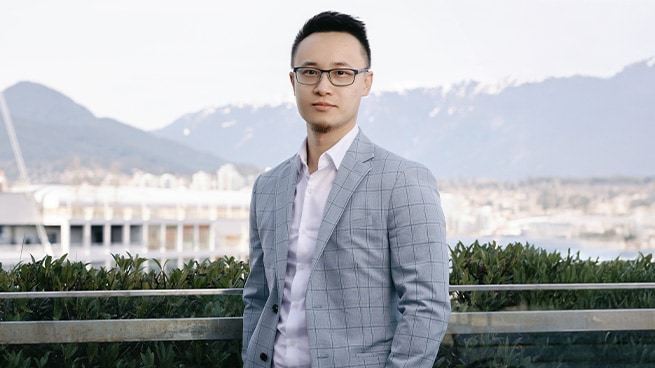
Photography by: BBZ Productions @bbzproductionsinc
At what point did you decide it was time to move on from PwC Canada, and how did you know it was time to come back?
My decision to leave PwC Canada was shaped by several factors, including Covid burnout and a desire to experience a different environment. I had spent my entire career at PwC Canada, so I wanted to step out of my comfort zone and see if I could succeed without the support of great mentors and a reputation built over a decade. Spoiler: The grass isn’t necessarily greener—it’s just different.
Returning to PwC Canada was a matter of stars aligning. Even after leaving the organization, I kept in touch with my PwC Canada mentors. Conversations with them revealed new opportunities in the private tax practice, and I rejoined as a director in July 2023.
Getting back to your current work at PwC Canada, how do you stay ahead of evolving tax legislation and ensure your clients’ strategies do the same?
It’s nothing glamorous. I just put in the work and try to stay on top of it. I read new legislation, court cases, and CRA publications, and I think about which clients might be affected. Any new piece of information I come across, new tax rules, or interesting views, I literally go through my list of clients and see who I can have a conversation with.
What excites you most about the future of the CPA profession?
What excites me most is that the people going into the CPA profession are always changing, and they bring different perspectives and will take it in new directions. I’m really excited to see what these changes will be, given the use of artificial intelligence (AI) and major technological shifts. Someone has to figure out how the profession is going to be resilient in the face of these technological changes.
Since you’ve been back at PwC Canada, you’ve seen the firm make major investments in technology and, specifically, AI. How do you see AI impacting tax advisory in the next five years?
To be honest, I don’t know enough to predict what AI will do in five years. I probably couldn’t even tell you what AI will be doing in six months. I can tell you what I see now. A lot of clients use AI tools before coming to us. The way I see it, our job is to be better than the chatbot. AI can produce good information, but it’s often not nuanced and can be confidently wrong. So it comes back to being really good at what we do and understanding our clients, because there’s never a single best tax plan. It’s always about what’s right for the context and the client’s objectives.
I use AI as a tool for research and learning, as it’s helpful for interrogating documents and legislation to accelerate understanding. AI helps junior team members level the playing field with senior colleagues, but for now, it can’t replace deep expertise and context.
What advice would you give to your younger self and the next generation of PwCers?
Build, build, build your career capital! And be really good at what you do. Don’t sit in a cave and just read the Tax Act—use AI to augment your learning and get even better at what you do. This is a fantastic opportunity for our junior staff to be on a level playing field with more senior team members.


Follow PwC Canada


