








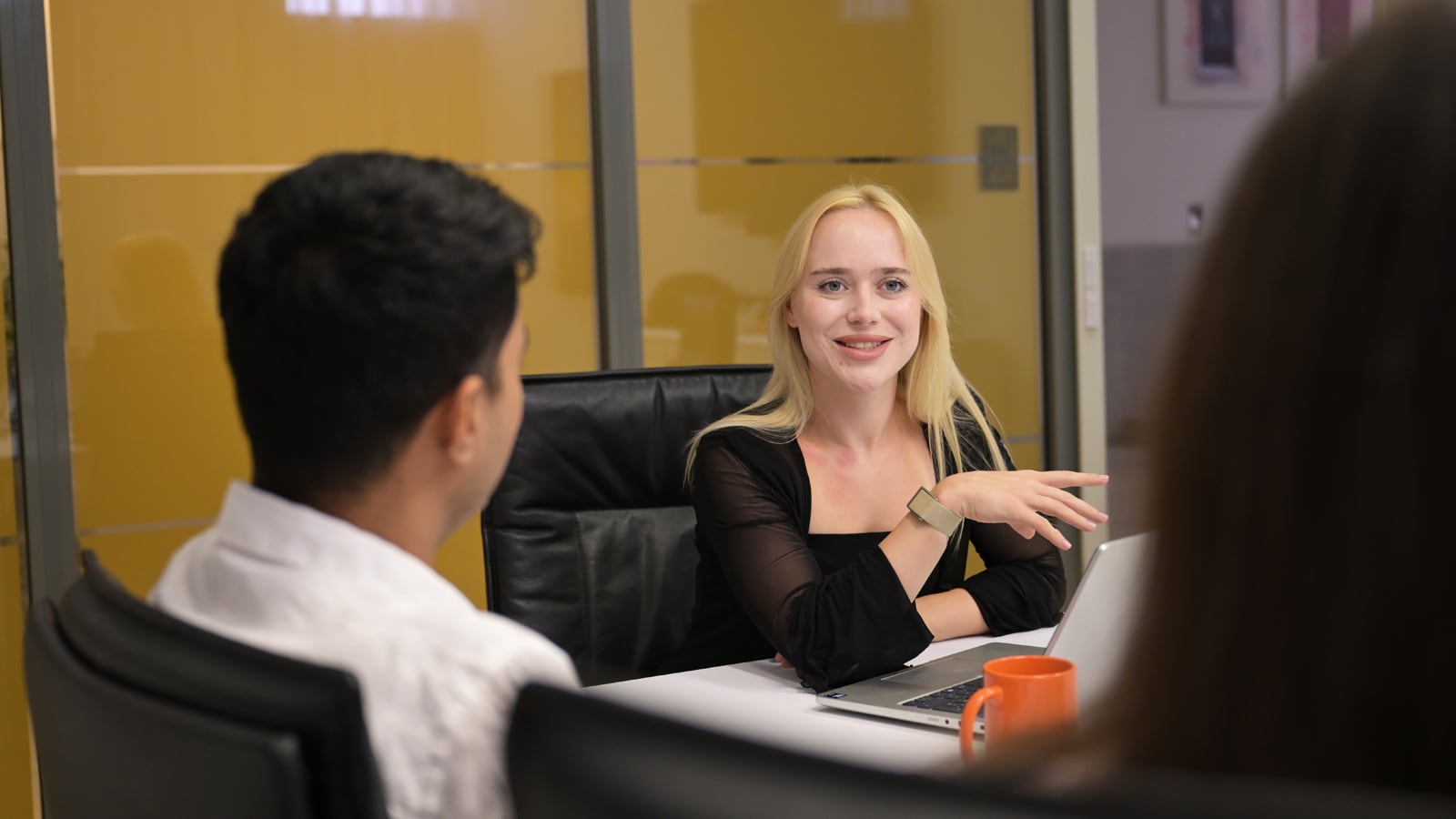

“Malta’s businesses have shown remarkable resilience, but rising costs, changing demographics, evolving customer expectations and technological disruption mean that incremental improvement alone is no longer enough. Successful transformation requires a clear vision and strategy, redesigned processes and operating models, and the capabilities, technology, and people needed to turn ambition into action. For Malta’s organisations, the question is no longer whether transformation is necessary, but how to transform with clarity, confidence, and the discipline to create lasting value.”
One Advisory practice, one transformation journey
The challenges facing organisations rarely fit neatly within a single service line. A new growth strategy may require investment or acquisition. A transaction may prompt operating model integration. Regulatory change may demand new processes, controls and technology. A digital programme may only succeed when employees understand, adopt, and sustain new ways of working.
Therefore, our advisory team brings together deals, risk and regulation, consulting, and digital services around the client’s transformation journey.
We help clients

This integrated approach reflects our global direction: sector-led, client-centric propositions delivered across the full lifecycle of advise, implement, and operate. It gives clients access to the breadth of PwC without requiring them to navigate separate teams or disconnected interventions.
Explore what we do
Deals
Creating, protecting, and realising value
Major business decisions are often made in periods of uncertainty. Shareholders may be considering an acquisition or sale, preparing for succession, raising capital, restructuring a business, or assessing the value of an asset. In each case, the challenge is not only to complete a transaction, but to understand how it supports the organisation’s longer-term strategy.
Our deals team helps clients evaluate their options, identify value, and make informed decisions throughout the transaction lifecycle. We support both buyers and sellers with corporate finance advice, transaction services, financial due diligence, valuations, financial modelling, and capital-market transactions.

Transaction services
In light of the evolving market environment during 2026 and the pressures confronting many local businesses, we anticipate that the pace of consolidation will continue in the years ahead. To address this need, our team supports buyers in the identification of targets aligned with their strategic objectives and also assists prospective sellers in preparing their businesses for sale and in identifying suitable buyers.
A core element of our work involves advising parties on valuation expectations and pricing considerations, thereby ensuring that decisions are well informed and practical. Our experienced professionals accompany clients through every stage of a transaction, from the preparation of documentation and marketing materials to assistance during negotiations and through to completion, thereby ensuring an efficient and well-managed process.
The local capital markets gained considerable momentum over the course of the year, characterised by strengthened investor appetite and a consistent flow of issuers to market, particularly in respect of debt raising. We played an active role in supporting our clients' capital raising initiatives, including a number of notable bond rollovers and refinancing exercises, as well as assisting new issuers in making their market debut.
Our team has continued to assist international issuers who have continued to select the local capital market as an attractive avenue through which to raise debt and advised on additional capital market transactions such as spin-offs and other corporate exercises, supporting clients in navigating regulatory requirements and structuring transactions optimally. These engagements underscore our growing presence within the capital markets space and our continued commitment to adding value throughout the transaction cycle.
Valuations
Our valuations team comprises skilled specialists possessing significant expertise in the valuation of businesses, real estate, complex financial instruments, and intangible assets such as intellectual property and brand portfolios.
Over the past year, we undertook valuations across all these areas for a range of purposes, including transactions, financial reporting, shareholder restructurings, and transfer pricing assessments. In addition, our team continues to provide technical support to our assurance practice and the wider PwC network, covering fair value assessments, impairment testing, and going concern evaluations.

Innovation and AI
Our sustained investment in upskilling in recent years has proven valuable, with the team now proficient in a broad range of advanced data tools and continuing to draw upon the expertise of our wider data and analytics network. Building upon this foundation, we have directed our focus towards the development of Artificial Intelligence capabilities, through targeted training and collaboration across teams.
As part of this ongoing initiative, we continue to consolidate our use of Junction, a data and AI-powered platform designed to strengthen real-time client engagement and to deliver insights with greater efficiency and effectiveness. Junction together with the development of other AI integrated tools including AI agents combine deep sector knowledge with intuitive collaboration tools, thereby enabling our team to continue to generate sustainable value across various engagements.

Financial advisory
Our financial advisory team continued to support clients on matters relating to corporate strategy, debt advisory (including financing strategy and debt restructuring), business recovery services, value creation, investment appraisal, and office of the CFO engagements, helping businesses navigate strategic and financial decisions beyond the immediate scope of a transaction.

Risk and Regulation
Turning risk into resilience and trust
During FY26, organisations faced greater regulatory scrutiny and increasingly interconnected risks across operations, technology, third parties, financial crime and business continuity. Against this backdrop, we helped clients move beyond stand-alone compliance activities by embedding risk management into day-to-day operations and strategic decision-making.
Our work gave leadership greater visibility over the risks affecting strategic objectives, strengthened governance and internal controls, and improved organisations’ readiness to respond to disruption. By connecting risk insight with practical implementation, we helped clients build stronger, more resilient operating environments.
Across FY26, we supported clients throughout the risk lifecycle: advising on frameworks and priorities, implementing governance arrangements, controls and response plans, and operating functions such as internal audit on their behalf. We also worked with consulting, digital services, and deals to help ensure that new processes, systems, and transactions were compliant by design and resilient in practice.
Internal audit
During FY26, we supported boards and audit committees with independent assurance over governance, risk management, and internal controls. Through fully outsourced and co-sourced internal audit engagements, we established and strengthened functions, developed charters and risk-based audit plans, executed reviews, reported findings to audit committees, and tracked remediation. Where engagements required specialist input, we brought together expertise in IT, cyber, anti-money laundering, and data protection, while also helping in-house teams build their capabilities.
Risk management
We helped organisations improve how leadership identifies, assesses, and monitors the risks linked to strategic objectives. Our work included designing and embedding enterprise risk management frameworks, defining risk appetite, carrying out risk assessments, and developing risk registers. We also reviewed, designed, and tested internal controls, including controls over financial reporting, to give management and boards clearer and more reliable insight into the risks that matter and how effectively they are controlled.
Fraud and forensics
We helped organisations reduce their exposure to fraud and misconduct through fraud risk assessments and tailored anti-fraud, anti-bribery, and conflict-of-interest policies. Where concerns arose, our investigators used forensic data analytics, document reviews, and interviews with whistleblowers, witnesses, and persons of interest to establish the facts. This work gave leadership an objective basis for action and helped organisations address root causes and reduce the risk of recurrence.
Crisis and resilience
Throughout FY26, we helped organisations strengthen their ability to prepare for, respond to, and recover from operational, technological, and reputational disruption. Our work included identifying critical activities through business impact analyses, developing business continuity, crisis-management, and disaster-recovery plans, and testing those arrangements through training, exercises, and simulations. Following incidents, we also helped clients establish root causes and embed lessons learned so that their response capabilities became stronger over time.
Taken together, this work helped clients respond to immediate regulatory and operational pressures while establishing stronger governance, clearer accountability, and more resilient ways of working for the future.
Consulting
Translating strategy into a business that performs
During FY26, organisations remained focused on turning strategic ambition into practical performance improvements amid rising costs, capacity constraints, changing customer expectations, and increasing demands on their people. Against this backdrop, we helped clients translate priorities into clearer operating models, stronger capabilities, and more effective ways of working.
Our work helped clients improve decision-making, simplify processes, strengthen commercial performance, and build the organisational capabilities needed to deliver change. We brought together financial, operations, sales and marketing, and people consulting expertise, supported by our capabilities in ESG, research, and EU advisory, to address connected commercial, operational, and organisational priorities.

Financial consulting
Finance functions are increasingly expected to look forward, provide timely insight, and support better commercial decisions, often while managing fragmented data, manual processes, and growing demands for control.
Over the year, we helped finance teams respond to growing demands for forward-looking insight, stronger control and more effective commercial decision support. Our work included strengthening financial planning and performance management, redesigning finance processes, clarifying governance and accountability, improving management information, building financial models, and aligning finance operating models with organisational strategy.
Our focus was to help finance go beyond reporting what has happened to actively shape what happens next.

Operations consulting
We know that rising costs, capacity constraints, and disconnected processes can stop you from turning growth into better performance.
Across our engagements, we helped clients identify where complexity, duplication, bottlenecks, and unclear ownership were limiting performance. Through business process re-engineering and operating model redesign, we simplified workflows, improved productivity, and strengthened service delivery.
This work extended across procurement, supply chain, inventory, demand planning, service operations, quality, and regulatory processes. Where technology enablement was required, we worked with our digital services teams to ensure that systems supported the redesigned process rather than simply digitising existing problems.

Sales and marketing consulting
Sustaining growth can be difficult when customer expectations are changing, routes to market are fragmented, or commercial decisions are not supported by reliable insight.
We supported organisations in understanding their markets and customers, refining value propositions, improving sales effectiveness, strengthening pricing and revenue management, redesigning customer experiences and omnichannel journeys, and making better use of marketing data.
By connecting customer insight with commercial execution, this work helped clients create more relevant experiences and build more durable sources of growth.

People consulting
Transformation succeeds when people understand the ambition, have the capabilities to deliver it, and see how they contribute to your organisation’s future.
Throughout the year, we helped organisations align their people with transformation priorities through organisational design, job evaluation, pay transparency reporting, workforce planning, competency frameworks, HR transformation, leadership development, and organisational optimisation. We also supported major programmes through structured change management, stakeholder engagement, communication, training, and adoption activities, helping employees understand new ways of working and build the capabilities needed to sustain them.
Our learning capabilities complemented this work by helping clients establish structured, scalable development programmes. Through our learning management solution and wider Academy support, organisations could manage content, track participation, support continuous development and embed the capabilities required for new strategies, processes, and technologies.

Capabilities that work across every Consulting pillar
ESG and sustainability
Sustainability increasingly affects strategy, operations, investment, data, and stakeholder expectations. Our teams help you understand what ESG developments mean for your organisation, set practical plans, and integrate sustainability into decision-making.
Our work in FY26 covered sustainability strategy, reporting readiness, data and controls, decarbonisation planning, sustainable operations, and governance. It helped clients move beyond compliance by connecting resilience, transparency, and responsible business practices with long-term value.
Strategy and research
Important decisions require credible evidence. Our research capabilities help you understand markets, customers, competitors, and emerging opportunities through market assessments, sector analysis, customer research, stakeholder consultation, and data-led insight.
By combining market assessments, sector analysis, customer research, stakeholder consultation, and data-led insight with expertise from across Advisory, we supported strategic, investment, and policy decisions and helped clients translate findings into clearer strategies, service designs, and transformation priorities.
EU advisory
Funding can help organisations accelerate investments that might otherwise be delayed, but identifying suitable opportunities and navigating the application and compliance process can be challenging.
We supported businesses, public entities, and other organisations across the EU funding lifecycle. This included identifying relevant direct and indirect opportunities, assessing eligibility, aligning investments with funding requirements, developing applications and business plans, structuring budgets, responding to clarifications, building consortia and identifying partners, and managing post-award obligations. By connecting funding with wider transformation priorities, we helped ensure that proposed investments addressed a clear business need and were supported by a deliverable roadmap.
Taken together, our Consulting work helped clients move from ambition to execution by improving how they plan, operate, engage customers, enable their people, and invest for longer-term value.
Digital services
Turning transformation ambition into technology-enabled outcomes
During FY26, organisations continued to invest in technology while facing pressure to demonstrate clearer business value, manage delivery risk, and build the capabilities needed for adoption. We helped clients connect technology decisions to defined operational priorities, stronger processes, and measurable outcomes.
Our work combined business and technology expertise across digital transformation, business solutions, data and AI, cybersecurity, cloud and infrastructure, and IT managed services. Strong project-management capability ran across these areas, helping clients govern complex programmes, coordinate stakeholders, manage delivery risk, and maintain focus on intended outcomes.
Working with consulting, risk and regulation, and deals, we supported clients from early strategic decisions through implementation and ongoing operation. This integrated approach enabled technology change to remain connected to the wider transformation agenda rather than becoming a stand-alone initiative.
Digital transformation
Organisations often know that change is necessary but may not have a shared vision, transformation roadmap, or the capacity to coordinate multiple initiatives.
Across transformation programmes, we helped clients define digital and technology strategies, assess operating models, re-engineer processes, and establish practical roadmaps. We also put in place the governance, stakeholder alignment, change and adoption disciplines needed to coordinate delivery, manage dependencies and risks, and sustain momentum through to benefits realisation. By aligning business priorities, customer and employee needs, data, processes, and technology, we helped clients sequence investment decisions and link them to measurable value.
Transformation programmes can lose momentum when responsibilities are unclear, decisions are delayed, or dependencies across business and technology are not actively managed.
Our project and programme management professionals established the governance, planning, reporting, and risk-management disciplines required to move complex initiatives forward. By connecting executives, business teams, technology specialists, and third parties around common outcomes, they helped clients maintain control from mobilisation through implementation and value realisation.
Business solutions
Legacy applications and disconnected processes can constrain growth, weaken visibility, and make it difficult for organisations to respond quickly to change.
We modernised core processes through cloud-based enterprise platforms and business applications. As a systems integrator and implementation partner, we designed, configured, integrated, tested, and deployed solutions across finance, operations, customer, and employee processes, using technologies including Microsoft and Oracle. Our work covered process redesign, solution selection, and end-to-end implementation, followed by ongoing optimisation to embed the solution successfully across the organisation.
Some business challenges cannot be resolved through standard platforms alone. Organisations may require a tailored workflow, customer-facing service, or digital product that reflects a specific operating need.
Where standard platforms did not fully address the need, our software and digital-products teams designed and delivered tailored workflows, customer-facing services, and digital products. By combining user needs, process knowledge, data, and technical delivery, we created practical solutions that addressed defined business problems and could evolve as requirements changed.
Data an AI
Many organisations hold significant volumes of data but struggle to turn it into trusted insight. Fragmented sources, inconsistent quality, and unclear governance can also prevent artificial intelligence from moving beyond experimentation.
We helped clients define data strategies, implement modern data platforms, strengthen governance, and develop analytics, automation, and AI solutions. This work improved access to trusted insight, streamlined processes and enabled more responsible innovation, with governance, security, transparency, and measurable business value considered throughout delivery.
Cybersecurity
Cyber risk is an operational, regulatory, and reputational concern. Organisations need to understand where they are exposed, protect critical services, and demonstrate that resilience is actively managed.
We supported clients across cybersecurity governance, risk, and compliance, security assessments, penetration testing, identity and access management, cloud security, privacy, threat intelligence, and security operations. By combining advisory, implementation, and managed capabilities, we helped organisations prioritise investment, strengthen protection, and respond more confidently to evolving threats.
Cloud and infrastructure
Growth and digital innovation require a technology foundation that is secure, scalable, and resilient. Legacy infrastructure, technical complexity, and limited internal capacity can restrict performance and increase operational risk.
Our teams designed, modernised, and managed cloud and infrastructure environments spanning networking, compute, workplace technology, backup, and disaster recovery. This provided clients with a more secure, scalable, and dependable foundation for business continuity, future applications, and data and AI adoption.
IT managed services
For many organisations, maintaining the breadth of expertise needed to operate a modern IT environment is increasingly difficult.
Through tailored IT managed services, we helped clients maintain secure, stable, and efficient technology operations, from specific operational needs through to broader end-to-end service management. Access to specialist capability, structured processes, and ongoing monitoring supported operational continuity while allowing internal teams to focus more attention on strategic priorities.
Alliances
Our alliance ecosystem helped clients access leading technology while retaining a single partner focused on the wider business outcome. Relationships with Microsoft, Oracle, and Hewlett Packard Enterprise strengthened our delivery across enterprise applications, data and AI, cloud platforms, workplace technology, and infrastructure, complemented by specialist capabilities in cybersecurity and cloud operations.
Cybersecurity across identity, threat detection and response, data protection, cloud security, and resilience.
Cloud and infrastructure across architecture, migration, modernisation, performance and cost optimisation, and managed operations.
By combining alliance capabilities, certified expertise, and established delivery approaches, we accelerated implementation, strengthened integration and reduced risk across business solutions, trusted data platforms, responsible AI, cybersecurity, and resilient infrastructure. Rather than treating each technology as a stand-alone purchase, we brought the right capabilities together around the client’s strategy, processes, and operating model.
This solution-led approach allowed clients to assess options, design integrated architectures, and implement technologies that worked together securely. Backed by our sector insight, transformation capabilities, and global alliance network, our local teams supported the journey from initial vision and selection through implementation, adoption, optimisation, and ongoing operation.
Taken together, our digital services work helped clients turn technology ambition into practical outcomes by strengthening delivery, modernising core platforms, improving the use of data and AI, building cyber resilience, and supporting dependable day-to-day operations.
The closing message
Transformation, connected
Business transformation is not a single project or technology implementation. It is a continuing process of making choices about where to compete, how to operate, what capabilities to build and how to earn the trust of customers, employees, regulators, and investors.
At PwC, we bring these choices together. Our deals, risk and regulation, consulting, and digital services teams work as one advisory practice, supported by our global network, sector knowledge, alliances, and delivery capabilities.
Whether an organisation is rethinking its business model, preparing for a transaction, strengthening resilience, redesigning operations, or implementing new technology, we can support the journey from vision and strategy through to execution and ongoing operation.
As we look forward to the next year, we remain committed to help you move from fragmented initiatives to connected transformation, creating value today while building the organisation you will need tomorrow.
How we showed up for our clients
As the needs of Malta’s businesses evolve, we continued to expand and integrate our offerings to help you, our clients, navigate an ever-changing world. Here are some of the ways we showed up for you in FY26.
Contact us