









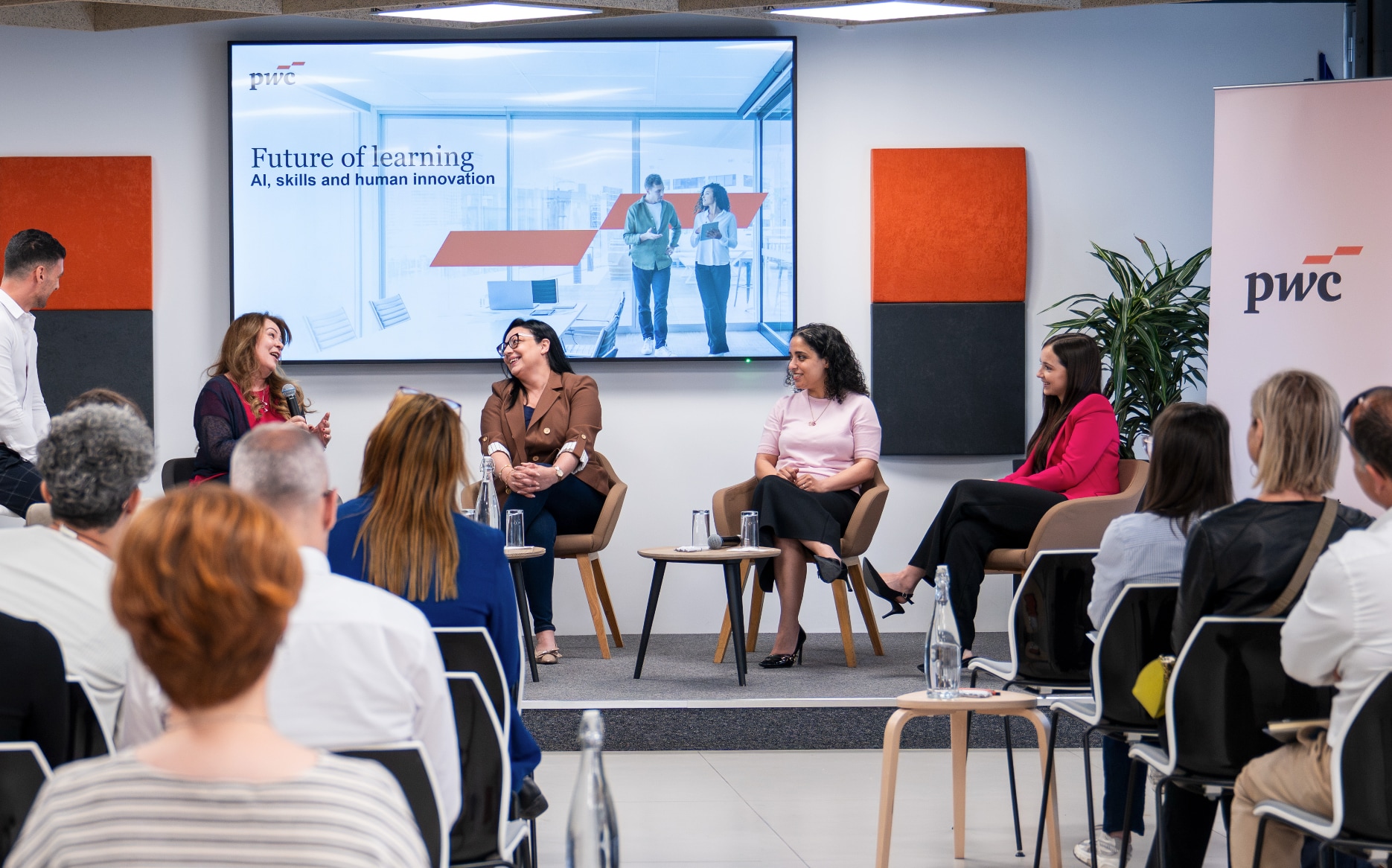
The ‘Future of learning – AI, skills, and human innovation’ event highlighted a fundamental shift for HR and Learning & Development leaders: learning is no longer a support function, it’s a core driver of organisational performance and transformation.
As AI reshapes roles, workflows, and expectations, organisations must move from reactive training to proactive, skills-based strategies aligned to business outcomes.

Scaling workforce capability at pace
A key priority is scaling AI capabilities across the workforce. A leading example is the AI Skills Boost programme, where PwC UK is partnering with the UK government to upskill 10 million workers by 2030 and tackle a 96% AI skills gap.
This reflects a broader shift from traditional training to scalable, technology-enabled learning ecosystems, where AI literacy is embedded into everyday work. For L&D leaders, this means designing continuous, personalised learning journeys tied to real role requirements.
Starting with business needs, not tools
A key insight from the event was clear: successful AI adoption begins with business challenges and workflow “friction”, not technology.
By identifying inefficiencies, organisations can apply AI where it delivers the most value. This shifts L&D from delivering content to enabling measurable outcomes such as productivity, quality and better decision-making.


Transforming skill assessments with AI
AI is also reshaping how organisations assess capabilities. Traditional training needs analysis is often manual, slow, and inconsistent.
As an example, we developed an AI-enabled tool that enables employees to assess themselves against defined competency frameworks. The system validates responses through adaptive questioning and generates real-time, data-driven insights, including readiness scores, identified skill gaps, and personalised learning pathways.
This enables L&D teams to move towards continuous skills intelligence and more targeted, impactful learning investment.
Designing L&D for adoption, change, and future-ready skills
To unlock value, AI adoption must go hand in hand with behavioural change and skills development. This requires a structured approach that integrates governance, continuous measurement, and a strong focus on leadership, culture, and mindset.
Crucially, AI capabilities and transversal skills should not be developed in isolation but built together within the same learning and change journey. Skills such as critical thinking, creativity, judgement, and collaboration must be developed alongside AI and data literacy and embedded into the flow of work.
By combining technical and human capabilities as part of a continuous adoption process, organisations can equip employees not only to use current technologies, but to adapt confidently to future ones. This ensures that the mindset and behaviours required for effective adoption are embedded from the outset, enabling sustained impact as new technologies emerge.

Embedding AI into workforce strategy
The key message is clear: AI must be embedded across learning, talent and business strategies, not treated as a standalone initiative.
Organisations are moving towards more dynamic, data-driven approaches where AI continuously identifies skill gaps, surfaces insights, and supports innovation.
The implication for organisations is a shift towards continuously adaptive operating models, where learning is integrated into every process. For HR and L&D, this means evolving from programme delivery to strategic capability building, leveraging AI to close skill gaps faster and enable transformation at scale.
Stay up to date with our latest
thought leadership
Contact us