









Malta Budget 2026
Malta Budget key highlights
Key measures announced by the Minister for Finance in the budget speech for 2026 include:
COLA will amount to €4.66 per week
Tax cuts for families with children
MicroInvest scheme expanded and enhanced
Increased grants for carers and disabled children
Pension income fully exempt from 2026
Eco-contribution for tourists increases to €1.50/night
Wage support for long-serving private employees
Relief on duty on donations to descendants extended
€10 weekly increase for all pensioners
First-time buyers’ scheme made permanent
Inheritance duty relief threshold doubled to €400,000
Eco-friendly and tech related investments supported with tax credits
Explore the key measures
Performance of the economy
During the first half of the year, the economy registered real growth of 3.1%, representing a slight moderation on previous years - but still comparatively strong when compared to the European average of 1.4% over the same period.
Government expects GDP to grow by 4.1% for the full year 2025, driven mainly by domestic consumption, public investment and a buoyant tourism sector.
On the fiscal front, Government expenditure is set to increase by a larger amount than revenue, resulting in a slight widening of the general Government deficit in absolute terms from €814m in 2024 to €820m this year.
However, when expressed as a percentage of GDP - which in nominal terms is set to increase from €23.1bn to €24.7bn – the deficit is expected to decline from 3.5% last year to 3.3% this year. By 2026, the deficit is expected to fall below the 3% threshold – on the back of continued expected nominal GDP growth.
Meanwhile, Government debt is set to amount to €11.6bn in 2025, up from €10.7bn last year – and is expected to reach €14bn by 2028. This equates to 47.1% of GDP in 2025 and is expected to remain broadly at that level over the next three years, well below the 60% EU threshold.
Key macroeconomic developments
Malta’s budget deficit set to narrow gradually, but surplus still out of reach
Malta Budget 2026 - Economic Analysis
Income & other taxes
The budget measures deliver income tax relief and incentives. Revised tax brackets for families with children, introducing higher thresholds for parents with two or more children; eligibility lasts until the youngest child is 18 (or 23 if in education). From 2026, pension income is fully exempt and widows’ pension remains exempt. The deduction for elderly/disabled care fees rises to €4,500.

Businesses will gain accelerated deductions for AI, digitalisation, automation and cybersecurity; a 175% Research & Innovation (R&I) deduction, enhanced MicroInvest credits and wage support, plus a tax credit of 60% of qualifying expenditure spread over four years.
The first-time buyers' scheme is now permanent and duty on donations relief is extended. The eco-contribution will be increased to €1.50 per night.
Summary of measures in income tax
Income tax reductions for families with children
Tax cuts: The Government will reduce the tax due by families with children. The average tax saving for parents is projected at €2,400, over a three-year period.
Eligibility: Families qualify until the youngest child is 18 years old, or 23 if the child remains in education.
The tax brackets for parents applicable for the basis year 2026 will be the following (more favourable rates will apply for 2027 and 2028):
| Basis year 2026 - Married couples with one child | ||
Income earned (€) |
Tax Rate | Subtract (€) |
0 - 17,500 |
0% |
0 |
| 17,501 - 26,500 | 15% | 2,625 |
26,501 - 60,000 |
25% |
5,275 |
| 60,001+ | 35% |
11,275 |
| Basis year 2026 - Married couples with two or more children | ||
Income earned (€) |
Tax Rate | Subtract (€) |
0-22,500 |
0% |
0 |
22,501-32,000 |
15% |
3,375 |
32,001-60,000 |
25% |
6,575 |
60,001+ |
35% |
12,575 |
| Basis year 2026 - Parent with one child | ||
Income earned (€) |
Tax Rate | Subtract (€) |
0-14,500 |
0% |
0 |
14,501-21,000 |
15% |
2,175 |
21,001-60,000 |
25% |
4,275 |
60,001+ |
35% |
10,270 |
| Basis year 2026 - Parent with two or more children | ||
Income earned (€) |
Tax Rate | Subtract (€) |
0-18,500 |
0% |
0 |
18,501-25,500 |
15% |
2,775 |
25,501-60,000 |
25% |
5,325 |
60,001+ |
35% |
11,325 |
Parents with two children will apply the one child income tax brackets once their older child turns 18 or 23 if the older child is in education.
Tax exemptions for pensioners
Pension income has been, over a 5-year period since 2022, gradually excluded from taxable income. For calendar year 2026, 100% of the amount of pension income will not be considered taxable income.
Widows’ pension remain exempt due to previous measures.
Enhanced tax deductions for elderly and disabled care
The tax deduction for fees paid to elderly or disabled care centres will now be increased from €2,500 to €4,500 to better support those who alleviate pressure on state institutions by opting for private facilities.
First-time buyers' scheme
The first-time buyers' scheme was introduced in 2013 and has since been renewed annually. This measure is now being incorporated into the main legislation.
Furthermore, eligibility will be extended to include individuals who previously purchased non-residential property, ensuring all first-time residential buyers can benefit from the scheme.
Inheritance duty relief
Currently, individuals who inherit property already being used as their residence, pay a reduced duty rate of 3.5% on the first €200,000 of the property's value. This threshold will now be increased to the first €400,000.
Donations of shares in companies and benefits to family businesses
Existing benefit schemes for family businesses such as reduced duty on intra-family transfers, governance and succession planning grants, training support for next-generation family business members, and digitalisation and financial support, will be extended to continue promoting stable succession and sustainable growth.
Tax incentives for innovation and digitalisation
Investments made with respect to artificial intelligence, digitalisation, modernisation, automation, and cybersecurity will benefit from accelerated tax deductions over a two-year period.
Businesses which invest in eligible research and innovation will be granted a tax deduction amounting to 175% on such eligible expenditure.
MicroInvest scheme enhancements
The MicroInvest scheme will include digital solutions as eligible investments. Tax credits will increase to €65,000 (up to 65% of eligible expenditure). Businesses in Gozo will retain a further 20% uplift, with total aid rising to €85,000 for specific categories.
Wage support for private sector
Through the MicroInvest scheme, a new mechanism will be introduced to support the private sector. In this regard, wage increases of employees which have been in employment with the same employer for over four years shall be financed by the Government.
This will however be limited to a maximum of 65% of the increase for two years, for up to €780 per year. As for employees in Gozo, this scheme will be of a maximum of 80% for up to €960 per year.
Tax credit for investors
Enterprises investing, during the next two years, in machinery, tools, equipment, software, and cybersecurity solutions (amongst others), with a view to adding value and productivity or for the purpose of launching a new business, will be eligible for a tax credit of 60% of the investment value, spread over four years.
Increase in eco-contribution
The eco-contribution paid by tourists will increase from €0.50 to €1.50 per night.
Other measures
Malta’s economic strategy focuses on supporting start-ups, SMEs, innovation and digitalisation, with initiatives including seed capital, loans, and upskilling schemes. The European Digital Innovation Hub boosts access to AI for businesses. New offices and data repositories simplify business processes. The country is rapidly expanding in fintech, blockchain, and green sectors. Labour reforms target migration and talent development, while education and research receive substantial investment. Gozo benefits from infrastructure upgrades. Security, justice, and public services will continue to be modernised; cultural heritage, creative industries and local Government are strengthened through digitalisation and partnerships.

Economic transformation & Vision 2050
Malta is advancing its economic vision through targeted support for start-ups, SMEs, innovation, and digitalisation. The Government continues to offer seed capital, loans, and accelerator programmes, while expanding upskilling schemes for workers. The European Digital Innovation Hub now provides free access to AI and high-performance computing for SMEs and start-ups, reinforcing Malta’s leadership in technology.
New initiatives such as the Credit Review Office and a Common Central Data Repository are simplifying business-banking interactions and due diligence procedures.
Innovation, training & sectoral growth
Malta is growing at a fast pace in emerging sectors including fintech, blockchain, esports, video game development, AI and green jobs, and a number of MiCA licences have already been issued by the regulator.
Labour market & talent development
Labour reforms include a stricter Labour Migration Policy and the creation of a National Talent Register to better plan training programmes and support employers – meaning that getting immigration right remains a priority. The agricultural sector is also getting a new laboratory and training hub.
Education, research & innovation
New investment continues to flow in the education and research space – with substantial investment announced covering research programmes and infrastructural projects for the creation of modern educational spaces.
Gozo development
Gozo is seeing substantial development, with upgrades to roads, schools, sports facilities, and healthcare infrastructure. Strategic initiatives are improving connectivity, green spaces, and cultural heritage, while support for Gozitan students and integration programmes is being enhanced.
Security, justice & public services
Security, justice, and public services are being strengthened, with investments in police, armed forces, civil protection and health. These investments include technology upgrades and investment in new facilities. The justice system is being modernised through digitalisation, and new initiatives for victims of domestic violence are being launched alongside continued reforms in civil rights.
Cultural heritage & creative industries
Cultural heritage and creative industries are receiving significant attention, with the development of the Culture and Arts Hub in Marsa, restoration of historical sites and expansion of creative spaces. The film sector continues to grow, supported by new infrastructure and international partnerships.
Local government & public service
Local government and public service are being supported through digitalisation of services and training initiatives for employees, with ongoing investment in public service technology, artificial intelligence integration, and cybersecurity. The Maltese Government has entered into an agreement with Microsoft to introduce artificial intelligence into public administration.
Sustainability and the environment
The 2026 Budget builds on Malta’s ongoing commitment to sustainability and environmental progress, mainly by extending a number of existing initiatives. The Government continues to prioritise stable energy prices, investments in infrastructure, and a holistic approach to environmental protection, resource efficiency, and green growth.
Energy and utilities
Electricity, water, fuel, and LPG prices remain stable, keeping energy costs in Malta among the EU’s lowest. Major investments include the near-completion of a second interconnector cable and new battery storage projects to maximise solar energy use. Legislation for wind turbine projects has been updated, with tenders open and under evaluation.

Infrastructure and water
Short-term investments are modernising the electricity distribution network with the new substations and distribution centres. Malta now boasts its highest-ever drinking water quality, with expanded recycled water capacity and reservoir rehabilitation projects underway.

Renewable energy and incentives
Ongoing schemes supporting investment in solar panels, batteries, water heating, insulation, double glazing, well restoration, and water purification, remain in place. Feed-in tariffs remain for small-scale solar power installations.

Waste management and circular economy
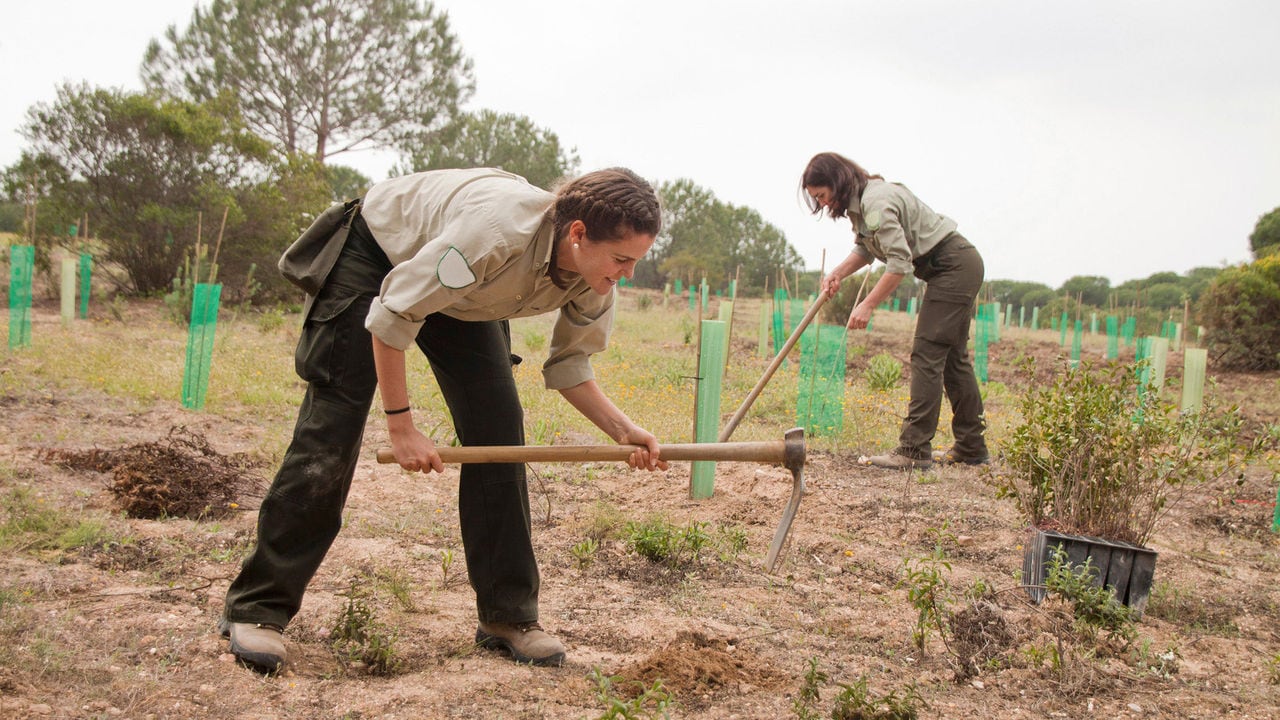
Mixed waste has decreased by 35% since 2018. Record levels of organic waste are processed into renewable energy and compost. New facilities are planned for organic waste processing, skip waste management, and hazardous waste treatment, while the recycling and bulky waste processing infrastructure is being expanded.

Green and urban spaces
Major investments are transforming public and abandoned lands into accessible green spaces across Malta and Gozo. Urban regeneration projects are revitalising Senglea, Kalkara, and Marsa.
Cleanliness and public maintenance
€11m invested in new equipment for the cleaning of residential streets has improved efficiency. Pilot projects for elderly and disabled residents have been launched to enable convenient recycling of waste.

Agriculture, fisheries and food security
Reforms include increased protection of agricultural land, support for new farmers, and the establishment of the Food Safety Authority. New infrastructure includes an animal manure processing plant, modernised markets, and an advanced aquaculture laboratory. Voluntary land transfer schemes and fiscal incentives promote sustainable agriculture. Animal welfare is also a focus as regards an operational animal hospital, expanded veterinary services, and new facilities for animal cremation and rehoming.

Promotion of Maltese products
The Government is enhancing Malta’s food supply chain by promoting local products, introducing Fish Fridays in public schools, providing fresh milk to students for balanced nutrition, and launching a National Fisheries Strategy focused on sustainability and growth.

Transport and mobility
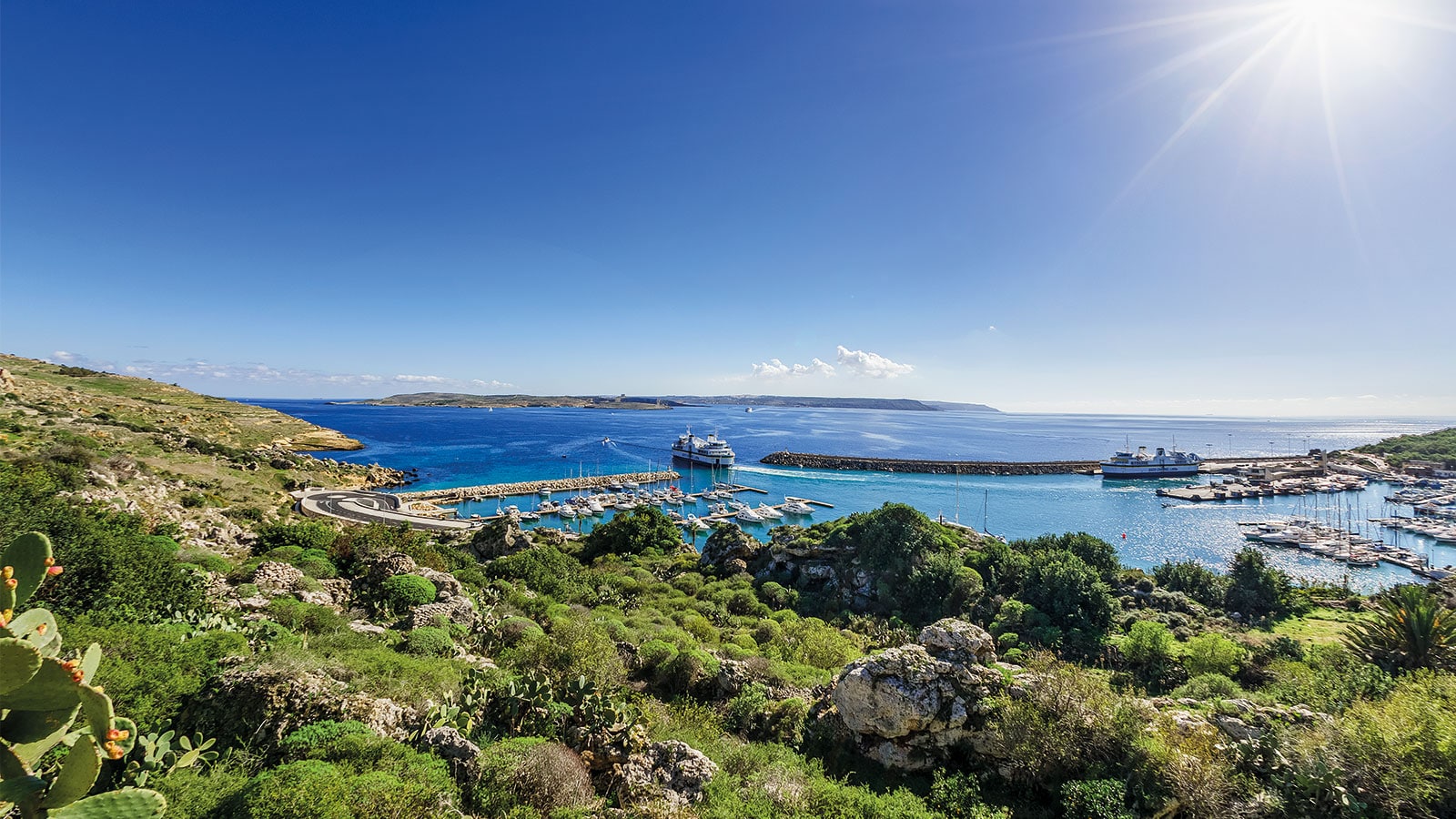
Projects such as Msida Creek, C-SAM, and Vjal Kulhadd focus on congestion reduction, safety, and sustainable mobility. Electrification of Gozo’s bus fleet is planned for 2026. New fast ferry routes and terminals will double Malta-Gozo connectivity. The Reshaping Our Mobility plan expands off-peak services, incentives for people below the age of 30 being given €5,000 a year for 5 years to give up their driving licence, continued support for electric vehicles, and a new grant of €1,500 a year when renouncing a car driving license to become a motorbike user.
Community and public works
A new €13.5m framework agreement will be entered into with local councils to extend support for sustainable public spaces, pedestrian areas, and local infrastructure. Renovation of voluntary organisation centres, sports, ecclesiastical, and restoration projects continues. National parks and promenades, such as the Ta’ Qali Masterplan and Birżebbuġa Promenade, are being implemented.

Flooding and coastal protection
Rainwater harvesting projects in Kirkop, Żebbuġ, and Marsa, and a major tunnel extension in Birkirkara, address flooding and enhance coastal protection.

Get in touch
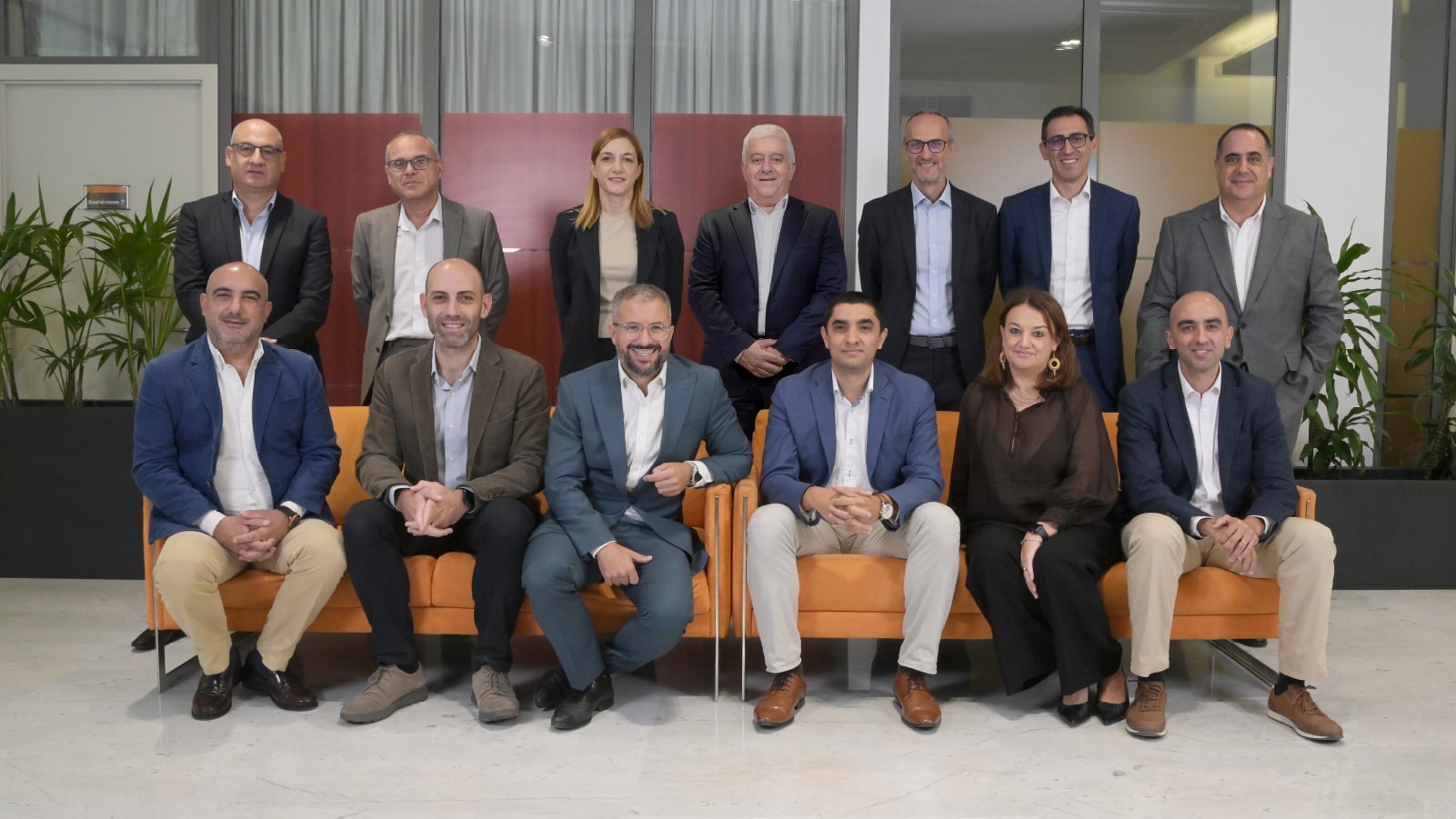
Click on a name to send an email.
At the back, from left to right:
Bernard Attard, Neville Gatt, Lucienne Pace Ross, David Valenzia, Steve Gingell, Mirko Rapa and David Ferry.
In front, from left to right:
Stefan Diacono, Chris Mifsud Bonnici, Edward Attard, Michael Borg, Francesca Fenech and Mark Lautier.
or call us on +356 2124 7000
Social measures
This section outlines a comprehensive set of social measures, including a €120m investment to improve quality of life. Key initiatives are a €10 weekly pension increase, additional increases for widowed pensioners and parents, higher supplementary allowances, and a harmonised cost of living bonus.
There are also increases in sickness, unemployment, and disability benefits, as well as enhanced support for carers and families with children. The measures extend to grants for the elderly, expanded energy benefits, and reforms to social assistance, all aimed at strengthening social protection and inclusivity.