









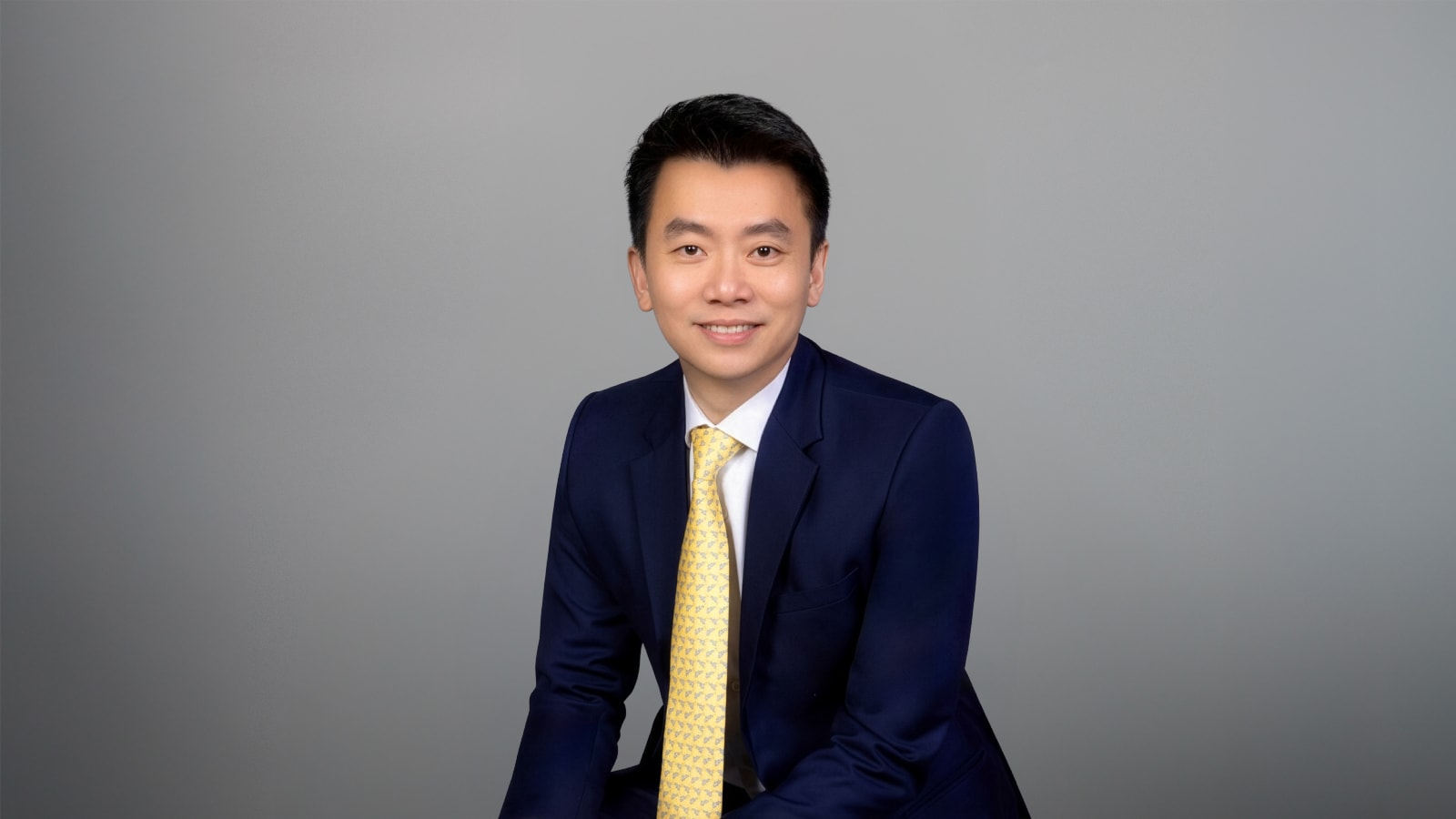
Now, Chan Weng Fai, Deals Partner at PwC Malaysia and Alan Foo, Deals Director at PwC Malaysia turn to Southeast Asia and Malaysia, where the market is nascent. Sharing industry insights and pragmatic lessons is Koo Chwee Sing, Senior Managing Director of Singapore-based private credit investment manager Orion Capital Asia. He has close to two decades of experience in private financing, having spent the majority of his career at Credit Suisse where he was formerly Head of Trading and Risk for its private financing business in Asia Pacific.
This is the final part of the conversation.
Alan Foo: How does Southeast Asia’s private credit landscape compare with the US and Europe, in terms of maturity and lending dynamics?
Chwee Sing: In the US and Europe, private credit is a mature and highly institutionalised asset class. There is deep financial sponsor penetration, relatively standardised deal frameworks, larger deal sizes, and well-developed legal, restructuring, and secondary market infrastructure. In many segments, private credit has become a default financing solution.
Southeast Asia, by contrast, is at an earlier stage and far more fragmented. It is not a single homogeneous market, but a collection of countries at varying stages of development. Unlike the US and Europe, where banks have structurally retreated from higher-risk lending, banks in Southeast Asia remain active across much of the credit spectrum.
As a result, the private credit market in Southeast Asia is less standardised and more relationship-driven. Deal sizes are generally smaller, sponsor-backed activity is more limited, and a significant portion of lending is to founder-owned or family-owned businesses. That introduces additional complexity around governance, transparency, and control.
Within the region, Singapore is the most developed market, with legal and enforcement frameworks comparable to the US and Europe. Domestic banks are however well capitalised and highly competitive, which means there is ample credit availability and, consequently, less private credit activity and tighter returns.
In the rest of Southeast Asia, private credit returns are generally higher, reflecting smaller and less mature underlying businesses, more bespoke structures, greater jurisdictional and governance risks, and the extra effort to originate and monitor transactions. At the same time, enforcement tends to be more nuanced, placing a premium on local legal expertise and active borrower engagement.
Indonesia has historically been the most active private credit market in Southeast Asia, with activity dating back several decades. Earlier investors benefited from a relatively tight domestic bank funding environment. Over the past ten years, however, domestic banks have stepped up meaningfully, which has weakened the risk-return balance for private credit. Activity there also tends to be concentrated in resources and real estate, sectors with higher capital needs but are also more volatile.
Private credit has surged in Vietnam over the past decade, powered by rapid growth, infrastructure build-out, and capital-constraint within the banking system. But the market is still narrow with deal flow concentrated in real estate and a small cohort of large, founder-led groups.
Malaysia, Thailand, and the Philippines generally have strong domestic credit availability, so private credit tends to be more opportunistic in nature—focused on opportunistic credit, special situations, distressed opportunities, or bespoke founder-level transactions, rather than broad-based direct lending.
“Malaysia, Thailand, and the Philippines generally have strong domestic credit availability, so private credit tends to be more opportunistic in nature—focused on opportunistic credit, special situations, distressed opportunities or bespoke founder-level transactions, rather than broad-based direct lending.”
Alan Foo: What needs to develop for the market to deepen?
Chwee Sing: First, greater institutionalisation. More consistent governance standards, reporting, and transparency are critical to making the market scalable and accessible for global capital.
Second, stronger creditor rights and more predictable legal and restructuring frameworks. Faster and clearer enforcement outcomes would materially reduce risk premiums and give lenders greater confidence in downside protection.
Third, the investor base needs to broaden across the risk-return spectrum. Today, much of the capital in Southeast Asia is still focused on higher-yielding risks. For private credit to become more mainstream, there needs to be more capital operating at the lower end of the risk and return curve, in segments closer to traditional bank lending.
Finally, local talent and platforms help. Private credit in Southeast Asia works best when underwriting, monitoring, and workouts are done on the ground. Local presence and experience are critical to navigating legal, cultural, and governance nuances.
Alan Foo: Which industries in Malaysia, would you say, are best suited for private credit solutions today, and what types of transaction would you expect to see more in Malaysia?
Chwee Sing: Private credit works best in industries with stable cash flows, tangible assets, and clear competitive positioning, particularly where borrowers value flexibility and certainty over the lowest possible cost of capital.
From an industry perspective, a few areas stand out.
The sweet spot is consumer staples and essential services, including healthcare, education, and selected consumer sectors, where demand stays resilient through economic cycles.
Infrastructure and infrastructure-adjacent assets are another area of interest, particularly where cash flows are contracted or quasi-contracted. These businesses often require bespoke financing solutions that banks may be less willing to provide at scale or with flexibility.
Given Malaysia’s relatively strong domestic funding liquidity, private credit opportunities tend to concentrate around more leveraged situations, holding-company or founder-level financing, and opportunistic or special-situations credit involving businesses in transition, rather than plain-vanilla lending.
Overall, Malaysia offers a compelling opportunity set for private credit, particularly in the mid-market, where private capital can complement banks by providing flexible, fit-for-purpose solutions.
Field notes from private credit
Weng Fai: Moving on from theory to practice, what are some deals that you have worked on that best illustrate where private credit adds the most value and solve financing problems—and why?
Chwee Sing: One transaction was a holdco-level financing for a data centre platform, where most of the underlying assets were greenfield projects. The assets were too early-stage and the structure too subordinated for traditional bank lending. However, there was underlying value in the form of long-term offtake contracts, which provided visibility on future cash flows and asset value. We were also able to structure around development risk, illustrating how private credit can provide flexibility to bridge early-stage assets into longer-term financing solutions.
Another situation involved providing financing against minority private shares in a power plant asset. The asset was highly cash-flow generative, with predictable dividend distributions, and the shareholders wanted to extract liquidity without selling their stake. A key complication was that the shares could not be pledged as security. We were nevertheless able to structure around this constraint, effectively providing an advance against future dividend streams.
A third example involved delivering a unitranche financing that met the borrower’s entire funding requirement. What made this deal interesting was the structure—the unitranche was structured over a back-to-back senior bank facility and a junior private credit loan. It was a good example of how private credit can work alongside banks, rather than replace them, to deliver a holistic financing solution that met the borrower’s needs.
What ties these deals together is that none of them were about providing plain-vanilla capital. They were about structuring solutions around complexity—whether that meant working alongside banks, underwriting early-stage assets, or navigating structural and legal constraints. That, to me, is where private credit consistently adds the most value.
“What ties these deals together is that none of them were about providing plain-vanilla capital. They were about structuring solutions around complexity—whether that meant working alongside banks, underwriting early-stage assets, or navigating structural and legal constraints. That, to me, is where private credit consistently adds the most value.”
Weng Fai: Looking across the restructurings you led, what were your takeaways on what determined success?
Chwee Sing: One of my biggest takeaways from leading restructurings is that successful outcomes are far more about behaviour than mechanics. Restructuring is ultimately a collaborative process; it requires lenders and borrowers to work together toward a viable solution.
In my experience, how easy or difficult a restructuring becomes depends largely on the borrower’s mindset and conduct. What matters most is what I often think of as a borrower’s ‘willingness to pay’—their willingness to engage constructively, share information transparently, and make real sacrifices alongside lenders.
When shareholders or sponsors are prepared to inject capital, give up control, or meaningfully restructure their economics, it creates alignment and momentum. Conversely, when borrowers try to offload the burden onto creditors while preserving optionality for themselves, restructurings tend to drag on and destroy value.
Closely related to this is the concept of ‘skin in the game.’ How a borrower will behave in a stress situation is often a function of how much it has to lose. Entering a restructuring with an adequate equity buffer or meaningful recourse can materially improve outcomes.
Another key determinant of success is early engagement. Situations where issues are addressed early—before liquidity is exhausted and trust has broken down—tend to have far better outcomes than those where action is delayed.
Ultimately, the most successful restructurings I’ve been involved in are those where there is realistic recognition of the problem, shared ownership of the solution, and alignment on preserving long-term value, rather than simply negotiating short-term relief.
Weng Fai: What’s your approach on enforcement that you’d share with the readers? Is there anything you think is important?
Chwee Sing: My approach to enforcement is grounded in a simple principle: enforcement is a tool, not an objective. Wherever possible, I aim to resolve situations through a consensual restructuring, asset disposal, or sale of the business, because that typically preserves more value for all stakeholders.
This is particularly important in transactions involving emerging markets, where legal frameworks, timelines, and enforcement outcomes can be uncertain. In those situations, alignment with the borrower and other stakeholders is often more effective than immediately resorting to legal action.
That said, decisiveness and preparedness are also critical. When a situation deteriorates fast, you need to move quickly and credibly. Delays destroy value, and reluctance to enforce can signal a lack of resolve.
One example that stays with me involved a share-backed loan secured against a listed company. When news of fraud broke, the share price gapped down sharply, and loan-to-value triggers were materially breached. We immediately started the process to dispose of the shares. We were able to do that because we were well prepared for it. That prompt action led the borrower to inject cash and fully repay the loan. In the months that followed, the shares lost most of their value.
The key takeaway for me is that successful cross-border enforcement starts well before any default—with clear documentation, enforceable security, realistic assumptions about jurisdictional risk, and the operational readiness to act when needed. When those elements are in place, you have both the credibility to pursue consensual outcomes and the ability to enforce decisively if required.
As with all capital, virtue lies in discernment
By the end of the conversation, Chwee Sing returned, almost austerely, to first principles. Private credit, he suggested, should not be romanticised as a clever financial workaround, but understood as one instrument within a larger architecture of capital.
For founders and CFOs, the starting point is not, “Can I get this financing?” but rather, “Is this the right form of money for my business?” Private credit is rarely the cheapest form of capital. If the business cannot earn more on its capital than it pays for credit, private credit will, in time, destroy value rather than create it.
“There must be a credible and executable plan to refinance, deleverage, or monetise assets. One of the most common pitfalls I see is borrowers taking on very expensive private credit with no clear exit plans.” Chwee Sing noted.
Equally important is alignment and transparency. Private credit, he said, works best when lenders are treated as long-term partners rather than a source of last-resort capital—when borrowers are candid about risks, constraints, and trade-offs.
Private credit is neither cure-all nor culprit. It is a powerful tool capable of supporting growth and ambition, but in the absence of a clear strategy, it can magnify strain and erode shareholder value.
“Being disciplined about cost and exit is ultimately what makes the difference for borrowers,” he concluded.
The views and opinions expressed by interviewees are their own and do not necessarily reflect those of PwC Malaysia. The content and people information presented are accurate as of the time of publication.