









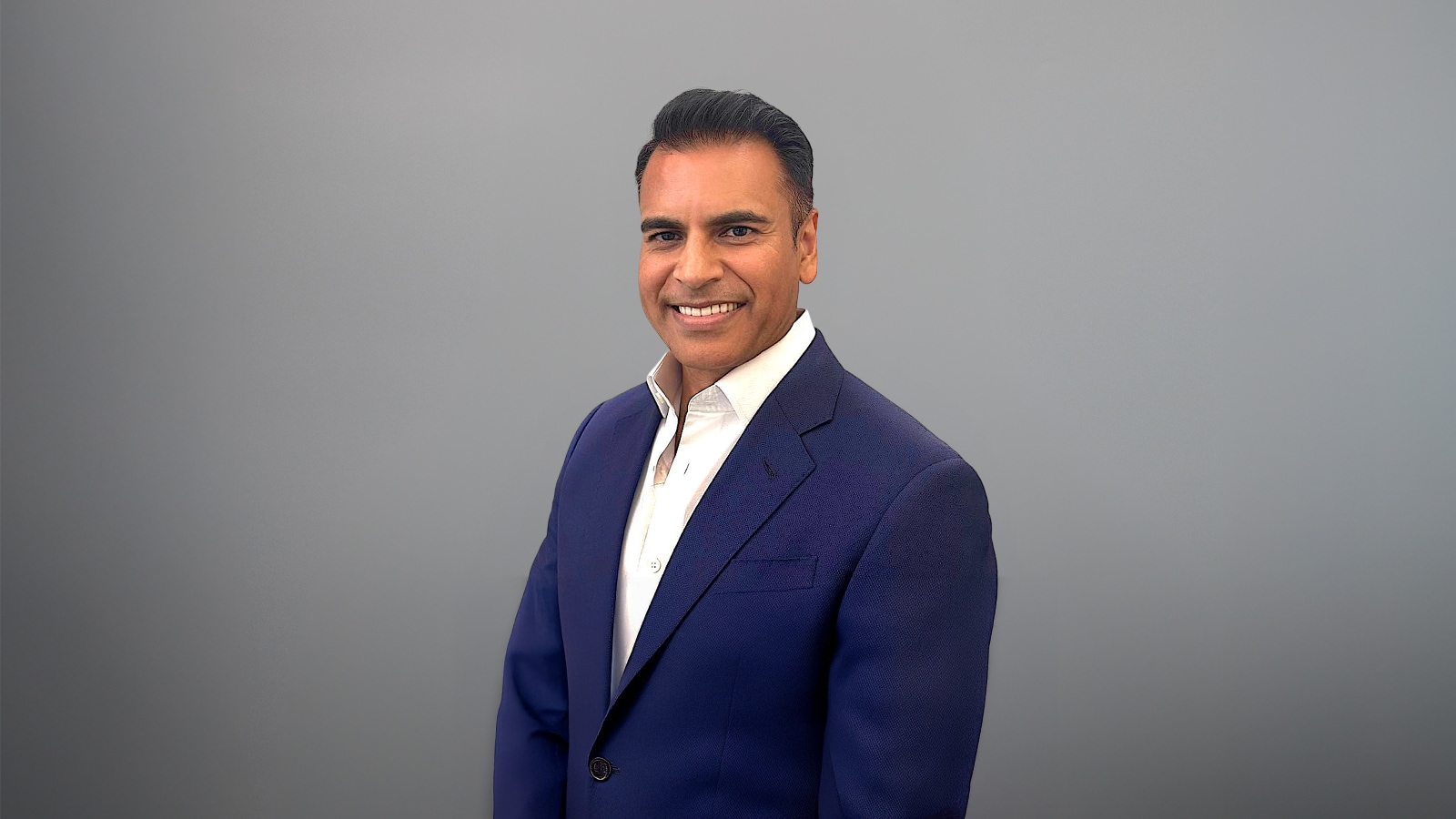
So, what happens? Who acquires these debts? To understand how NPLs are managed, Chan Weng Fai, Deals Partner of PwC Malaysia, spoke to Ibrahim Hussain, Chief Executive Officer (CEO) of Aiqon Capital to unravel the operational intricacies of a company adept at acquiring NPLs and their continued journey to build trust.
Chan Weng Fai: How can banks benefit from disposing of their NPL portfolios?
Ibrahim Hussain: Disposing of NPL portfolios can provide several key benefits for banks. First, it improves financial health by reducing the burden of toxic assets, thus enhancing balance sheet strength. This in turn can lead to a more favourable risk-weighted capital asset ratio. The second important benefit is the earlier realisation of liquidity; by selling these NPL portfolios, the banks receive liquidity immediately instead of having to wait years to go through the normal recovery process. This process frees up capital that can be reinvested in productive assets or used for lending purposes, which can generate positive returns.
Stable levels of liquidity and adequacy of capital are essential pillars of banking. This was evident in Spain and many of the banks in Europe and US after the Global Financial Crisis (GFC), that was purely liquidity and capital crisis. Capital was a big issue for all the banks and the central banks, and much like the Asian Financial Crisis, it was a mandated position that the banks have to sell their toxic debt.
That strategy was designed to instil maturity in the market, dissipate panic from the financial system and empower banks to resume lending confidently. It serves as a powerful catalyst for reinforcing capital and ensuring stability during a steep crisis, like the unprecedented challenges posed by the Covid-19 pandemic, ultimately creating a win-win situation for economic resilience and recovery.
The disposal of NPL assets has a significant positive impact on operational efficiency. The resources spent on managing and collecting NPLs can be redirected towards core banking activities. This allows banks to focus on growth and customer service.
Beyond liquidity and operational efficiency, disposing of NPLs positively impacts a bank’s reputation. It signals to investors and customers that the bank is proactively managing risk and focusing on sustainable growth. It also enhances a bank’s compliance to regulatory requirements. Healthy asset quality lowers the risk of capital shortfalls and regulatory scrutiny.
Debt’s delayed reckoning
Chan Weng Fai: Have you noticed any significant changes in how NPL transactions are being conducted before and after the Covid-19 pandemic?
Ibrahim Hussain: Actually, nothing of great significance. During Covid, the perception and consensus view held by many was that there would be a steep rise in NPLs. After all, nobody had experienced such an event in recent times. With extreme lockdown restrictions, and its resultant effect on the general economy, it would not be unreasonable to assume that this would result in many businesses collapsing—resulting in extremely high rates of NPLs.
But what we did not anticipate was the massive injection of liquidity into the system from banks, moratoriums and government subsidies. In fact, there was more liquidity in the system than before Covid. Once the economy began to recover, we faced a different challenge: inflation. With rising inflation, interest rates started to pick up. The abrupt shift from low-interest rates during Covid posed a greater challenge.
A noteworthy observation is that any crisis or any such substantial change usually takes about 24 months before its impacts are felt on main street. We’re now seeing this in places like the UK and Europe, where prices have gone up and disposable income has shrunk. The first response from people is to cut back on spending—things like credit cards and hire purchase (HP) bills.
To compound the situation, the recent tariff situation implemented by the US and its potential economic fallout has placed a greater emphasis on global inflation and may negatively impact global growth.
In an environment where household costs are increasing, consumers start to suffer, unemployment goes up and the economy shrinks—that is something that will certainly impact the industry. This could be felt by banks in the form of increasing NPLs, lower recovery rates and possibly a greater incentive to expedite NPL sales.
Chan Weng Fai: Do you anticipate any changes in the Malaysian NPL market in the next 12 to 24 months?
Ibrahim Hussain: Historically, Malaysia would certainly not be seen as a market in which there is a high frequency of NPL sales. The typical product mix that is favoured by banks in debt sales is credit card, hire purchase and personal loan. It is rare to see the sale of secured mortgage or corporate loans as these assets have a much larger impact on balance sheets. Although there has been a slight increase in the number of NPL sales over the past year or so, we do not anticipate any substantial uptick in activity within the next 24 months.
Chan Weng Fai: Bank Negara Malaysia (BNM) issued a policy document on disposal and purchase of impaired loans and financing in June 2024. What has the impact been to your business?
Ibrahim Hussain: I think the most consequential element of the policy document was to allow 100% foreign ownership of companies that acquire NPLs. Under the new guidelines, there is no longer the requirement of 51% local ownership—it’s 100% open to foreign ownership. The objective of this policy change was to encourage more transactions across the entire suite of loan products—corporate, secured and unsecured loans, and the development of a more mature market. The thinking being that large foreign funds would be able to deploy greater capital and potentially bring best practices to the industry.
However, we don’t quite see that yet, for multiple reasons. One is that for foreign funds to enter the market, they will need a very mature debt collection environment, as they typically won’t have servicing capabilities themselves. Another issue is the ability to deploy sufficient capital. As I highlighted earlier, the Malaysian NPL market is not typically regarded as one in which there is a high frequency of debt sales or large ticket sales. It’s a very positive move yes, and we’re very happy that BNM have taken this step, but there is going to be a time lag before the structures are in place for foreign funds to enter the market in a meaningful way.
Furthermore, the realm of compliance has undergone a profound transformation, evolving into a considerably more stringent framework than ever before. Banks are now required to adhere to rigorous due diligence practices before executing the sale of NPLs—a crucial and positive advancement that fortifies financial stability. This heightened compliance acts as a robust safeguard, ensuring transactions involving NPLs are conducted with unparalleled scrutiny and accountability, ultimately cultivating a healthier and more resilient financial ecosystem. These enhanced diligence processes are pivotal in driving transparency, mitigating risk and reinforcing trust within the industry and among consumers—essential pillars for the prudent management of financial assets and liabilities in today's dynamic economic landscape.
Inside the mechanics of a sale
Chan Weng Fai: Capital management is a big agenda for all the banks. Can you provide some insights on how does a typical process look like when you deal with banks?
Ibrahim Hussain: A typical debt sale process commences with the issuance of an Information Memorandum by a bank to seek interest from selected buyers. Once interest has been gauged, a non-disclosure agreement is executed after which the bank will provide an anonymised data tape of the loan products for sale. This data tape will provide basic details of the customers data such as location, age, default history, payment history, legal status, collateral information for those products which have security instruments. In addition to the data tape, the bank may also provide a draft copy of the Sales and Purchase Agreement (SPA).
The buyer will then use this data and any internal data points it may have to assess the future recoverability of these loan products and the related recovery costs. These parameters as well as the terms and conditions of the SPA are used in a pricing model to estimate the value and hence the price, to be offered for a portfolio. This estimate is then presented to the bank for evaluation. The bank will review the bid submitted as well as the buyer’s track record, compliance history, SPA mark up and degree of certainty of completion to select the final bidder.
The SPA is then submitted to BNM for final approval together with regulatory submissions by both the buyer and the seller. Once BNM approves the sale, the process moves to the High Court of Malaya in order to legally vest the assets from the seller to the buyer. It is a regulatory requirement that post-High Court vesting, the customers are informed of the debt sale by both the seller and buyer via a 'Hello and Goodbye' letter. This letter informs the customer of the details of the sale, introduction to the buyer and how to make any future payments together with contact details of the buyer. It is also a regulatory requirement to publish the vesting order in two national newspapers to ensure full transparency.
Typically, post-sale, a joint help desk is set up by both the bank and buyer to assist customers with any enquiries or complaints.
Data and tech-driven precision in pricing and recovery
Chan Weng Fai: You mentioned due diligence multiple times. How important is it in this business? Do you use any data analytics tool or is it more intuition and acumen when assessing portfolios?
Ibrahim Hussain: Intuition? That’s very risky. Data is critical. We start by looking at the data that we receive from the bank, which sometimes can be quite scant. This data tape is anonymised and only a limited amount of information is typically provided. We perform a complete segmentation and stratification of the data based on demographics, loan characteristics, default dates, customer age and location, legal status, collateral details, if any, gender and employment status etc. This data is then overlayed with internal data points and input into our proprietary pricing model, Aiqon Valuation Model. This model utilises a proprietary algorithm, developed over the years, to estimate the future recovery rate of the portfolio under review.
This recovery estimate is then refined to take into account economic factors like inflation, interest rates, fiscal and monetary policies, and even geopolitical issues—anything that may affect the disposable income of the consumer. All of that gives us a collection to life.
Then we assess the operational costs required for the recovery process. This may include call centre costs, field visit, legal costs and possibly outsourcing costs.
Once the net cash flow is obtained, a discount factor is applied to estimate the value of the portfolio.
In the initial years, we used data and some element of intuition since we had limited internal data points. However, over the years, we have developed and refined a robust and data-driven approach not only for pricing of portfolios but also for the extensive use of data analytics during the recovery process.
'In the initial years, we used data and some element of intuition since we had limited internal data points. However, over the years, we have developed and refined a robust and data-driven approach not only for pricing of portfolios but also for the extensive use of data analytics during the recovery process.'
Chan Weng Fai: It seems to me that there’s a very well-thought-out, data-driven process.
Ibrahim Hussain: Absolutely, data will be a key driver for the growth of this industry over the coming years. This can now be clearly seen with the global focus on Artificial Intelligence (AI). We have taken our initial steps to deploy AI not only in the pricing of portfolios but also to create efficiencies within the collection process. With the immense data gathered over the years, we are now exploring the use of Large Language Model tools to develop an early-stage AI agentic framework. This strategy will assist to develop and refine the creation of an AI agent that will be capable of performing collection calls in multiple languages and colloquial dialects seamlessly using sentiment analysis. The effective deployment of AI could open a myriad of opportunities in the collection industry.
Chan Weng Fai: What happens in the recovery phase? How do you uplift recovery after acquiring a portfolio?
Ibrahim Hussain: The key differentiator to uplift the recovery profile is again the effective utilisation of data and technology. We have developed a robust campaign management system which is able to segment customers profiles by demographics and various pre-determined parameters. These selected accounts are then matched to recovery agents based on skillsets, age, gender, similar language and temperament.
Once these accounts have been allocated to the respective agents, the activity is monitored by detailed dashboards which measure all key performance indicators of the recovery process. These dashboards are customised based on the various authority levels—from agents, managers to the Portfolio Officers.
When dealing with a high volume of customers and data, it is very important to have a strong monitoring and stratification engine together with a regular feedback loop. Everything comes together through our data engine. It’s much less about human intervention and more about using technology to make informed decisions.
The economics of trust and empathy
Chan Weng Fai: My last question for you would be how do you create trust between Aiqon and the customers who are supposed to pay you? That seems like a challenging part of the process.
Ibrahim Hussain: The creation of trust between Aiqon and its customers is the cornerstone of an effective recovery process and is probably the most challenging aspect. The trust deficit arises right from the beginning of the engagement as the customer transitions from being managed by a bank to the new owner of the debt, which in most cases is an unknown entity to them. As a result, there is an element of understandable scepticism and suspicion of the NPL acquirer. Once Aiqon has been verified by the customer, through either the selling bank or BNM or both, the process of bridging the trust deficit begins.
The key approach to building this trust is through open and honest communications channels. Actively demonstrate empathy and willingness to understand their particular financial circumstances and customise payment plans that work specifically for them. When customers feel respected and understood, they are more likely to honour their debts out of goodwill and desire to maintain the relationship.
The core element of building trust and sustainable relationships is to refine the human engagement between agent and customer. This process involves training of all agents on soft skills, effective negotiation techniques, psychology of conflict de-escalation and emotion management.
Like all relationships, trust takes time to develop and is nurtured with positive actions which serve the interest of all parties.
‘Actively demonstrate empathy and willingness to understand their particular financial circumstances and customise payment plans that work specifically for them. When customers feel respected and understood, they are more likely to honour their debts out of goodwill and desire to maintain the relationship.’
Beyond the mechanics of data and technology lies a more enduring challenging for the debt collection industry: overcoming deep-rooted mistrust. ‘Unfortunately, we’re in an industry where people think they’ve gotten away with not paying debts,’ Ibrahim notes. ‘But we’re here to remind them otherwise.’
He envisions an evolution towards higher ethical standards and a more robust moral framework within the industry. Such a shift would necessitate coordination across various bodies and regulators to recast debt collection as a legitimate business, far from the notorious reputation of loan sharks.
‘If it is any consolation, we have the same reputation everywhere in the world. I think anyone who’s in this line of work have the same troubles.’ Still, he holds out hope that, over time, these efforts will chip away at the negative perceptions, allowing the sector to earn greater trust and respect.
The views and opinions expressed by interviewees are their own and do not necessarily reflect those of PwC Malaysia.