

Hungarian CEOs are facing both growing short-term threats and the ongoing pressure of technological transformation, which requires a long-term, strategic focus. While they remain optimistic about the global economic outlook, they are increasingly uncertain about the prospects for Hungarian economic growth. According to PwC’s 15th Hungarian CEO Survey conducted last autumn, Hungarian CEOs spend 60% of their time on issues with a time horizon of less than one year – significantly more than their global counterparts. This leaves less time for business viability, innovation, and AI adoption, long-term strategic issues that are becoming more and more prominent.
Key survey findings

Tyranny of the urgent: Hungarian CEOs spend 60% of their time on issues with a time horizon of less than one year, significantly more than their global peers, which substantially limits their strategic focus.

Revenue optimism at a historic low: Only 31% expect revenue growth over the next 12 months – the lowest figure in the one-and-a-half-decade history of the survey.

Optimistic globally, cautious at home: 71% of Hungarian CEOs are confident about a pick-up in global economic growth, while only 53% consider an acceleration of the Hungarian economy likely.

Strong AI foundations deliver triple the business benefit: Companies operating with stable technological and responsible AI frameworks are three times more likely to achieve measurable financial benefits (e.g. revenue growth: 9% vs. 28%), yet in Hungary only 6% report both revenue and cost improvements attributable to AI.

Regulatory risk as the new number one threat: 51% of executives consider the domestic regulatory environment the greatest risk, ahead of exposure to inflation and macroeconomic volatility (both at 43%).

Technological experimentation comes with slow returns for now: In Hungary, 77% of companies see neither cost reduction nor revenue growth from the use of AI. The technology is primarily applied in demand generation (18%), customer experience (17%), and support functions (12%).

Interested in all the results?
Discover the details of PwC’s 15th Hungarian CEO Survey!
The duality of growth expectations: optimism about the global economy, caution at home
Hungarian CEOs are far more optimistic than their global counterparts about growth prospects for the global economy: 71% are confident about global economic growth, compared to 61% globally, and only 5% expect a slowdown from the previous year. However, the outlook for the Hungarian economy is now more nuanced. Compared to the previous 60%, only 53% expect growth to accelerate this year, which clearly shows a decline in confidence.
Companies’ revenue expectations are also more pessimistic than in previous years: only 31% of Hungarian CEOs anticipate revenue growth over the next 12 months, which is the lowest figure in the survey’s fifteen-year history. However, the three-year revenue growth outlook is more optimistic, with 48% of Hungarian CEOs and 49% of global CEOs expressing greater confidence.

The regulatory environment emerges as a top concern
There has been a shift in how threats are perceived: for the first time since 2023, risk perception among CEOs has increased significantly. This year, the Hungarian regulatory environment topped the list of concerns (51%), ahead of inflation and macroeconomic volatility (both 43%). There was a slight increase in the percentage of respondents worried about geopolitical conflict (37%; up from 36% in last year’s survey), while cyber risks continue to rank as a top threat (37%, compared to 31% globally). The proportion of CEOs concerned about the availability of key skills has decreased significantly (from 44% to 32%), as has the proportion of those concerned about technology disruption (from 35% to 24%).
AI: turning investment into advantage?
The biggest question on CEOs’ minds is whether they are transforming fast enough to keep pace with technological change, including AI. Although we are in the early stages of the AI era, organisations are already deploying AI across the business, but company-wide integration is still limited. In Hungary, CEOs say they are applying AI to a large or very large extent to areas such as demand generation (18%), customer experience (17%), and support services (12%).

“Now that AI has been around for a while, more and more connections are revealed. One of the key findings from this year’s survey is that AI readiness in Hungary has realised limited results. The question is whether we all understand readiness in the same way, and if so, what other reasons might explain the more modest results? We can only speculate at the moment, but exciting findings could emerge in the coming years that will impact the use of AI,”

PwC’s report, Value in Motion is based on data-driven scenario analysis which reveals that AI has the potential to boost global economic output by up to 15 percentage points over the next decade. This would effectively add one percentage point to annual growth rates – on par with the growth increment the world began enjoying with 19th century industrialisation.
Industry transformations
Companies are increasingly recognising that growth requires crossing traditional industry boundaries. Based on data from the past five years, 35% of Hungarian CEOs and 42% of global CEOs are now competing in new sectors. Meanwhile, fears of recession have led to a significantly lower appetite for expansion than is seen globally.
“As the structure of the economy transforms, value will increasingly come from organisations that can connect the dots across traditional industry boundaries. By focusing on evolving customer needs and using technology to dramatically change the way business operates, business leaders can unlock a step change in growth,”

PwC’s research suggests that over the next decade, industries will reconfigure to meet human needs in new ways, leading to the formation of new ‘domains’ that cross traditional sector lines. For example, the rise of electric vehicles is bringing electricity providers, battery manufacturers, tech firms and others into the mobility domain, enabling them to create value alongside automobile manufacturers.
Trust and sustainability: new expectations, shifting priorities
Stakeholder trust has never been easier to lose: cyberattacks, unpredictable geopolitics, rising expectations for transparency, rapidly shifting attitudes on sustainability – all factors that place a new kind of responsibility on companies. Then there’s AI, a cause for excitement and anxiety in equal measure among investors, customers, and employees.

Sustainability reporting became mandatory in 2025 under the EU’s Corporate Sustainability Reporting Directive (CSRD). However, the EU has since reduced the number of entities covered by the CSRD and simplified the requirements. Where is sustainability reporting heading, and how can it become an efficient, repeatable and auditable process?
Eased ESG obligations, extended deadlines and a narrower group of stakeholders, while many companies are rolling back their commitments. Is this the end of ambitious climate targets?
Key issues
When asked about what concerns them most, CEOs’ responses were unanimous: in Hungary (32%) and globally (42%), the top concern was whether they are transforming fast enough to keep up with the scope and pace of technological change, including AI. The medium- and long-term viability of their business, along with its innovation capability, are also crucial to CEOs.

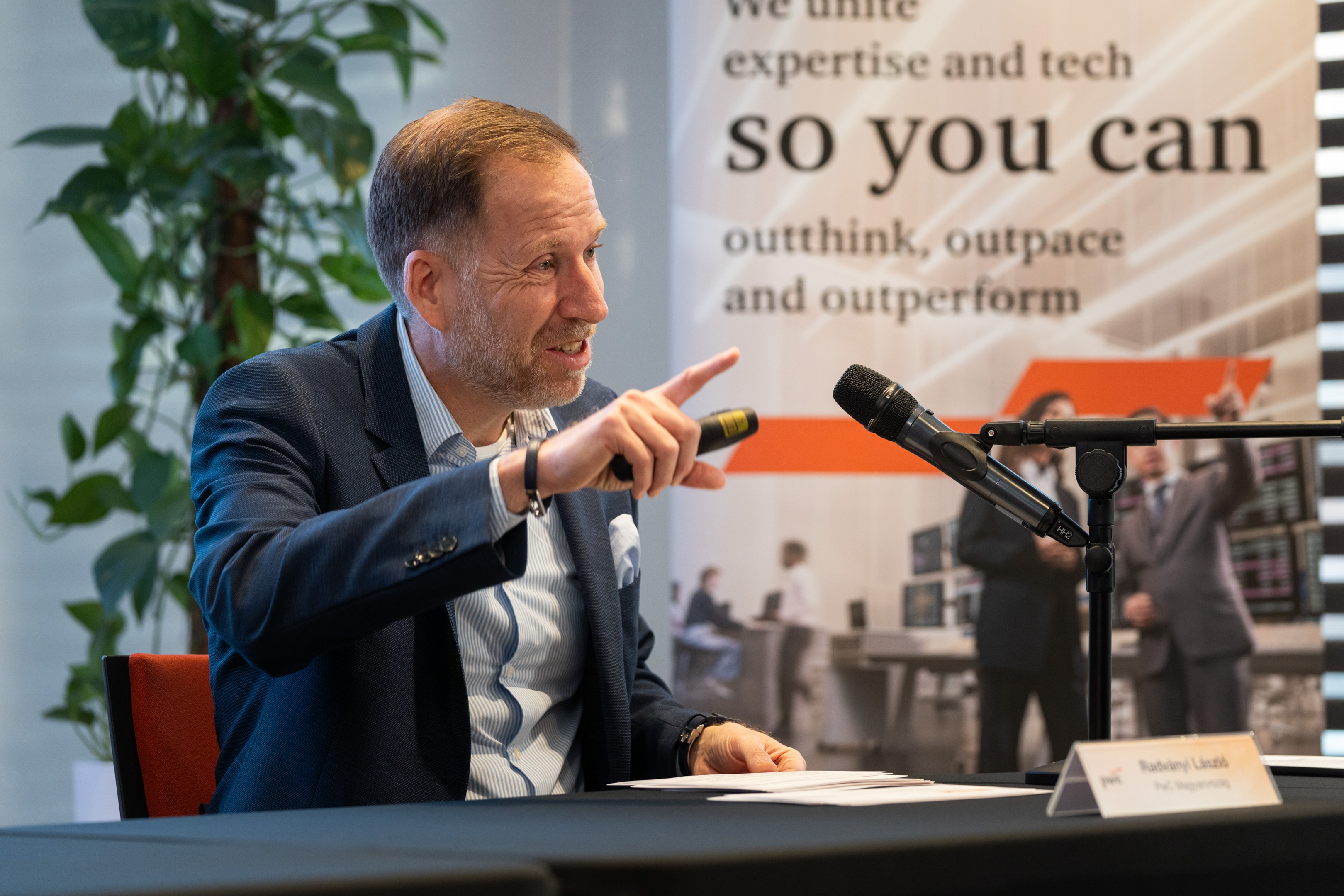


Technological transformation is the main imperative for Hungarian CEOs
Read our press release
Discover the details of PwC’s 15th Hungarian CEO Survey!
Download the full report


