
PwC's response to Singapore Budget 2026
Our leaders’ immediate response to Singapore Budget 2026 measures
AI
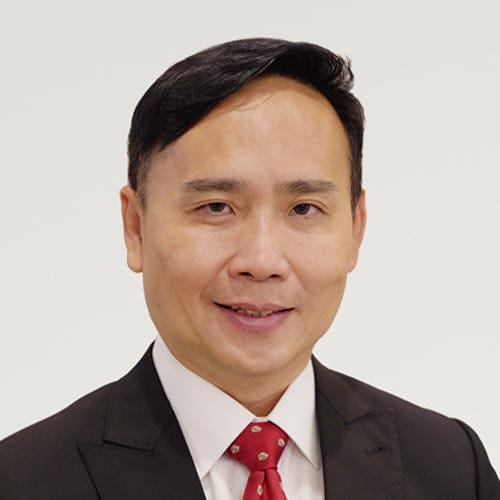
Lennon Lee
Tax Leader, PwC Singapore
"To harness the potential of AI, the Singapore Government is supporting local businesses to defray costs of adopting AI by offering 400% tax deductions on qualifying AI expenditure capped at $50,000 through the Enterprise Innovation Scheme. While this is done to further the national AI agenda by getting local enterprises to explore the deployment of AI in their businesses, more clarity is needed on what constitutes “qualifying AI expenditure” to avoid abuse in making tax deduction claims."

Anthony Dias
AI Hub Leader, PwC Singapore
"Singapore’s continued early bet on frontier technologies, exemplified by hosting the latest quantum computer by Quantinuum and collaborations with global experts in quantum research, demonstrates a strategic commitment to technological leadership. This quantum initiative not only enhances Singapore’s innovation ecosystem, but also complements its AI ambitions by laying the groundwork for next-generation AI research and computational capabilities."
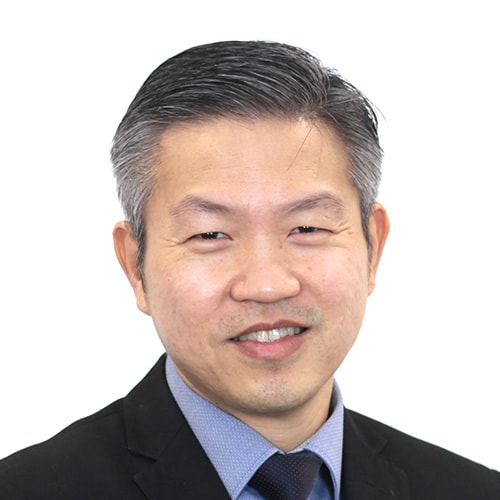
Kwek SoCheer
Partner, Digital Solutions, PwC Singapore
"This year’s Budget recognises the need to support Singapore businesses to adopt AI in a more targeted way, with initiatives such as the Champions of AI Programme for relatively mature enterprises and the Enterprise Innovation Schemes for those in the early stages of their AI journey."
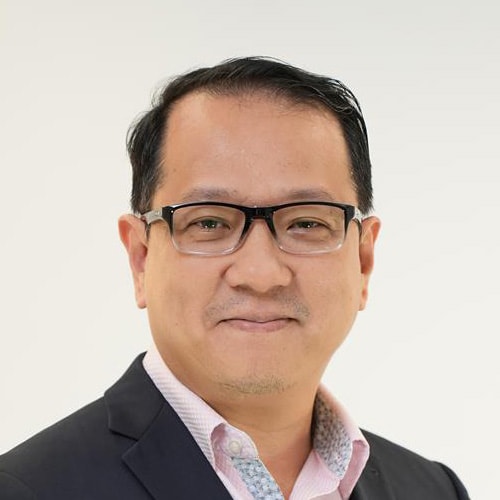
Tan Tay Lek
Tax Partner, PwC Singapore
"The expansion of the EIS to include further deductions for qualifying AI expenses should encourage businesses to seriously evaluate AI adoption in their operations, if they have not already started. $50,000 is a meaningful amount, particularly to smaller businesses, to help kickstart their AI journey."

Lim Kexin
Partner, Corporate Tax, PwC Singapore
"It is encouraging to see how the Government has practically segregated its AI strategy for the workforce, students, everyday Singaporeans and businesses, to better diffuse AI into daily life. Adding on this, continued growth of initiatives like LorongAI, a uniquely Singapore-style community aggregating Government, industry and research in collaboration, alongside the new AI Hub serves as a beacon of inspiration to further propel Singaporeans forward in our AI journey."
Kwek SoCheer
Partner, Digital Solutions, PwC Singapore
"Expanding the Productivity Solutions Grant (PSG) to include a wider range of AI and AI-enabled tools will help defray the costs relating to adopting AI. This expanded list will need to be refreshed regularly, given how fast technology advances now."
Kwek SoCheer
Partner, Digital Solutions, PwC Singapore
"The National AI Council will transform the Singapore economy and the priority sectors of Advanced Manufacturing, Connectivity & Logistics, Finance, and Healthcare which in turn will lead to the transformation of adjacent sectors as well. Thus, businesses not directly in these priority sectors can expect to be pulled along in this transformation journey."

Trillion So
Transport and Logistics Leader, PwC Singapore
"I'm heartened to know that Connectivity & Logistics is one of four sectors that the new National Artificial Intelligence (AI) Council chaired by PM Lawrence Wong will focus on. It shows the importance of our Transportation & Logistics (T&L) sector to Singapore and that there are productivity and effectiveness benefits to be harnessed. I would like to encourage the T&L sector to embrace AI holistically, tapping on grants such as the EIS and PSG to kick start its AI journey."
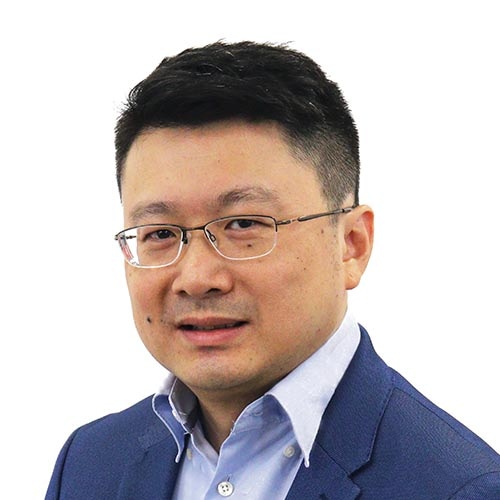
Charles Loh
Singapore Consulting Leader, PwC South East Asia Consulting
"The announcement of a new set of national AI missions across four key sectors intrinsic to Singapore’s success — advanced manufacturing, connectivity, finance and healthcare — is a courageous and calculated move by the Government to shift the narrative from AI pilots to practical and sustainable digital transformation. Coupled with robust regulatory and governance frameworks, Singapore is pressing ahead with efforts to define its own unique AI journey for our economy and society, powered by AI-powered business model reinvention."

Parul Munshi
Asia Pacific Workforce Leader, PwC South East Asia Consulting
"The government's move to pair AI training with six months of premium tool access represents a strategically significant step in accelerating the nation’s transition into an AI‑enabled economy. By giving Singaporeans hands‑on exposure to advanced models—tools that usually require paid subscriptions—they can practise, experiment and truly apply what they learn, becoming AI‑fluent rather than AI‑dependent. This is exactly the kind of practical capability building that will strengthen employability and position Singapore as a global testbed for responsible and efficient AI integration.”
Workforce transformation
Lennon Lee
Tax Leader, PwC Singapore
"Increasing the minimum qualifying salary for new applicants for Employment Pass and S Pass for foreign workers in 2027, coupled with potential higher work permit levies, can result in higher operating costs for some segments of the economy that rely heavily on foreign workers, including service, F&B and the retail industry. Given the tight local labour market, a key question is whether these businesses will eventually have to passon the higher costs to consumers?"

Ding Suk Peng
Workforce Tax Leader, PwC Singapore
"Singapore’s timely push to make AI upskilling accessible can translate learning into on-the-job productivity by pairing clearer SkillsFuture pathways with six months of premium tool access, strengthening the nation’s talent pool and SME capabilities. To optimise impact, Singapore should set measurable outcomes, enable mentorship and build communities of practice, and provide targeted SME support, underpinned by data, IP, and Responsible AI guardrails."
Kwek SoCheer
Partner, Digital Solutions, PwC Singapore
"The acknowledgement of workers’ anxieties due to AI transformation is reassuring. A redesigned SkillsFuture site that makes AI courses easier to access, as well as a free six-month subscription to premium AI tools after the training, is a good start. This new design will be very important and, beyond being simple to use, should ideally include an element of personalisation to guide the worker in his/her personal AI upskilling journey."
Ding Suk Peng
Workforce Tax Leader, PwC Singapore
"The increase in Local Qualifying Salary to S$1,800 is a direct boost for lower income Singaporeans and ties firms’ access to foreign manpower to fairer pay for locals. By strengthening this wage floor, employers are nudged to redesign roles, invest in basic productivity tools, and offer more predictable hours so that entry level work is dignified and sustainable."
Kwek SoCheer
Partner, Digital Solutions, PwC Singapore
"Whilst strengthening AI literacy in Institutes of Higher Learning (IHLs) is important, pairing this initiative with internships programmes in enterprises will be critical to ensure that the literacy is grounded in practical applications and tangible outcomes."
Martijn Schouten
Workforce Transformation Leader, PwC South East Asia Consulting
"The merging of SkillsFuture Singapore and Workforce Singapore as a single entity offers a stronger and more coordinated approach for the Government to tackle head-on the immense challenges of job restructuring, upskilling and future proofing the city state's jobs-skills ecosystem. Jobs and skills are inalienable components in today's world of work; this move will enable a singular agency to focus on fortifying Singapore's workforce transformation policies to build a future-ready labour force."
Enhancing Equity and Capital market
Startup SG Equity Scheme, Anchor Fund, Financial Sector Development

Patrick Yeo
Markets Leader, PwC Singapore
"Ramping up support to not just early-stage startups, but also growth-stage companies, helps to increase the probability of Singapore enterprises becoming world beaters. Positioning Singapore as the leading centre for growth capital can create a virtuous cycle: more enterprises based here succeed and scale, in turn increasing the demand for public listings in Singapore."
Paul Pak
Asia Pacific Asset and Wealth Management Leader, PwC Singapore
"The government’s S$1.5 billion expansion of the Equity Market Development Programme is very welcome news for the asset management industry. It will meaningfully strengthen the development of the local ecosystem, and as Singapore’s capital markets continue to deepen, it will create clearer exit pathways for private markets participants in the years ahead. Taken together, these measures further reinforce Singapore’s position as a leading global asset and wealth management hub."
David Toh
Entrepreneurial and Private Business Leader, PwC Singapore
"Many SMEs will welcome the move away from pre‑fixed solution bundles, as the added flexibility better reflects sector‑specific realities and varying levels of SME maturity. From an SME’s perspective, the enhanced PSG represents a meaningful upgrade in both intent and impact. However, this flexibility also raises expectations—SMEs must now make smarter, more deliberate choices. Ultimately, the enhancements send a strong signal of commitment, but they will favour SMEs that are focused, disciplined, and strategic in their transformation approach."
Jimmy Seet
Capital Markets Partner, PwC Singapore
"The latest budget initiatives, including the $1.5 billion infusion into both the Anchor Fund and Financial Sector Development Fund, signal a strong government commitment to invigorate the equities market. Together with the other measures from the Equity Market Review Group, institutional participation is set to rise, creating attractive opportunities for companies eyeing IPOs. Businesses with capital markets ambitions should seize this moment by strengthening governance and investor relations, and ensuring market readiness. This alignment will not only facilitates successful market entry, but also enhances the overall vitality of Singapore's capital markets."
Lim Kexin
Partner, Corporate Tax, PwC Singapore
"Significant injection of an additional $1billion into Startup SG Equity is a strong signal of Singapore’s commitment to nurturing innovation through times of disruption and uncertainty. By extending support beyond early‑stage ventures to include growth‑stage companies alongside Singapore's current schemes to attract high quality entrepreneurs, the scheme strengthens the startup pipeline and reinforces Singapore’s position as a leading hub for scale‑up capital."

Girish Sahajwalla
Southeast Asia Corporate Finance Leader, PwC Singapore
"Budget 2026 signals a deliberate shift from funding start‑ups to engineering a full capital‑formation lifecycle in Singapore. By expanding Startup SG Equity to cover both early‑stage and growth‑stage companies, strengthening the Anchor Fund and EQDP for pre‑IPO and public‑equity investment, and streamlining SGX listings alongside the SGX–Nasdaq bridge, the Government is not just supporting innovation – it is systematically building an end‑to‑end pipeline from venture creation to global capital‑markets access.
The effect is two‑fold. First, SGX becomes a more attractive venue for listings and investor participation, giving retail investors better access to Singapore and regional champions and reinforcing IPOs as a core pathway for PE and VC exits. Second, founders and corporates gain access to a deeper, more integrated pool of capital across private and public markets. Overall, this materially enhances Singapore’s positioning as a regional listing hub while deepening its enterprise ecosystem and long‑term value creation."

Tan Si Ying
Partner, Corporate Tax, PwC Singapore
"The adjustment to the Corporate Income Tax Rebate with the maximum rebate lowered to $30,000 and minimum benefit reduced to $1,500 is a clear manifestation of this Budget’s pivot to more deliberate channelling of resources towards targeted, strategic priorities."
Internationalisation, trade and attracting foreign MNCs
David Toh
Entrepreneurial and Private Business Leader, PwC Singapore
"From an SME point of view, the internationalisation grant enhancements are likely to be seen as timely, pragmatic, and confidence‑boosting. They lower financial and execution barriers, encourage longer‑term commitment to overseas markets, and recognise the realities SMEs face when competing internationally. In doing so, they position international growth as a viable next step for a broader base of Singapore enterprises."

Frank Debets
Asia Pacific Customs and Trade Leader, PwC Singapore
"Although it is heartening to hear that the Singapore government will continue to enter into new trade agreements of all kinds – goods, services, digital, and so on – the inevitable patchwork of smaller and narrower agreements may make it even harder for Singapore’s exporters of goods and services to navigate them efficiently and effectively. Harnessing appropriate technology to identify and select the best new trade corridors to pursue will distinguish the champions from the also-rans."
Frank Debets
Asia Pacific Customs and Trade Leader, PwC Singapore
"Expanding the Market Readiness Assistance (MRA) grant to support Singapore companies to grow in overseas markets where they are already active, rather than only in markets new to them, should lead to a higher take-up rate. Expanding it further to companies that only operate within Singapore but support other companies that export from Singapore could potentially have an even bigger impact."

Irene Tai
Energy, Utilities and Resources, Transport and Logistics Tax Leader, PwC Singapore
"Traditionally, EDB has used tax incentives with stringent eligibility criteria to attract foreign MNCs to set up operations in Singapore. Attracting high-growth companies early in their growth trajectory will require a different approach, and it is hoped that EDB will tweak its incentive toolkit to better cater to their specific situations."
Irene Tai
Energy, Utilities and Resources, Transport and Logistics Tax Leader, PwC Singapore
"In the past, businesses may not have been sufficiently motivated to utilise the Double Tax Deduction for Internationalisation scheme, given the administrative efforts needed to maintain documentation to support the claim. With the raising of the cap to S$400,000 and the broadening of qualifying activities for automatic deduction claims, hopefully more businesses will be motivated to leverage this scheme. Businesses can also consider the use of AI to help manage the administrative and documentation efforts."
Tan Si Ying
Partner, Corporate Tax, PwC Singapore
"The Government’s move to broaden the scope of qualifying activities under the Double Tax Deduction for Internationalisation Scheme and raise the automatic deduction cap to $400,000 is a strong signal that Singapore is strategically empowering businesses to compete on the global stage. By reducing the tax burden on crucial market expansion, this enhancement will help domestic firms, especially SMEs, absorb upfront costs and gain confidence to chart more ambitious international growth trajectories in an increasingly competitive world."
ESG

Bing Yi Lee
Financial Services Assurance, Sustainability and Climate Change Partner, PwC Singapore
"Budget 2026 sends an unambiguous signal that Singapore's climate commitments are unwavering, but not unrealistic. The emphasis is on tangible solutions and innovation in areas of key national interests such as energy and transport/aviation resilience, paced in line with global realities and calibrated for competitiveness. These messages provide clear policy certainty underpinning long-term decarbonisation investments, and businesses should make use of available support schemes, including the extended Energy Efficiency Grant and Enterprise Financing Scheme – Green (EFS-Green), to build resilience and competitive advantage, in line with Singapore’s long‑term policy direction."
CPF
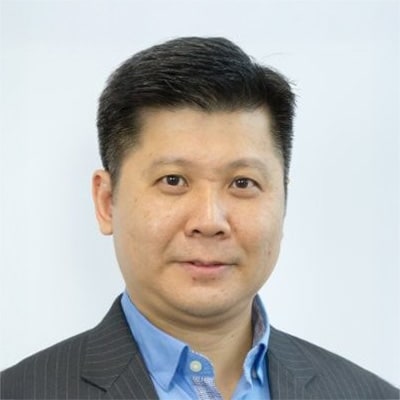
Marcus Kok
Principal Pension Consultant, PwC Asia Actuarial Services, PwC Singapore
"Implementing investment products tailored for CPF members with a higher risk appetite, especially younger members with a longer runway until retirement, is highly welcomed. Since investing is not always a walk in the park, developing life-cycle investment products that keep fees low and are easy to understand are essential to help enable CPF members who wish to manage their own investments."
Tax
Lennon Lee
Tax Leader, PwC Singapore
"While the 40% corporate tax rebate, capped at $30,000 for Year of Assessment 2026, will help cushion rising business costs in Singapore, loss-making businesses would not be able to enjoy the full extent of the rebate and may only claim the minimum benefit of $1,500."
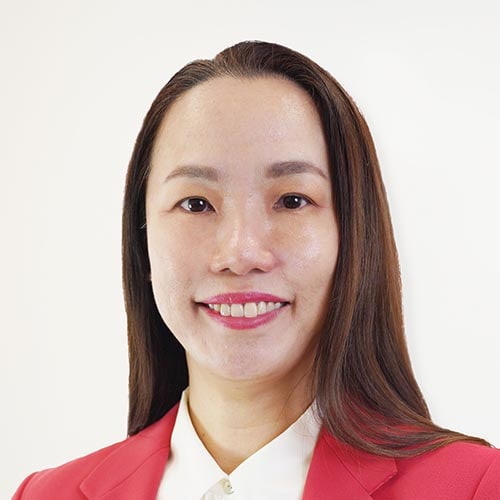
Tan Ching Ne
Pharma and Life Sciences Leader, PwC Singapore
"Exciting news on the expansion of the Enterprise Innovation Scheme to grant 400% tax deduction on up to $50,000 spending on AI adoption. Over two years, this would mean a sizeable $400,000 in tax deductions. Regardless of their size, businesses should seize this window to start their AI journey."
Contact us
Marcus Lam
Executive Chairman, PwC Singapore
Patrick Yeo
Girish Sahajwalla
Anthony Dias
Paul Pak
Irene Tai
Tan Ching Ne
Marcus Kok
Jimmy Seet
Singapore Budget 2026
Visit our Budget page for the latest analysis and insights.


