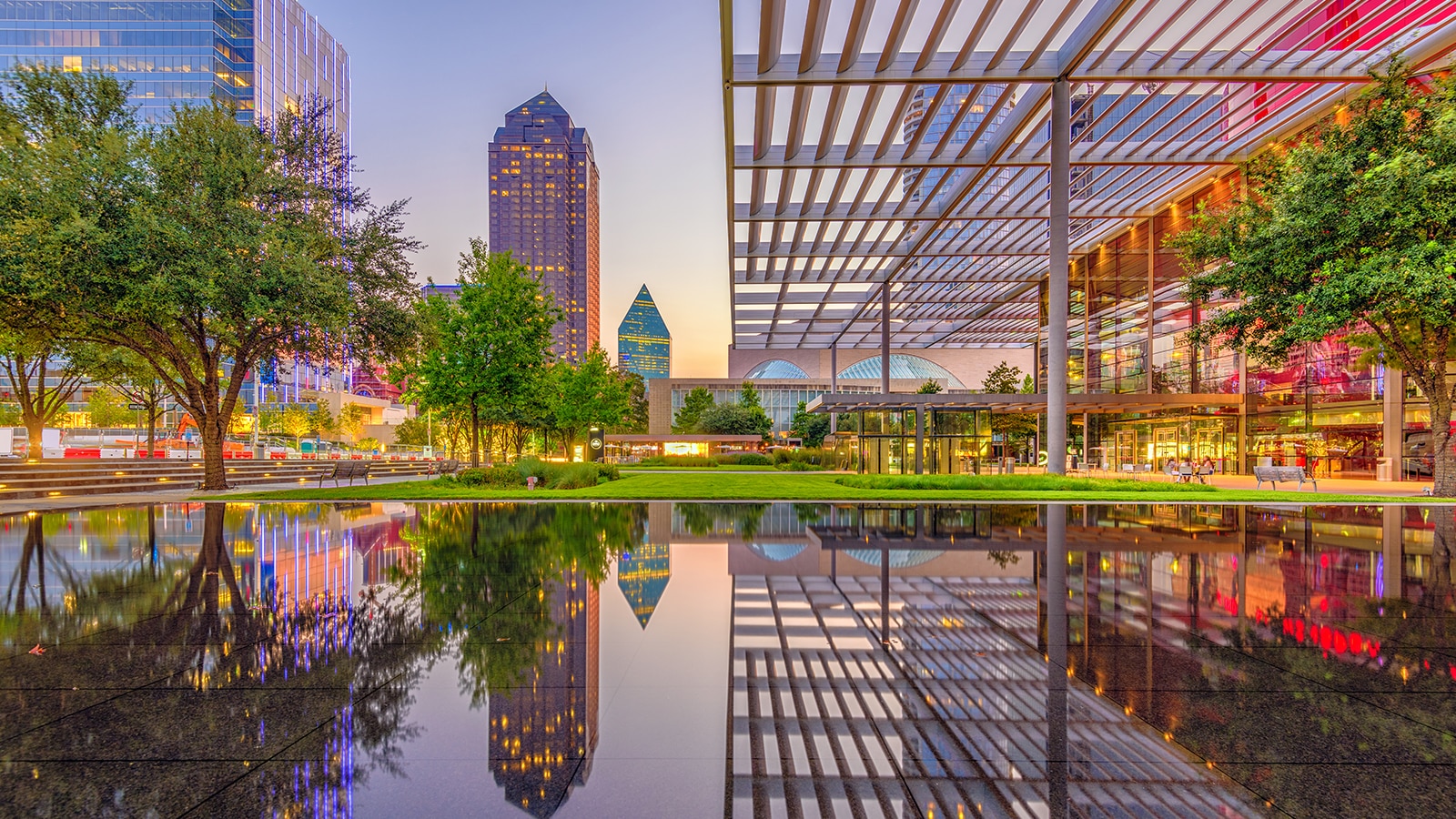
It’s no shock that “Bigger in Dallas” remains the top market to watch. The Texas Stock Exchange began trading in July 2026 and completed its rollout by month-end, joining NYSE Texas and Nasdaq Texas. In September, a global financial services firm chose Uptown over suburban Atlanta for a regional hub expected to house 3,800 employees by 2035, while another global investment bank’s campus—equipped for up to 5,000 employees—takes shape nearby for early 2028 delivery. These are operating centers, not satellite offices, and they bring high-wage jobs that require premium space and amenities.
The office sector continues to lead the nation. Class A vacancy remains high at 24.8 percent, but having declined 190 basis points since its 1Q 2025 peak, it started compressing sooner and faster than the nation. Net absorption has been positive for seven straight quarters, totaling 3.8 million square feet, however, additional tailwinds—conversions, demolitions, and user purchases—have allowed the stock to shrink by 7.3 million square feet, removing high-vacancy properties from the market. Top-tier space is tightening fast, especially along the Dallas North Tollway. Class A asking rents sit nearly 25 percent above pre-pandemic levels while top tier rents are 30 percent higher. Construction remains limited, but the pipeline for office has grown each quarter since 3Q 2025.
The office sector isn’t the only one where supply is picking up. From its nadir in 1Q 2025 at 19.9 million square feet, the industrial sector now has 30.6 million square feet underway. Overbuilt periphery submarkets are clearing, which reopens the door for new development. Dallas’s 7.3 percent vacancy rate is down 250 basis points from its post-pandemic peak. Big-box leasing (500,000+ square feet) reached 23.9 million square feet across 30 leases through September, eclipsing the 2023 record of 18.3 million. South Dallas has no available big boxes for the first time in at least a decade, versus 12.6 million square feet in early 2022.
Cushman & Wakefield’s 2026 Global Data Center Market Comparison ranks Dallas as the world’s top primary data center market for the first time. The binding constraint is now power. The Electric Reliability Council of Texas’s large-load queue runs to hundreds of gigawatts, much of it speculative, and new Texas rules put loads above 75 megawatts under curtailment protocols. Meanwhile, infrastructure is keeping pace, with DFW Airport’s Terminal F and Terminal C rebuilds, a multibillion-dollar convention center overhaul, and a $2.5 billion Love Field expansion starting in 2027.
The mixed-use wave extends to the Mavericks and Stars, who are each planning arena-anchored districts—about 104 acres at Valley View and a roughly $1 billion project at Willow Bend, that would redevelop two aging malls. The outlook remains nearly unstoppable as Texas also leads in projected future manufacturing investment, at an estimated $672 billion according to Industrial Sage. The robust socioeconomic environment in the city of 8.5 million people has produced the third best year (through August) of investment sales so far in 2026, behind only 2021 and 2022, and the annualized pace is up 23.2 percent from 2025 levels.
—Cushman & Wakefield


