




.jpg.pwcimage.150.100.jpg)


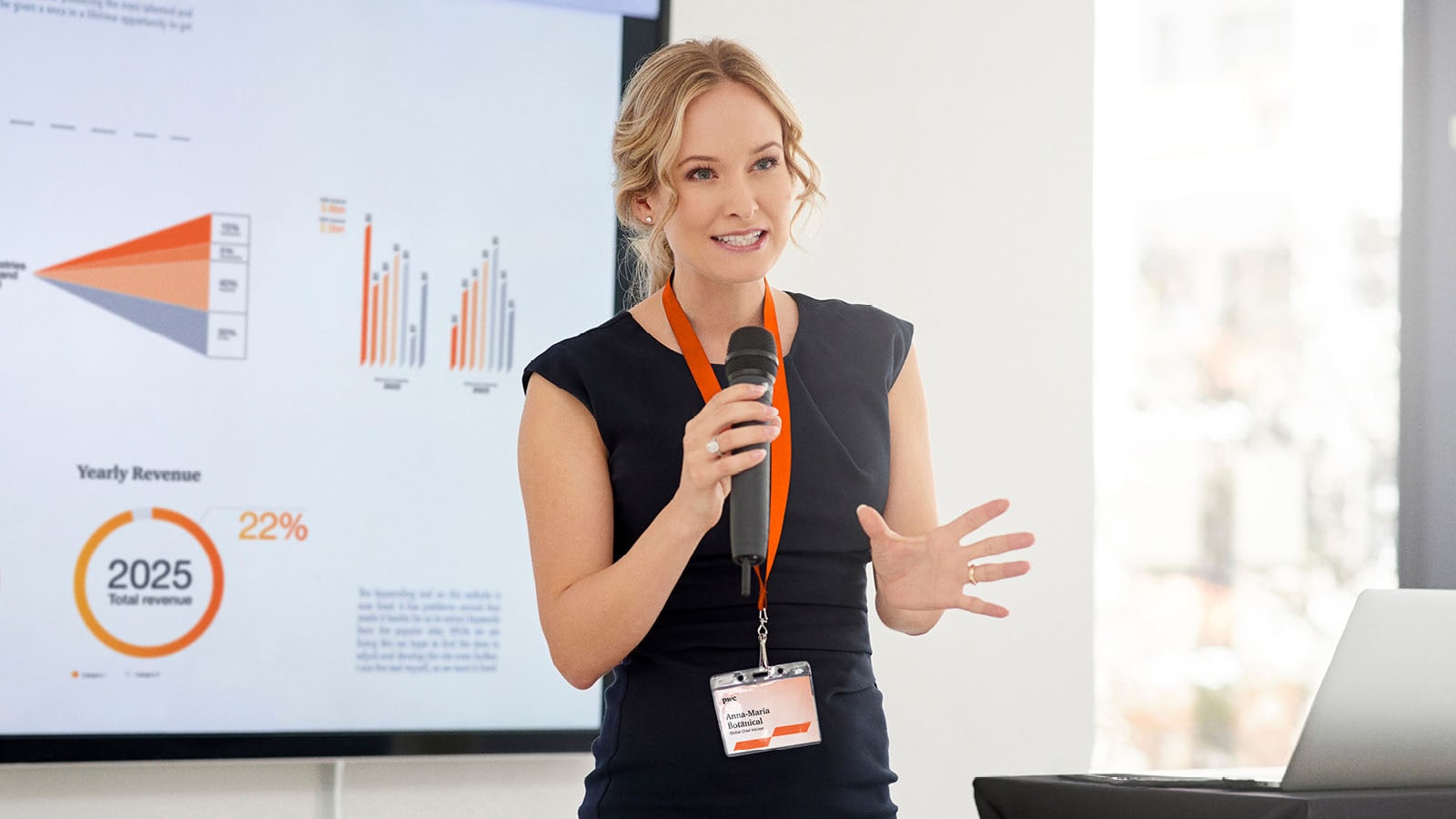
At the recent Manx State of the Nation conference, I had the opportunity to lead a panel on AI: The Future in Balance. Our discussions focused on:
How AI's rapid disruption is reshaping business and labour markets: Jobs less exposed to AI are growing faster, while AI-exposed occupations face slower growth but significant shifts in required skills.
The skills mix is shifting away from automatable tasks toward uniquely human skills, and hiring is trending towards a skills-based model with fewer degree requirements.
Skills that can be automated, like IT and accounting, are declining. In contrast, uniquely human skills - critical thinking, complex problem-solving, collaborative creativity, and strategic judgement - are gaining value.
AI has strong potential to boost productivity, with the augmentation of jobs that could increase wages.
Organisations need to stay alert to potential data breaches and maintain the security of confidential information in a world of changing legislation and regulation, as AI and enhanced technology risks evolve.
As I listened, the human side of this transformation resonated with me. One message stood out: while AI is evolving at extraordinary speed, its true success will depend on leaders, those who can guide people through change with urgency, clarity and empathy.
Reflecting on the discussion, here are my critical workforce takeaways that every leader should prioritise now:
1: We’re in a “Great Skill Rotation,” not a “Great Job Replacement”.
The public narrative around AI appears to focus on job replacement fears, but the panel highlighted a different reality: the real story isn't about the elimination of jobs, but the rapid and profound transformation of the skills required to perform them. This is positive news for our people!
This isn’t just an observation; the data is clear. Our 2025 Global AI Jobs Barometer shows skills in AI exposed roles are evolving 66% faster (up from 25% last year), shifting value toward human strengths - critical thinking, creativity, strategic judgement, and problem-solving.
What leaders must do: This shift requires moving from a passive to an active talent management strategy. It demands proactive strategic workforce planning, deconstructing current roles to understand which tasks will be automated or augmented, pinpointing new skills that will create value, and building targeted development programmes to reskill our people at scale.
2: The C Suite sees efficiency; employees fear significant change. Culture must bridge the gap.
Throughout the panel, business optimism was evident. Leaders are rightly excited about AI's potential to drive productivity and innovation. But as I observed the audience, I wondered: does the average employee hear efficiency, or do they fear their job will change beyond their skills or comfort zone?
This perception gap is a hidden risk in any AI implementation. Our 29th Global CEO Survey shows CEOs say their companies aren’t yet seeing a financial return from investments in AI, although some report increased revenue from AI in the last 12 months and others are seeing lower cost. In contrast, our Global Workforce Hopes and Fears Survey 2025, reveals only 14% of workers said they were using generative AI daily. Workers who feel supported to upskill are 73% more motivated than those with the least support - making access to learning a strong predictor of motivation to use AI.
What leaders must do: This potential gap between executive optimism and employee fears can't be closed with a new software rollout. It’s a culture and trust issue. Success requires building a culture of psychological safety where learning is encouraged, and employees can be curious, not fearful. Leaders must champion AI as a tool to augment their team's workload, not monitor or replace them. They also need to be mindful that some employees may struggle with upskilling in AI and its adoption and thus a strategy is needed to address this. Without that cultural foundation of trust and a visible commitment to people, AI investments will never deliver its full potential.

3: We’re using old talent tactics for a revolutionary technology
AI represents a fundamental shift in how work gets done. Yet many organisations respond with incremental solutions, typically more training modules that are misaligned to the scale of change.
The data from this year’s CEO Survey confirms this mismatch in scale. Companies at the forefront of change, who are the one in eight achieving both additional revenues and lower costs from AI, are further ahead in building strong AI foundations. One of these foundations is the development of an organisational culture that enables AI adoption. A workforce strategy can't be limited to adding a few new courses to a current learning management system. It requires a more fundamental development of human readiness to adapt to new ways of working.
What leaders must do: This moment demands a bold rethink of work itself, which is a core pillar of strategic workforce planning. It's about redesigning workflows, creating new hybrid "human + AI" roles, and fundamentally changing how we measure and reward value. We must shift performance metrics away from basic task delivery to skills like creativity, scepticism, innovation, strategic thinking, and leadership.
4: Leadership must shift from “Managing Tasks” to “Coaching People.”
An undercurrent in the panel discussion was how AI will free up time by automating administrative and analytical tasks. This could lead to an immediate assumption that this could drive pure efficiency. But my reflection is that this 'found time' comes with a new, profound responsibility for our managers and leaders to consider how they support a new way of working for their people.
This is a critical blind spot. The Global Hopes and Fears Survey 2025 shows that while employees are concerned about automation, their trust and sense of belonging are deeply tied to their direct manager and human connection at work. As AI becomes the 'manager' of workflows and data, the human leader must become the 'coach' of people. Thus, the current key skills of empathy, communication and the ability to inspire continue to be necessary to build resilience, nurture creativity and to guide teams through ambiguity.
What leaders must do: Elevate coaching, communication, empathy, and resilience as core leadership capabilities. Rethink promotions and leadership pathways, by prioritising people-centric strengths over task management. Consider the question: are they promoting people based on their ability to manage task or projects, or their ability to coach a team through demanding volumes of work, busy periods or a difficult change? The companies that will thrive will be those that intentionally build a pipeline of these modern, human-centric leaders.
5: Responsible AI is a board-level cultural imperative, not an IT issue.
Ethical risks like bias, cybersecurity, unpredictable geopolitics and misinformation are real, but they point to a deeper need for strong governance and culture. Trust is your most valuable asset, and it can be shattered in an instant by an AI deployed irresponsibly. The C-suite is acutely aware of this danger. Two-thirds of CEOs (66%) say their company experienced trust concerns to at least a moderate extent in the last year on topics such as AI safety, data privacy, transparency, and the impact of climate change on business performance.
What leaders must do: Embed responsible AI principles across the organisation. Establish clear ethical principles from the top down and embed them in the organisation's DNA and overall culture. It requires the proactive embedding of compliance, ethics and security into the initial future state systems, rather than adding them later, ensuring the entire workforce understands the principles of ethical data use. Trust must be foundational to the entire AI strategy.
The path forward
The promise of AI is enormous, but the organisations that succeed won’t be those with the most advanced technology. They will be the ones with the most adaptable, skilled and trusted workforce. The technology is the what. Your people, culture, and leadership are the how.


